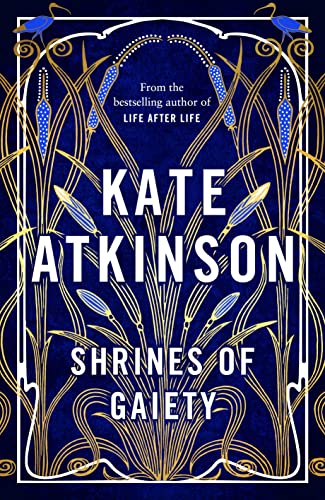
Shrines of Gaiety by Kate Atkinson

Random House UK| 27 September 2022| 440 pages| e-book Review Copy| 2.5*

Synopsis from Amazon

1926, and in a country still recovering from the Great War, London has become the focus for a delirious new nightlife. In the clubs of Soho, peers of the realm rub shoulders with starlets, foreign dignitaries with gangsters, and girls sell dances for a shilling a time.

At the heart of this glittering world is notorious Nellie Coker, ruthless but also ambitious to advance her six children, including the enigmatic eldest, Niven whose character has been forged in the crucible of the Somme. But success breeds enemies, and Nellie’s empire faces threats from without and within. For beneath the dazzle of Soho’s gaiety, there is a dark underbelly, a world in which it is all too easy to become lost.

With her unique Dickensian flair, Kate Atkinson brings together a glittering cast of characters in a truly mesmeric novel that captures the uncertainty and mutability of life; of a world in which nothing is quite as it seems.

My thoughts:

Kate Atkinson is one of my favourite authors, so I was expecting to enjoy Shrines of Gaiety. But it took me a while to settle into this book and for quite a while I wasn’t at all sure that I wanted to carry on reading. But I persevered and finished it, because I wanted to find out what happened.

The novel begins just before the General Strike in May 1926. What I liked about it is that it does give a good idea of life in the 1920s, the atmosphere and attitudes after the First World War. There’s the nightlife, the new nightclubs, gangsters, corrupt police, and missing girls, drugs, drinking, crime and murder. The ‘dark belly’ of Soho’s underworld was very dark indeed and the gaiety superficial.

However, my problem with it was I found it confusing, with several plot lines and lots of characters, in lots of different locations, and at different times, and the narration jumps around between all of them. I had to keep backtracking to work out who was who and how they interacted. It was hard work! And some of it was boring, with quite a lot of padding, making the book as a whole far too long. It’s a sprawling story that could probably have been better spread between two or even three books.

In her Author’s Note Atkinson explains that inspiration for her novel came from the life and times of Kate Meyrick, who for many years was the queen of Soho’s clubland. Many of the details for the novel are taken from her autobiography, Secrets of the 43 Club and Atkinson also cites Barbara Cartland’s autobiography, We Danced All Night and several other works as sources for the novel. But although based on fact and including real people this is very much a work of fiction and she lists several details that she has invented.

Shrines of Gaiety has all the ingredients I love in a novel, but for me it didn’t hold my interest. Sometimes timing is everything and this may be just a case of the wrong book at the wrong time for me.

My thanks to Random House for an ARC via NetGalley.
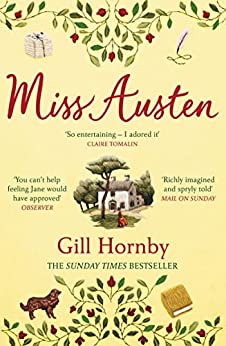
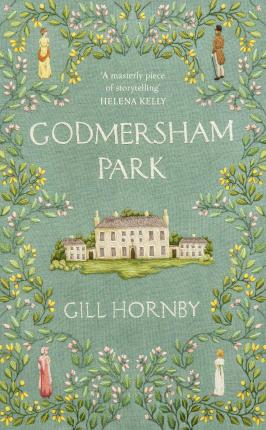
Miss Austen & Godmersham Park by Gill Hornby

In January I read Miss Austen by Gill Hornby, but despite enjoying it I didn’t write about it then. And in September I read Godmersham Park. Both are based on Jane Austen and her relationships with family and friends.

Miss Austen is the untold story of the most important person in Jane’s life – her sister Cassandra. After Jane’s death, Cassandra lived alone and unwed, spending her days visiting friends and relations and quietly, purposefully working to preserve her sister’s reputation. Set in 1840, Cassandra in her ’60s, visits Isabella Fowle following the death of her father, the Reverend Fowle when Isabella is packing up her parents’ belongings so that a new reverend can move in. Cassandra is convinced that her own and Jane’s letters to Eliza Fowle, the mother of Cassandra’s long-dead fiancé, are still somewhere in the vicarage. Eventually she finds the letters and confronts the secrets they hold, secrets not only about Jane but about Cassandra herself. Will Cassandra reveal the most private details of Jane’s life to the world, or commit her sister’s legacy to the flames?

I was surprised by how much i enjoyed this book as I don’t usually like spin-offs, sequels or prequels of my favourite books, but I really enjoyed this book as Cassandra relives her life with Jane, revealing what life was like for spinsters living in the early 1800s. It is different from Jane Austen’s own novels but still manages to recreate that flavour of her novels that I have loved ever since I first read Pride and Prejudice. It’s very well researched, a novel that held my attention from the beginning right to the end. A definite 4.5 star book.

I didn’t enjoy Godmersham Park quite as much as Miss Austen. It is the fictionalised life of Anne Sharp, employed as the governess to Fanny, Jane Austen’s niece. Fanny’s father was Edward Austen, who was adopted by the wealthy Knight family (Thomas Knight was a cousin), taking their name in 1812. Anne became one of Jane’s closest friends.

Little is actually known about Anne as Gill Hornby acknowledges in her Author’s Note. So the story of her early life before her arrival in 1804 at Godmersham Park is a ‘fiction, fashioned out of the biographies of other, contemporary genteel ladies who found themselves working as governesses.’ But the two years she spent working for the Austen family were recorded by Fanny in her diaries and so Gill Hornby has closely followed her account. Henry Austen, Jane’s favourite brother was a regular visitor at Godmersham and Jane, Cassandra and their mother visited too during those two years.

Anne had no experience of teaching, but was left with no alternative as her mother had died and she had to find employment. She found it difficult – treated neither as a servant nor as one of the family, she risked dismissal if she overstepped the mark. Similarly she found that Henry Austen’s attention put her in the most awkward situations. But when Jane visited she was able to relax in her company and the two struck up a friendship.

I can’t quite put my finger on why I find this novel not as good as Miss Austen. But it moves at a slower pace and apart from the mystery that surrounds Anne’s father, I didn’t find it as absorbing – there’s that anticipation in Miss Austen of will Cassandra find the letters and what will they reveal. In parts Godmersham Park came over to me as just a tiny bit flat and I never grew as fond of Anne as I did of Cassandra. Having said that, I did enjoy this book enough to give it 3.5 stars.

Undercurrent by Barney Norris

This is another short review of a book I read in the summer and didn’t manage to review before I went away on holiday. I really enjoyed it.

Random House| 25 August 2022| 257 pages| e-book Review Copy| 4*

Blurb:

Years ago, in an almost accidental moment of heroism, Ed saved Amy from drowning. Now, in his thirties, he finds himself adrift. He’s been living in London for years – some of them good – but he’s stuck in a relationship he can’t move forward, has a job that just pays the bills, and can’t shake the sense that life should mean more than this. Perhaps all Ed needs is a moment to pause. To exhale and start anew. And when he meets Amy again by chance, it seems that happiness might not be so far out of reach. But then tragedy overtakes him, and Ed must decide whether to let history and duty define his life, or whether he should push against the tide and write his own story.

Filled with hope and characteristic warmth, Undercurrent is a moving and intimate portrait of love, of life and why we choose to share ours with the people we do.

A few years ago I read Turning for Home by Barney Norris and thought it was a moving book with emotional depth. Undercurrent has very much the same tone, plumbing the same depth of emotion, as he tells the story of a family’s grief and loss as well as love.

The main story centres around Ed and his immediate family, but the narrative includes the stories of his grandparents and great grandparents. He had a troubled childhood, living on a farm in Wales with his mother, stepfather and stepsister, Rachel. His mother wants him and Rachel to take over the farm when she dies, but neither of them want to, which leaves Ed feeling guilty and frustrated. But when his mother becomes seriously ill and dies he has to make a decision.

It’s also the story of his grandparents and great grandparents, beginning in 1911 in India when Arthur, an Englishman met and later married Phoebe a young Indian teenager. When the First World War broke out they moved to England and Arthur enlisted in the navy. She never got over leaving India and sank into depression and melancholy. Their son, Leo, was greatly affected by his mother’s mental illness and caring for her and the farm became too much for him, resulting in tragedy. The women in the family followed the same pattern as Phoebe – following the men, their lives changing for better or worse.

I don’t feel I have done justice to this novel, finding it quite difficult to review. It’s a quiet thoughtful book that explores the nature of our relationships and emotions. The central theme is the pull of home, that sense of belonging, of attachment to a place, and how our past has shaped our lives. Alongside this there is the desire for a new life, and new experiences. It is beautifully written.

My thanks to the publishers for a review copy via NetGalley.

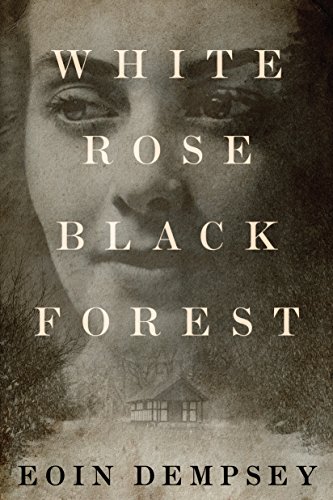
White Rose, Black Forest by Eoin Dempsey

Rating: 3 out of 5.

This is the second of several short posts as I try to catch up with writing reviews of books I read earlier this year.

White Forest, Black Rose by Eoin Dempsey is a World War 2 novel which is different from other books set during the War that I’ve read before, told from the perspective of a German who opposed the Nazis. It is set in the Black Forest, Germany in 1943, where Franka Gerber is living alone in an isolated cabin, having returned to her home town of Freiburg after serving a prison sentence for anti-Nazi activities.

It is December and the Forest is blanketed in deep snow when she discovers an unconscious airman lying in the snow wearing a Luftwaffe uniform, his parachute flapping in the wind. Taking him back to the cabin she saves his life, but whilst he is unconscious she hears him speak in English and so it seems that he is not who she first thought he was. Both his legs are broken and, having been a nurse, Franka is able to set the bones, and tries to discover his true identity. Trapped in the cabin they both gradually reveal details of their past lives and learn to trust each other.

It is a tense, claustrophobic novel and as soon as he is able to walk they decide to leave the cabin and so begins a race against time, as they are hunted by the Gestapo. Can they trust each other enough to join forces on a mission that could change the face of the war and their own lives forever?

White Rose, Black Forest is a novel inspired by true events, although the author doesn’t clarify what is fact and what is fiction. I enjoyed it, especially the historical aspects. The White Rose movement in Germany was a non-violent intellectual resistance group in Nazi Germany, who conducted an anonymous leaflet and graffiti campaign that called for active opposition to the Nazi regime.

It slots into the Forest box in the Wanderlust Bingo card and is also one of my TBRs, a book I’ve owned since 2018.

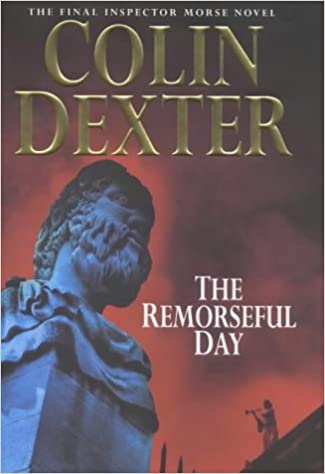
Throwback Thursday: The Remorseful Day by Colin Dexter

Today I’m looking back at my post on The Remorseful Day by Colin Dexter, the last Inspector Morse book. I first reviewed it on August 2, 2015.

My review begins:

Chief Inspector Morse is one of my favourite fictional detectives (maybe even the favourite). I first ‘met’ him years ago in the ITV series Inspector Morse and so, just as Joan Hickson is forever in my mind as Miss Marple and David Suchet is Poirot, John Thaw is Morse. The series was first broadcast in 1987, but I don’t intend to write about the books versus the TV adaptations – I’ve enjoyed both. This post is just about the last book in the series – The Remorseful Day.

Click here to read my full review

~~~

The next Throwback Thursday post is scheduled for September 29, 2022.

Book Beginnings & The Friday 56: All Among the Barley by Melissa Harrison

Every Friday Book Beginnings on Friday is hosted by Gillion at Rose City Reader where you can share the first sentence (or so) of the book you are reading. You can also share from a book you want to highlight just because it caught your fancy.

Yesterday I finished reading Shrines of Gaiety, Kate Atkinson’s new book which will be published in September. I’ll write about it in a later post. Although I’m still reading The Return of the King and The Island, I wondered what I’d like to read next. I was thinking of reading  Lion by Conn Iggulden, the first in a new series ‘The Golden Age’, set in Ancient Greece in the 5th century BC. But, today I wasn’t in the mood for ancient historical fiction and fancied something more rural and more modern – and spotted All Among the Barley in a pile of books waiting to be read. It’s set on a farm in Suffolk just before the Second World War.

Prologue

Last night I lay awake again, remembering the day the Hunt ran me down in Hulver Wood when I was just a girl.

And then Chapter 1:

My name is Edith June Mather and I was born after the end of the Great War. My father, George Mather, had sixty acres of arable land known as Wych Farm; it is somewhere not far from here, I believe. Before him my grandfather Albert farmed the same fields, and his father before him, who ploughed with a team of oxen and sowed by hand.

Also every Friday there is The Friday 56, hosted by Freda at Freda’s Voice, where you grab a book and turn to page 56 (or 56% of an eBook), find one or more interesting sentences (no spoilers), and post them.

Page 56:

Unlike Doble, whose family had been tied to ours for generations, John was what we in the village called a ‘furriner’, having been born sixty miles or more north of us, where our clay gave way to flat, rich peat.

Synopsis from Amazon:

WINNER OF THE EU PRIZE FOR LITERATURE

‘BOOK OF THE YEAR’ NEW STATESMAN, OBSERVER, IRISH TIMES, BBC HISTORY MAGAZINE

The fields were eternal, our life the only way of things, and I would do whatever was required of me to protect it.


The autumn of 1933 is the most beautiful Edie Mather can remember, though the Great War still casts a shadow over the cornfields of her beloved home, Wych Farm.

When charismatic, outspoken Constance FitzAllen arrives from London to write about fading rural traditions, she takes an interest in fourteen-year-old Edie, showing her a kindness she has never known before. But the older woman isn’t quite what she seems.

As harvest time approaches and pressures mount on the whole community, Edie must find a way to trust her instincts and save herself from disaster.

I chose this book because earlier this year I enjoyed Melissa Harrison’s novella, Rain: Four Walks in English Weather, which is about four rain showers, in four seasons, across Wicken Fen, Shropshire, the Darent Valley and Dartmoor. I like the way she writes about the natural world and All Among the Barley looks as though it will bring to life a world governed by the old rural traditions, in an evocation of place and a lost way of life.

What do you think? Have you read this book ?