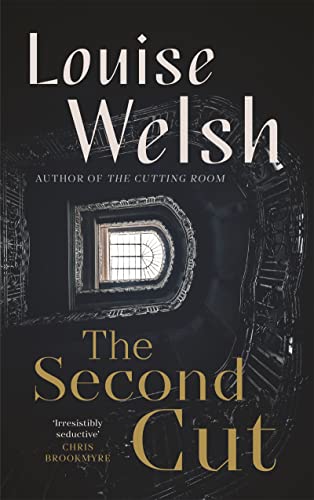
The Second Cut by Louise Welsh

Canongate Books| 27 January 2022| 372 pages| e-book| review copy via NetGalley| 3.5*

Synopsis:

Auctioneer Rilke has been trying to stay out of trouble, keeping his life more or less respectable. Business has been slow at Bowery Auctions, so when an old friend, Jojo, gives Rilke a tip-off for a house clearance, life seems to be looking up. The next day Jojo washes up dead.

Jojo liked Grindr hook-ups and recreational drugs – is that the reason the police won’t investigate? And if Rilke doesn’t find out what happened to Jojo, who will?

Thrilling and atmospheric, The Second Cut delves into the dark side of twenty-first century Glasgow. Twenty years on from his appearance in The Cutting Room, Rilke is still walking a moral tightrope between good and bad, saint and sinner.(Amazon UK)

I enjoyed reading Louise Welsh’s debut novel, The Cutting Room back in 2005, even though it was not the usual type of book that I read, and was way out of my comfort zone. I remember that its dark, edgy atmosphere made it compelling reading about Rilke an auctioneer who discovered a collection of violent and highly disturbing photographs. So when I saw that she’d written another novel, about, Rilke, The Second Cut I was keen to read it. I had forgotten most of the detail in The Cutting Room, but that didn’t matter as this book reads well as a standalone.

Twenty years have passed since the first book was published and much has changed in the world, but Rilke at forty seven years old, is now only four years older in this second book, still an auctioneer at Glasgow’s Bowery Auctions and ‘too tall, too thin and too cadaverous to look like anything other than a vampire on the make’. I found this somewhat confusing as The Second Cut is clearly set in the present day, with all the changes that have taken place in the last twenty years regarding the rights of LBGTQ+ people, and the references to Covid.

Just like The Cutting Room, I found this compelling reading, but not always comfortable reading, particularly about the darker side of Glasgow’s violent underworld and gay scene. The characters are vividly drawn and from start to end the pace is fast, and the details about the auction house are fascinating. There are two main threads – the first is Rilke’s determination to find out how and why his old acquaintance Jojo turned up dead on a doorstep.

Aand the second follows his suspicions about the truth behind the house clearance of Ballantyne House, a neglected Georgian house in Galloway, less than two hours from Glasgow. It was crammed with many valuable items along with the dross. It was owned by Mrs Forrest, an old lady who had been a concert pianist but was now suffering from dementia, so her son and nephew were dealing with the sale of the property and its contents. I read a lot of crime fiction, so I soon guessed what had happened to Mrs Forrest, and similarly I was immediately suspicious about what was going on in the polytunnels.

But it’s the gay scene that is the main focus of the book and in her Afterword Louise Welsh explains that she had written The Cutting Room twenty years ago in a white-hot rage about the intensity of the hostile environment against LBGTQ+ people. Although much has changed since then with equal marriages, increased visibility, access to hate laws, improved awareness of queer and trans rights, with a general consensus that violence and prejudice against LBGTQ+ people is wrong, outrages still occur. She writes that the Glasgow she inhabits is largely better, in terms of sexuality, than it was twenty years ago. I have to say that some of the scenes in The Second Cut seem to be stuck in the past – or have I got that wrong?

Many thanks to Canongate Books for a review copy via NetGalley
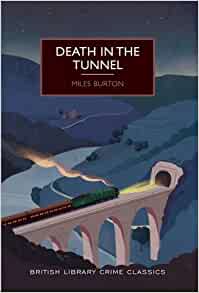
Death in the Tunnel by Miles Burton

Death in the Tunnel by Miles Burton – this is a British Library Crime Classic, first published in 1936, about the death of Sir Wilfred Saxonby who was found in a first class compartment of the 5 pm train from London to Stourford. He had been shot through the heart. Initially it was thought he had committed suicide while the train was passing through a long tunnel, but there seemed to be no reason why he should have wished to kill himself. Inspector Arnold of Scotland Yard became interested in the case when he heard of a strange incident that had taken place in the tunnel – a mysterious red light had caused the driver to slow down for a few moments. Unable to find out why this had happened and whether it had any relevance to Sir Wilfred’s death he consulted his friend Desmond Merrion, an amateur expert in criminology and between them they discovered what had happened.

It’s a complex mystery -a type of locked room puzzle. If Sir Wilfred hadn’t committed suicide, who had a motive for killing him? Because Sir Wilfred had asked to have the compartment to himself, the rear guard had locked the door and it was only opened when the train reached Stourford – so how could anyone have got in? A miniature automatic pistol with Sir Wilfred’s initials on it is found under his seat, but although he had a certificate for a revolver and a rifle he didn’t have one for an automatic pistol. Why is his train ticket was missing and what is the significance of his wallet and its contents. It puzzles Inspector Arnold and Merrion and it puzzled me too. First of all it is not at all clear, if it was murder, who was responsible – his family, his business employees or contacts, or was it because of his personality – who disliked him so much to want him dead. And on top of all that how had he been killed? This both a whodunnit and a howdunit – and it is most ingenious. If you, like me, enjoy this puzzle type of mystery you’ll enjoy this book.

Miles Burton is a pseudonym. His real name was Cecil John Charles Street (1884 – 1964) and he also wrote under the names of John Rhode and Cecil Way. In his Introduction to Death in the Tunnel Martin Edwards writes about Street’s career as a crime writer. He was a founder member of the elitist Detective Club and was and compiled an anthology of the work of the Club’s members, Detection Medley, and continued to publish crime novels until the 1960s. He was a prolific writer – see this list of his works on the Fantastic Fiction site.

  • Publisher ‏ : ‎ British Library Publishing (10 May 2016)
  • Language ‏ : ‎ English
  • Paperback ‏ : ‎ 256 pages
  • ISBN-10 ‏ : ‎ 071235641X
  • ISBN-13 ‏ : ‎ 978-0712356411
  • Source: my own book
  • My Rating: 3*

Library Books 24 February 2022

I love libraries – here are some of the books I have on loan at the moment. I had made a few attempts to take a photo of these books and wasn’t happy with any of them. I’d left the books in a pile on the floor and was delighted to see this photo that my husband had taken – much better than any of my attempts.

Trigger Mortis by Anthony Horowitz – because I enjoy his books, but I’m not sure I’ll like this one as much as his crime fiction books. It’s a James Bond thriller set in 1957 re-inventing the golden age of Bond, incorporating previously unseen Ian Fleming material.

An Event in Autumn by Henning Mankell, a Wallender thriller, again because I’ve enjoyed other books by him. This is a novella in which Wallender makes an offer on a house, and then discovers the skeleton of a middle-aged woman in the garden. What a nightmare!

Prague Nights by Benjamin Black. Black is the pen name of John Banville, another author whose books I like. This is historical crime fiction set in Prague in 1599, when the mistress of Rudolf II, the Holy Roman Emperor, is killed and her body found thrown upon the snow in Golden Lane.

Presumed Innocent by Scott Turow, the first book in his Kindle County series, because I enjoyed the last book in the series, The Last Trial so much. This is a courtroom drama in which prosecutor Rusty Sabich stands accused of killing Carolyn with whom he had been having an affair.

Ordinary Heroes by Scott Turow, historical fiction set in World War Two, described on the front cover as ‘part mystery, part thriller, this is a quietly powerful piece of fiction.’ A courtroom journalist researches the experiences of his grandfather during the War.

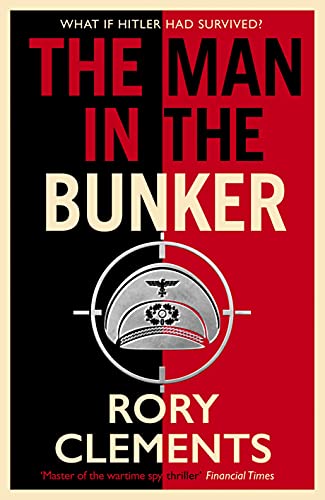
The Man in the Bunker by Rory Clements

Rating: 5 out of 5.

Bonnier Books UK Zaffre| 22 January 2022| 453 pages| e-book| review copy via NetGalley| 5 stars

I’ve read two of Rory Clements’ books in his Tom Wilde series, the first one, Corpus and the fourth Hitler’s Secret, both of which I loved. So I was looking forward to reading more of his books – The Man in the Bunker is the sixth book in the series, but fortunately they all read perfectly as standalone books.

This is a complicated novel and I am not going to attempt to describe all the details. In August 1945 an American and professor of history, Tom Wilde is preparing for the Michaelmas term at his Cambridge University college. He had spent most of the last three years in a senior advisory role with the Office of Strategic Services, America’s wartime intelligence outfit. He has quit the OSS and wants to put the war behind him, so when he sees a big American car parked outside his home where he lives with his wife and young son, he is not at all pleased. His three visitors bring news that there’s reason to believe that Hitler is alive and hiding out in Bavaria – and they want Wilde to find him.

The rumour that Hitler didn’t die in the Berlin bunker has always interested me, especially as his body was never found. I remember seeing a TV documentary about it, so I wondered what Clements would make of it and what his conclusion would be. Did Hitler live on after the war or not? His version of events is thrilling and dramatic as Wilde travels across the continent, mainly in Germany and Austria, seeing the devastation the War had brought both to places and to people. There were millions of people without homes – refugees, some living in displaced persons camps dotted around Europe. Some had been slave labourers interned in concentration camps, others were survivors of the death camps.

Wilde was accompanied by a young lieutenant, Mozes Heck, a Dutch Jew who had escaped to England and joined the British Army. Heck is desperate to find out what had happened to his family, loathes the Nazis and Hitler, and he is set on revenge. He is both headstrong and dangerous. They were both co-opted to the US Counter Intelligence Corps in Garmisch, an Alpine town in Bavaria. Wilde has a difficult job restraining Heck, but eventually they work well together in tense and extremely dangerous situations.

I thoroughly enjoyed it. The search for Hitler across Germany and Austria is fast paced, full of action, danger, and violence. Needless to say really, but I was gripped by this novel and I just had to find out what had happened, whether Hitler had died in the bunker – or did Wilde find him in hiding somewhere in the Alps? I’m not telling – you’ll have to read the book to find out.

Many thanks to Bonnier Books for a review copy via NetGalley.

The Last Trial by Scott Turow

In this explosive legal thriller from New York Times bestselling author Scott Turow, two formidable men collide: a celebrated criminal defense lawyer at the end of his career and his lifelong friend, a renowned doctor accused of murder.

Rating: 5 out of 5.

The Last Trial is the first book by Scott Turow that I’ve read. It is a great book and I wish I’d come across his work before now. This one is the 11th book in his Kindle County series (Kindle County is a fictional Illinois county that is based on Cook County). Now I’ll have to read his earlier books, not that I had any problems reading this as a standalone book, but because I enjoyed it so much I want to know more. I love legal thrillers and this is one of the best I’ve read.

There are quite a lot of characters, the main ones being the defence attorney, Sandy Stein, aged 85 and nearing retirement and his daughter, Marta also a lawyer, and Kiril Pafco, his friend and Nobel Prize winner, a doctor, who has developed a drug to treat cancer, which is currently still in its clinical trial period. Sandy is one of his patients whose life has been extended by the drug. Other characters who stood out for me are Pinky, Sandy’s granddaughter, whose offbeat approach to life proves invaluable – I really liked her, and Dr Innis McVie, who had been in a long term relationship with Kiril and until recently had assisted him in his cancer research.

Most of the book is centred on the trial – Kiril is charged with murder after some of the clinical trial patients had suddenly died, and with fraud and insider trading, after he allegedly doctored the research results and sold shares before the details of the deaths became public. Kiril insists he is innocent – but is he?

The details and the of sequence of events is important and gradually becomes clear during the witness testimonies and cross examinations. It all became real to me as I read – I believed in the characters, even the minor ones, and tried to follow all the details of the charges as though I was on the jury. I might not have fully understood all the details of the insider trading, but the medical details were easier for me to follow. This is, however, mainly a character-driven book, revealing their relationships, secrets, motivations and betrayals. It is full of suspense right up until the end.

I loved it and have his first book, Presumed Innocent lined up to read as soon as possible. If you love legal thrillers you’ll love The Last Trial too.

  • ASIN ‏ : ‎ B081YWP83K
  • Publisher ‏ : ‎ Mantle (28 May 2020)
  • Language ‏ : ‎ English
  • File size ‏ : ‎ 689 KB
  • Print length ‏ : ‎ 465 pages
  • Source: A BorrowBox book
  • My Rating: 5*

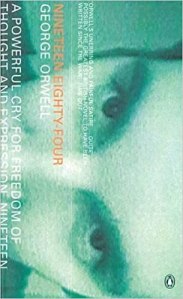
Book Beginnings & The Friday 56: 1984 by George Orwell

Every Friday Book Beginnings on Friday is hosted by Gillion at Rose City Reader where you can share the first sentence (or so) of the book you are reading. You can also share from a book you want to highlight just because it caught your fancy.

1984 is one of the books I’m currently reading. It’s one of those books I’ve had for years and never read.

The Book Begins:

It was a bright cold day in April, and the clocks were striking thirteen,

Also every Friday there is The Friday 56, hosted by Freda at Freda’s Voice. *Grab a book, any book. *Turn to Page 56 or 56% on your  ereader . If you have to improvise, that is okay. *Find a snippet, short and sweet, but no spoilers!

These are the rules:

  1. Grab a book, any book.
  2. Turn to page 56, or 56% on your eReader. If you have to improvise, that is okay.
  3. Find any sentence (or a few, just don’t spoil it) that grabs you.
  4. Post it.
  5. Add the URL to your post in the link on Freda’s most recent Friday 56 post.

Page 56:

‘By 2050 – earlier, probably – all real knowledge of Oldspeak will have disappeared. The whole literature of the past will have been destroyed. Chaucer, Shakespeare, Milton, Byron – they’ll exist only in Newspwak versions, not merely changed into something different, but actually changed into something contradictory of what they used to be.

Summary:

The year 1984 has come and gone, but George Orwell’s prophetic, nightmarish vision in 1949 of the world we were becoming is timelier than ever. 1984 is still the great modern classic of “negative utopia”—a startlingly original and haunting novel that creates an imaginary world that is completely convincing, from the first sentence to the last four words. No one can deny the novel’s hold on the imaginations of whole generations, or the power of its admonitions—a power that seems to grow, not lessen, with the passage of time. (Goodreads)

~~~

What have you been reading lately?