Still Catching Up

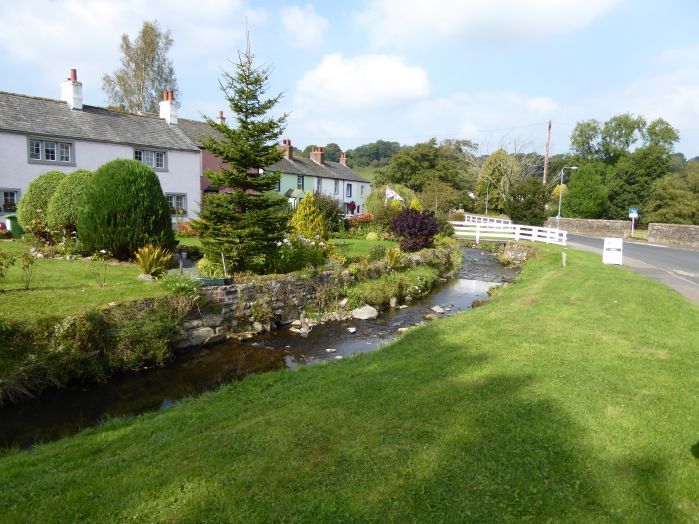
I’ve been missing from my blog for most of September, but I’ve still been reading. We’ve just returned from a  few days in the Lake District – such a beautiful part of the UK!
Caldbeck P1010042
Caldbeck Cumbria

I managed to squeeze in some reading time as well as walking in the fells near Caldbeck and visiting the Pencil Museum in Keswick, Castlerigg Stone Circle, the Honister Pass, Ullswater and Aira Force. I’ll post some photos later on.
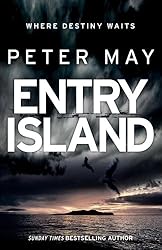
I took two books with me that I had already begun reading and finished one of them – Entry Island by Peter May. I’ve previously read May’s Lewis Trilogy – The Blackhouse, The Lewis Man and The Chessmen all of which I loved and whilst I did enjoy Entry Island I don’t think it quite lives up to the Lewis books. However, as I discovered when I came home this weekend Entry Island has been awarded the third annual Deanston Scottish Crime Book of the Year Award at the Bloody Scotland Crime Writing Festival.

Entry Island is set in present day Magdalen Islands, part of the province of Quebec, in the Gulf of St Lawrence, and in the nineteenth century on the Isle of Lewis at the time of the Highland Clearances.  It mixes together two stories and two genres, crime fiction and historical fiction. It has a strong sense of place in both locations and beautiful descriptions of the landscape as for example in this passage:

It was another ten minutes before the ferry slipped out of the harbour, gliding past the outer breakwater on a sea like glass, to reveal Entry Island in the far distance, stretched out on the far side of the bay, the sun only now rising above a gathering of dark morning cloud beyond it. The island drew Sime’s focus and held it there, almost trancelike, as the sun sent its reflection careening towards him, creating what was almost a halo effect around the island itself. There was something magical about it. Almost mystical. (page 14)

The characters are convincing – Detective Sime Mackenzie, based in Montreal is part of the team sent to Entry Island to investigate the death of the wealthy businessman, James Cowell found stabbed to death. His wife, Kirsty is the obvious suspect. Sime is suffering from insomnia, a situation made worse by the fact that his ex-wife is also on the investigating team. Sime is convinced that he knows Kirsty, although they have never met before and he doubts that she is the culprit. Running parallel to this crime fiction element is the historical one, linked by Sime’s ancestor, also called Sime who was a crofter’s son on the Isle of Lewis and whose love for the laird’s daughter seemed doomed from the start. The story of life on Lewis and the harsh treatment the crofters received during the potato famine, followed by the terrible conditions they endured during their transportation to Canada is powerfully and emotionally portrayed.

The two stories are linked together well, but I found the present day investigation not too convincing and rather contrived as the team seemed to jump to conclusions without much thought or thorough investigation of the evidence. And I thought that the historical element was dominant at the expense of the modern day crime story making the book a little unbalanced. However, as I said I liked the book, which is an entertaining read that held my interest to the end.

Peter May is a prolific author. He was born and brought up in Scotland, but he now lives in France. As well as The Lewis Trilogy he has also written The Enzo Files, a series of seven books featuring Scottish forensic scientist, Enzo MacLeod, who lives in France, teaches at a university in Toulouse, and is working on solving seven of France’s most famous cold cases by applying the latest scientific techniques and The China Thrillers, a series of six books featuring Beijing detective Li Yan and Margaret Campbell, forensic pathologist from Chicago. He has also had a successful career as a television writer, creator, and producer. 

I still have three other books to write about, including my first book for this year’s R.I.P. Challenge, Testament of a Witch, which like Entry Island also qualifies for the Read Scotland 2014 Challenge. Will I ever catch up with myself?

Cragside: The Turkish Baths

I haven’t done a Saturday Snapshot for months!

Turkish Bath P1090264

Here are some photos of the Turkish Baths at Cragside, in Northumberland that I’ve been meaning to post since our last visit. There’s a lot to see at Cragside. It’s now owned by the National Trust and was formerly the home of William George Armstrong (1810 – 1900). We didn’t manage to see this suite of rooms the first time we visited as there was quite a queue.  But on our second visit there weren’t as many people. You go down stairs from the Library lobby to go into the rooms below the Library. The guide book describes them as:

The suite of rooms includes a steam bath, a cold plunge, a hot bath and a shower, as well as water closets and a changing room. They are the lowest and the first completed part of Norman Shaw’s first addition to the original house. His plan, which shows that modifications were still being made, is dated 5 May 1870, and Armstrong’s friend, Thomas Sopwith, recorded in his diary that €˜the Turkish Bath at Cragside was used for the first time on November 4th 1870€².
The baths were part of Lord Armstrong’s innovative provision of central heating for the whole house. The space occupied by the baths is cleverly situated between chambers with huge water-pipe coils, which, heated from the boiler to the north, were the source of hot air that was ducted up into the main house. (NT guide book for Cragside)

Turkish Bath P1090265

Turkish Bath P1090266Apparently, Lord Armstrong was keen to build up foreign business and thought that:

Chinese or Burmese, or Japanese arms ministers would be more likely to agree to handsome contracts, if they were both well entertained and comfortable – even in a Northumbrian winter. (NT guide book for Cragside)

I think it’s an excellent idea and wish we had space for something similar!

The Steel Bonnets by George MacDonald Fraser

The Steel Bonnets 001The full title of this book is The Steel Bonnets: the Story of the Anglo-Scottish Border Reivers by George MacDonald Fraser. It’s a detailed account of the Border between England and Scotland up to the accession of James VI’s succession to the English throne in 1603.

The people living in the Borders, both English and Scottish feuded amongst themselves, Scots against Scots, English against English, and Scots against English – robbery, blackmail, raiding, arson, kidnapping, murder and extortion were regular events during that period, amongst a number of families, including Armstrongs, Johnstones, Forsters and Hetheringtons, Elliots, Fenwicks, Bells and Nixons, Littles and Scotts, Maxwells and Kerrs. Some families had both English and Scottish members, making it all very confusing. Fraser searched many sources in compiling this history, including State and Border papers and letters, listed in the Bibliography.

There is a map showing the six Marches that made up the Border – three on each side, East, Middle and West. Each March had its own Warden. It’s not very easy to see on my copy of this map, but it shows the general locations:

Border Marches map

The seamen of the first Elizabeth might sweep the world’s greatest fleet off the seas, but for all the protection she could give to her Northumbrian peasants they might as well have been in Africa. While young Shakespeare wrote his plays, and the monarchs of England and Scotland ruled the comparatively secure hearts of their kingdoms, the narrow hill land between was dominated by the lance and the sword. The tribal leaders from their towers, the broken men and outlaws of the mosses, the ordinary peasants of the valleys, in their own phrase, “Shook loose the Border.” They continued to shake it as long as it was a political reality, practising systematic robbery and destruction on each other. History has christened them the Border Reivers.*

*Reiver, reaver – robber, raider, marauder, plunderer. the term is obsolete, but lingers on in words like bereave. (page 3)

The book is divided into five parts:

  • Part I a brief historical sketch up to 1500 from the Roman period.
  • Part II describing what the Border was like in that century, the people who lived there, who were the leading robber families, how they lived, ate, dressed, built their homes, the games they played (football, the fore-runner of rugby, soccer and American football, horse racing, hawking, hunting, fishing and gambling), and the songs they sang – Border ballads.
  • Part III – about the reivers, how they rode their raids, conducted their feuds etc and the Border Law, and how the March Wardens tried to keep order, what it was like for ordinary folk living in the frontier country.
  • Part IV – historical survey of the reiving century from 1503 – 1603, how the reivers fitted into the history of their time and the part they played in the long-drawn Anglo- Scottish struggle..
  • Part V – how their story ended when England and Scotland came under one king, and the old Border ceased to be.

James became the King of all Britain in 1603:

… he was determined to make one country where there had been two before, to bury the old quarrels, and to keep the peace. (page 360)

Fraser makes the point that whilst James pacified the Borders using a

‘heavy hand and it makes an ugly story’, … ‘at the end of the day he left the old, wild, bloody Border a fit place for ordinary folk to live. If the border riders were harshly dealt with, it is not irrelevant to point out that they had dealt fairly harshly in their time. Undoubtedly injustice and atrocity took place in settling the frontier, but the victims are not to be accounted any nobler just because of that.

It is also wrong to suggest that James was ignorant of Border conditions. He knew a great deal about them, from first-hand experience – certainly more than any occupant of the English throne since Richard III. He may be charged with cruelty, indifference and dishonesty in his attitude to Border affairs, but not with ignorance or stupidity. (pages 360 -361)

It’s taken me since the beginning of December to read this book. I read it slowly in small sections as there is a lot to take in and I found the structure of the book a bit confusing and disjointed, as inevitably it meant that information was repeated. There are a large number of footnotes, which interrupted the flow of the text if I paused to read them – which I did, as they contained much relevant information. I would have preferred it to have been incorporated into the main body of the book.

However, I’m glad I read it – it’s a tour de force, and a mine of information! An ideal book for Read Scotland 2014 if you are interested in the history of the region and/or the families, or like me, you live there.

George MacDonald Fraser (1925 – 2008) was a Scot born in England (Carlisle), a Borderer himself. In 1943 he enlisted in The Border Regiment and served in the Burma Campaign. He was later granted a commission into the Gordon Highlanders. After the War he became a journalist. He was the author of the ‘Flashman‘ books, other novels and movie scripts.

Saturday Snapshot – Flodden

It’s the 500th anniversary of the Battle of Flodden this year – it was on 9th September 1513 that the armies of England and Scotland met at Flodden Field, near Branxton in Northumberland. There have been events this year to commemorate the battle and the men from both nations who died in this last medieval battle between England and Scotland.

Living not far from the site of the battle this week we went to see what had changed as a result of the anniversary. There’s now a surfaced path leading up to the Monument.

(Click on the photos to see them enlarged)

500th anniversary P1010826

There are some more information boards and signs to guide you round the Battlefield Trail:

Battlefield trail signpost P1010837The monument isn’t actually on the site of the battle but stands on Piper’s Hill.

Flodden MonumentFrom the monument you can look towards the north down on the village of Branxton:

Branxton P1010831The two armies lined up south of the monument with a marshy dip between them. The Scots advanced first, unaware of the of the ground conditions below them. Now it’s a ditch but in 1513 there was a brook surrounded by a reeded quagmire downhill – where the Scots were bogged down, the rear ranks pushing forward into the front ranks, crushing the fallen bodies and causing chaos. They were then easy prey for the deadly English billhooks.

It looks like this now – the ditch between the hedge and fence is now nearly dry, after weeks of rain in 1513 it was a quagmire:

Boggy Ground P1010835

 and the two armies came face to face:

Tthe Killing Fields P1010858

Flodden 1513: Scotland’s Greatest Defeat by John Sadler is an excellent account of the strategies and tactics of both armies, with maps and plans showing how the battle began and a time timeline of the various conflicts giving a detailed account of events.

Having read this book and the information boards around the trail I was able to visualise the battle, even on a peaceful weekday afternoon 500 years later. The Scottish troops had moved from their original position on Flodden Edge as the English approached the battlefield, putting them at a disadvantage. The outcome could have been different if they had seen the dip below them as they charged down the hill – or even if the English had attacked first.

But then, the battle needn’t have taken place at all if James IV of Scotland had not invaded England in an attempt to divert English troops from their fight against the French. Indeed he had entered into a Treaty of Perpetual Peace with England in 1502. But in 1512 he had also renewed the Auld Alliance with the French, putting him in the position of either declaring for France against Henry VIII (James’s brother-in-law) or remaining neutral, which would make him vulnerable to any further English expansion, as Henry had revived his claim to the Scottish throne.

Despite pressure from senior members of his council to avoid an outright breach with England, when Henry arrived in Calais preparing to wage war against the French, James decided to go to war against the English. Prior to the battle at Flodden he had crossed the River Tweed into England where he then attacked and captured Norham Castle, and then destroyed both Etal and Ford Castles whilst the English were still mustering their troops. But the outcome was a disaster for Scotland and James was killed on Flodden Field:

The king’s was but one of many hundreds of bodies, sprawled and piled on the bloodied turf. The whole hillside from the brook northwards was a killing ground, the dead, maimed and horribly injured competing for space, severed limbs and streaming entrails spilling fresh gore. The din would have been terrific, with hoarse shouts and the screams of the dying men, the crash of spears, a crescendo rising and spilling like breakers against the shore. (page 82, Flodden 1513 by John Sadler)

Each time I go to Branxton, or see the monument as we drive south along the A697, I think about the battle and all those who died there in 1513.

For more Saturday Snapshots see Melinda’s blog West Metro Mommy Reads.

Saturday Snapshots

It’s been a busy time here recently, as these photos of some of the places we’ve visited show:

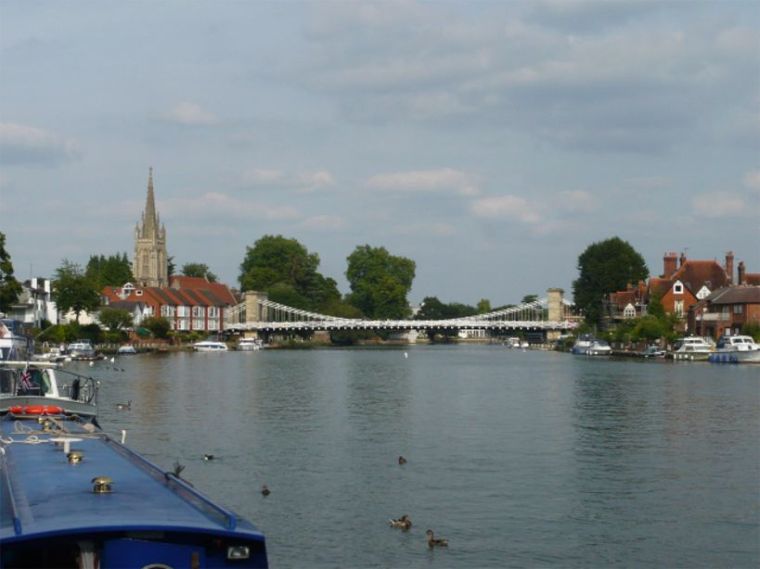
We’ve been away visiting family. We stayed at Marlow in Buckinghamshire. The photo below shows the Marlow Bridge – a road and footbridge across the River Thames. The original crossing probably dates back to 1309. The current suspension bridge was built 1829 and 1832 and was restored in 1956-7.

Marlow Bridge P1090134

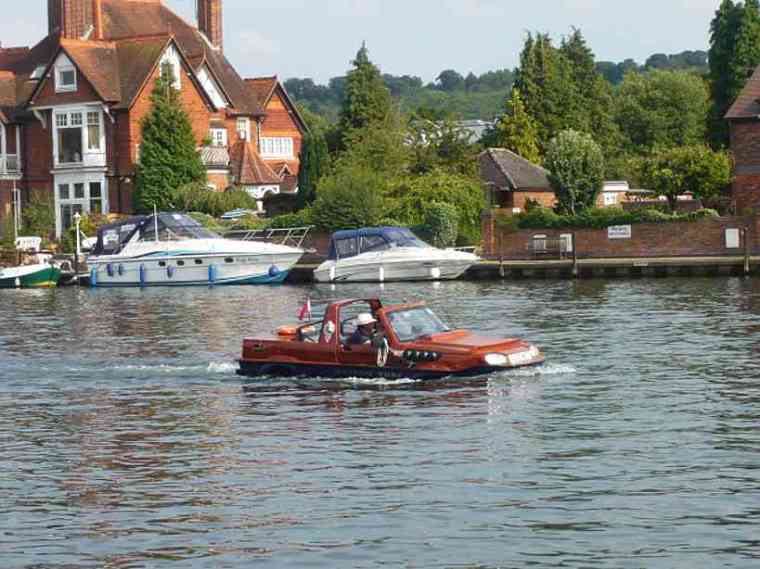
There were the usual boats, ducks and swans but we were surprised to see this driving up the Thames:

Amphibious car Marlow P1090141We had a flying visit to Eton and Windsor, not far from Marlow. We had lunch at the 300 year old George Inn at Eton on one side of the Thames:
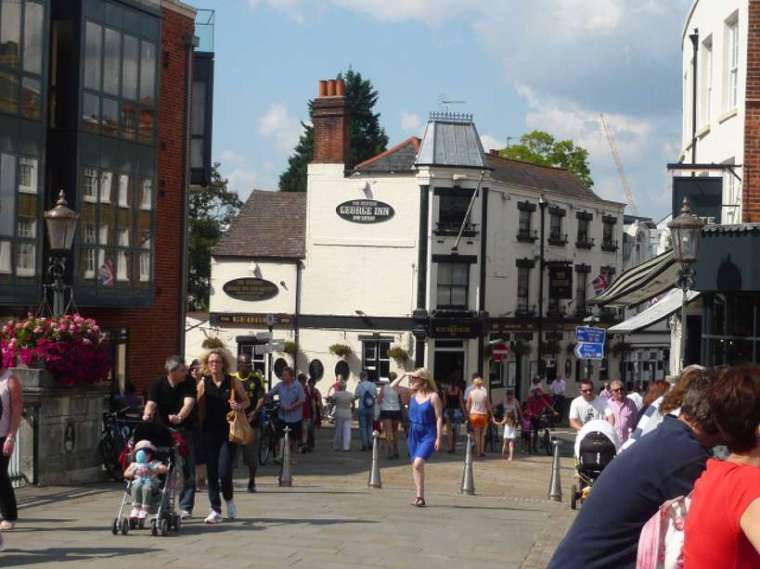
George Inn Eton P1090082and then we crossed the bridge into Windsor for a quick look at Windsor Castle:
Windsor Castle P1090097

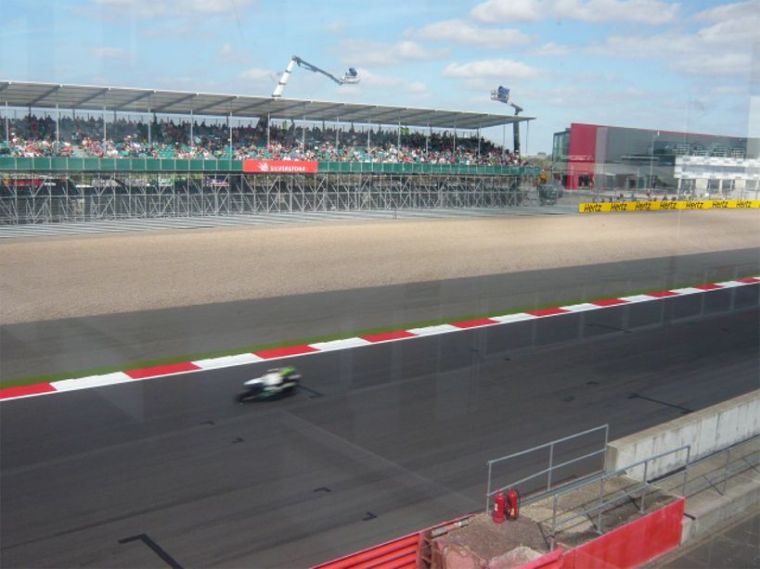
 Other trips out were to Silverstone in Northamptonshire where our nephew has a hospitality suite and we watched the practice for the British MotoGP. His suite, located right over the pit lane, has fantastic views over the start/finish straight.

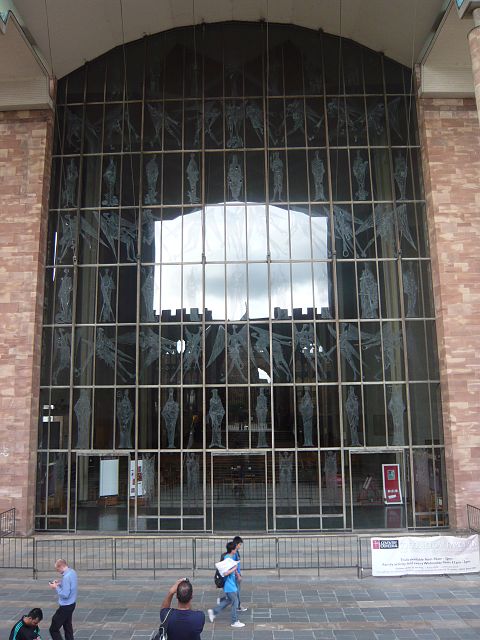
Silverstone P1090230And then we were off to Coventry to see our other nephew’s show The Prodigals (he’s the musical supervisor/director). Before  the show we managed to go to Coventry Cathedral, but only to see the outside as it was near to closing time for the Cathedral and opening time for the show. The photo below shows the entrance to the Cathedral through the huge Screen of Saints and Angels, with a reflection of the ruins of the old Cathedral:
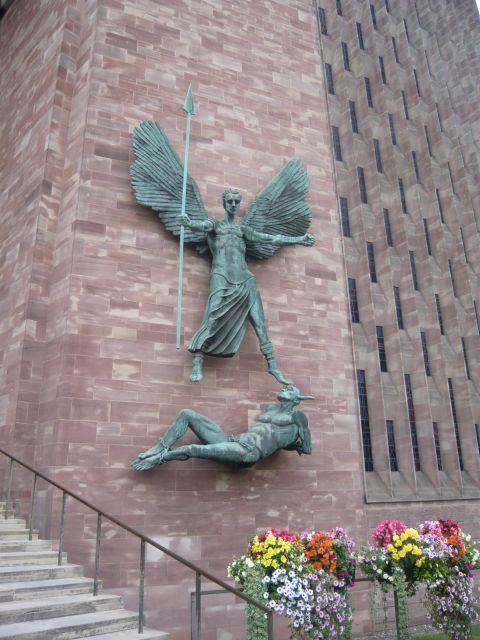
Coventry Cathedral P1090236and finally the next photo shows the enormous bronze statues, designed by Sir Jacob Epstein, of St Michael defeating the Devil:
Coventry Cathedral P1090238

I’ve got more photos – plenty for several Saturday Snapshot posts!

For more Saturday Snapshots see Melinda’s blog West Metro Mommy Reads.

Agatha Christie at Home by Hilary Macaskill

One of the things that struck me when I was reading Agatha Christie’s An Autobiography was her love of houses. It stemmed from her childhood dolls’ house. She enjoyed buying all the things to put in it – not just furniture, but all the household implements such as brushes and dustpans, and food, cutlery and glasses. She also liked playing at moving house, using a cardboard box as a furniture van.

Writing about her life with her husband, Max Mallowan she wrote:

We were always choosing sites for houses. This was mainly owing to me, houses having always been my passion – there was indeed a moment in my life, not long before the outbreak of the second war, when I was the proud owner of eight houses. (page 440 of An Autobiography)

Agatha Christie at Home Macaskill

So when I saw that Hilary Macaskill had written this book – Agatha Christie at Home – I knew immediately that I wanted to read it. It’s a beautiful book, with many photographs – more than 100 colour photos – illustrating Agatha’s life and homes. I took my time reading it, first of all looking at the photos, before reading the text.

There is a Foreword by Mathew Prichard, her grandson, explaining the love his grandmother had for Devon, in particular for Torquay, where she was born and Greenway, the house that had a special place in her heart.  He expressed his hope that this book will ‘transmit some of the magic that my whole family felt when they were there.’  And this book does indeed do that!

There is an overview of Agatha Christie’s life followed by descriptions of the houses and countryside she loved – from Ashfield in Torquay her first home, where she was born and brought up to Greenway, a Georgian mansion above the River Dart, now owned by the National Trust.

There are no spoilers in this book but Hilary Macaskill has identified the settings Agatha Christie used in her books and how some of the place names have been altered, but are still recognizable from her descriptions. I hadn’t realised that the names of some of her characters are taken from the names of streets or villages, such as Luscombe Road in Paignton which she adopted for Colonel Luscombe in At Bertram’s Hotel.

It’s a useful book too if you want to find out more about visiting Devon with tourist information and website addresses. The final chapter is about Agatha Christie’s legacy and her continuing popularity both nationally and internationally. As well as being able to visit Greenway, which has been restored to the way it was when Agatha lived there, there are events to celebrate her life and works, such as the annual Agatha Christie week that takes place in Torquay each September around her birthday.

I haven’t been to Greenway, although I have stayed in Torquay, but that was before Greenway was open to the public. It is enormously popular – on the first day it was opened over 400 visitors came to see the house. But Agatha Christie was a very private person and I can’t imagine what she would have thought about that. After all she had refused permission for an ‘authorized life’ to be written, stating:

‘I write books to be sold and I hope people will enjoy them but I think people should be interested in books and not their authors.’ (page 129)

Knowing that I think I’d feel I was invading her privacy if I did go to Greenway!