Random House UK|5 April 2018|373 pages|e-book |Review copy|5*
Description:
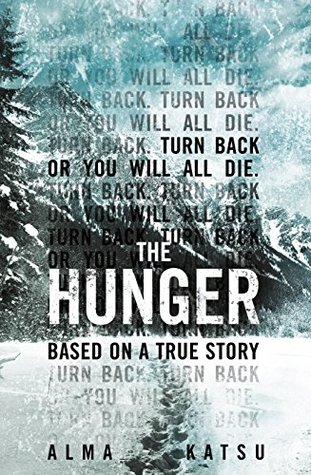
After having travelled west for weeks, the party of pioneers comes to a crossroads. It is time for their leader, George Donner, to make a choice. They face two diverging paths which lead to the same destination. One is well-documented – the other untested, but rumoured to be shorter.
Donner’s decision will shape the lives of everyone travelling with him. The searing heat of the desert gives way to biting winds and a bitter cold that freezes the cattle where they stand. Driven to the brink of madness, the ill-fated group struggles to survive and minor disagreements turn into violent confrontations. Then the children begin to disappear. As the survivors turn against each other, a few begin to realise that the threat they face reaches beyond the fury of the natural elements, to something more primal and far more deadly.
Based on the true story of The Donner Party, The Hunger is an eerie, shiver-inducing exploration of human nature, pushed to its breaking point.
The Hunger by Alma Katsu is a story about the Donner Party, comprising pioneers, people who were looking for a better life in the American West. They formed a wagon train under the leadership of George Donner and James Reed making their way west to California in 1846. This is historical fiction based on the true story of the Donner Party. I knew nothing about the history so it was all fascinating to me – especially as I’m always drawn to stories of pioneers.
Alma Katsu has taken the basic facts and has woven a fictional tale around them to explain what happened. She lists the sources she has used and explains where she has varied from the actual facts and added fictional characters. The Donner Party did set out to get to California, and they did take what was supposed to be a short cut that promised to cut 300 miles off their journey, following a trail called the Hastings Cutoff, from Fort Bridger, Wyoming and this proved to be their downfall – it wasn’t a short cut.
It took them into the Great Salt Lake Desert, a much harder and longer route, a long hard dry drive without water and without feed for the animals. So by the time they got to the Oregon trail to take them over the Sierra Nevada mountains it was late in the season, at the beginning of November and their way was blocked by heavy snowfall. The snow was head deep and impenetrable. Their supplies were low, many of them died of starvation, and some of them resorted to eating their animals and it is supposed, the deceased members of the group.
The facts alone are fascinating, but with Alma Katsu’s fiction interwoven with hints of the supernatural and Indian myths it becomes a thrilling, spine tingling horrific tale. And above all it is well written, describing the landscape the wagon trail takes through the heat of the desert, the lonely deserted plains, the isolated forts along the way, the forests where they had to hack a trail through, and the freezing cold of the snow filled mountains that finally blocked their way.
It has an impressive cast list of men, women and children, explaining their back stories and drawing a realistic picture of what their lives were like on the trail – their friendships, rivalries and hostilities, the ways they managed to survive and how they reacted to the frightening rumours of Indian rituals, especially when their children begin to disappear. It is a tense, menacing tale full of hope and also of desperation. I loved all of it.
Many thanks to Random House UK for a review copy via NetGalley.





 BooksPlease