The Second Sleep by Robert Harris

Rating: 4 out of 5.

I decided to read The Second Sleep because I enjoy Robert Harris’ books and when I saw him on a TV programme talking about this book I thought it sounded interesting and a bit different. I’m glad I did because I thoroughly enjoyed most of it – it was the ending that I felt was rather flat.

I read it at the end of June and I wish I’d written about it straight away – but I didn’t, it got left because I’ve been finding it difficult to concentrate on writing reviews. So, this is one of my catching up posts that can’t do justice to the books. But, I really do think that you should go into reading this book with an open mind, without knowing too much about it.

The blurb certainly made me want to read it:

Dusk is gathering as a young priest, Christopher Fairfax, rides across a silent land.

It’s a crime to be out after dark, and Fairfax knows he must arrive at his destination – a remote village in the wilds of Exmoor – before night falls and curfew is imposed.

He’s lost and he’s becoming anxious as he slowly picks his way across a countryside strewn with the ancient artefacts of a civilisation that seems to have ended in cataclysm.

What Fairfax cannot know is that, in the days and weeks to come, everything he believes in will be tested to destruction, as he uncovers a secret that is as dangerous as it is terrifying …

As I began reading I had that feeling that this is a book I was going to enjoy – historical fiction, with a mystery to it as well. There is something not quite right about Faifax’s mission as he approaches that remote village in the dark, something menacing and dangerous. The signs are all there – a cataclysmic disaster and a terrifying secret await him when he reaches that village.

But then – all is not as it first appears and I wondered if all this is a smoke screen – what is really going on, is this really the medieval England I’ve read about in history books? And here it is – the nub of the matter – what is going on, where and when are these events taking place? This is an imagined world, a piece of speculative fiction, a bleak and brutal world under a strict authoritarian rule. It’s about progress, or lack of it, about the rule of law, and the power of knowledge.

As I expect in Harris’ novels, apart from that abrupt ending, it is paced well, as more and more information about this strange time and place are revealed the tension rises and rises. The characters became real to me and I could easily visualise all the scenes – in other words I was gripped and involved in the story. So, it was with a sense of an anti-climax that I reached the ending – was that it? I wanted to know more. Even so, I can say that this is a book I thoroughly enjoyed and I think I’d like to re-read it sometime, prepared for the ending.

I was interested in the title, the second sleep, referring to the characters’ sleep pattern of having a period of wakefulness of a couple of hours in the middle of the night and then returning to bed for a second period of sleep. I wondered if that was historical fact – these days it’s not considered to be good to have a broken sleep pattern. It was – I found this BBC article, which explains there is a wealth of historical evidence that humans used to sleep in two distinct chunks and that during the waking period people were quite active – as they are in this book. They often got up, went to the toilet or smoked tobacco and some even visited neighbours. Most people stayed in bed, read, wrote and often prayed. Countless prayer manuals from the late 15th Century offered special prayers for the hours in between sleeps.

  • Format: Kindle Edition
  • File Size: 2384 KB
  • Print Length: 330 pages
  • Publisher: Cornerstone Digital (5 Sept. 2019)
  • Source: I bought it

Mortmain Hall by Martin Edwards

a perfect crime

Rating: 4 out of 4.

Mortmain Hall by Martin Edwards is the sequel to Gallows Court. Both books are set in 1930 in London and reflect Martin Edwards’ fascination with that period in history and his love of Golden Age detective fiction.

1930. A chilling encounter on London’s Necropolis Railway leads to murder and a man escapes the gallows after a witness gives sensational evidence. After this string of strange, fatal events, journalist Jacob Flint discovers that he has been framed for murder. To save himself, he flees to Mortmain Hall, a remote estate on the northern coast. There, an eccentric female criminologist hosts a gathering of eclectic people who have all escaped miscarriages of cruel justice. This strange group puts Jacob a little on edge, but they may be his only hope to clear his name.

When a body is found beneath the cliffs near the house, it seems this gathering might be an ingenious plot to get away with murder. Are these eccentrics victims or are they orchestrators of the great deception? Jacob must now set out to uncover the labyrinthine of secrets within Mortmain Hall, alongside Rachel Savernake, woman whose relentless quest for the truth might just bring down the British establishment…

This is one of those books that I find difficult to review – it is complex with several plot lines. So, I’m going to be brief. It begins most unusually with an Epilogue in which Rachel Savernake is talking to a dying man about a ‘perfect crime’ and asks him what had happened at Mortmain Hall. Then chapter one begins with this strange statement, ‘The ghost climbed out of a hackney carriage‘ and I was hooked. Rachel followed the ‘ghost’ as he entered a funeral train run by the London Necropolis Company for privileged first-class passengers. What was going on?

The novel moves on to a scene in the Old Bailey where Jacob Flint, a journalist is watching the trial of Clive Daneskin, accused of murder. After the trial he meets Leonora Dobell, a mysterious woman. Then the book gets very detailed, as more murder cases were described at length and I couldn’t see, at first, how they were connected, or how Mortmain Hall came into the story. But then I thought about the Epilogue and I realised that this is a book about ‘a perfect crime’, so I persevered and eventually it all became much clearer.

And there is further clarification when you reach the end of the book where the Epilogue, in its right place, is continued, followed by a chapter called Cluefinder, in which Martin Edwards lists 30 clues in the narrative, in the tradition of the Golden Age detective novels. Mortmain Hall is not a quick read because it is so detailed, but I did enjoy it.

Mortmain Hall was first published in the UK by Head of Zeus in April 2020 and is scheduled to be published in the US by Poisoned Pen Press on 20 September 2020. My thanks to Poisoned Press and NetGalley for a review copy.

His and Hers by Alice Feeney

HQ| 28 May 2020| 384 pages| Review copy| 4*

I read Alice Feeney’s debut novel, Sometimes I Lie three years ago and loved it. His and Hers is her third book and just like her first book I was utterly gripped by it and compelled to read it, puzzled and amazed by the cleverness of the plot. It’s a standalone psychological thriller.

Blurb:

Jack: Three words to describe my wife: Beautiful. Ambitious. Unforgiving.
Anna: I only need one word to describe my husband: Liar.

When a woman is murdered in Blackdown village, newsreader Anna Andrews is reluctant to cover the case. Anna’s ex-husband, DCI Jack Harper, is suspicious of her involvement, until he becomes a suspect in his own murder investigation.

Someone is lying, and some secrets are worth killing to keep.

The narrative moves between two characters ‘Him’, Jack Harper and ‘Her’, Anna Andrews and there is also a third narrator, the unnamed killer. Anna lives in London, working for the BBC. She grew up in Blackdown, and is an alcoholic, who is still recovering from a recent tragedy that pushed her to drink. Jack is a Detective Chief Inspector, who has recently moved to Blackdown from London to be in charge of the Major Crime Team based in Surrey. He knows Blackdown well as he also grew up there and Anna is his ex wife.

There is so much ambiguity and misdirection that there were times when I thought the killer could just as easily be Jack, or Anna, or one of the other characters – and wondered just which one was the narrator. More murders follow after that first one. But these are not random killings – and it’s soon apparent that the victims are all connected. They had all been at to the same school and had been guests at Anna’s sixteenth birthday party.

I read it quickly, suspending my disbelief and disliking most of the main characters – they really are downright nasty – cheating, lying, manipulating and abusing others, bullying and blackmailing them. – and worse. It kept me guessing throughout, changing my mind about the culprit, or culprits, as I read on. It’s not a comfortable read, dark and twisted with some gruesomely graphic scenes, which is why I’m giving this book 4 stars instead of 5. It’s one of those books I didn’t really like, but I did enjoy working out the puzzle of who could be trusted, who to be wary of and most of all who was doing the murders.

Many thanks to NetGalley and the publishers HQ for an ARC.

Alice Feeney’s second book, I Know Who You Are, is one of the books lost in the depths of my Kindle library – I must dig it out.

Smallbone Deceased by Michael Gilbert

Rating: 4 out of 4.

Smallbone Deceased by Michael Gilbert, first published in 1950, was his fourth Inspector Hazelrigg novel. It’s the first one I’ve read, although I have read two of his other books. There is an excellent introduction by Martin Edwards, which gives details of Gilbert’s career as a a solicitor and as a mystery writer. He wrote 30 novels and 185 short stories, as well as work for radio, television and stage.

As the title tells you Smallbone is dead. He was one of the trustees of the Ichabod Stokes Trust together with Abel Horniman, the senior partner of a London law firm, Horniman, Birley and Craine. After the recent death of Abel, whilst looking for the deeds relating to the Trust, Marcus Smallbone’s body was discovered in the Trust’s deed box, a large, hermetically sealed box.

Inspector Hazelrigg runs the police investigation. It’s obviously an inside job and with the help of Henry Bohun, a newcomer to the firm, the police investigate each of the suspects until by process of elimination the culprit is identified. Of course it’s not that straight forward, as each person’s motive, opportunity and alibi is considered and there are a number of red herrings that did baffle me a little. There is rather too much detail about the finances of the firm for my liking, but apart from that the book moves along swiftly.

The setting in the solicitors’ office after the end of the Second World War is well done and reflects the differences between the male professionals and the female admin staff with their intrigues, rivalries and flirtations. I think Bohun is the most interesting character, although they are all individually distinguishable. Bohun is not just new to the firm, but also a newly qualified solicitor. He has para-insomnia and never gets a full night’s sleep, averaging about ninety minutes a night. It doesn’t make him feel tired, but means he has lots of time to help Inspector Hazelrigg and still carry out his job, as well as doing a good deal of reading, walking the streets and even working as a night watchman. It’s written with a light touch and a sense of humour and I enjoyed it very much.

Now, I’d like to read more of Gilbert’s work, maybe starting with some of his short stories as Bohun appeared in nine short stories and also in a six-part radio thriller and Hazelrigg featured in nineteen short stories as well as in six novels.

Michael Gilbert

Michael Gilbert (1912-2006) wrote thrillers, police procedurals and espionage novels that rank among the highest and most varied achievements of British crime writing in the second half of the twentieth century. A founding member of the Crime Writers’ Association, Gilbert was for many years partner in a London law firm and drew on his knowledge of the law in writing his most acclaimed novel. For more information about Michael Gilbert see this article by Martin Edwards.

Format: Kindle Edition
File Size: 5145 KB
Print Length: 236 pages
Page Numbers Source ISBN: 0755119193
Publisher: British Library Publishing (22 Jan. 2019)
Source: I bought it

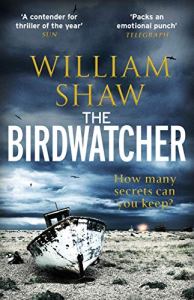
My Friday Post: The Birdwatcher by William Shaw

Every Friday Book Beginnings on Friday is hosted by Gillion at Rose City Reader where you can share the first sentence (or so) of the book you are reading, along with your initial thoughts about the sentence, impressions of the book, or anything else the opener inspires.

I bought The Birdwatcher by William Shaw this week. It’s a book I’ve been looking out for, ever since I read about Shaw’s books on Café Society’s blog. So when I saw it was a limited time deal on Kindle at 99p I knew I had to buy it. It looks really good and it’s gone to the top of my books to read next pile.

It begins:

There were two reasons why William South did not want to be on the murder team.

The first was it was October. The migrating birds had begun arriving on the coast.

The second was that, although nobody knew, he was a murderer himself.

Also every Friday there is The Friday 56, hosted by Freda at Freda’s Voice.

30879-friday2b56

These are the rules:

  1. Grab a book, any book.
  2. Turn to page 56, or 56% on your eReader. If you have to improvise, that is okay.
  3. Find any sentence (or a few, just don’t spoil it) that grabs you.
  4. Post it.
  5. Add the URL to your post in the link on Freda’s most recent Friday 56 post.

Page 56:

Ferguson said, ‘See, I don’t believe a boy like you would have just stayed in the room with his dad, like that. Not for almost an hour.

The book blurb:

Sergeant William South has always avoided investigating murder. A passionate birdwatcher and quiet man, he has few relationships and prefers it that way.

But when his only friend is found brutally beaten, South’s detachment is tested. Not only is he bereft – it seems that there’s a connection between the suspect and himself.

For South has a secret. He knows the kind of rage that killed his friend. He knows the kind of man who could do it. He knows, because Sergeant William South himself is a murderer.

Moving from the storm-lashed, bird-wheeling skies of the Kent Coast to the wordless war of the Troubles, The Birdwatcher is a crime novel of suspense, intelligence and powerful humanity about fathers and sons, grief and guilt and facing the darkness within.

~~~

I like those opening lines – letting the reader know straight away that South is a murderer and also a policeman. And he is the birdwatcher of the title. Immediately I wanted to know more.

Have read this book? Does it appeal to you?

Moonflower Murders by Anthony Horowitz

A labyrinth of clues. A mystery novel hiding a deadly secret. A killer with a fiendish plot: a brilliantly intricate and original thriller from the bestselling author of Magpie Murders

Random House Cornerstone| 20 August 2020| 400 pages| Review copy| 5*

Moonflower Murders is a follow up novel to Magpie Murders. It has the same format – that of a book within the book. Although I don’t think you have to read Magpie Murders first as this stands well on its own merits, I think it would help to know the background and some of the characters if you do.

Susan Ryeland, the main character, has retired as a publisher and is running a small hotel on a Greek island with her long-term boyfriend, Andreas. Their hotel is in debt, they’re in danger of going bankrupt and she is missing her literary life in London. So, when Lawrence and Pauline Trehearn, the owners of an hotel, Branlow Hall in Suffolk visit her and ask if she would investigate the disappearance of their daughter Cecily from their hotel for a fee, she decides to go – and at the same time visit London.

Before she had disappeared Cecily had read Alan Conway’s murder mystery, Atticus Pund Takes the Case, based on a murder that happened at Brownlow Hall eight years earlier. At that time, the evidence against Stefan, the general maintenance man was overwhelming and he was convicted. Cecily was convinced that there was something in the novel that proved Stefan wasn’t responsible for the crime. Unfortunately she hadn’t told anyone what had convinced her. The Trehearnes had read the book, but they couldn’t see any connection, although there are similarities – the characters are clearly based on the people at Brownlow Hall, with the same or similar names.

Susan had published Conway’s books, but thought that if he had indeed discovered that an innocent man was in prison he would have gone straight to the police and not turned it into a novel. But investigating Cecily’s disappearance, she re-reads his book and examines the evidence relating to the murder of eight years ago.

Moonflower Murders combines elements of vintage-style golden age crime novels with word-play, cryptic clues and anagrams. I thoroughly enjoyed trying to work it all out. it – Anthony Horowitz’s style of writing suits me – so easy to read, I whizzed through it, no doubt missing all the intricacies and clues along the way. But it is such an enjoyable way to read – no need to puzzle about the structure, or who is who as the characters all come across as individual people. Of course it’s not a straightforward mystery and along the way I was easily distracted by the red herrings. I thoroughly enjoyed trying to work it all out.

Many thanks to NetGalley and the publishers Cornerstone for an ARC.