Top Ten Tuesday: Books Set in the 1950s

Top Ten Tuesday is a weekly meme created by The Broke and the Bookish and now hosted by Jana at That Artsy Reader Girl. For the rules see her blog

Today the topic is a Freebie and I’ve chosen books Books Set in the 1950s.

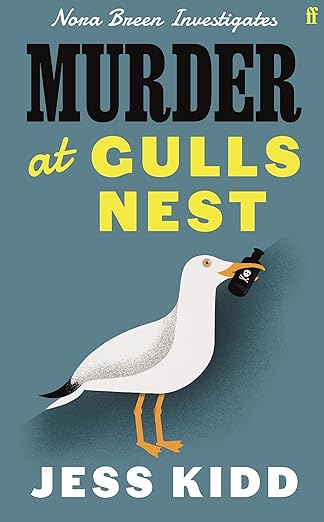
Murder at Gulls Nest by Jess Kidd. The first in a sparkling new 1950s seaside mystery series, featuring sharp-eyed former nun Nora Breen.

After thirty years in a convent, Nora Breen has thrown off her habit and set her sights on the seaside town of Gore-on-Sea. Why there? Why now? Instinct tells her it’s better not to reveal her reasons straight away. She takes a room at Gulls Nest guest house and settles in to watch and listen.

I enjoyed this. It’s quirky with some odd characters. At times it feels like a cosy crime mystery, but it’s also rather dark and foreboding, whereas at other times there’s some humour and also a hint of a romance. The setting is good in a fictional 1950s British seaside town.

 Fludd by Hilary Mantel. I enjoyed this immensely – partly about religion and superstition, but also a fantasy, a fairy tale, told with wit and humour and with brilliant characterisation. It’s one of her earlier novels, set in Fetherhoughton, a drab, dreary town somewhere in a magical, half-real 1950s north England, a preserve of ignorance and superstition. The story centres on Fludd, a young priest who comes to the Church of St Thomas Aquinas to help Father Angwin, a cynical priest who has lost his faith. The Bishop, a modern man, is concerned about Father Angwin and wants to bring him and the Catholic community up to date – so the statues in the church have to go. This has a most disturbing effect on all concerned – not just the church and Father Angwin, but also the the nuns in the convent, and the school, both under the stern eye of Mother Perpetua.

An Air That Kills by Andrew Taylor, the first book in his Lydmouth crime series. The setting is Lydmouth, a small market town on the Welsh/English border in the early 1950s, just after the end of the Second World War. It begins as journalist, Jill Francis arrives to stay with her friends, Philip and Charlotte in Lydmouth, to recover from a bad experience.  Also new to the town is Inspector Richard Thornhill, who is finding it difficult to adjust to working in the local police force. Workmen digging out a drain discover a wooden box containing baby’s bones, an old brooch and some scraps of yellowed newspaper. When Major Harcutt, the local historian is consulted he found that there could be a connection to an old murder trial. 

Vengeance by Benjamin Black (a pseudonym used by John Banville), number five in Black’s Quirke Mysteries series set in Ireland in the 1950s. It begins with a suicide, that of Victor Delahaye, a business man who takes his boat out to sea and shoots himself. He had taken his partner’s son, Davy Clancy out to sea with him. The Delahayes and Clancys are interviewed – Mona Delahaye, the dead man’s young and very beautiful wife; James and Jonas Delahaye, his identical twin sons; Marguerite his sister; Jack Clancy, his ambitious, womanizing partner and Sylvia, Jack’s long-suffering wife. Then there is a second death. Why did Victor kill himself and who is the murderer, wreaking vengeance on the families?

The setting is excellent, both in location and time, with the characters wreathed in cigarette smoke, and having to find public telephones for example. 

 Death Has Deep Roots: a Second World War Mystery by Michael Gilbert. Set in 1950 it’s a mix of courtroom drama, spy novel and an adventure thriller. Victoria Lamartine, a hotel worker, and an ex-French Resistance fighter is on trial for the murder of Major Eric Thoseby, her supposed lover, and alleged father of her dead child. She is the obvious suspect – she was found standing over Thoseby’s dead body in his room at the Family Hotel in Soho, a room that was only accessed by one staircase – making this a variation on a locked room murder mystery. It was written not long after the end of the Second World War and it conveys a vivid impression of what life was like in both France and England, with memories of the war still fresh on people’s minds.

An Awfully Big Adventure, a semi-autobiographical novel set in 1950, based on Beryl Bainbridge’s own experience as an assistant stage manager in a Liverpool. A Liverpool repertory theatre company are rehearsing its Christmas production of Peter Pan. The story centres around Stella, the assistant stage manager. On the face of it this is a straight forward story of the theatre company but underneath it’s packed with emotion, pathos and drama. And it’s firmly grounded in a grim post-war 1950s England, food rationing still in operation and bombed buildings still in ruins overgrown with weeds.

Hickory Dickory Dock by Agatha Christie, a Poirot mystery, first published in 1955. It’s set in a crowded London house, owned by Mrs Nicolstis, a Greek and full of a mixed group of young students from a variety of backgrounds and cultures – from America, West Africa and India as well as an assortment from the British Isles.Items have gone missing and then one of the students commits suicide – or is it murder? And more deaths follow.

Agatha Christie reveals contemporary attitudes (1950s) to race and politics, as the characters’ prejudices come out in their discussions. There are some interesting reflections on crime and the psychology of behaviour. 

Fresh from the Country by Miss Read, set in the 1950s, this is a stand-alone novel telling the story of Anna Lacey, a newly qualified teacher, as she spends her first year teaching in Elm Hill, a new suburb in London. It highlights the differences between life in the country and the suburbs, which transported me back to the 1950s, when children were taught in large classes and the pace of life was slower than today. It was a bit disconcerting to read that Anna enjoyed smoking, but then the dangers of cigarettes were not emphasised in those days and many people did smoke.

The Blood Card by Elly Griffiths, the third book in the DI Stephens and Max Mephisto series. Known as the ‘Magic Men’ they had been part of a top-secret espionage unit during the War. This book captures the atmosphere of 1953 – a time of great change and optimism. Britain is looking forward with eager anticipation to the new Queen’s coronation. The newspapers and newsreels are full of it and more than half the homes in the country have bought a television in order to watch the coronation live- it was the first British coronation to be broadcast on television, a momentous occasion. But there are fears that an anarchist group is plotting to disrupt the coronation.

I enjoyed the insight into the history of television as Max is sceptical about performing magic on TV thinking the ‘smug grey box’ will be the death of the days of music hall, that magic tricks needed to be performed on stage not in close up with a camera over his shoulder. But he is persuaded to take part in a new show after the coronation.

Maigret’s Doubts by Georges Simenon: a Novella

Rating: 5 out of 5.

Maigret’s Doubts by Georges Simenon, translated by Shaun Whiteside is the 52nd Maigret novel (first published as Les scrupules de Maigret in 1957), and published by Penguin in 2018, one of the books in the Maigret Capsule Collection, a selection of twelve of Georges Simenon’s iconic Inspector Maigret titles.

Description from Goodreads

Inspector Maigret finds himself caught in the middle of a husband and wife duo’s case of “he said/she said”—with murderous consequences

An unusually quiet day for Inspector Maigret at the Quai des Orfèvres is disturbed by a visit from mild-mannered toy salesman Xavier Manton. Maigret is taken aback by Manton’s revelation that he suspects his wife of plotting to poison him. And when he receives a visit from Madame Manton expressing her own grave concerns later that day, he finds himself deeply conflicted, unsure of whom to trust. Maigret heeds the advice of his seniors and begins investigating the couple—and with every turn, new complications arise. When the case comes to a boil and a body is discovered, everyone, including Maigret, is shocked.

Maigret’s Doubts is an engrossing mystery of marriage and deceit that forces the reader to question whether our brilliant inspector may be fallible after all.

My review:

I recently reviewed Simenon’s earlier book, The Yellow Dog, which baffled me because I had little idea about what Maigret was thinking or even doing. Maigret’s Doubts is just the opposite as it is very clear what he is thinking as Simenon describes his thoughts in detail.

It begins on the 10th January, after the holidays finding detectives at the Quai des Orfèvre, strangely quiet with little to do except dull administrative tasks, a period of dead calm. Maigret wasn’t in good form, feeling lethargic and wondering if he wasn’t coming down with the flu. And he’s worrying about his wife’s health after their family doctor has told him he’s prescribed her some pills at the same time telling him there was absolutely nothing to worry about. It makes him melancholy as he realises they are both getting to the age of minor ailments that need attention.

A visit from Xavier Marton, the head of the toy department at the Grands Magasins du Louvre, a model train specialist, breaks into Maigret’s melancholy, telling him that he thinks his wife wants to poison him. Later that same day his wife, Gisèle also visits Maigret and tells him that her husband is having delusions, leaving him unsure who is telling him the truth. The next day, Manon visits Maigret again and warns him that if his wife poisons him, he’ll shoot her before he dies. But it soon becomes clear that Manon and Jenny, his wife’s sister are in love, although not actually having an affair and that Gisèle, on the other hand, is having an affair with her employer, Monsieur Harris.

Maigret is puzzled by what Manon and his wife have told him and asks Dr Pardon his family doctor for his opinion and consults books about psychiatry, making this book more of a psychological study than a police investigation. Maigret isn’t faced with a crime that has been committed but one that could be committed. But it was just as possible that it wouldn’t be committed at all.

What he had to do this time was not to reconstruct the actions and gestures of a human being, but to predict his behaviour, which was difficult in a different way.(page 114)

But Maigret doesn’t find the books of much help:

In the end he got up, as a man who has had enough threw the book on the table and, opening the sideboard in the dining room picked up the bottle of plum brandy and filled one of the little gold-rimmed glasses.

It was like a protestation of common sense against all that scientific gobbledygook, a way of getting back to earth.

I really enjoyed this book, although not a lot actually happens. Maigret fears that there is going to be a murder but who will be the victim and how can he make an arrest when no crime has been committed? The narrative moves at a slow pace as the tension steadily rises culminating in a murder as the book moves to its end.

Novellas in November is hosted by Cathy at 746 Books and Bookish Beck.

The Yellow Dog by Georges Simenon

The Maigret books are also a good choice for Novellas in November, they’re all under 200 pages. I’ve been a Maigret fan for a long time, ever since I was in my teens, watching the TV series with Rupert Davies in the title role. And I’ve been reading the Maigret series as I’ve come across the books in libraries, bookshops, and more recently as e-books, so not in the order they were originally published.

Penguin| 2014| 164 pages| My own copy| 3*

This is a short review because, once more I’m behind with writing reviews. The Yellow Dog is the 5th book in the new Penguin Maigret series, translated by Linda Asher. It was first published in 1931 and also published in a previous translation as A Face for a Clue. It’s a tale of small town suspicion and revenge.

In the windswept seaside town of Concarneau, a local wine merchant is shot. In fact, someone is out to kill all the influential men and the entire town is soon sent into a state of panic. For Maigret, the answers lie with the pale, downtrodden waitress Emma, and a strange yellow dog lurking in the shadows…

It’s only 134 pages but with a slow start it did seem longer than that. It begins with the shooting of Monsieur Mostaguen, a local wine merchant, followed by the appearance of the yellow dog, a big, snarling yellow animal, and then an attempt at poisoning for Maigret to investigate. I wondered what the significance of the yellow dog was and who it belonged to; no one seems to know. The locals had never seen it before and they all viewed it with fear and suspicion. I’ve read some of the earlier Maigret and have noted before that I’ve been confused and baffled, with little idea of what was going on and it was just the same with this book. Maigret doesn’t seem to be very concerned about the man who was shot and seriously injured, nor about the attempted poisoning until there’s a murder and another man disappears. He walks around the town, observing but not actively investigating.

Simenon is good at conveying atmosphere and skilled at setting the scene and drawing convincing characters in a few paragraphs.  As the book begins there’s a south-westerly gale slamming the boats together in the harbour in Concarneau and the wind surges through the streets. Contrast the weather at the beginning of the book with the change by the time Maigret is getting close to clearing up the mystery – the weather turned fine, with a vibrant blue sky, the sea sparkled, and ‘the Old Town’s walls, so gloomy in the rain, turn a joyful, dazzling white.

I don’t think this is one of the best Maigret book, but it is puzzling with Maigret keeping his thoughts to himself until the end of the book, when like Agatha Christie’s Hercule Poirot, he explains it all.

The Black Loch by Peter May: Book Beginnings on Friday & The Friday 56

Every Friday Book Beginnings on Friday is hosted by Gillion at Rose City Reader where you can share the first sentence (or so) of the book you are reading. You can also share from a book you want to highlight just because it caught your fancy.

The book I’m currently reading is The Black Loch by Peter May, the fourth book in May’s Lewis Trilogy. I’ve read and loved the first three books. So I was keen to read it, and so far (I’ve read 45%) it’s living up to my expectations.

The book begins with a Prologue:

The sun set some time ago. Although it is not yet dark enough, somehow for murder.

Also every Friday there is The Friday 56, hosted by Freda at Freda’s Voice, but she is taking a break and Anne at My Head is Full of Books has taken on hosting duties in her absence. You grab a book and turn to page 56 (or 56% of an eBook), find one or more interesting sentences (no spoilers), and post them.

Page 56:

‘Did I ever tell you about the whaling boy?’

He never had.

‘You know what a whale is, Finn?’

‘Of course!’

‘Well there was a time when we killed them all over the planet. Hundreds and thousands of them.’

Description from Amazon:

A MURDER

The body of eighteen-year-old TV personality Caitlin is found abandoned on a remote beach at the head of An Loch Dubh – the Black Loch – on the west coast of the Isle of Lewis. A swimmer and canoeist, it is inconceivable that she could have drowned.

A SECRET

Fin Macleod left the island ten years earlier to escape its memories. When he learns that his married son Fionnlagh had been having a clandestine affair with the dead girl and is suspected of her murder, he and Marsaili return to try and clear his name.

A RECKONING

But nothing is as it seems, and the truth of the murder lies in a past that Fin would rather forget, and a tragedy at the cages of a salmon farm on East Loch Roag, where the tense climax of the story finds its resolution.

If you have read this book, what did you think?

Spell the Month in Books – October 2025

Spell the Month in Books is a linkup hosted by Jana on Reviews From the Stacks on the first Saturday of each month. The goal is to spell the current month with the first letter of book titles, excluding articles such as ‘the’ and ‘a’ as needed. That’s all there is to it! Some months there are optional theme challenges, such as “books with an orange cover” or books of a particular genre, but for the most part, any book you want to use is fair game!

This month’s theme is Trick or Treat: books that you feel strongly about, whether positively or negatively.

I don’t like tricks so my books are all books I’ve enjoyed – real treats!

O is for On Beulah Height by Reginald Hill

Reginald Hill’s 17th Dalziel and Pascoe novel, set in a Yorkshire village, Dendale. Three little girls had gone missing from the village one summer. Their bodies were never found, and the best suspect, a strange lad named Benny Lightfoot, was held for a time, then released. Fifteen years later another little girl, Lorraine, aged seven went out for a walk one morning with her dog before her parents got up and didn’t return home, reviving memories of the missing children from fifteen years earlier. It was a case that has haunted Dalziel.

This book is tightly plotted with many twists that made me change my mind so many times I gave up trying to work out who the murderer was and just read for the pleasure of reading. Hill’s descriptive writing is rich and full of imagery. The main characters are fully rounded people and the supporting cast are believable personalities, often described with wry humour.

C is for The Christmas Book Hunt by Jenny Colgan.

Mirren is looking for a copy of A Child’s Garden of Verses by Robert Louis Stevenson, a particular one that had belonged to her Great Aunt Violet. It was a special edition, with hand-drawn plates by Aubrey Beardsley and now Great Aunt Violet, who is in hospital seriously ill would love to see the book for Christmas. I loved that book as a child, so this is what made the story irresistible for me. She went to the book town Hay-on-Wye, bookshops in Edinburgh and a secondhand bookshop in Northumberland that sounds very like Barter Books in Alnwick, my favourite bookshop. She bumps into mysterious, charming Theo, who, unbeknownst to her, is searching for the same book for reasons of his own…


T is for Tamburlaine Must Die by Louise Welsh

It was a real treat to read Tamburlaine Must Die, a short book of only 140 pages, that I read in a day. Weaving together fact and fiction and set in 1593 this is a tense, dramatic story of the last days of Christopher Marlowe, playwright, poet and spy. Accused of heresy and atheism, his death is a mystery, although conjecture and rumours abound. It has an immediacy, that drew me into the late Elizabethan world.

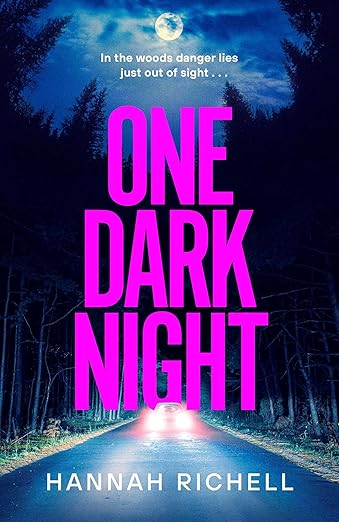
O is for One Dark Night by Hannah Richell

I loved the spooky, tense atmosphere and as soon as I started reading it knew I was going to enjoy this book. The settings are vividly described, the characters come across as real people, and the plot is amazing, multi- layered, with plenty of suspects for the murder and numerous twists and turns to throw me off the scent. For quite a while you don’t even know the name of the victim, who was found in the woods, called ‘Sally in the Wood’. It’s a police procedural centred on Ellie, a pupil at the private school, where her mother Rachel works as the school counsellor and her father, Ben, a detective sergeant who is on the investigation team

B is for The Bean Trees by Barbara Kingsolver

I loved this book. Barbara Kingsolver writes in such a way that I can easily visualise the scenes, beginning with the opening paragraph in which she describes a tractor tire blowing up, flinging a man up in the air and throwing him over the top of a Standard Oil sign. Taylor (originally called Marietta/Missy) grew up in rural Kentucky. She left home when she had saved enough to buy a car, an old VW. She changed her name to Taylor after the first place where she ran out of petrol, which just happened to be Taylorville. She drove on until the car broke down in the middle of nowhere, on land owned by the Cherokee tribe. And it was there at a garage that an Indian woman abandoned a baby girl in Taylor’s car – she called the baby, Turtle.

E is for Every Man For Himself by Beryl Bainbridge.

This the story of Morgan’s voyage on the Titanic, divided into four days as he tells it. It’s mainly about the young rich people as they drink and party their way across the Atlantic. Morgan is part of the crowd but he is not rich, and although he has connections, he’s a young American who has to earn his living. Day four is the day the Titanic sank. I could easily imagine what it was like to be a passenger, people rushing about the boat, trying to get on the lifeboats and being separated from friends and family. And the final scenes bring home the reality that it really was a case of every man for himself with the callous attitude towards the steerage passengers, the lack of lifeboats and the disregard of the ice warnings. And so the boat described as unsinkable, sank.

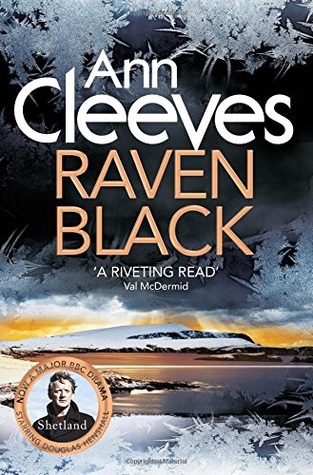
R is for Raven Black by Ann Cleeves, the first in her Shetland series, crime novels set in the Shetland Islands, to the north of mainland Scotland. This is a murder mystery investigated by Inspector Jimmy Perez.

It begins on New Year’s Eve as Magnus Tait is seeing the new year in on his own, until two teenage girls knock on his door to wish him a Happy New Year. A few days later one of the girls is found dead in the snow not far from Magnus’s house, strangled with her own scarf.

The book has a strong sense of location and a terrific atmosphere – the landscape, the sea, the weather, the circling ravens and the spectacle of Up Helly Aa (the Fire Festival), all anchor the story and bring the book to life.

Upcoming Themes

November 1: Nostalgia

December 6: Giftable – Books you would give or would like to receive as a gift

January 3, 2026: New Books – Ones you have received recently or are looking forward to reading or seeing published this year

Novellas in November 2025 – Books on Kindle

It’s almost time for Novellas in November, hosted by Cathy of 746 Books and Rebecca of Bookish Beck.

I’ve already listed some novellas from my physical TBR shelves and today here are some from my TBR Kindle shelves:

  1. Appointment in Arezzo: A friendship with Muriel Spark by Alan Taylor – 169 pages
  2. The Lost World by Arthur Conan Doyle – 165 pages
  3. Silent Kill: Maeve Kerrigan Book 8.6 by Jane Casey – 100 pages
  4. Murder on Thames, a Cherringham: Mystery Shorts Book by Matthew Costello, Neil Richards – 126 pages
  5. Five Six Pick Up Sticks by EJ Lamprey – 167 pages
  6. Down and Out in Paris and London by George Orwell – 196 pages
  7. Daisy Miller by Henry James – 69 pages
  8. The Aspern Papers by Henry James – 107 pages
  9. The Third Man and the Fallen Idol by Graham Green – 160 pages
  10. Travels with a Donkey in the Cevennes: A Journey of Solitude and Reflection by Robert Louis Stevenson – 124 pages

Where would you start?