Every Friday Book Beginnings on Friday is hosted by Gillion at Rose City Readerwhere you can share the first sentence (or so) of the book you are reading. You can also share from a book you want to highlight just because it caught your fancy.
I’m featuring Dead Man’s Time by Peter James, his 9th Roy Grace crime fiction thriller. It’s one of my TBRs. I started reading it a few days ago.
Brooklyn, February 1922
The boy’s father kissed him goodnight for the last time – although neither of them knew that.
Also every Friday there is The Friday 56, hosted by Freda at Freda’s Voice, but she is taking a break and Anne at My Head is Full of Books has taken on hosting duties in her absence. You grab a book and turn to page 56 (or 56% of an eBook), find one or more interesting sentences (no spoilers), and post them.
‘It’s Nurse Wilson, Mr Daly. Your sister is weakening. I think you should come back quickly.’
Description from Amazon UK
Detective Superintendent Roy Grace is haunted by the past in his latest case, and his private life, in Dead Man’s Time, by award winning crime writer Peter James.
A vicious robbery at a secluded Brighton mansion leaves its elderly occupant fighting for her life. Millions of pounds’ worth of valuables have been stolen.
Within days, Grace is racing against the clock, following a murderous trail that leads him from the shady antiques world of England, across Europe and all the way back to the New York waterfront’s gang struggles of 1922, chasing a killer driven by the force of one man’s greed and another man’s fury.
Although the Roy Grace novels can be read in any order, Dead Man’s Time is the ninth gripping title in the bestselling series. Enjoy more of the Brighton detective’s investigations with Want You Dead and You Are Dead.
Ruth Rendell, Lady Rendell of Babergh, also known as Barbara Vine, who died aged 85 in 2015, was a literary phenomenon. From 1964, when Inspector Reginald Wexford first appeared in From Doon With Death, she wrote more than sixty novels, including police procedurals, standalone and psychological mysteries plus numerous books of short stories. Many of them were adapted for television or made into feature films.
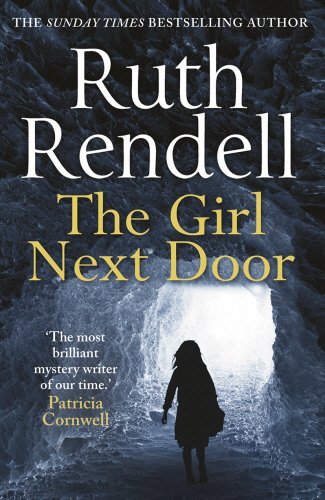
The Girl Next Door by Ruth Rendell, is one of my TBRs, a book that’s been sitting on my bookshelves since 2016. It’s one of her later novels, a stand-alone book, first published in 2014, a year before her death.
Description from Amazon UK
Beneath the green meadows of Loughton, Essex, a dark network of tunnels has been dug. A group of children discover them. They play there. It becomes their place.
Seventy years on, the world has changed. Developers have altered the rural landscape. Friends from a half-remembered world have married, died, grown sick, moved – or disappeared.
Work on a new house called Warlock uncovers a long buried grisly secret: the bones of two severed hands are discovered in a box, and an investigation into a long-buried crime of passion begins.
The friends, who played together as children, begin to question their past.And a weary detective, more concerned with current crimes, must investigate a case of murder.
The book begins just before the second world war when Woody killed his wife and her lover when he discovered they were having an affair. He then cut off their hands, a right hand and a left that they had held together, and put them in a biscuit tin, which he buried in a tunnel, where the local children played.
Time moves on to 1944. Ruth Rendell describes a garden where the neighbourhood children play:
The garden was not beautiful. It had no flowering trees, no roses, no perfumed herbs. Tunnels they called it at first. The word ‘qanat’, an impossible word, was found by Daphne Jones and adopted by the rest of them. It meant, apparently, a subterranean passage for carrying water, in some oriental language. They liked it because it started with a q without a u. Their schoolteachers had taught them that no word could ever start with q unless followed by u, so Daphne’s idea appealed to them and the tunnels became qanats. (pages 13 – 14)
Time moves on again and we meet up with the children as adults in their seventies, when the skeletal hands have been discovered. The qanats were actually the foundations of a house called Warlock in Loughton, twelve miles north of London and most of the children, are now still living in the area. When they read the newspaper report about the discovery of the hands they get together and reminisce about their childhood and playing in the tunnels, wondering whose hands had been buried.
This is when the book expands into a study of ageing as well as murder mystery:
As you get older, you forget names: those you studied with, lived next door to, the people who came to your wedding, your doctor, your accountant and those who cleaned your house. Of these people’s names you forget perhaps half, perhaps three quarters. Then whose names do you never forget, because they are incised on the rock of your memory? Your lovers (unless you have been promiscuous and there are too many) and the children you went to your first school with. You remember their names unless senility steps in to scrape them off the rock face. (page 17)
It’s quite a long book, nearly 350 pages in a small font in my copy and Ruth Rendell takes time to describe these old friends’ lives and reveals their relationships, their loves and losses and those of their own children and grandchildren as well as their regrets, and bereavements. I felt I really got to know them as real people. Long buried secrets rise to the surface, and old passions are reignited.
From the beginning we know the identity of the murderer, Woody and that of his wife Anita, but not that of the man, whose hand had held Anita’s. At times I thought I’d worked out who it was but when his identity was revealed it wasn’t who I thought it was – it was more complicated than I’d realised. And who is ‘the girl next door‘? I did work that out correctly. It is in some places a bleak novel, and all the characters’ lives have changed by the end of the book. It’s a book that really gripped me and drew me on to find out more. And I really enjoyed how it shows the changes that have taken place in society from the 1930s onward.
I’ve read several of Ruth Rendell’s standalone books and I think this is one of her best. I’ve also read some of her Inspector Wexford books and those she wrote under the name of Barbara Vine.
It’s time for the 1970 Club, the bi-annual event where Simon and Karen ask readers across the internet to join together to build up a picture of a particular year in books. Any book published in 1970 counts – in whatever format, language, place.
I’ve previously read and reviewed read three books published in 1970:
Passenger to Frankfurt by Agatha Christie – not representative of Agatha Christie’s books and not one I’d recommend to anyone who hasn’t read any of her books. Although there is a degree of pessimism and cynicism running through it there is also a strain of humour, a sense that you shouldn’t take it all too seriously and I did enjoy it.
Sir Stafford Nye, a diplomat is on his way back to London, sitting in an airport lounge in Frankfurt. He was thinking that “life and journeys by air were really excessively boring” when he met a dark haired woman whose life was in danger and his own life changed for ever. The woman wanted his passport to get her safely to London, disguised by his dark purply-blue cloak with its scarlet lining and hood. He agreed. So far, so good. From then on Sir Stafford is dragged along, somewhat unwillingly at first into a world of espionage, and world-wide organisations dedicated to anarchy and violence.
A Clubbable Woman by Reginald Hill, his first published book and the first book featuring Dalziel and Pascoe. My first encounters with Dalziel and Pascoe (played by Warren Clarke and Colin Buchanan respectively) were the TV adaptations that began in 1996 and I was pleased to find out that Warren Clarke’s portrayal of him was a good match for Reginald Hill’s description.
Connon, known as Connie, was set to play rugby for England before an ankle injury ended his career. He is no longer Wetherton Rugby Football Club’s star player but he still plays occasionally. After a match in which he returns home dazed and confused after a blow on the head he finds his wife, Mary watching television, leaving him to get his own meal. Feeling sick he goes upstairs, then passes out. Later he realises that she is still downstairs, apparently still watching the television – then he discovers that she is dead, with a hole in the middle of her forehead. Dalziel, who is a member of the rugby club, and Pascoe investigate the murder.
Wycliffe and How to Kill a Cat by W J Burley is the second book in the Wycliffe series. It’s set in Cornwall in the late 1960s, specifically at the time of the astronauts’ first moon landing in July 1969. Superintendent Wycliffe, despite being on holiday, can’t help getting involved when a young woman is found murdered in her seedy hotel bedroom. She’d been strangled and her face had been savagely smashed in. A thousand pounds was still in a drawer, hidden beneath her clothes, so the motive wasn’t theft. I like Wycliffe, a quiet man who works on instinct and I’ve read a few more of the books in the series.
I have two other books published in 1970 to read in my TBRs:
I’m the King of the Castle by Susan Hill, which I am currently reading and The Sovereignty of Good by Iris Murdoch.
It’s time again for Six Degrees of Separation, a monthly link-up hosted by Kate atBooks Are My Favourite and Best. Each month a book is chosen as a starting point and linked to six other books to form a chain. A book doesn’t need to be connected to all the other books on the list, only to the one next to it in the chain.
This month starts with ColmTóibín’s Long Island, the sequel to Brooklyn. I haven’t read this book, so this is the description on Amazon UK:
A man with an Irish accent knocks on Eilis Fiorello’s door on Long Island and in that moment everything changes. Eilis and Tony have built a secure, happy life here since leaving Brooklyn – perhaps a little stifled by the in-laws so close, but twenty years married and with two children looking towards a good future.
And yet this stranger will reveal something that will make Eilis question the life she has created. For the first time in years she suddenly feels very far from home and the revelation will see her turn towards Ireland once again. Back to her mother. Back to the town and the people she had chosen to leave behind. Did she make the wrong choice marrying Tony all those years ago? Is it too late now to take a different path?
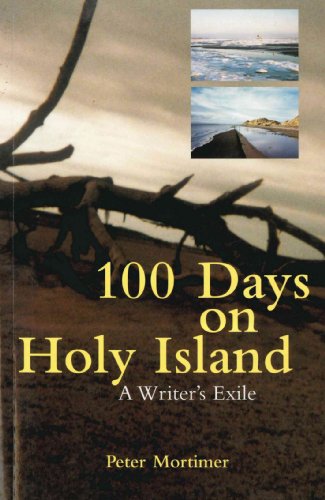
My first link is from the word ‘Island‘ in 100 Days on Holy Island by Peter Mortimer. The island is also known as Lindisfarne. This sense of being an outsider pervades the book. He always felt an ‘outsider’, not accepted by the locals. He wasn’t there as a tourist, nor had he gone to settle there, but he went with the intention of seeing how he coped with living there for one hundred days and writing about it.
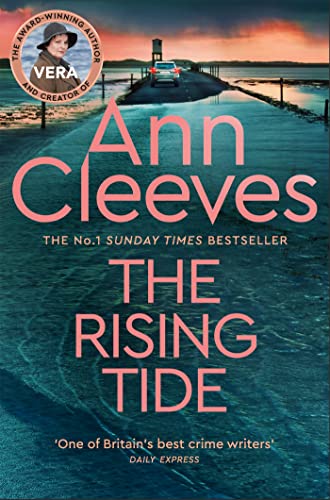
My second link is The Rising Tide by Ann Cleeves, the 10th Vera Stanhope mystery novel. It’s set on the Holy Island of Lindisfarne a tidal island just off the coast of Northumberland, only accessible across a causeway when the tide is out. DCI Vera Stanhope and her team investigate the death of Rick Kelsall who was discovered hanged from the rafters of his small bedroom on Holy Island. He is one of a group of friends who have met for a reunion each year on the island for the past fifty years
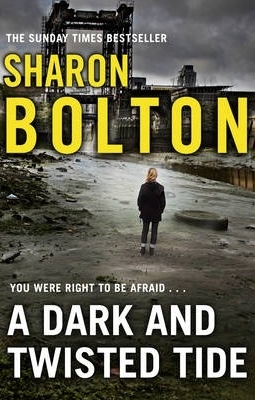
My third link is another book with the word ‘tide‘ in the title – A Dark and Twisted Tide by Sharon Bolton. This is such a terrifying novel, particularly if like me, you have a fear of drowning. Police Constable Lacey Flint thinks she’s safe. Living on the river, she’s never been happier. Until she finds a body floating on the surface, as she wild-swims in the Thames.
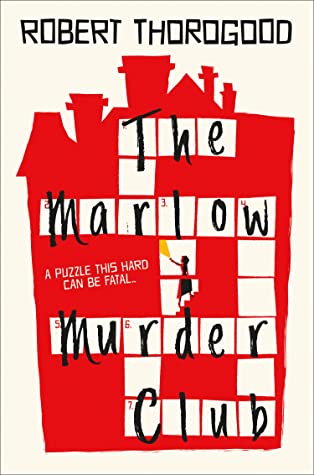
My fourth link is The Marlow Club Murderby Robert Thorogood a ‘cosy’ murder mystery. Seventy-seven year old Judith Potts is happy with her life, living in an Arts and Crafts mansion on the River Thames, although there are hints that there is something in her past she wants to forget. It’s the height of summer, in the grip of a heatwave, and Judith decides to take all her clothes off and go for swim in the Thames. She was enjoying herself when she hears a shout from her neighbour’s house on the opposite riverbank, followed by a gunshot. Later, when she goes to investigate, she finds him, dead in the river, with a bullet hole in the centre of his forehead. Judith is a crossword compiler, who writes cryptic clues.
So My fifth link is Puzzled: Secrets and Clues from a Life in Words by David Astle, a real life cryptic crossword compiler, a Melbourne-based writer of non-fiction, fiction and drama. He co-hosts Letters and Numbers (the Australian version of Countdown) as the dictionary expert, and his crosswords appear in Australian papers The Age and Sydney Morning Herald. Beginning with a Master Puzzle, he leads us through each of the clues, chapter by chapter, revealing the secrets of anagrams, double meanings, manipulations, spoonerisms and hybrid clues. More than a how-to manual and more than a memoir, Puzzled is a book for word junkies everywhere.
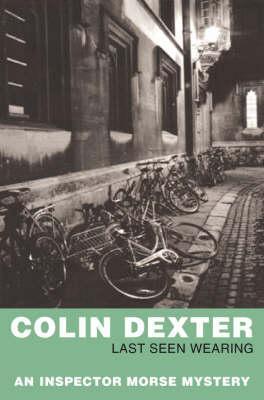
My final link is Last Seen Wearing by Colin Dexter the second book in the Inspector Morse books. Inspector Morse is perplexed when a letter of reassurance arrives from young Valerie Taylor, missing for more than two years and presumed dead, in a case that takes a bizarre turn when a mysterious body turns up. This book, like all of Dexter’s books, is a most complicated mystery, one of the ‘puzzle’ types. Dexter, himself, constructed crossword puzzles and made Morse a crossword aficionado. Morse is puzzled by this case, his brain seething in ceaseless turmoil, until he realised that if he shuffled the suspects and possibilities like the letters in an anagram the answer would come to him.
The books in my chain are a mix of crime fiction novels, and non fiction (Puzzled and 100 Days on Holy island). What is in your chain, I wonder?
Next month (November 2, 2024), we’ll start with Sally Rooney’s latest release, Intermezzo.
Top 5 Tuesday was created by Shanah at Bionic Book Worm, and it is now being hosted by Meeghan at Meeghan Reads. It’s time to talk about all the shiny new books coming out in October, November and December 2024. What are the books you can’t wait to hold in your hands the most? For details of all of the latest prompts for October to December, see Meeghan’s post here
Here are five books I’m looking forward to reading and they are all coming out this month! They are all by authors whose books I’ve loved.
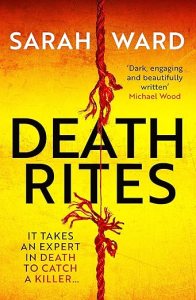
Death Rites by Sarah Ward – 3 October. This is the first in a new series, a dark and atmospheric crime thriller (Carla James Crime Thrillers Book 1).
Archaeology professor Carla James is reeling following the death of her husband. Desperate for a change of scene, she takes a job at an elite New England college. On her first day, Carla is asked to represent the department at a murder site. She initially believes there is nothing notable about the scattered debris that surrounds the body, but there is more to the case than meets the eye. This victim is just the latest in a series of unsolved deaths. Nothing obvious links them but Carla is convinced – there is a methodical killer operating in the shadows.
Can she uncover the truth before she becomes the next victim?
Midnight and Blue by Ian Rankin – 10 October. It’s the 25th Inspector Rebus book. I’ve read all the others, so I have to read this one!
John Rebus spent his life as a detective putting Edinburgh’s most deadly criminals behind bars. Now, he’s joined them…
As new allies and old enemies circle, and the days and nights bleed into each other, even the legendary detective struggles to keep his head. That is, until a murder at midnight in a locked cell presents a new mystery. They say old habits die hard… However, this is a case where the prisoners and the guards are all suspects, and everyone has something to hide. With no badge, no authority and no safety net, Rebus walks a tightrope – with his life on the line.
But how do you find a killer in a place full of them?
Olifantshoek, Southern Africa, 1688. When the violent Cape wind blows from the south-east, they say the voices of the unquiet dead can be heard whispering through the deserted valley. Suzanne Joubert, a Huguenot refugee from war-torn France, arrives in search of her cousin — the notorious she-captain and pirate commander Louise Reydon-Joubert — who landed at the Cape of Good Hope more than sixty years before, then disappeared without a trace . . .
Franschhoek, Southern Africa, 1862. Nearly one hundred and eighty years after Suzanne’s perilous journey, another intrepid and courageous woman of the Joubert family — Isabelle Lepard — has journeyed to the small frontier town once known as Oliftantshoek in search of her long-lost relations. Intent on putting the women of her family back into the history books, she quickly discovers that the crimes and tragedies still shadow the present. And now, Isabelle faces a race against time if she is to discover the truth, and escape with her life . . .
In the darkness of an old asylum, a young man unscrews the lid from a bottle of sleeping pills.
In the nearby village, two couples begin their day. Local doctor, Eric Parry, mulling secrets, sets out on his rounds, while his pregnant wife sleeps on in the warmth of their cottage. Across the field, in a farmhouse impossible to heat, funny, troubled Rita Simmons is also asleep, her head full of images of a past life her husband prefers to ignore. He’s been up for hours, tending to the needs of the small dairy farm he bought, a place where he hoped to create a new version of himself, a project that’s already faltering.
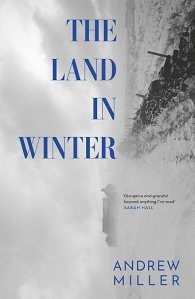
There is affection – if not always love – in both homes: these are marriages that still hold some promise. But when the ordinary cold of an English December gives way to violent blizzards – a true winter, the harshest in living memory – the two couples find their lives beginning to unravel.
Where do you hide when you can’t leave home? And where, in a frozen world, could you run to?
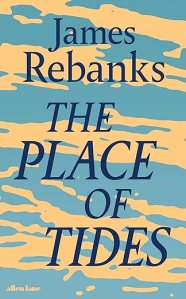
One afternoon many years ago, James Rebanks met an old woman on a remote Norwegian island. She lived and worked alone on a tiny rocky outcrop, caring for wild Eider ducks and gathering their down. Hers was a centuries-old trade that had once made men and women rich, but had long been in decline. Still, somehow, she seemed to be hanging on.
Back at home, Rebanks couldn’t stop thinking about the woman on the rocks. She was fierce and otherworldly – and yet strangely familiar. Years passed. Then, one day, he wrote her a letter, asking if he could return. Bring work clothes, she replied, and good boots, and come quickly: her health was failing. And so he travelled to the edge of the Arctic to witness her last season on the island.
This is the story of that season. It is the story of a unique and ancient landscape, and of the woman who brought it back to life. It traces the pattern of her work from the rough, isolated toil of bitter winter, to the elation of the endless summer light, when the birds leave behind their precious down for gathering, like feathered gold.
Slowly, Rebanks begins to understand that this woman and her world are not what he had previously thought. What began as a journey of escape becomes an extraordinary lesson in self-knowledge and forgiveness.
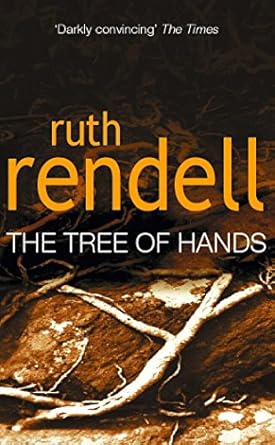
When Benet was about fourteen, she and her mother had been alone in a train carriage – and Mopsa had tried to stab her with a carving knife. It has been some time since Benet had seen her psychologically disturbed mother. So when Mopsa arrives at the airport looking drab and colourless in a dowdy grey suit, Benet tries not to hate her. But when the tragic death of a child begins a chain of deception, kidnap and murder in which three women are pushed to psychological extremes, family ties are strained to the absolute limit…
The Tree of Hands by Ruth Rendell is one of my TBRs. It’s a book I bought nine years ago from Barter Books in Alnwick. I don’t know why I haven’t read it before now as it is really good – one of the best books I’ve read this year, and one of her best standalone books. I read it this year as one of my 20 Books of Summer.
Why I enjoyed it so much is that it thoroughly gripped me and made me want to read on and on. It’s a psychological thriller, full of suspense, with several twists and turns that made me unsure how it would end. I was delighted by the final twist!
Benet’s son, James aged four dies from croup whilst in hospital soon after Mopsa, her mother with a history of mental illness, comes to visit. Meanwhile Carol, a young widow with three kids, two of them in care, is living nearby with Barry, her younger boyfriend. He adores her but she doesn’t want to marry him, content for him to do all the housework and look after Jason her two year old son when he is not being looked after by babysitters. The trouble starts when Mopsa kidnaps Jason and brings him back to Benet as a replacement for James.
The tree of hands in the title is taken from the collage on the hospital playroom wall:
On the white paper base sheet had been drawn a tree with a straight brown trunk and branches and twigs, and all over the tree, on the branches, nestling among the twigs, protruding like fungus from the trunk, were paper hands. All were exactly the same shape, presumably cut out by individual children using a template of an open hand with the fingers spread slightly apart. (page 46)
Benet found them horrible, as though the hands were begging for relief, or freedom, or oblivion. She thought there was a mad quality about them, ‘all the hands upraised, supplicating, praying.’ And she fell forward in a faint when the doctor told her James had died.
This is a dark and disturbing book about what happens to Jason, Benet, Carol and Barry. It’s well written and I could easily visualise the characters and the setting. It’s emotionally challenging and it both fascinated and horrified me in equal measure. It won the CWA Silver Dagger Award in 1984, an award given annually by the Crime Writers’ Association of the United Kingdom since 1960 for the best crime novel of the year.
NB I’m currently reading Rendell’s The Girl Next Door because I enjoyed The Tree of Hands so much.










 BooksPlease