Novellas in November: Ethan Frome

I intended to post this review of Ethan Frome at the weekend, but Storm Arwen stopped that. We were without power from last Friday afternoon until yesterday (Monday) afternoon! It was a cold, dark weekend. So this post about Edith Wharton’s short classic (120 pages) and the ‘buddy’ read is overdue!
I first read it seven years ago and although I remembered that it was a beautifully told tale I didn’t remember all the details. So I loved it all over again when I re-read it. What follows is a revised version of my original review.

It’s a tragedy, signalled right from the beginning of the book, when the unnamed narrator first saw Ethan Frome and was told he had been disfigured and crippled in a ‘smash up’, twenty four years earlier. Life had not been good to him:

Sickness and trouble: that’s what Ethan’s had his plate full up with ever since the very first helping.

Even though Ethan Frome is a tragedy there is light to contrast the darkness, and there is love and hope set against repression and misery. It’s a short book and deceptively simple to read, but there is so much packed into it. As well as striking and memorable characters the setting is  beautifully described – a ‘mute and melancholy landscape, an incarceration of frozen woe‘, in the isolated village of Starkfield (a fictional New England village).

Trapped in an unhappy marriage, Ethan’s life had changed when his father died and he had had to give up his studies to work on the farm. His wife Zeena had always been ill and needing help in the house, which was why her cousin Mattie came to live with them. At first it worked out quite well, but Ethan can’t shrug off a sense of dread, even though he could

… imagine that peace reigned in his house.

There was really even now, no tangible evidence to the contrary; but since the previous night a vague dread had hung on the sky-line. It was formed of Zeena’s obstinate silence, of Mattie’s sudden look of warning, of the memory of just such fleeting imperceptible signs as those which told him, on certain stainless mornings, that before night there would be rain.

His dread was so strong that, man-like, he sought to postpone certainty.

As I said I didn’t remember the details of the tragedy and had thought that the outcome was different, so I was surprised by it. I think that made it even more tragic than I’d thought. I’m glad that I re-read it.

Edith Wharton (1862 – 1937) was an American author. Ethan Frome was first published in 1911 and is in contrast to some of her other books about the New York society of the 1870s to 1920s. It’s a rural tragedy of inevitable suffering and sadness that reminded me of Thomas Hardy’s books.

Picnic at Hanging Rock by Joan Lindsay

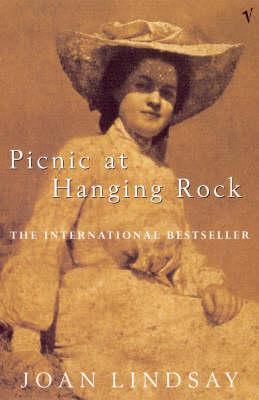
Picnic at Hanging Rock is one of the best books I’ve read this year. It was first published in 1967 and has since been republished a few times. The copy I read was published by Vintage in 1998. It’s a novella of 189 pages, with a list of characters at the beginning followed by a note, that indicates the truth of the story it tells is in question:

Whether Picnic at Hanging Rock is fact or fiction the readers must decide for themselves. As the fateful picnic took place in the year nineteen hundred, and all the characters who appear in this book are long since dead, it hardly seems important.

On St Valentine’s Day in 1900, a party of nineteen girls accompanied by two schoolmistresses sets off from the elite Appleyard College for Young Ladies, for a day’s outing at the spectacular volcanic mass called Hanging Rock. The picnic, which begins innocently and happily, ends in explicable terror, and some of the party never returned. What happened to them remains a mystery.

I enjoyed it immensely. I love the detailed descriptions of the Australian countryside and the picture it paints of society in 1900, with the snobbery and class divisions of the period. It’s a hot day, the picnic at the base of Hanging Rock shaded from the heat by two or three spreading gums was going well, and while some of the party dozed in the sunshine four of the girls walked to the Rock to get a closer view. As they walked up to the pinnacles and crags the plain below came into sight, but infinitely vague and distant and a rather curious sound was coming up from the plain, like the beating of far off drums. They neared a monolith rising up in front of them and:

Suddenly overcome by an overpowering lassitude, all four girls flung themselves down on the gently sloping rock in the shelter of the monolith, and there fell into a sleep so deep that a horned lizard emerged from a crack to lie without fear in the hollow of Miranda’s outflung arm.

Nobody had noticed that one of the teacher had also left the picnic. The day ended dramatically when one of the girls ran screaming down to the plain, back to the picnic grounds. She had left the other three girls ‘somewhere up there’, but she had no idea where that was. Despite lengthy searches only one girl was found and she couldn’t remember what had happened. It was all very strange. There’s an eerie feeling hanging over the whole event – during the picnic two of the adults found that their watches had stopped at twelve o’clock and they had no idea of the time. It was as though time had been suspended.

It’s a deceptively simple story, but with so many layers and undercurrents, making this mysteriously compelling reading. All the characters are believable people, each with their own backstories, and all their lives are affected and changed by the events of that one day. There’s a dreamlike quality to the mystery and a suspicion of the supernatural surrounding it. I loved the ambiguity of it all.

This is a Novella in November contribution and also qualifies as an entry for AusReading Month 2021.

Short Classics: The Old Man and the Sea by Ernest Hemingway

It’s the last week of Novellas in November hosted by Cathy and Rebecca, and the final theme is short classics. The buddy read this week is Ethan Frome by Edith Wharton and I’ll post my thoughts later this week. Today my short classic is The Old Man and the Sea by Ernest Hemingway, which won the 1953 Pulitzer Prize for Fiction.In 1954 Hemingway was awarded the Nobel Prize in Literature 1954 for his mastery of the art of narrative and for the influence that he had exerted on contemporary style.

Synopsis – This is the story of an old Cuban fisherman and his supreme ordeal: a relentless, agonizing battle with a giant marlin far out in the Gulf Stream. Using the simple, powerful language of a fable, Hemingway takes the timeless themes of courage in the face of defeat and personal triumph won from loss and transforms them into a magnificent twentieth-century classic.

My thoughts:

A simple story on the surface, told in a few pages, yet full of depth. Hemingway’s language is direct and deceptively simple too, but I was drawn into his descriptive writing, almost a stream of consciousness in placea. I felt the exhaustion of the old man as he struggled to catch the enormous marlin and then to return to the shore with his catch.

It’s one of those books that I find so difficult to write about, a well known story that has received much praise and also a lot of criticism as some people find it boring.. There’s this old man alone on the sea pondering about life and death, what he has achieved and also his failures. He is at the end of his strength and yet he endures. He has perseverance and determination and pride. Pride in his ability and in his way of life. The matter of sin occupies his mind and he thinks it was a sin to kill the fish, even though he did it to keep himself alive and feed many people. Then he thought he was born to be a fisherman:

You did not kill the fish only to keep alive and to sell for food, he thought. You killed him for pride and because you are a fisherman. You loved him when he was alive and you loved him after. If you love him, it is not a sin to kill him. Or is it more?

So, yes this is a simple tale and well told – it is more than just a fishing story and it gave me much to ponder.

Book Beginnings & The Friday 56: The Count of Monte Cristo by Alexandre Dumas

Every Friday Book Beginnings on Friday is hosted by Gillion at Rose City Reader where you can share the first sentence (or so) of the book you are reading. You can also share from a book you want to highlight just because it caught your fancy.

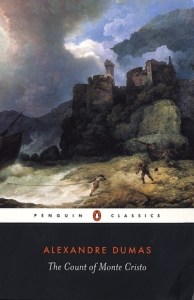
There are just two books left on my Classics Club book list and so, I’ve decided it’s time for me to read one of them, The Count of Monte Cristo by Alexandre Dumas. It is particularly daunting as it is so long, depending on which edition you read. The Penguin Classics edition is 1313 pages long.

The Book Begins:

On the 24th of February 1810, the look-out at Notre Dame de la Garde signalled the three-master, the Pharaon from Smyrna, Trieste, and Naples.

As usual, a pilot put off immediately, and rounding the Chateau d’If, got on board the vessel between Cape Morgion and Rion Island.

Also every Friday there is The Friday 56, hosted by Freda at Freda’s Voice. *Grab a book, any book. *Turn to Page 56 or 56% on your  ereader . If you have to improvise, that is okay. *Find a snippet, short and sweet, but no spoilers!

These are the rules:

  1. Grab a book, any book.
  2. Turn to page 56, or 56% on your eReader. If you have to improvise, that is okay.
  3. Find any sentence (or a few, just don’t spoil it) that grabs you.
  4. Post it.
  5. Add the URL to your post in the link on Freda’s most recent Friday 56 post.

Page 56:

‘I do not know what M. de Villefort promised you,’ said the gendarme, ‘but I know we are taking you to the Chateau d’If’.

By a rapid movement, which the gendarme’s practiced eye had perceived, Dantes sprang forward to precipitate himself into the sea; but four vigorous arms seized him as his feet quitted the bottom of the boat. He fell back cursing with rage.

Summary:

Thrown in prison for a crime he has not committed, Edmond Dantes is confined to the grim fortress of If. There he learns of a great hoard of treasure hidden on the Isle of Monte Cristo and he becomes determined not only to escape, but also to unearth the treasure and use it to plot the destruction of the three men responsible for his incarceration. Dumas’ epic tale of suffering and retribution, inspired by a real-life case of wrongful imprisonment, was a huge popular success when it was first serialized in the 1840s.

The Classics Club Spin Result

The spin number in The Classics Club Spin is number …

which for me is Picnic at Hanging Rock by Joan Lindsay. The rules of the Spin are that this is the book for me to read by 12 December, 2021.

I am delighted as this just the book I wanted to read next! It was one of my 20 books of Summer, but I didn’t get round to reading it then.

It was a cloudless summer day in the year nineteen hundred.

Everyone at Appleyard College for Young Ladies agreed it was just right for a picnic at Hanging Rock. After lunch, a group of three of the girls climbed into the blaze of the afternoon sun, pressing on through the scrub into the shadows of Hanging Rock. Further, higher, till at last they disappeared.

They never returned.

Whether Picnic at Hanging Rock is fact or fiction the reader must decide for themselves. (Goodreads)

Did you take part in the Classics Spin? What will you be reading?

Framley Parsonage by Anthony Trollope

Framley Parsonage is my current Classics Club spin book. Although I read my previous spin book, Little Dorrit , I didn’t write a post about it. So, I decided to make an early start with Framley Parsonage to make sure I finished it before the 22nd August deadline – which I did!

Synopsis – Goodreads

A brilliant depiction of social climbing and scandal, Framley Parsonage tells the story of Mark Robarts, a young clergyman with ambitions beyond his small country parish of Framley. In a naive attempt to mix in influential circles, he makes a financial deal with the disreputable local Member of Parliament, but is instead brought to the brink of shame and ruin.

One of Trollope’s most enduringly popular novels, Framley Parsonage is an evocative portrayal of country life in nineteenth-century England, told with great compassion, humour and an acute insight into human nature. 

It is the fourth book in Anthony Trollope’s series, the Chronicles of Barsetshire, first published in serial form in the Cornhill Magazine in 1860, then in book form in 1861.

This is a long book – 688 pages in the Penguin classics edition – and begins slowly. It took me a while to settle into reading it and to sort out who all the characters are and how they relate to each other, There are several plot lines – there’s the clergyman Mark Robarts, the Vicar of Framley, and his attempts to climb up the church hierarchy. Mark through naivety, is bamboozled by Nathaniel Sowerby, a member of parliament. He guarantees a three-month bill of Sowerby’s for £400 (making Mark liable if Sowerby does not pay a £400 debt within that time) and then a further bill for £500. This does not go well for Mark!

Another plot line is that relating to Mark’s sister, Lucy and her on/off romance with Lord Lufton, much to the disapproval of his mother, Lady Lufton. Mark and Lord Lufton were childhood friends and Lady Lufton is Mark’s patroness, which causes problems all round, especially as she would much prefer her son to marry Griselda Grantley, the daughter of Doctor Theophilus Grantly, the Archdeacon of Barchester. There’s also a subplot involving Mrs Grantly and Mrs Proudie, Bishop Proudie’s wife, and their rivalry over their daughters’ marriages. There’s another marriage in the offing, that of the outspoken heiress, Martha Dunstable, to Doctor Thorne, the eponymous hero of the preceding novel in the series, Doctor Thorne.

Framley Parsonage is full of lifelike and interesting characters engaged in their everyday life and inevitable class inequalities and power struggles, described with a fair amount of wit and humour. Interspersed between the plotlines Trollope introduces several sections of political commentary on the Parliamentary shenanigans of the day, which I have to admit were less interesting to me. But it seems that not much has changed in the way the political parties carried on both in parliament and in their relationship with the press. The next book in the series is The Small House at Arlington, which I expect I’ll eventually get round to reading.