26 Questions in 2026 from The Classics Club
When did you join The Classics Club? How many titles have you read for the club so far? Share a link to your latest classics club list. I joined the Classics Club in April 2013. I didn’t finish reading and reviewing the books until 2022! Here is my completed list. I am now on my second list , aiming to finish it in January 2027 and have read 30 of the books, making a total of 80 books. The books on both lists are all either physical books on my bookshelves or e-books on my Kindle.
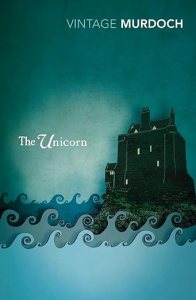
What classic are you planning to read next? Why? Is there a book first published in 1926 that you plan to read this year? It will probably be The Unicorn by Iris Murdoch. It’s been years since I read any of her books and I have a paperback copy lined up to start soon. I haven’t got a book first published in 1926 in mind to read this year.
Best book you’ve read so far with the club? Why? This is a hard question, too hard, there are so many!
Classic author who has the most works on your club list? Or, classic author you’ve read the most works by? Charles Dickens – 10 books
If you could explore one author’s literary career from first publication to last — meaning you have never read this author and want to explore him or her by reading what s/he wrote in order of publication — who would you explore? Obviously this should be an author you haven’t yet read, since you can’t do this experiment on an author you’re already familiar with. 🙂 Or, which author’s work you are familiar with might it have been fun to approach this way? Evelyn Waugh. I read Officers and Gentlemen years ago, the second book in his Sword of Honour trilogy, so I’d like to read all three, but I’m not sure I want to read all his books in the order they were published.
First classic you ever read? I was about 12 when I first read Pride and Prejudice.
Favorite children’s classic? I can’t decide between What Katy Did by Susan Coolidge and Heidi by Johanna Spyri.
Which classic is your most memorable classic to date? Why? These are such hard questions. I think it could be The Grapes of Wrath by John Steinbeck because it totally surprised me by how much I loved it. Cannery Row was the first of Steinbeck’s novels that I read and I thought then that Steinbeck’s style is perfect for me. With both books I felt that I was there in the thick of everything he described
Least favorite classic? Why? Washington Square by Henry James because it just didn’t catch my imagination and I found it tedious.
Favourite movie or TV adaption of a classic? I usually prefer a book to a movie or TV adaptation. But I did enjoy the 2005 BBC adaptation of Charles Dickens’s Bleak House with Gillian Anderson as Lady Dedlock and Charles Dance as lawyer Mr Tulkinghorn, which prompted me to read the book. I loved the book.
Favorite biography about a classic author you’ve read, or the biography on a classic author you most want to read, if any? I’ve read several biographies of classic authors so this is yet again a difficult question, but I’ve chosen Peter Ackroyd’s biography of William Shakespeare. I’m familiar with several plays, which helped enormously with reading Ackoyd’s biography as he has structured it mainly around the plays. But above all, he has placed Shakespeare within his own time and place, whether it is Stratford or London or travelling around the countryside with the touring companies of players. Shakespeare spans the reigns of two monarchs, which saw great changes and Ackroyd conjures up vividly the social, religious and cultural scene. It’s a very readable book, full of detail.
Favourite classic author in translation? Do you have a favorite classics translator? What do you look for in a classic translations? I think my favourite classics author I’ve read in translation is Leo Tolstoy. I loved War and Peace so much that I forgot that I don’t like reading about battles and war.
Do you have a favorite classic poet/poem, playwright/play? Why do you love it? I don’t read a lot of poetry but I do like Robert Frost’s poems. When we used to live near enough to see plays at the Royal Shakespeare Company in Stratford we went to several live performances including Twelfth Night, King Lear and The Tempest. I love to see plays rather than just reading them.
Which classic character most reminds you of yourself? Which classic character do you most wish you could be like? I’ve never really thought about this before and off the top of my head I can’t think of any characters who remind me of myself.
What is the oldest classic you have read or plan to read? Why? The oldest book I own is Meditations by Marcus Aurelius, 161–180 CE. I’ve only read some of it.
If a sudden announcement was made that 500 more pages had been discovered after the original “THE END” on a classic title you read and loved, which title would you be happiest to see continued? I can’t think of one.
Favorite edition (or series) of a classic you own, or wished you owned, if any? I still have my mother’s copy of Pride and Prejudice which I treasure.
Do you reread classics? Why, or why not? Yes, Jane Austen’s books, Jane Eyre, The Christmas Carol, A Tale of Two Cities, and Rebecca are some that come to mind.
Has there been a classic title you simply could not finish? The House of Mirth by Edith Wharton.
Has there been a classic title you expected to dislike and ended up loving? There aren’t any I expected to dislike, but there are some that I was surprised at how much I enjoyed them – War and Peace, as said before, as I usually dislike reading about battles, but I loved it.
List five fellow Classic Clubbers whose blogs you frequent. What makes you love their blogs? There are more I could list – they all write such interesting and in-depth reviews.
- Anne at My Head is Full of Books
- FictionFan at FictionFan’s Book Reviews
- Brona at Brona’s Books
- Helen at She Reads Novels
- Karen at BookerTalk
If you’ve ever participated in a readalong on a classic, tell us about the experience? If you’ve participated in more than one, what’s the very best experience? the best title you’ve completed? a fond memory? a good friend made? In 2022 when FictionFan mentioned she was intending to read Notre-Dame de Paris and hold a Review-Along on her blog that nudged me into reading it. I am glad I read it even if I couldn’t give it more than 3 stars – I liked it, a good, enjoyable book. I also contributed to the Classics Club Jane Austen event last year. I really enjoyed reading the other members’ experiences in reading her books.
If you could appeal for a readalong with others for any classic title, which title would you name? Why? Maybe Dombey and Son by Charles Dickens, or one of his others I’ve still not read.
What are your favourite bits about being a part of The Classics Club? The Spins – I look forward to them immensely.
What would like to see more of (or less of) on The Classics Club? Not sure about this.
Question you wish was on this questionnaire? (Ask and answer it!) How do you define a classic? What is the definition of a ‘modern’ classic? What is a ‘vintage ‘ classic? These all seem to me to be rather loose, vague terms, with no fixed timelines and criteria. Just who decides whether a book is/will be a classic? I don’t know the answers.



 BooksPlease