The Man in the Bunker by Rory Clements

Rating: 5 out of 5.

Bonnier Books UK Zaffre| 22 January 2022| 453 pages| e-book| review copy via NetGalley| 5 stars

I’ve read two of Rory Clements’ books in his Tom Wilde series, the first one, Corpus and the fourth Hitler’s Secret, both of which I loved. So I was looking forward to reading more of his books – The Man in the Bunker is the sixth book in the series, but fortunately they all read perfectly as standalone books.

This is a complicated novel and I am not going to attempt to describe all the details. In August 1945 an American and professor of history, Tom Wilde is preparing for the Michaelmas term at his Cambridge University college. He had spent most of the last three years in a senior advisory role with the Office of Strategic Services, America’s wartime intelligence outfit. He has quit the OSS and wants to put the war behind him, so when he sees a big American car parked outside his home where he lives with his wife and young son, he is not at all pleased. His three visitors bring news that there’s reason to believe that Hitler is alive and hiding out in Bavaria – and they want Wilde to find him.

The rumour that Hitler didn’t die in the Berlin bunker has always interested me, especially as his body was never found. I remember seeing a TV documentary about it, so I wondered what Clements would make of it and what his conclusion would be. Did Hitler live on after the war or not? His version of events is thrilling and dramatic as Wilde travels across the continent, mainly in Germany and Austria, seeing the devastation the War had brought both to places and to people. There were millions of people without homes – refugees, some living in displaced persons camps dotted around Europe. Some had been slave labourers interned in concentration camps, others were survivors of the death camps.

Wilde was accompanied by a young lieutenant, Mozes Heck, a Dutch Jew who had escaped to England and joined the British Army. Heck is desperate to find out what had happened to his family, loathes the Nazis and Hitler, and he is set on revenge. He is both headstrong and dangerous. They were both co-opted to the US Counter Intelligence Corps in Garmisch, an Alpine town in Bavaria. Wilde has a difficult job restraining Heck, but eventually they work well together in tense and extremely dangerous situations.

I thoroughly enjoyed it. The search for Hitler across Germany and Austria is fast paced, full of action, danger, and violence. Needless to say really, but I was gripped by this novel and I just had to find out what had happened, whether Hitler had died in the bunker – or did Wilde find him in hiding somewhere in the Alps? I’m not telling – you’ll have to read the book to find out.

Many thanks to Bonnier Books for a review copy via NetGalley.

John Le Carré’s Books

I have been having a sort out of both my physical and e-books and realised I have several books by John Le Carré, that I’d like to read sometime this year. I have three ‘real’ books by him and nine e-books. I’ve only read two (three now April 2022) of them!

Books shown in bold are the ones I’ve read and those in italics are the ones I own that I have yet to read. There are nine books in the Smiley series, in which the character George Smiley appears (in four out of the nine, Smiley is only a minor character). Within that series is the The Karla Trilogy (Books 5, 6 & 7).

Smiley
   1. A Call for the Dead (1961) – TBR (ebook)
   2. A Murder of Quality (1962) – TBR (ebook)
   3. The Spy Who Came in from the Cold (1963) read
   4. The Looking Glass War (1965)
   5. Tinker, Tailor, Soldier, Spy (1974) read
   6. The Honourable Schoolboy (1977) read (paperback)
   7. Smiley’s People (1979) TBR (ebook)
   8. The Secret Pilgrim (1990)
   9. A Legacy of Spies (2017)

Standalone novels:

  1. A Small Town in Germany (1968)
  2. The Naive and Sentimental Lover (1971)
  3. The Little Drummer Girl (1983) – TBR (ebook)
  4. A Perfect Spy (1986) – TBR (ebook)
  5. The Russia House (1989)
  6. The Night Manager (1993) – TBR (ebook)
  7. Our Game (1995)
  8. The Tailor of Panama (1996)
  9. Single and Single (1999)
  10. The Constant Gardener (2000)- TBR (paperback)
  11. Absolute Friends (2003)
  12. The Mission Song (2006)
  13. A Most Wanted Man (2008)
  14. Our Kind of Traitor (2010) – TBR (ebook)
  15. A Delicate Truth (2013)
  16. Agent Running in the Field (2019)
  17. Silverview (2021)

As I’ve read Tinker, Tailor, Soldier Spy, the next one I’ll read is The Honourable Schoolboy.

Summary

In this classic masterwork, le Carré expands upon his extraordinary vision of a secret world as George Smiley goes on the attack.

In the wake of a demoralizing infiltration by a Soviet double agent, Smiley has been made ringmaster of the Circus (aka the British Secret Service). Determined to restore the organization’s health and reputation, and bent on revenge, Smiley thrusts his own handpicked operative into action. Jerry Westerby, “The Honourable Schoolboy,” is dispatched to the Far East. A burial ground of French, British, and American colonial cultures, the region is a fabled testing ground of patriotic allegiances and a new showdown is about to begin.

And after that as I did enjoy watching the TV adaptation of The Night Manager a while back, I might read that later on.

David Copperfield by Charles Dickens

4*

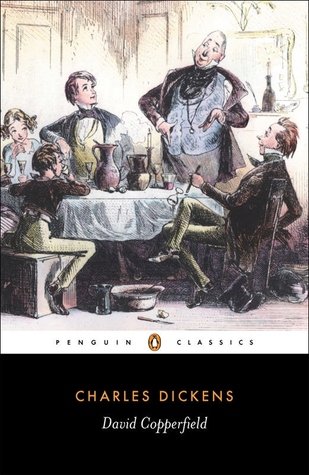
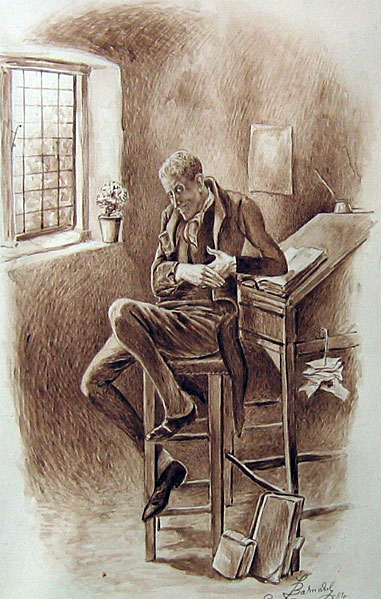
All I knew about David Copperfield: The Personal History, Adventures, Experience and Observation of David Copperfield the Younger of Blunderstone Rookery (Which He Never Meant to Publish on Any Account) by Charles Dickens is that it is said to be his most autobiographical novel. I think I must have watched a TV serialisation years ago but I remember very little about it. It was first published as a serial in 1849 and 1850, and then as a book in 1850.

It’s a long novel with a multitude of characters, including David’s cruel stepfather, Mr Murdstone, the family housekeeper Peggotty, his school friends Steerforth, who he mistakenly idolises and, my favourite character, Tommy Traddles, who has a heart of gold, and a remarkable upstanding head of hair. Then there’s another favourite character, David’s great aunt Betsey Trotwood, who wages war against marriage and donkeys and her companion, the simple-minded Mr Dick; Mr Micawber, always in debt and in and out of the debtor’s prison, and the odious and nauseating Uriah Heep are both memorable characters.

I was totally immersed in their world, enjoying the sights, sounds and smells of Victorian England, the living conditions of the poor contrasting with the decadent wealth of the rich, and the dramatic intensity of episodes such as the terrible storm at sea off Yarmouth. There’s drama, comedy and tragedy, melodrama and pathos as the story follows David’s life from his birth to his adulthood, covering his childhood, early schooldays, his time as a young boy working in a factory, then as a student in Canterbury where he lodged with the lawyer Mr Wickfield and his daughter, Agnes.

Betsey later established him in London where he worked in the Doctor’s Commons, under the tutelage of Mr Spenlow, whose daughter, the beautiful, frivolous and to my eyes, the utterly pathetic Dora totally captivated him. The sections of the book involving Dora are rather too sentimental for my liking. Then there’s Pegotty’s family – her brother Daniel, a fisherman, their nephew Ham and niece, Little Em’ly who is David’s childhood friend and sweetheart. They live in a converted boat on the beach at Yarmouth. And not forgetting Barkis, who marries Pegotty, after telling David to tell her, ‘Barkis is willing‘. Their sections of the book are the ones I enjoyed the most. I could go on and on, not forgetting David himself as describes the misfortunes and obstacles he met and the friends he makes.

I enjoyed reading David Copperfield, which was Dickens’ own personal favourite of all his novels, but it is not mine – it’s a bit too long for me. I think my favourite is Bleak House, which I read after seeing the TV adaptation in 2005 with Anna Maxwell Martin, Gillian Anderson, Denis Lawson, and Charles Dance. Maybe I’ll read it again to see what I think of it now. These days I prefer shorter books and Bleak House, like David Copperfield is long with many characters and sub-plots.

The Chalet by Catherine Cooper

3*

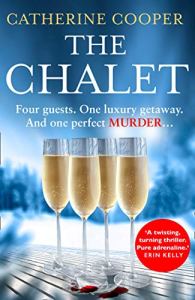
The Chalet, by Catherine Cooper, is a fast-paced murder mystery, set mainly in La Madière, a fictional ski resort in the French Alps. It is her first published full-length novel, though she has also written several (unpublished) thrillers for teens and a (what used to be called) chick lit novel set in TV production.

Synopsis

French Alps, 1998 -Two young men ski into a blizzard… but only one returns.

20 years later – Four people connected to the missing man find themselves in that same resort. Each has a secret. Two may have blood on their hands. One is a killer-in-waiting. Someone knows what really happened that day.

And somebody will pay.

The Chalet is Catherine Cooper’s first published full-length novel, though she has also written several (unpublished) thrillers for teens and a (what used to be called) chick lit novel set in TV production.

I read The Chalet quickly. It’s well written, easy reading, with a beautiful setting in the French Alps. It began well and I was quickly drawn into the drama of the story. The narrative moves between 1998, and 2020 and is told from several of the characters’ perspectives. None of the characters are particularly likeable and they all seem to have something to hide.

It’s a story of revenge, stemming from the events in 1998 when two brothers go skiing with their girlfriends and only one of the brothers returns. The weather conditions were bad and on a difficult off-piste route they lost contact with their guides and only one of them was found, but he couldn’t remember anything about what had happened. The body of the other brother was only found 20 years later after an avalanche hit the resort.

In 2020 a group of people, four couples mixing business with pleasure are staying at the same resort in a luxury chalet. The atmosphere is a difficult one as the couples’ relationships begin to breakdown, particularly when the weather worsens and a storm sets in, leaving them somewhat isolated. Various past events became clearer as secrets are revealed. Although there are plenty of twists and turns, it really wasn’t hard to work out what had happened and who was seeking revenge. An entertaining read, but maybe a bit too predictable by the latter half of the book. The last paragraph promises there is more to come in this story – I’ll be interested to see what happens next, if there is a sequel.

  • ASIN: ‎ B086JJ2TK1
  • Publisher: ‎ HarperCollins (31 Oct. 2020)
  • X-Ray: ‎ Enabled
  • Print length: ‎391 pages
  • My Rating: 3*

My thanks to NetGalley and Harper Collins, the publishers for a review copy.

The Queen’s Lady by Joanna Hickson

Harper Collins|20 January 2022|451 pages|e-book via NetGalley|Review copy|4*

Publishers’ Description:

As lady-in-waiting and confidante to Queen Elizabeth, wife of Henry VII, Joan understands royal patronage is vital if she and her husband, Sir Richard, are to thrive in the volatile atmosphere of court life.

But Tudor England is in mourning following the death of the Prince of Wales, and within a year, the queen herself. With Prince Henry now heir to the throne, the court murmurs with the sound of conspiracy. Is the entire Tudor project now at stake or can young Henry secure the dynasty?

Drawn into the heart of the crisis, Joan’s own life is in turmoil, and her future far from secure. She faces a stark choice – be true to her heart and risk everything, or play the dutiful servant and watch her dreams wither and die. For Joan, and for Henry’s Kingdom, everything is at stake…

My thoughts:

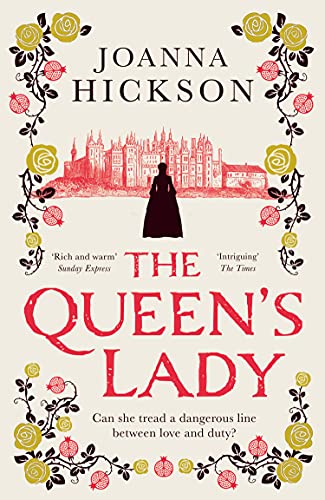
I enjoyed reading Joanne Hickson’s first book in her Queens of the Tower series, The Lady of the Ravens (my review), so I was keen to read the sequel, The Queen’s Lady, continuing the story of Joan Vaux, Lady Guildford. She was a lady in waiting to Queen Elizabeth, the wife of Henry VII and had became a good friend and confidante of Elizabeth. Her son Henry, known as Hal, had also became a good friend to the young Prince Henry.

It begins one evening at the Tower of London in April 1502. There’s strange atmosphere, as the ravens sit hunched in silence in the trees around the White Tower, Joan thought, as if awaiting some sad event, sensing death. One of the things I had particularly enjoyed in The Lady of the Ravens was Joan’s fascination for and care of the ravens of the Tower of London firmly believing in the legend that should the ravens leave the Tower for good then the crown would fall and ruin would return to the nation.

1502 had begun with pageantry and the New Year celebrations for the wedding of Prince Arthur, the heir to the throne, and Katharine of Aragon. It looks as if the ravens had indeed sensed death because in April he became seriously ill and died. It was Joan who had to break the news to Elizabeth and help console her in her grief. His death left Prince Henry as the heir to the throne.

In addition King Henry’s agents had uncovered a new Yorkist plot against the throne. Joan’s husband, Sir Richard Guildford is a Privy Councillor and loyal to Henry, but Henry is persuaded that he could be guilty of treason and he is imprisoned. Joan’s life is suddenly turned upside down. What happens next is fascinating to read covering Joan’s involvement in both national affairs and in her personal life.

I thoroughly enjoyed this novel. It is beautifully written, grounded in its historical context, full of colour and life. At the end of the book there’s a Glossary of words and terms that are not commonly in use today, which I wish I’d realised was there earlier. Intriguingly, Joanna Hickson promises in her Author’s Note that she has ‘more fascinating fifteenth century lives in sight’. I’m looking forward to see what she writes next.

The Author:

Joanna Hickson became fascinated with history when she studied Shakespeare’s history plays at school. However, having taken a degree in Politics and English she took up a career in broadcast journalism with the BBC, presenting and producing news, current affairs and arts programmes on both television and radio. Now she writes full time.

My thanks to the publishers for my review copy via NetGalley.

Nineteen Eighty-Four by George Orwell

3*

I bought a paperback copy of Nineteen Eighty-Four (its original title) in 2008, but have only just read it. It is George Orwell’s last novel, written in 1948 and presents his vision of a dystopian society, a totalitarian state complete with mass surveillance, where individuality is brutally suppressed.

Synopsis from the back cover:

In Orwell’s frightening vision of the future, society is under the control of Big Brother. Every aspect of life is closely monitored, whilst any hint of unorthodoxy is ruthlessly suppressed by the Thought Police. The Ministry of Truth, where Winston Smith works, is the Party’s Propaganda Machine. A secret rebel, Winston yearns for liberty and finds new hope when he falls in love with the earthy, uncomplicated Julia. Instead he discovers a nightmare world of terror where the price of freedom is betrayal.

Winston Smith’s attempt to find liberty and individuality plunges him into a truly horrific version of hell. The world is ravaged by war with three superstates, Oceania, Eurasia and Eastasia battling for total control. Winston lives in Airstrip One (Britain) in Oceania. His job is to rewrite history and destroy the old records, in accordance with the current circumstances. He secretly opposes the Party’s rule, led by the mysterious Big Brother, and dreams of rebellion. But faced with the Thought Police, the Hate Week sessions the surveillance through the television screens, cameras and hidden microphones monitoring his every move and thought, he realises it is a futile hope and that he is likely to be caught.

This really is the most depressing book and in places it is boring, especially in the middle section of the book devoted to Goldstein’s book. Goldstein, the leader of the Opposition Party to Big Brother, is always the subject of hatred at the Hate Week sessions. There are also passages that I could hardly bear to read – torture scenes that I did not want to visualise – it is a harrowing book. But it was interesting to see where the terms, Big Brother is Watching You, Room 101 (you do not want to be sent there!) Thought Police, Newspeak, Doublethink, holding two contradictory thoughts at the same time, and Thoughtcrime originated.

Nineteen Eighty -Four has received very many accolades and 94% of the people who have rated it on Goodreads ‘liked’ it – 79% giving it 5 or 4 stars .This is possibly the least enjoyable book I’ve read, horrific in content, lacking in convincing characterisation, and has a poor plot. It is depressing and dreary in the extreme, but I can see why it can be considered a brilliant book in its depiction of a dystopian society. It is seriously thought provoking!

‘George Orwell’ was the pen name of Eric Arthur Blair (25 June 1903 – 21 January 1950). He ‘was an English author and journalist. His work is marked by keen intelligence and wit, a profound awareness of social injustice, an intense opposition to totalitarianism, a passion for clarity in language, and a belief in democratic socialism.’ (Goodreads)