Saturday Snapshots – on Sunday

A few years ago we had a holiday in Gloucestershire – in Painswick. I’ve posted some photos in the past but not these of a walk in Frith Wood, which is on a ridge between Slad and Painswick. It’s a beautiful, magical wood of magnificent beech trees, with a mix of oak, ash and sycamore and it’s a Site of Special Scientific Interest.

Frith Wood

Frith Wood DSC_0106

Frith Wood DSC_0100 Frith Wood DSC_0109For more Saturday Snapshots see Alyce’s blog At Home With Books.

Saturday Snapshot: Castle Stalker

I was delighted to find this romantic ruined castle during our holiday on the west coast of Scotland. This is Castle Stalker, a 15th century tower house built by the Stewarts of Appin. It’s on a small island in Loch Linnhe, just north east of Port Appin (the setting for Robert Louis Stevenson’s Kidnapped, a fictionalised account of the “Appin Murder” of 1752).

Castle Stalker  P1080069

It was quite late in the day when we got there and the light was fading, so my photo is rather dark. I’d love to go back and take a trip across the loch to the island and see round the castle. It’s privately owned and there are tours on just 5 weeks of the year. There’s a brief history of the castle on the Castle Stalker website.

Castle Stalker is the location of Castle Aaaaarrrrrrggghhh in the 1975 film Monty Python and the Holy Grail.

To participate in the Saturday Snapshot meme post a photo that you (or a friend or family member) have taken then leave a direct link to your post in the Mister Linky at At Home With Books. Photos can be old or new, and be of any subject as long as they are clean and appropriate for all eyes to see. How much detail you give in the caption is entirely up to you. Please don’t post random photos that you find online.

Saturday Snapshot: On Holiday

We’ve been away last week, over at Kentallen on the west coast of Scotland – near Glencoe. These were the views of Loch Linnhe from our bedroom windows, taken late afternoon on the day we arrived. Click on the photos to enlarge them:

Here’s a close-up of the flag:

We got back home last night and I’ve got lots more photos of the places we visited – I just need time to sort them all out.

For more Saturday Snapshots see Alyce’s blog At Home with Books.

Saturday Snapshot: Horncliffe Bridge

The Union Chain Bridge links England and Scotland over the River Tweed at Horncliffe, just a few miles from where we live. Below is a view of the bridge seen from a footpath on the banks of the river. This was the first suspension bridge in Europe to carry road traffic. It still carries vehicular traffic.

Scotland is on the left as you look at the photo and England on the right.

Designed by Captain Samuel Brown, the bridge was opened in 1820, when it was the longest wrought iron suspension bridge in the world, with a span of 137 metres (449 ft). It is a Grade I listed building and Scheduled Ancient Monument.

I took the photo below standing on the bridge looking towards Scotland:

And a closer view of the bridge on the English side of the border:

Just up the road from the bridge is the Chain Bridge Honey Farm, a fascinating place where you can see a live colony of bees, behind glass, making honey, and where you can buy honey and other products such as candles made from beeswax. I’ll maybe write more about that in another Saturday Snapshot post.

The Visitor Centre at the Honey Farm also has a beautiful mural painted by local artist,Tony Johnson. My photo below shows a section of the map – my blue arrow points to the Chain Bridge. Also shown in this photo is Smailholm Tower (on the left of the photo as you look at it) which I featured in an earlier Saturday Snapshot post.

For more Saturday Snapshots see Alyce’s blog At Home with Books.

Saturday Snapshot: Duddo Stone Circle

Stone circles fascinate me. They have done ever since I was a young teenager and went to Stonehenge. It was dawn as we were travelling to the New Forest for our annual Girl Guide camp there. The coach driver stopped so we could get out and see the sun rising over the stones. This was in the days when the stones were open and we ran across so we could be in the circle when the sun came up – it was magical. These days Stonehenge is fenced off and going there is just not the same experience.

There is a small stone circle not very far from where we live and we went to see it last Saturday. Duddo Stone Circle is a group of five Neolithic/Bronze Age stones – radiocarbon dating indicates they were erected around 2000BC. Originally there were seven stones. Excavations in the 1890s revealed the socket holes of the missing stones and also the cremated human remains in the central pit.

This is the view of the stone circle standing proud on a low hill next to the small Northumberland village of Duddo as you approach the stones along a permissive path:

P1060985

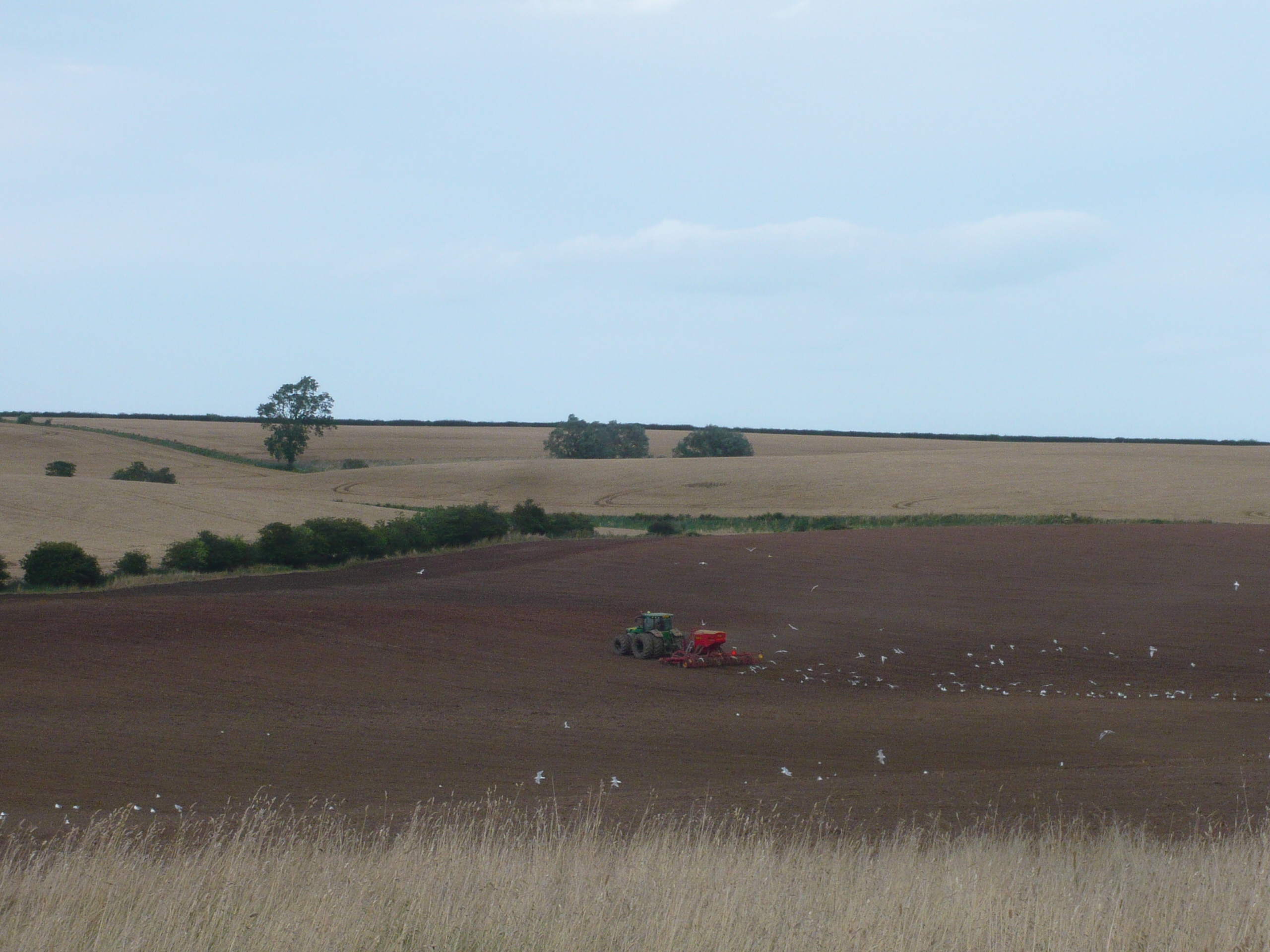
Farmers used to plough across the inside of the circle.These days they don’t, but farm all around the circle:

P1060992

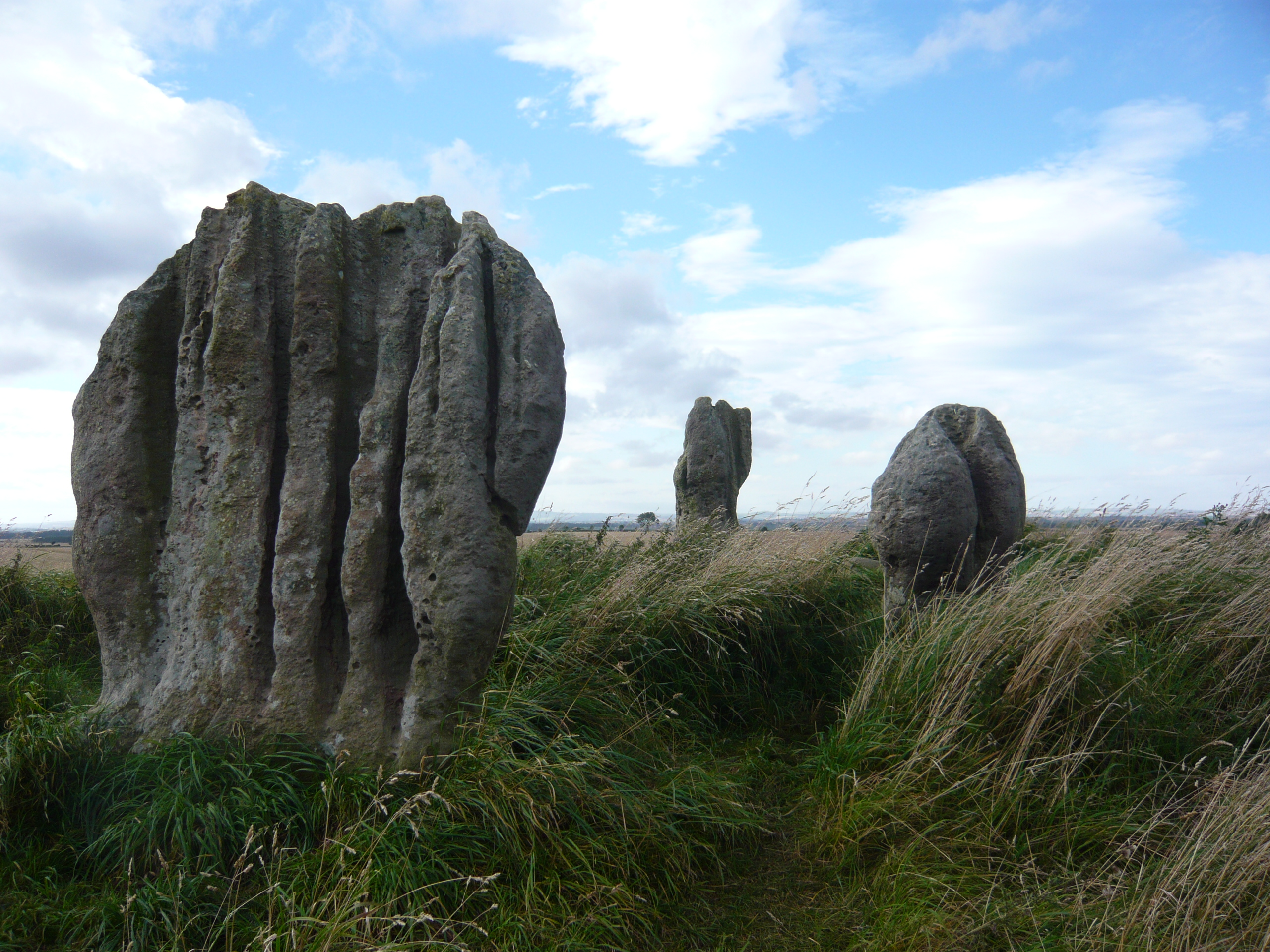
It’s fantastic up inside the stone circle. Unlike Stonehenge (which is of course much bigger) you can walk right up to the stones and go inside the circle. The stones are sandstone, varying in height from 1.3 metres to 2.3 metres. The site is listed on the Schedule of Ancient Monuments – No. 1006622.

It was very windy last Saturday and I found it hard to keep my camera steady, but I did manage to get some close ups of the stones. Stones that have been sculpted by the wind into weird shapes.

P1060995

We had the stones to ourselves and it was easy to imagine what it must have been like up there on the hill all those years ago, with views all round to the Cheviots and the Eildon Hills in Scotland and to wonder just why the stones were there and what they had meant to the people who erected them. The Defra information board below the stones indicated that the fragments of human bones found in the central pit dated from 1740 – 1660 BC suggesting that the use of the site for burial was a later event. Its original purpose remains a mystery – I like that.

Also in Duddo are the remains of a medieval tower house. We didn’t have time to look at it last Saturday, but we’ll go there another day.

For more Saturday Snapshots see Alyce’s blog At Home With Books.

Saturday Snapshot

On a grey, dismal day in May we visited Smailholm Tower in the Scottish Borders. It’s a four-storey tower house on a base of volcanic rock, a stark feature on the skyline between Kelso and Selkirk in the Tweed Valley.

(click on the photos to enlarge)

It was built in the 15th century by the Pringle family on Smailholm Craig, providing protection from the elements and from raiding parties of English reivers (raiders).

Standing 650ft (200m) above sea level, it’s walls are 9ft (2.5m) thick and 65ft (20m) high and it has one small entrance in the south wall and tiny windows.

Inside it’s quite dark and most of my photos inside aren’t very good. There’s a spiral staircase giving access to all five floors and the battlements.

In 1645 the Pringle family sold the tower and Smailholm Craig to the Scott family. Sir Walter Scott lived at Smailholm for a while with his grandmother and Aunt Janet after he’d had polio because they thought the fresh country air would be good for him. It was his aunt who told him tales of the Border countryside which gave him his passion for folklore and history.

The three upper floors house an exhibition of costume figures and tapestries to illustrate Sir Walter Scott’s Minstrelsy of the Borders, his collection of ballads. The photo below is of the Queen of the Fairies:

and below is one of little Walter Scott and his Aunt Janet:

I was fascinated by the roof of the tower, because it’s covered in turf, making a living roof:

There are spectacular views of the surrounding countryside on the way up. Below is the view of the Eildon Hills through a window:and even more panoramic views from the battlements:

For more Saturday Snapshots see Alyce’s blog At Home With Books.