Mount TBR: Checkpoint 1

It’s time for the first quarterly check-in for Bev’s Mount TBR Challenge (TBRs for this challenge must be books you’ve owned prior to January 1, 2017). Here are my answers to her questions:

  • How many miles (books) up the mountain are you?

I’m still climbing Pike’s Peak, so I’m behind if I want to reach my target of 48 books, ie reach the top of Mount Ararat, as I’ve only read 9 books (see this page for details). I’ve been sidetracked by reading new-to-me books so far this year! 

  • Post a picture of your favourite cover so far

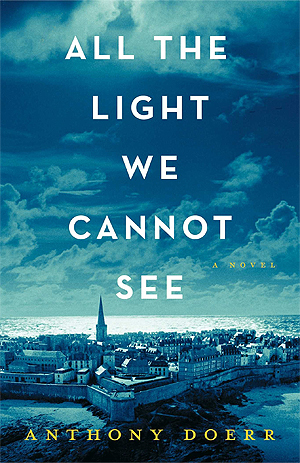
All the Light We Cannot See

  • Title Scrabble: See if you can spell a word using the first letter of the first word in the titles of some/all of the books you have read so far. Feel free to consider “A,” “An,” or “The” as the first word or not as it helps you with your word hunt.

My word: Tablet:

T –The Dead of Jericho by Colin Dexter (Morse)
A –All the Light We Cannot See by Anthony Doerr
B –The Buttonmaker’s Daughter by Merryn Allingham
L –Last Seen Wearing by Colin Dexter
EThe Eagle of the Ninth by Rosemary Sutcliff
TThe Gathering by Anne Enright


What I read in March

March has been a fantastic reading month, with eight of the books I read being excellent 5 and 4 star books. And I’ve written posts about 10 out of the 12!

  1. A Death in the Dales by Frances Brody 4*
  2. At the Edge of the Orchard by Tracy Chevalier 4*
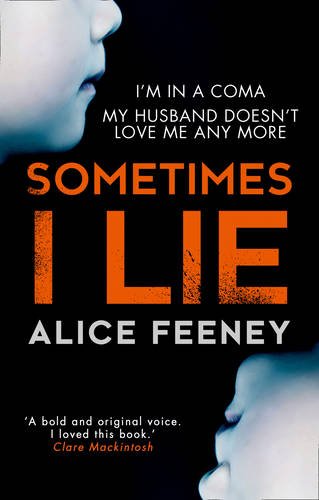
  3. Sometimes I Lie by Alice Feeney 5*
  4. See What I have Done by Sarah Schmidt 4* – review to come soon
  5. Northanger Abbey by Jane Austen 4*
  6. The Spirituality of Jane Austen by Paula Hollingsworth 4*
  7. Northanger Abbey by Val McDermid 3*
  8. The Gathering by Anne Enright 1*
  9. The Idea of You by Amanda Prowse 2*
  10. The Invention of Wings by Sue Monk Kidd 5* – review to come soon
  11. The Legacy by Yrsa Sigurdardottir 5*
  12. The Lauras by Sara Taylor 2.5*

They’re a mix of fiction, historical fiction and crime fiction, with one non-fiction book on Jane Austen’s works. Only one of them, The Gathering, is from my TBR shelves of books I’ve owned prior to January 1 this year, the rest are either new books or new-to-me books and one library book, Val McDermid’s Northanger Abbey. The links are to my posts on the books.

The two books I have yet to review are both excellent books – See What I Have Done by Sarah Schmidt is historical fiction based on the unsolved American true crime case of the Lizzie Borden murders, due to be published in May. The Invention of Wings by Sue Monk Kidd is historical fiction based on the lives of the abolitionist Grimké sisters set in the American Deep South in the nineteenth century, a story of slavery.

My favourite? So hard to choose, but because it kept me glued to the pages and puzzled, stunned and amazed me it has to be Sometimes I Lie by Alice Feeney.

Six Degrees of Separation: from Room to Wives and Daughters

Six Degrees of Separation is a monthly link-up hosted by Kate at Books Are My Favourite and Best. Each month, a book is chosen as a starting point and linked to six other books to form a chain. A book doesn’t need to be connected to all the other books on the list, only to the one next to it in the chain.Room by Emma Donoghue
This month’s chain begins with Room by Emma Donoghue – about a five
year old boy and his mother, abducted seven years earlier and living in captivity, confined to an 11 by 11 foot room. I haven’t read this book which was on the Man Booker 2010 shortlist.
The Long Song by Andrea LevyBut I have read the first link in my chain, also on the list that year – The Long Song by Andrea Levy, a book about slavery in Jamaica just as slavery was coming to an end and both the slaves and their former owners were adjusting to their freedom. The narrator is July, at the beginning, a spirited young woman, born in a sugar-cane field, telling her story at her son’s suggestion.
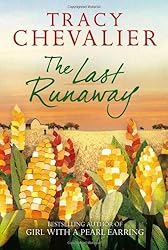
Slavery is the link to the next book – The Last Runaway by Tracy Chevalier, historical fiction about the life of Honor Bright after she emigrated from Dorset to America in 1850 where she joined a Quaker community in Ohio. It intertwines her story with that of the ‘˜Underground Railroad’, helping the runaway slaves from the southern states to escape to Canada.
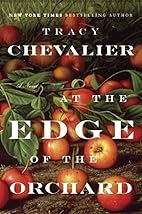
At the Edge of the Orchard by Tracy'¦Also by Tracy Chevalier is At the Edge of the Orchard the story of a pioneering family on the American frontier, the Goodenough family, James and his wife Sadie and their five surviving children. It begins in 1838 in Black Swamp, Ohio where James and Sadie are arguing over apples and moves west with their son Robert to California.
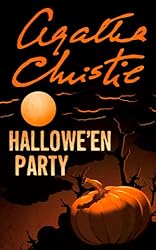
Apples also feature in my next link – Hallowe’en Party which begins with the party given by Mrs Drake for teenagers. One of the guests, Joyce Reynolds, a boastful thirteen-year old, who likes to draw attention to herself, announces that once she’d witnessed a murder. It seems nobody believed her and yet later on she is found dead, drowned in the tub used for the bobbing for apples game.
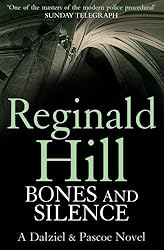
Another witness to a murder is Detective Superintendent Andy Dalziel in Bones and Silence by Reginald Hill. He witnesses a bizarre murder across the street from his own back garden positive that he saw Philip Swain shoot his wife, but Swain insists it was an accident. He says he was trying to stop her from killing herself and the gun went off. Just what did happen?
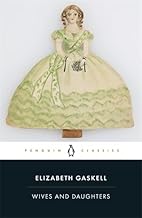
Wives and Daughters (Wordsworth Classics) by'¦My final link is through the structure of the title – 3 words linked by ‘and‘. It’s Wives and Daughters by Elizabeth Gaskell, a book I’m currently reading. Set in rural England in the early nineteenth century before the 1832 Reform Act this is the story of two families, centred on Molly Gibson, brought up by her father, a widowed country doctor. When he remarries, a new step-sister enters Molly’s quiet life ‘“ lovable, but worldly and troubling, Cynthia.

So, my chain has gone from a book about a woman and her child (a son) passing through books about slavery, a pioneer family and their apple orchard to murder mysteries featuring apples and witnesses to murders and finally to a another book about parents and children (daughters).

I never know where my chain will end. What about you, where would yours end?

The Lauras by Sara Taylor

The Lauras by Sara Taylor is due to be published in paperback in the UK on 6 April 2017. Kindle and hardcover copies have already been published. My copy is a digital version for review from the publishers, via NetGalley.

It’s a road-trip story as Ma leaves her husband in Virginia and takes to the road with her thirteen-year old child, Alex. I really liked those parts of the novel in which Sara Taylor describes their journey and the places they travel through or stay at for a while, sometimes sleeping in the car, sometimes in a motel, and sometimes for a longer stay whilst she earns enough money to continue their journey. But I didn’t like the structure of the book as much, because it is basically just a collection of stories that Ma tells Alex – stories about her childhood and teenage years; about her childhood in Sicily, the time she spent in foster homes, and the friends she made, several of them called Laura- as they travel to visit people from her past. This structure makes the book disjointed, especially as neither Alex nor the reader knows where it is going or when/if it will come to an end. It unsettled me in that respect.

It’s narrated in the first person by Alex, looking back some 30 years to that journey. Alex was a shy and lonely teenager, unable to fit in with others and unsure about sexuality and gender. It makes for very uncomfortable reading in places as Alex is confronted by the misunderstandings and abuse of others. Ma is also a troubled person, having suffered various traumas, hardships and emotional insecurities. Both of them have itchy feet, not happy to stay for long in one place and unable to relate easily to others.

It’s a book about identity, about outsiders, and about parenting and relationships. I liked the various meditations on memory, its unreliable nature and slipperiness and on reality. Alex observes that we don’t actually have perfect memories of what happened, but just have fragments that we piece together to understand and make sense of events, to explain our life to ourselves. After they’ve gone all we have left of people are their stories, not necessarily the stories they told us, but as we remember those stories. Alex realises in later life that we can gloss over some memories  or can pretend to ourselves we have forgotten certain times and places, until some unexpected smell or sound drops us back into ‘that awkward, adolescent body’.

I can’t say that it’s a book I enjoyed or would want to re-read. It’s not a book I was eager to get back to once I put it down, but it certainly gave me much to think about.

  • Format: Kindle Edition
  • File Size: 2773 KB
  • Print Length: 302 pages
  • Publisher: Cornerstone Digital (4 Aug. 2016)
  • Rating: 2.5 stars

The Legacy by Yrsa Sigurdardottir

The Legacy is my first venture into Icelandic Noir and the first in a new series by Yrsa Sigurdardottir – the Children’s House thriller series, translated from Icelandic by Victoria Cribb.

I think the first thing I should say about this book is that I loved it and once I started reading I just didn’t want to put it down. What is so remarkable about that is that there are some particularly dark and nasty murder scenes, which would normally guarantee that I’d stop reading. I am so glad I did read on. The Legacy is an excellent book. It’s dark, mysterious and very cleverly plotted, full of tension and nerve-wracking suspense. Although I thought I’d worked out who the murderer is I was completely wrong, but looking back I could see all the clues are there, cunningly concealed – I just didn’t notice them.

It begins with a prologue set in 1987 when three young children, two boys and their little sister are waiting to be adopted. It’s hard to find anyone willing to adopt all three and they are separated. The psychiatrists’ opinion is that it is in their best interests to be parted and that their horrendous background be kept secret, hoping that time and being split up would obliterate their memories. I did try to keep the events in the prologue in mind as I read and had some idea of how it related to the rest of the book, but it was only when I came to the dramatic conclusion that everything became clear.

Move forward to 2015 to Elisa whose husband is away leaving her on her own with three young children for a week. Her seven-year old daughter, Margrét wakes her, frightened because there is a man in the house. What follows is the first horrifying murder (read it quickly and try not to linger over the details because the pictures they paint don’t bear thinking about). Margrét, who was hiding when her mother is killed, is the only witness and she’s too traumatised to say very much.

She is taken to the Children’s House where Freyja, the child psychologist in charge and the detective Huldar, in charge of the police investigation, try to get to the truth. It’s immensely difficult, complicated by more murders. Freyja and Huldar are both sympathetic characters, both deeply committed to their jobs, but because of past history between them unable to trust each other.

The narrative is in the third person and switches between Freyja’s and Huldar’s viewpoints, interspersed by that of another character, Karl a student and radio ham enthusiast who has been receiving strange messages from a mysterious numbers station broadcasting, unusually, in Icelandic. These consist of long strings of numbers read out by synthesised voices. Karl dreams of successfully cracking the codes. I was both intrigued and completely mystified by this part of the novel. I was completely engrossed in the plot and the characters and I shall certainly be reading more of Yrsa Sigurdardottir’s books in the future.

My thanks to the publishers, Hodder and Stoughton, for an e-book copy for review, via NetGalley.

  • Format: Kindle Edition
  • File Size: 2046 KB
  • Print Length: 464 pages
  • Publisher: Hodder & Stoughton (23 Mar. 2017)
  • My rating: 5* (despite the horrific murders)

Happy Mother’s Day!

Today really feels like spring has well and truly arrived and it’s Mother’s Day ! My son surprised me with not just one book, but two:

First, a book that was wrapped in brown paper in the bookshop from a pile of ‘mystery’ books – just a brief description, but not giving the author or the title. It’s Present Tense: a Best Defence Mystery by WHS McIntyre. On the cover it’s described as;

Crime with an edge of dark humour. The Best Defence series could only come out of Scotland.’

Blurb:

Criminal lawyer, Robbie Munro, is back home, living with his dad and his new-found daughter. Life as a criminal lawyer isn’t going well, and neither is his love life. While he’s preparing to defend the accused in a rape case, it all becomes suddenly more complicated when one of his more dubious clients leaves a mysterious box for him to look after. What’s in the box is going to change Robbie’s life – forever.

Secondly, a beautiful book, The Crofter and the Laird by John McPhee, described in the Guardian:

McPhee is a grand master of narrative non-fiction.

Blurb:

In 1969, John McPhee moved his family from New Jersey across the Atlantic to live in the land of his forefathers, the island of Colonsay ‘“ seventeen square miles of dew and damp twenty-five miles off the coast of Scotland. They rented a crofthouse, his children enrolled at the local school, and they soon were accepted into this tightly circumscribed community of 138 people.

Intertwining history and legend, McPhee gives us a comprehensive portrait of this remote and misty land. He battles the fierce gales on the outer shoals of the Ardskenish Peninsula, listens to the crofters complain of the laird over drams in the island’s sole pub, and meets perhaps the last of the Great Highland bagpipers.

A blend of anthropology and travelogue, The Crofter and the Laird presents us with a perfect mirror of daily-life in the Highlands. McPhee writes with insight, sensitivity, and fondness for these hardy people ‘“ resulting in an account that’s as honest, humorous, and frank as the locals themselves.

Two very different books, both by authors new-to-me, and I’m looking forward to reading both of them. Thanks, Paul!