Wives and Daughters by Elizabeth Gaskell

Wives and Daughters

 Wives and Daughters by Elizabeth Gaskell was my Classics Club Spin book for March and April and I was rather daunted when I realised that the e-book version I had downloaded about six years ago has over 800 pages, but it’s really easy reading. It’s only the second book of hers that I’ve read – the other book is Cranford, but I think Wives and Daughters is so much better. Elizabeth Gaskell is a superb storyteller and I loved this book.

Today there are many editions of Wives and Daughters available. It was first first published in serial form in The Cornhill Magazine from August 1864 to January 1866. Elizabeth Gaskell had died in August 1865 leaving Wives and Daughters unfinished. The final chapter was added by the editor of The Cornhill. In his concluding remarks he stated that little remained to be added to the story ‘and that little has been distinctly reflected into our minds.‘ He continued that he had summarised in his remarks all that what was ‘known of her designs for the story which would have been completed in another chapter.

It is set in the late 1820s to the early 1830s in the village of Hollingford (based on Knutsford), a close-knit community much like Cranford, and centres around Molly Gibson, the only daughter of the neighbourhood doctor. The characters are all fully rounded and believable people, most certainly not perfect people with all their faults exposed through their dialogue and Elizabeth Gaskell’s ironic descriptions. There is gentle humour and the plot carries the novel at a fairly brisk pace despite the length of the book – I was eager to find out how everything was resolved.

The story opens when Molly, an only child, is twelve and eagerly anticipating her visit to Cumnor Towers (based on Tatton Hall) for the yearly festivities hosted by Lady Cumnor and her daughters. But her enjoyment is spoiled when she gets lost in the house. She is found but then is overlooked when the carriages arrive to take all the visitors home and she has to wait for her father to come for her. This little episode provides an introduction to the other side of the village – the aristocracy.

Molly is very close to her father. When she is seventeen the doctor becomes concerned that one of his pupils wanted to declare his feelings for her and so he sends her to stay with the local squire and his wife and two sons at Hamley Hall. Mrs Hamley becomes very fond of her and treats her like a daughter and Molly becomes very friendly with the second son Roger. However, she knows she isn’t considered a suitable match for the Hamleys and thinks of him and Osborne as her brothers.

All is going well until Dr Gibson marries Hyacinth Clare (a former governess to Lord Cumner’s daughters), hoping she will be a mother to Molly. But Hyacinth is a selfish, socially ambitious and manipulative woman and Molly’s life is no longer happy and carefree, even though she does get on well with Hyacinth’s beautiful daughter, Cynthia. The two girls become good friends. Cynthia, though gets involved in a number of romantic entanglements which then gets Molly into trouble.

I don’t want to go into more detail about the various sub-plots and romances other than to say I enjoyed it all immensely. The fact that Elizabeth Gaskell did not finish the book didn’t spoil the book at all for me. She had all but drawn all the threads together so that the editor’s concluding remarks coincided with the way I had hoped everything would be resolved. Needless to say really, but Molly was my favourite character, which says a lot about Elizabeth Gaskell’s skill and understanding in portraying a ‘good’ character. I was completely absorbed in the world that she had created.

As well as being my Classics Club Spin book, Wives and Daughters is also one of my TBRs so it qualifies for Bev’s Mount TBR Reading Challenge.
Six Degrees of Separation: from The Slap to The Cipher Garden

Six Degrees of Separation is a monthly link-up hosted by Kate at Books Are My Favourite and Best. Each month, a book is chosen as a starting point and linked to six other books to form a chain. A book doesn’t need to be connected to all the other books on the list, only to the one next to it in the chain.

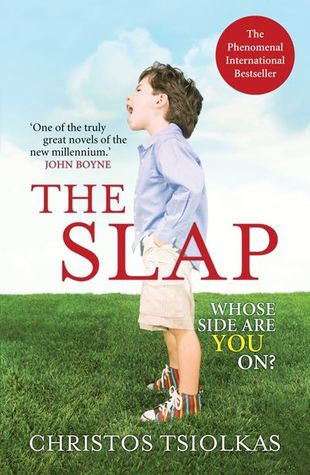
This month’s chain begins with The Slap by Christos Tsiolkas. I haven’t read this book about a man in suburban Melbourne who slaps an unruly three-year old boy at a barbecue. The boy is not his son. It is a single act of violence, but the slap reverberates through the lives of everyone who witnesses it.

The Slap

And after reading a number of reviews I have no desire to read it.

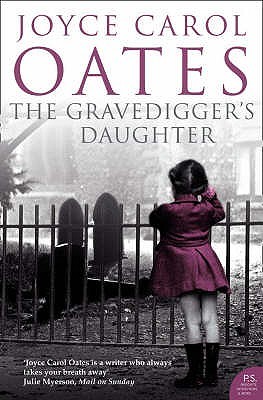
The Gravedigger's DaughterBut I have read the first book in my chain The Gravedigger’s Daughter by
Joyce Carol Oates, a book that also has a photograph of a child on the front cover. The title character of this novel is Rebecca Schwart, born in New York Harbor, the daughter of Jacob and Anna who escaped from Nazi Germany in 1936. Her father, originally a maths teacher can only get work as a gravedigger and caretaker of the cemetery.

The Secret ScriptureThe second link in my chain is also about a gravedigger’s daughter,
Roseanne in The Secret Scripture by Sebastian Barry. Roseanne, an old woman about 100 years old, in a mental hospital in Ireland looks back over her life and begins to wonder just what was real and what was fantasy. It’s a story of Roseanne’s struggle to survive set against the background of religious conflict and political unrest in Ireland and also about the nature of memory and its function in our lives.

A Pale View of HillsThe third link is a book that also considers how reliable our memories can be. It’s A Pale View of Hills by Kasuo Ishiguro about a widow, Etsuko living in Britain, as she reminisces about her past life in Japan shortly after the Second World War, living at the edge of the wasteland of Nagasaki. This is a beautifully written book, describing the countryside around and in Nagasaki after the war, referring to life before the war, and how not only the landscape but also the people and traditions were altered in the aftermath of the atomic bomb.

The Thousand Autumns of Jacob de ZoetAnother book set in Japan is The Thousand Autumns of Jacob de Zoet by David Mitchell. It’s set in 1799 on Dejima in Nagasaki harbour. This is one of my TBRs. As a junior clerk, de Zoet’s task is to uncover evidence of the previous Chief Resident’s malpractice. He becomes intrigued by a rare woman’”a midwife permitted to study on Dejima under the company physician.

AutumnMy fifth book is linked by the titleAutumn by Ali Smith, a novel that looks at modern life, how we got to where we are, and the mood of the country post-Brexit (that word is never mentioned in the book). It begins with a stream of consciousness as Daniel Gluck, a very old man, ponders his life and his approaching death. The main focus of Autumn is the relationship between Daniel and Elisabeth Demand who first met when Elisabeth was a child and she moved into the house next door to Daniel’s.

The Cipher Garden (Lake District Mystery #2)And finally my sixth link is the name of one of the characters – Daniel. In

Martin Edwards’ Lake District Mystery series the central characters are historian Daniel Kind and DCI Hannah Scarlett, head of the Cold Case Review Team. One of my favourites in the series is The Cipher Garden in which Daniel and Hannah’s team investigate the murder of Warren Howe, brutally killed in the peaceful village of Old Sawrey, close to Near Sawrey the home of Beatrix Potter.

From Melbourne to New York, Ireland, Nagasaki, and Great Britain my chain links books about children, gravediggers, the nature of memories, meditations on life and death, and a murder mystery – quite a journey.

Where will other chains lead, I wonder?

My Week in Books: 3 May 2017

This Week in Books is a weekly round-up hosted by Lypsyy Lost & Found, about what I’ve been reading Now, Then & Next.

IMG_1384-0

A similar meme,  WWW Wednesday is run by Taking on a World of Words.

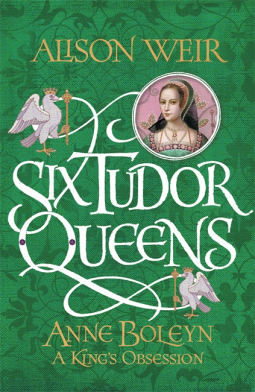
Now: I’m reading Six Tudor Queens: Anne Boleyn: A King’s Obsession by Alison Weir, which will be published by Headline on 18 May 2017. it is a long and detailed book, parts of which I’m finding tedious and repetitive, but I’m nearing the end now and it is picking up speed just a tiny bit!

Blurb:

The young woman who changed the course of history.

Fresh from the palaces of Burgundy and France, Anne draws attention at the English court, embracing the play of courtly love.

But when the King commands, nothing is ever a game.

Anne has a spirit worthy of a crown – and the crown is what she seeks. At any price.

ANNE BOLEYN. The second of Henry’s Queens. Her story.
History tells us why she died. This powerful novel shows her as she lived.

Then: The last two books I read were The Hanged Man of Saint-Pholien by Georges Simenon, a Maigret mystery, which I really enjoyed. My review will follow soon.

The Hanged Man of Saint-Pholien (Maigret, #4)


On a trip to Brussels, Maigret unwittingly causes a man’s suicide, but his own remorse is overshadowed by the discovery of the sordid events that drove the desperate man to shoot himself.

I also finished reading Wives and Daughters by Elizabeth Gaskell, which I loved. It’s a story of romance, scandal and intrigue within the confines of a watchful, gossiping English village during the early nineteenth century. I’ll soon be writing a review of this too.

Wives and Daughters

Next: I think I’ll read A Place of Execution by Val McDermid, one of my TBR books, with the usual proviso that when the time comes I may decide to read a different book.

A Place of ExecutionBlurb:

On a freezing day in December 1963, thirteen-year-old Alison Carter vanishes from her village. Nothing will ever be the same again for the inhabitants of the isolated hamlet in the English countryside. A young George Bennett, a newly-promoted inspector, he is determined to solve this case’”even if it just to bring home a daughter’s dead body to her mother.

As days progress, the likelihood that Alison has been murdered increases when a gruesome discovery is made in a cave. But with no corpse, the barest of clues, and an investigation that turns up more questions than answers, Bennett finds himself up against a stone wall…until he learns the shocking truth’”a truth that will have far-reaching consequences.

Decades later, Bennett finally tells his story to journalist Catherine Heathcote. But just when the book is posed for publication, he pulls the plug on it without explanation. He has new information that he will not divulge. Refusing to let the past remain a mystery, Catherine sets out to uncover what really happened to Alison Carter. But the secret is one she might wish she’d left buried on that cold, dark day thirty-five years ago.

I’m wondering what you are reading/have read recently too.

Caedmon’s Song by Peter Robinson

Peter Robinson writes the Inspector Banks books, but he has also written short stories and a couple of standalone books including Caedmon’s Song, described as a psychological thriller.

Summary (from Peter Robinson’s website)

One warm June night, a university student called Kirsten is viciously attacked in a park by a serial killer. He is interrupted, and Kirsten survives, but in a severe physically and psychologically damaged state. As the killer continues, leaving a trail of mutilated corpses, Kirsten confronts her memories and becomes convinced not only that she can, but that she must remember what happened. Through fragments of nightmares, the details slowly reveal themselves. Interwoven with Kirsten’s story is that of Martha Browne, a woman who arrives in the Yorkshire coastal town of Whitby with a sense of mission. Finally, the two strands are woven together and united in a startling, chilling conclusion. 

My thoughts

Overall I liked Caedmon’s Song, but I wouldn’t describe it as a thriller, even though the attack on Kirsten is particularly vicious. It is set mainly in Whitby a seaside town in Yorkshire. The ruins of Whitby Abbey, Bram Stoker’s inspiration for Dracula, stand on the East Cliff overlooking the North Sea, with St Mary’s Church and Caedmon’s Cross nearby. I wondered as I began reading whether Martha’s visit to Whitby had any connection to Dracula, but although these places are described as she finds her way around the town they are just incidental to the plot.

Then I began to wonder about the connection between Kirsten and Martha because Robinson drops in quite a few clues early on in the book, which become explicit in the second half of the book. So, the links between them are quite easy to see, which disappointed me at first and lessened the tension. I wasn’t too convinced either by how Kirsten discovered her attacker’s identity and even considering the horrific details of her injuries I didn’t really feel sympathetic towards her as she comes across as rather cold-blooded. But as the narrative developed I began to enjoy the story and to wonder how it would end.

Kirsten considers whether she is a ‘born victim‘ or not, questioning her actions on the night of the attack, and wondering whether she had been inviting destruction. Her conclusion is that she wasn’t at all clear about it, but felt that it was her destiny, that she had been chosen as her attacker’s nemesis. All she knew was that she had to find him and face him. The ending is dramatic, but what would happen next is left open.

In his afterword Peter Robinson (written in 2003 when a new edition was published) explains that he had the idea for writing Caedmon’s Song in the late 1980s after he had written the first four Inspector Banks novels. He had felt he needed a change and wanted to write a novel in which the police played a subsidiary role. Then in September 1987 when he saw Whitby as he approached it on the coast road the idea for the setting and opening of the book came to him:

There lay Whitby, spread out below. The colours seemed somehow brighter and more vibrant than I remembered: the greens and blues of the North Sea, the red pantile roofs. Then the dramatic setting of the lobster-claw harbour and the two opposing hills, one capped with a church, the other with Captain Cook’s statue and the massive jawbone of a whale. I knew immediately that this was where the story had to take place, and that it began with a woman getting off a bus, feeling a little travel-sick, trying the place on for size. (pages 326-7)

I feel a trip to Whitby coming on – a place I’ve been wanting to visit for some years now.

Amazon UK link

  • Paperback: 336 pages
  • Publisher: Pan; Reprints edition (1 Aug. 2013)
  • Language: English
  • ISBN-10: 1447225473
  • ISBN-13: 978-1447225478
  • Source : I bought the book
  • Rating: 3*

Reading challenges: Mount TBR Reading Challenge 2017

See What I Have Done by Sarah Schmidt

Lizzie Borden took an ax
And gave her mother forty whacks
When she saw what she had done,
She gave her father forty-one.

Or did she?

On the 4 August 1892 Andrew Borden and his second wife, Abby, were brutally murdered in their home at 92 Second Street in Fall River, Massachusetts and Andrew’s daughter, Lizzie, was charged with the murders. She was tried and was acquitted in June 1893 and speculation about the murders and whether Lizzie was guilty or not continues to the present day. See What I Have Done by Sarah Schmidt is a work of fiction based on true events using various resources.

File:Lizzie borden.jpg
Lizzie Borden c.1890

Lizzie was thirty two at the time of the murders but in this fictionalised account she seems emotionally much younger, more like a teenager than a mature woman.

The narrative is shared by Lizzie, her sister Emma, Bridget their maid and Benjamin, a ‘friend’ of Lizzie’s Uncle John, and moves backwards and forwards in time, before and after 4 August 1892. Lizzie’s account is the strangest and it takes you right inside her mind. She is a disturbed and unstable character to say the least and I had the most unsettling feeling as I read that I was right inside her crazy, demented mind.

The writing is ambiguous in parts, lending enough credence to cast doubt on Lizzie’s guilt – and then in other parts I was convinced that she had committed the murders. It’s the introduction of Benjamin, a fictional character, a vicious and violent man, that provides an explanation of what happened to the murder weapon, that the police were unable to find.

Sarah Schmidt’s prose highlights the senses – the sights, sounds, smells, and tastes are aroused. The tension is palpable, and the fear and feverish atmosphere in the Borden’s house comes to a climax in the gruesome murders. It is indeed eerie and compelling, a mesmerising book.

I received this as an ARC from the publisher, the Atlantic Monthly Press, via NetGalley. And it is published in the US on 1 August 2017 in hardback.

Amazon US

  • Hardcover: 324 pages
  • Publisher: Atlantic Monthly Press (August 1, 2017)
  • Language: English
  • ISBN-10: 0802126596
  • ISBN-13: 978-0802126597

See What I Have Done is also published in the UK today, 2 May 2017, as an e-book by Tinder Press

Amazon UK

See What I Have Done

  • Format: Kindle Edition
  • File Size: 1571 KB
  • Print Length: 336 pages
  • Publisher: Tinder Press (2 May 2017)

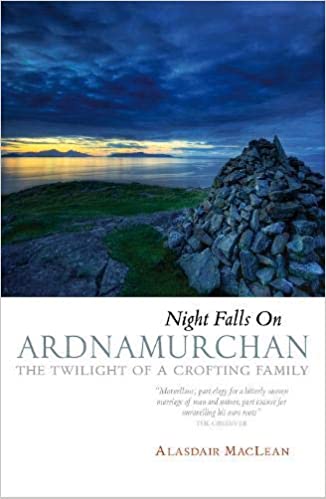
Night Falls on Ardnamurchan by Alasdair Maclean

Notes on Night Falls on Ardnamurchan: the Twilight of a Crofting Family by Alasdair Maclean (1926 – 1994).

Alasdair Maclean was a Scottish poet, born in Glasgow. He left school at fourteen to work in the Clydeside shipyards. In his late thirties he read English at Edinburgh University, later returning to the family croft at Sanna in Ardnamurchan to write. His father had worked as Deputy Harbour Master in the Greater Glasgow docks until he retired in the 1950s and moved back to take over the croft from his father.

What their life was like on the croft is captured in detail in Maclean’s only book of prose Night Falls on Ardnamurchan: the Twilight of a Crofting Family.

night-falls-1

The main section of the book is made up of extracts from his father’s journals forming a factual account of his daily life on the croft covering two years, a decade apart: 1960 and 1970, for the same three days at the beginning, middle and end of every month in those years, with explanatory comments where he thought necessary.

I  enjoyed this section together with the Prologue and two introductions – the first about his father and their relationship and the second, a brief history of Ardnamuchan – more that the section on Alasdair’s own journal of 1979 – 1980.

I quoted the opening of the book with an extract from page 56 in this earlier post. Here are a few more extracts to give a flavour of the book:

Due to Father’s complete lack of push, coupled with his unwillingness to flatter or connive, he was passed over for promotion on several occasions. In the early 1950s he retired, somewhat prematurely, and came back to Ardnamurchan to operate the family croft, which my grandparents were getting too old to look after. Poverty accompanied him north and this lasted till a state pension at sixty-five brought some slight ease. He died five months after my mother of a coronary, they said, but of being worn out and heartbroken, say I. (page 23)

Each journal entry begins with a description of the weather and its effects. This is a typical example:

November 15 1969

Moderate to fresh Southerly wind became strong in evening. Drizzle in early forenoon. Dry for an hour in the middle of the day. In the afternoon the sleety rain became torrential and continued into the night. Did a little more to a new house for Tilly. Gave cattle a little hay. Managed across river at Cnoc Brac peats.

Alasdair commented: Tilly was a pet sheep, the first of many orphans we hand-reared. She was a privileged character (I tell her story later) and no ageing butler, slopping sherry around the salver on his tottering passage between pantry and drawing room, could have been more conscious of possessing security of tenure or more determined to exploit it. The ‘house’ that was being built for her was but one indication of her status. Your ordinary sheep shivers it out on the hillside all night, having no roof but the low cloud of winter. (pages 84-85)

The state of the weather had great importance. To the crofter:

…  clinging by a mixture of instinct and experience to the remote fringes of these islands, the weather is a god. It is the difference not merely between a pleasant and an unpleasant life, but between success and failure, until the advent of the welfare state between – possibly – living and dying.  (page 52)

Winter is hard on Sanna:

Gales often blow for days on end, accompanied for much of the time by rain. The ground around house and outbuildings, with the constant to-ing and fro-ing of animals and people becomes a churned-up quagmire, a constant drag and hindrance to everything one tries to do.

… Even to enter or leave one’s house, if it lacks a back door – and most of the old cottages did – may be a hazardous operation in a gale and a door once opened may not be easy to shut again. I have seen old people in Sanna go from house to steading on hands and knees, being unable to proceed any other way. (page 52)

This is an unusual book describing not only life in a dying community but also revealing the relationship between children and parents, particularly in an isolated community. I was fascinated.

I was also interested to know what Ardnamurchan is like today. The Ardnamuchan website states it is on the most westerly peninsular of the British mainland, jutting out into the Atlantic Ocean and with views from every shore of islands, castles, lochs and wilderness, an amazing part of the West Coast of Scotland.

File:Sanna Bay - geograph.org.uk - 354282.jpg
Sanna Bay (The copyright on this image is owned by Stuart Wilding and is licensed for reuse under the Creative Commons Attribution-ShareAlike 2.0 license.)

Amazon UK –  only available from third-party sellers

  • Paperback: 224 pages
  • Publisher: Penguin Books Ltd; New edition edition (22 Feb. 1990)
  • Language: English
  • ISBN-10: 0140108122
  • ISBN-13: 978-0140108125
  • Source: I bought the book
  • Rating: 3.5 stars