 Reading today so far has been Stephen Fry’s The Ode Less Travelled. I’m only at the beginning of this and this morning I read about metre: “Poetry is organised.” I am comforted by Stephen’s words in his chapter How To Read This Book – the three Golden Rules are (and I paraphrase) read poems as slowly as you can because poems are not like novels; they are not to be swigged but are to be sipped like a “precious malt whisky” – I don’t like whisky, malt or otherwise, but I know what he means. Poems are to be read out loud – awkward when in public, but in those circumstances you can read out loud inside yourself whilst moving your lips. Mmmm, people already think I’m a bit odd when I mention I read at all, they’ll know I am if I read out loud or look as though I’m talking to myself, but I will try it, maybe.
The second rule is never worry about meaning – that suits me fine as I remember sitting in class at school beating my brains whilst the teacher was waiting for an answer to what does this poem mean. And don’t be shy or cross – be confident. You don’t have to make any response or judgment. The third rule is very simple – buy a notebook and pencil (doesn’t have to be a pencil, just not a computer) and doodle with words. Great, next week I might blog my word doodles – or not.
This morning I am sad to say that I have finished reading Cider With Rosie. Sad because it is such a delicious book, full of wonderful word pictures of life in a remote Cotswold village at the beginning of the twentieth century. Laurie Lee was also a poet and this book reads like a prose poem throughout. The village is Slad in Gloucestershire, the home of Laurie Lee, a beautiful place today (I went there last year). But the village of Laurie Lee’s childhood is no more:
The last days of my childhood were also the last days of the village. I belonged to that generation which saw, by chance, the end of a thousand years’ life. The change came late to our Cotswold valley, didn’t really show itself till the late 1920s; I was twelve by then, but during that handful of years I witnessed the whole thing happen.
and as he grew older he found that
Time squared itself, and the village shrank, and distances crept nearer. The sun and moon, which once rose from our hill, rose from London, now in the east. One’s body was no longer a punching ball, to be thrown against trees and banks, but a telescoping totem crying strange demands few of which we could yet supply.
I realised reading this book that although a few years younger than Laurie Lee my parents too grew up in that world, which was changed for ever after the First World War. They both lived in small villages and went to village schools and Sunday School each week as Lee did. Cider with Rosie brings their childhood to life for me in a way I never thought was possible. There’s so much more to say about this book, but that will be in a separate post.
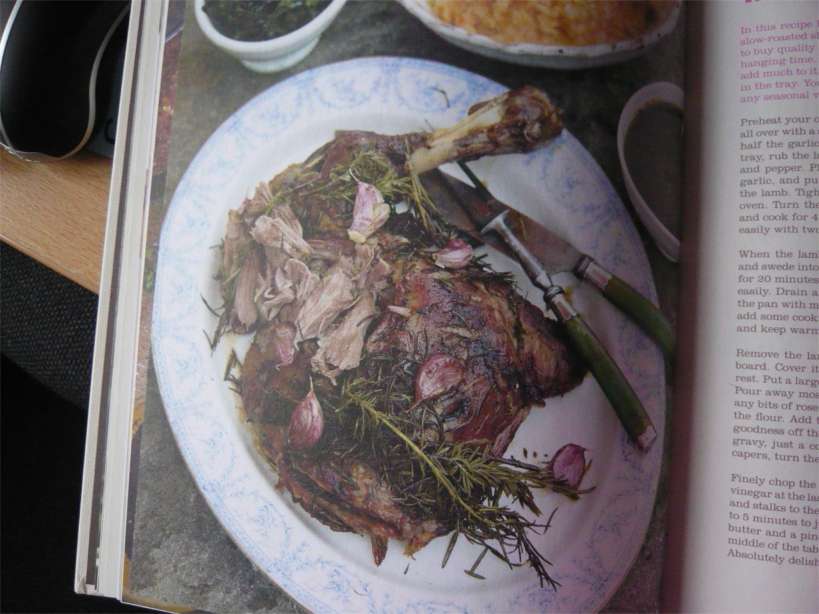
Back to the modern world another book I’ve dipped into today is Jamie Oliver’s Jamie At Home because today we’re having roast lamb. I loved his TV series and bought the book. Like his programmes it’s full of Jamie’s enthusiasm for food and cooking and of course, recipes. It’s not just recipes but details of how to grow a huge variety of vegetables, salad leaves and herbs, plus facts about the shock of battery farming and so much more.

I’ve cooked his “Incredible roasted shoulder of lamb” before and it is simply delicious.

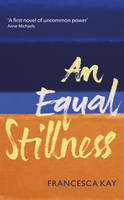 An Equal Stillness by Francesca Kay, set in Spain and Cornwall, is about the lives of two artists who “embark on a poignant and painful love affair”.
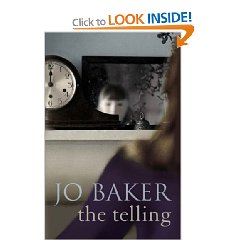 The Telling by Jo Baker to be published in May in paperback is the story of Rachel putting her mother’s affairs in order, packing up and selling her mother’s house, troubled by ghosts of the past.
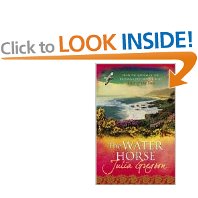 is a fictionalised account of Jane Evans, a Welsh woman who in 1853 ran off with Welsh cattle drovers and volunteered as a nurse with Florence Nightingale in the Crimea.