Best Crime Fiction 2008

Kerrie on her blog Mysteries in Paradise is collating lists of top ten crime fiction reads for 2008. These are books you’ve read in 2008 regardless of the year of publication.

I’ve only read a few crime fiction books this year – 16 to be precise. So it’s not too difficult to pick out ten as the top books. They are, in no particular order:

Christmas Reading

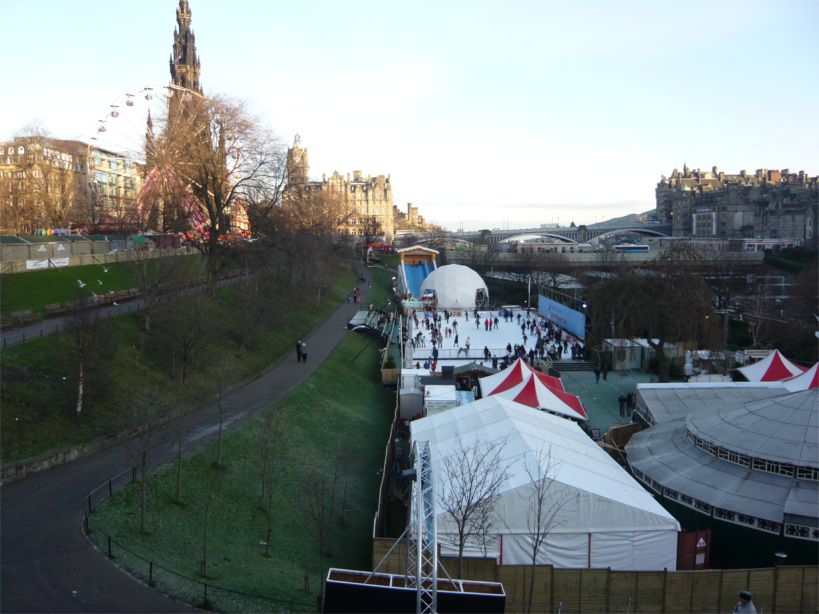
I didn’t read very much during Christmas week as we spent a very happy Christmas in Scotland with our son and his family, lots of presents, food and fun, a walk on Boxing Day and a trip to Edinburgh’s Winter Wonderland on Saturday. Set in in Princes Street Gardens overlooked on one side by the huge Scott Monument and on the other by Edinburgh Castle and surrounded by trees full of twinkling silvery lights there were two outdoor ice rinks and fairground rides. The grandchildren loved the skating, even the three-year old once she had got used to the doublebladed skates strapped to her boots! As it got dark the lights came on making the scene just magical – a winter wonderland.

It was a lovely break but now we’re back to normal and have picked up Lucy from the cattery. She was very pleased to be let out of prison and won’t leave us alone, following us around, inspecting everything and sitting on my lap.

As for reading, I read one of the books I had for Christmas – a nice boxful – Charles Dickens’ A Christmas Carol.  The past few years just before Christmas I’ve looked unsuccessfully for my copy that I had as a child to read it again; I’ve no idea where it went. So this year D bought me a new copy, with the same illustrations by John Leech as in the book I’ve lost. I’d forgotten just how good this book is!

And that was it apart from listening in the car on the way home to The End of Summer by Rosamunde Pilcher, read by Geraldine James. I wish I could read in a car but it makes me feel sick, so listening is the next best thing. Entertaining, if a bit predictable, it filled in three hours of the journey.

Also in my box of books are three books by Martin Edwards, Lake District mysteries – The Coffin Trail, The Cipher Garden and The Arsenic Labyrinth. (The last one I’ve already read when I borrowed a copy from the library, but I enjoyed it so much I wanted my own copy to read again after I’ve read the first two in the series.) 

The other books are a mixed bunch. There is Of Human Bondage by W. Somerset Maugham, the most autobiographical of his masterpieces, according to the back cover. And then, The Various Flavours of Coffee by Anthony Capella, “gourmet” fiction about the coffee trade set in 1895. Followed by Susan Hill’s The Vows of Silence, the latest of the Simon Serrailler crime novels. Then, We Have Always Lived in the Castle by Shirley Jackson, which I’ve been wanting to read for ages. Last and by no means least, I was given The Literary Pocket Companion by Emma Jones – full of fascinating things, perfect!

The only thing now is where do I start – one of these new books or maybe one from my ever growing to-be-read piles?

Best Books of 2008

I’ve read some excellent books this year.

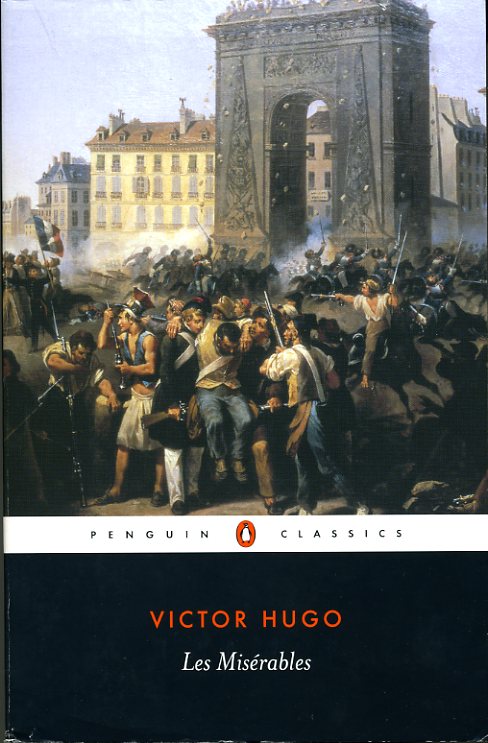
In January I decided to pick one book each month as my “Book of the Month” and my idea was that at the end of the year it would be easier to decide which was the one I liked the best. It hasn’t worked out because I just can’t decide between them. Maybe, because I have been reading it for most of this year and I  finished it yesterday, it’s Les Misérables by Victor Hugo!

These are my books for the year in the order I read them:

January

  • Winter In Madrid by C J Sansom – an action packed thrilling war/spy story and also a moving love story and historical drama all rolled into this tense and gripping novel. Sansom vividly conveys the horror and fear of the realities of life in Spain during the Spanish Civil War and the first two years of the Second World War. Original Review

February

  • The Illusionist by Jennifer Johnston – it starts with Stella, looking back on her life after the death of her estranged husband, Martyn. Thirty years earlier they had met on a train. Stella is charmed by him, and after a very short time they are married, against her parents’advice. Martyn has a full time job but practices magic tricks, describing himself as an “Illusionist”. However, it’s not long before she begins to have misgivings, particularly when he won’t tell her anything about his background or his job or what is in the locked the room where he is devising an extraordinary new trick, with the help of two mysterious men. Original Review

March

  • Half of a Yellow Sun by Chimamanda Ngozi Adichie. This book is based on the Nigeria-Biafra War of 1967-70. It begins in the early 1960s in Nsukka in the south eastern area where Ugwu becomes Odenigbo’s houseboy. The story centres on these two characters and Olanna, Odenigbo’s partner, her twin sister Kainene and her partner Richard. Odenigbo is a professor at the University and his house is the meeting place for academics who debate the political situation as it leads up to violence and the secession of Biafra as an independent state.  Original Review

April

  • Revelation by C J Sansom – the time was March and April 1543, a time of struggle for power between religious reformers and reactionaries. Matthew Shardlake, a lawyer joins forces with Gregory Harsnet, the London coroner in investigating the murder of his old friend Roger Elliard one of a number of grizzly murders based on the Book of Revelation.  Matthew is also working on the case of Adam Kite, a teenage boy, imprisoned in the Bedlam hospital for the insane, helped by Guy Malton (previously a monk and now licensed as a doctor). Adam is a ‘self-hater’ fearing that he is ‘unworthy of God’s love’. The question is, is he mad or possessed by the devil? Original Review

May

  • Our Longest Days: a People’s History of the Second World War  Mass Observation (non-fiction). This is a collection of real wartime diaries. The diarists came from a variety of backgrounds, and from different regions, most of them were middle-class, well-read and articulate. They tended to be people with a natural capacity for observing – and for recording what they observed. I felt as though I had lived through the war myself. Original Review

June

  • Messenger of Truth by Jacqueline Winspear – a detective story set in 1930/1 in England. The artist Nick Bassington-Hope fell to his death from the scaffolding whilst installing his work at an art gallery. The police believed it was an accident, but his twin sister Georgina wasn’t convinced and hired Maisie Dobbs to investigate his death. Along with Nick’s death there is also the mystery of the missing piece of art work that was to be the centre of the exhibition. Original Review

July

  • In God We Doubt by John Humphrys (non-fiction). Humphreys was brought up a Christian but his growing doubts overwhelmed his faith. On his Radio 4 programme he challenged the leaders of three religions to convince him that God exists. In this book he explores religious beliefs and atheism and finds himself somewhere in the middle. I didn’t write a post about this book.

August

  • Pompeii by Richard Harris. The story of the eruption of Vesuvius, destroying the town of Pompeii and killing its inhabitants as they tried to flee the pumice, ash and searing heat and flames. Harris gives vivid descriptions of the luxury of the town – its villas and baths – the corruption of its leaders, the poor living conditions of the general population and savage cruelty shown to the slaves. Original Review

September

  • The Gravedigger’s Daughter by Joyce Carol Oates about a Jewish family who emigrated to America before the Second World War, fleeing from the Nazis. Rebecca’s father, originally a maths teacher can only get work as a gravedigger and as the story unfolds we see the effect this has on him and inevitably on his wife and children. Original Review & also here

October

  • The Behaviour of Moths by Poppy Adams – the story of two sisters, Ginny and Vivi. Vivi, the younger sister left the family mansion 47 years earlier and returns unexpectedly one weekend. Ginny, a reclusive moth expert has rarely left the house in all that time. What happens when they meet again is shocking to both of them. Original Review

November – two books tied

  • Stillmeadow and Sugarbridge by Gladys Taber & Barbara Webster (non-fiction) -a lovely book composed of letters between Gladys and Barbara about country life in Pennsylvania and Connecticut in the 1950s, illustrated by Edward Shenton. Original Review,  also here & here.

  • Cider With Rosie by Laurie Lee (non-fiction) – the  story of Laurie Lee’s childhood in Slad in Gloucestershire, a remote Cotswold village at the beginning of the twentieth century. A delicious book, full of wonderful word pictures. Laurie Lee was also a poet and this book reads like a prose poem throughout.  Partial Review (Full review to follow next year).

December

  • The Arsenic Labyrinth by Martin Edwards – the mystery of the the disappearance of Emma Bestwick. Ten years earlier there had been no apparent reason why she vanished into thin air but more information was revealed following an article in the local paper appealing for the case to be re-opened on the tenth anniversary of her disappearance. There are many twists and turns as Detective Inspector Hannah Scarlett’s Cold Case Review Team carries out its investigation. Original Review

Christmas Presents – Musing Mondays

Today’™s MUSING MONDAYS post is about Christmas book buying’¦

In these last few days before Christmas, I’m sure there are plenty of us scrambling to get our last minute shopping done. Are you buying any books for friends or family (or even yourself)? Do you expect to recieve any bookish gifts from others – books, or book-related?


I like to buy presents to suit each person, so I give books to some people and not to others. It’s great if they have a wishlist to choose from as there is always the chance that I’ll buy a book they already have otherwise.
I love to have books as presents from other people, but I’m just as happy to have a book token. That actually gives me two presents – the actual book and the pleasure of browsing and choosing which one to buy. 


Sunday Salon – the Sunday Before Christmas

It’s not snowing or even very cold here but this poem came to my mind, thinking about Christmas when I was a child. We didn’t have central heating and on winter mornings the windows would be covered over with frost and icicles. My Dad would say Jack Frost had been out over night drawing in the window panes. One of my favourite poems that I used to recite with relish was When Icicles Hang by the Wall which I found in one of my mother’s books that she had had as a child. I had no idea then that it was by Shakespeare (from Love’s Labours Lost).

When Icicles Hang by the Wall by William Shakespeare

When icicles hang by the wall,
And Dick the shepherd blows his nail,
And Tom bears logs into the hall,
And milk comes frozen home in pail,
When blood is nipp’™d and ways be foul,
Then nightly sings the staring owl,
Tu-whit; Tu-who, a merry note,
While greasy Joan doth keel the pot.

When all aloud the wind doth blow,
And coughing drowns the parson’™s saw,
And birds sit brooding in the snow,
And Marian’™s nose looks red and raw,
When roasted crabs hiss in the bowl,
Then nightly sings the staring owl,
Tu-whit; Tu-who, a merry note,
While greasy Joan doth keel the pot.

I loved all the pictures this brought to mind the raw cold, frozen milk, biting wind and snow. Milk was often frozen on the doorstep when I was little, the foil cap lifted up by a plug of ice. I didn’t think that an owl whooting sounded merry at all and I imagined Dick and Tom out in the dark, with their “blood nipped”, fearfully going home to see greasy Joan sitting over a steaming pot – of what I wondered? To me it was a strange scene, but it was just that strangeness that appealed and I felt so sorry for poor Marian left out in the snow.

Maybe it’s the cold in that poem that then made me think of T S Eliot’s Journey of the Magi. Or maybe it’s the thought of travelling in winter:

A cold coming we had of it,
Just the worst time of the year
For the journey, and such a long journey:
The ways deep and the weather sharp,
The very dead of winter.

I’m nearly ready for Christmas – all the presents have been bought, and some are wrapped (by D not by me!) I haven’t done a lot of reading these last few days, but have continued with Wild Mary and Les Miserables (see the sidebar). It’s the start of the war for Mary Wesley, which was the most vivid time in her life and the source for her novels – it was “chaos, exhilaration and loss”. As for Les Mis, I’ve spent too long in the Paris sewers recently. There are long descriptions and history of the sewage system in Paris which I was tempted to miss out, or at least scan read, but I didn’t. I read it all, in all its noxious detail; the horror of Jean Valjean carrying Marius, struggling through the sewers and sinking up to his head in the pit.

This year is the first without my sister, although we didn’t always meet up at Christmas we always spoke on the phone – she even phoned me from China when she was there at Christmas! So it’s a bit strange. It’s also the first year that most of our family is split up, with our son and his family in Scotland and the rest of us in the south of England – the first time we’ve not all seen each other over Christmas. We’re off to Scotland next week, so it’s not all doom and gloom!

The Chunkster Challenge 2008

The aim of the Chunkster Challenge was to read 4 books over 450 pages long from 7 January to 20 December.  

I read one of the books that I initially chose:

  • The Book Thief by Markus Zusack (584 pages) which I did read. See here.

But I didn’t manage the other three, although I still intend to read them sometime:

  • The Meaning of Night by Michael Cox (598 pages)
  • The Needle in the Blood by Sarah Bower (575 pages)
  • Cloud Atlas by David Mitchell (529 pages) 

Instead I read:

  • Winter In Madrid, C J Sansom (530 pages) See here.
  • Revelation by C J Sansom (546 pages) See here
  • The Forgotten Garden by Kate Morton (645 pages) See here
  • The Gravedigger’s Daughter by Joyce Carol Oates See here

It’s hard to decide which of these I enjoyed the most as they’re all so different, but the one that is most memorable is The Gravedigger’s Daughter; Joyce Carol Oates has been a favourite for a long time and this book is one of the best. C J Sansom has to be one of my favourite authors, with two books by him in the challenge but I didn’t think that The Forgotten Garden lived up to Kate Morton’s previous book The House at Riverton. I had hoped to finish the longest book I’ve ever read but I still have 174 pages left of Les Misérables to read, and that’s without the appendices – on The Convent and Argot!

The biggest drawbacks with reading chunksters are of course their weight and size. Les Mis is the worst to read in bed as not only is it such a fat, heavy book, but it is printed in a very small font. The best things about chunksters are that they are books that you can really get your teeth into and because they are so long the characters and plots are really well defined and the books almost become part of my life!