Sunday Salon – Reading By Inclination

A man ought to read just as inclination leads him; for what he reads as a task will do him little good.

Samuel Johnson 1709-84

This week I’ve been reading where my inclination took me. I’ve been tempted to re-read old favourites through thinking and writing about the books I read five years ago, particularly the Iris Murdoch books and then looking at books on my bookshelves set me off again.

But in the end I concentrated on my current reading  and finished The Hidden by Tobias Hill. I need to think about it more before writing about it. I also read a bit more of both Suite Francaise and The Various Flavours of Coffee, and also started Tartan Tragedy by Antonia Fraser, although I’ve not read much of it yet. This is set on a remote island in the Scottish Highlands. There is a forbidding stone house, a family feud, Scottish nationalism and a couple of suspicious deaths. Jemima Shore, on holiday is drawn into the mystery.

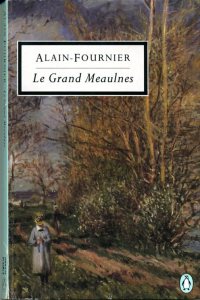
From Scotland I moved to France, reading the opening pages of Le Grand Meaulnes by Henri Alain-Fournier in preparation for the discussion on 14th February over at Cornflower’s book group. I haven’t managed to get the same edition as Cornflower’s as I’ve borrowed the book from the library. There were several copies held in the County Reserve stock (kept in the basement of the building next door to the library), one in French. My copy is a Penguin Twentieth Century Classic, published in 1966 with no introduction. From the back cover:

A classic of immaturity and adolescence … told with lucidity, grace and even magic.

The only novel by a brilliant young man who was killed in action in 1914 at the age of twenty-seven, it is a masterly exploration of the twilight world between boyhood and manhood, with its mixture of idealism, realism and sheer caprice.

I was wondering about “Meaulines”, not sure what it means or how to pronounce it.  “Le Grand Meaulines” is what the boys called Augustin Meaulines. Fortunately there is a footnote on page 18 by the Translator (Frank Davison), explaining that he has not translated the title because no English adjective conveys all the shades of meaning of “grand” which takes on overtones as the story progresses. It could mean the tall, the big, the protective, the almost grown up – even the great Meaulines, or “good old Meaulines” and it is pronounced like the English word “moan”.
le-grand-m001

Here’s a coincidence: the front cover of this book shows a detail from Small Meadows in Spring by Alfred Sisley, who I had never heard of until last Thursday at the first of a five week WEA course on the Impressionists. Sisley was influenced by the Barbizon School of painters. He moved to Moret-sur-Loing next to the Forest of Fontainebleau in 1880 and painted Small Meadows in 1881. It’s now in the Tate.  Sisley, a French landscape painter born in Paris of English parents was one of the founders of the Impressionist School of painting. A definite French trend seems to be going on here – first Suite Francaise, then Le Grand Meaulnes and now the Impressionists. This could be a distraction from my current reading as I want to know more about the Impressionists now.

I’m wondering where my inclination will take me next week – my intention is to read more of Suite Francaise and Le Grand Meaulines and to finish Tartan Tragedy, but maybe I’ll be tempted into starting something completely new, looking at the lives and works of the Impressionists, or I’ll be drawn back into reading an old favourite.
Bookshelf Meme

Avisannschild at She Reads and Reads blog tagged me for this meme. This took me back to my bookshelves looking at the books I’ve owned for years. It’s inevitably made  me want to read these books again and others too that I haven’t mentioned.

The book that’s been on your shelves the longest:

bible-stories

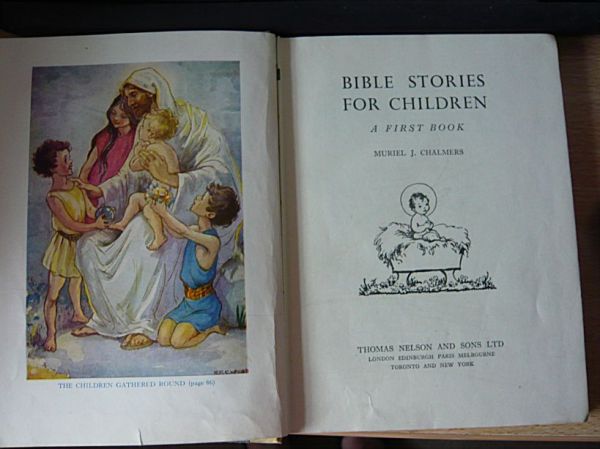
My parents gave me Bible Stories for Children: a First Book by Muriel J Chalmers for my sixth birthday (aeons ago). They bought me the Second and Third books for my seventh and eighth birthdays.

A book that reminds you of something specific in your life (a person, a place, a time, etc.):

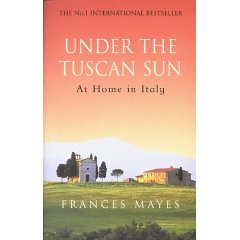
tuscan-sunUnder the Tuscan Sun by Frances Mayes because it reminds me of holidays in Tuscany. In this book she describes how she bought and renovated an abandoned villa. It’s full of the pleasures of living in Tuscany – the sun, the food, the wine and the local people. It makes me want to do the same! Bella Tuscany is the follow up book with more details about the restoration of the villa and its garden, plus recipes. Two of my favourite books.

A book you acquired in some interesting way (gift, serendipity in a used bookstore, prize, etc.):

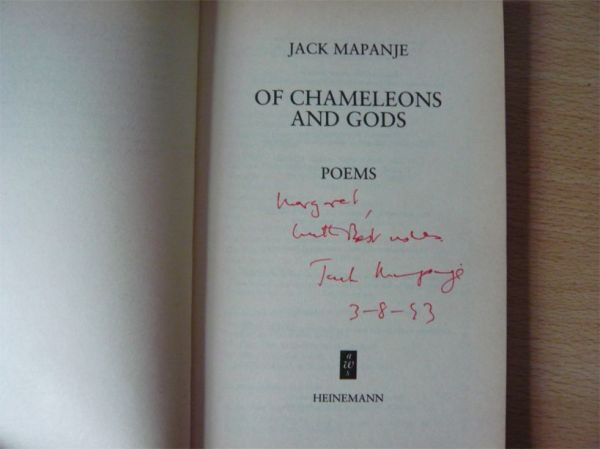
of-chameleonsOf Chameleons and Gods by Jack Mapanje, a book of poems. Mapanje was born in Kadango Village, in southern Malawi. He became the Head of English at the University of Malawi and worked as a research student in linguistics at University College London. This book was published in 1981 and on its second reprint it was banned in Malawi and he was arrested without trial and imprisoned for four years. He was released in 1991 following intense pressure from fellow writers and activists. I heard him speak whilst I was at an Open University Summer School at York University in 1993. Our tutor invited him to speak to the group I was in at a seminar the next day and we were all bowled over by his experiences. He signed my copy for me.

A book that’s been with you to the most places:

When I go abroad on holiday I take books that I haven’t read before and sometimes leave them for others to read and lighten my luggage coming back. So I never take a book to different holiday destinations. We moved to this house 15 years ago so all the books I had before then have been with me everywhere I lived. My husband says that’s far too many books and if/when we move again we’ll need a separate van just for the books. He’s exaggerating! .

The most recent addition to your shelves:tangled

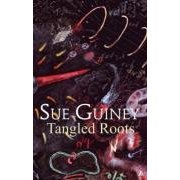
Two books arrived together in the post this week – The Madonna of the Almonds by Marina Fiorato and Tangled Roots by Sue Guiney, both review copies, which I’m looking forward to reading. Tangled Roots should have come from LibraryThing as part of the Early Reviewers Programme, but it didn’t arrive, so Sue kindly had a copy sent to me. I’ve looked at it briefly – it’s about a scientist John and his mother Grace. Their two stories intertwine involving various emotional issues between them.

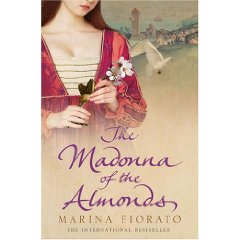
madonnaThe Madonna of the Almonds is from the publisher, Beautiful Books. This is to be published in May. It’s the fictionalised story of the artist Bernadino Luini, who was a protégé of Leonardo da Vinci. A young widow, Simonetta meets him and becomes his muse. She is trying to save her home in Lombardy and stumbles upon a new drink made by infusing almonds into alcohol – the origins of Amaretto. How did the publishers know I love Amaretto and Amoretti biscuits as well as Italy?

A bonus book that you want to talk about that doesn’t fit into the other questions:

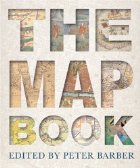
map-bookI love maps. The Map Book by Peter Barber is the book for map lovers. From the introduction;

This book is a celebration of the map in its myriad forms over time. It attempts to penetrate beneath th esometimes glossy, sometimes plain surface to look at why they came into being, who their creators were, what purposes they were intended to serve and what their relationship was to the society in which they were created and whose values they inevitably represented.

It is just wonderful.  It includes maps from all over the world, arranged in date order – maps of oceans and continents, countries, towns and countryside from 1500 BC fossilized prayers to the image derived from satellite data of Mount St Helena just after the volcanic activity of March 2005.  Here are some images:

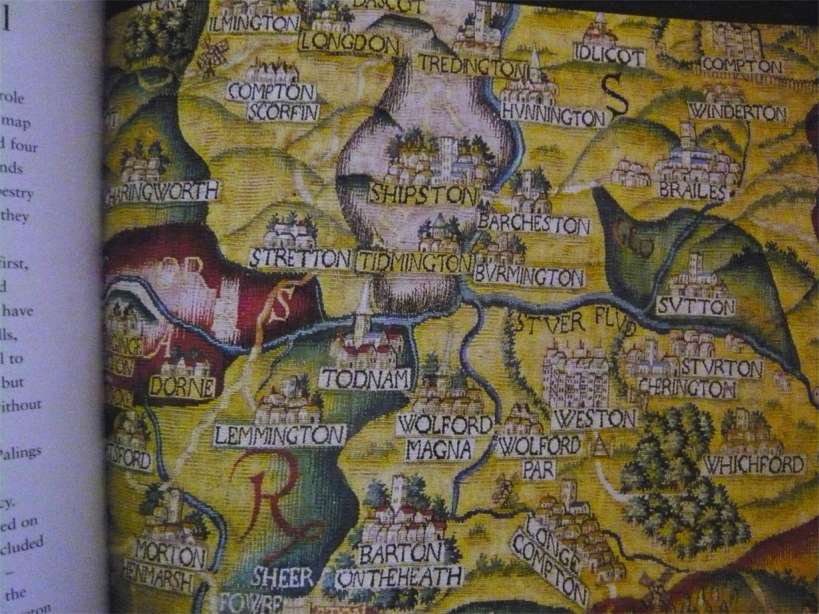
wool-map

 This woven tapestry map  is based on Christopher Saxton’s county map and was one of four comissioned by Ralph Sheldon showing the land he owned. It measures approximately 4 metres high and 6 metres wide.

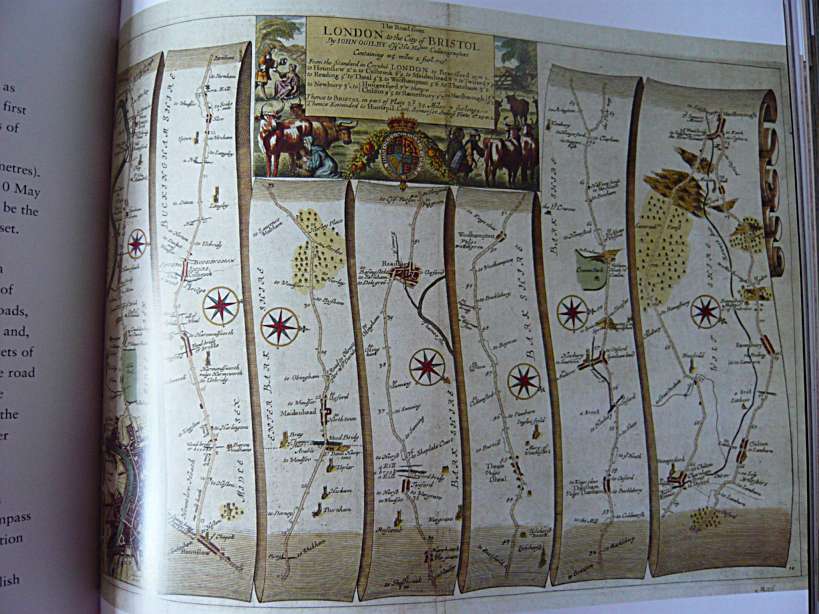
road-map-1675
Ogilby’s English Road Map 1675

 A Road Map from John Ogilby’s atlas Britannia 1675 shows roads in strip form on a scale of 1 inch to a mile. This section is the road from London to Bristol.

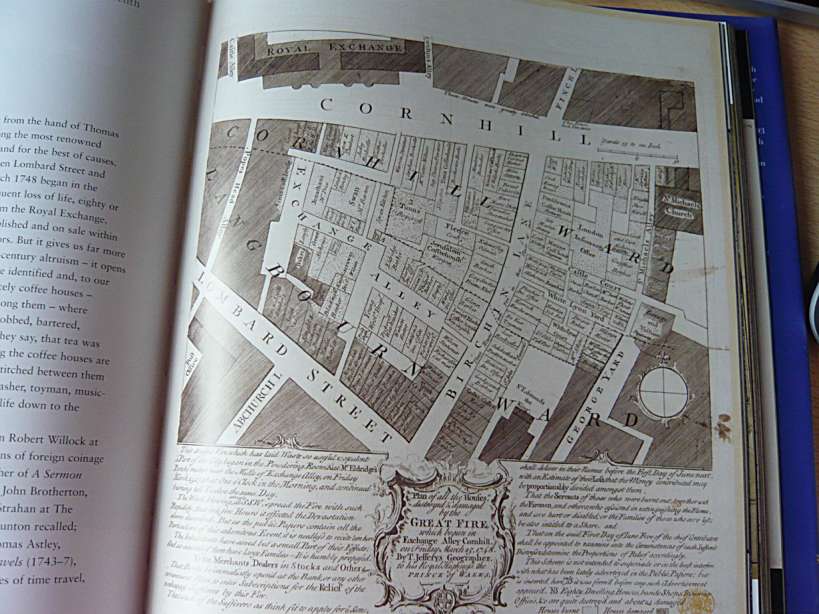
great-fire
Plan of London Houses 1748

 A detailed map published within weeks of the great fire in London of 1748 showing the houses that were destroyed. the purpose of the plan was to launch an appeal for the survivors. Individual occupants and occupations are identified and places such as coffee houses, insurance offices and booksellers.


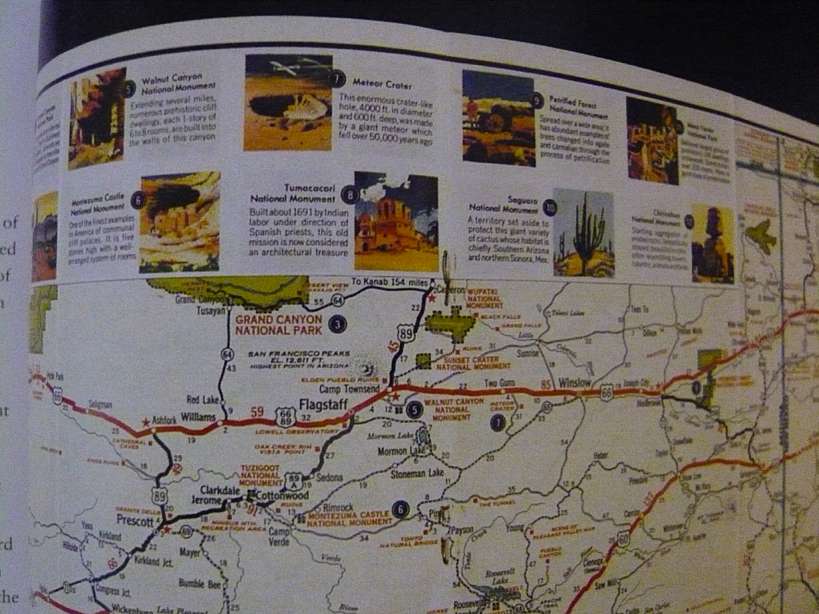
grand-canyon
Interstate Route Map 1941

This map was published for the Standard Oil Company of California. It doesn’t show physical features, the roads appear to cross flat and featureless plains, but there are views of major natural features and monuments numbered and linked to the map for tourists to find routes to places of interest.

The Rules – see below are to tag other people, but I always find this impossible and anyway I know some people have already done this meme. So if you haven’t and would like to do it please consider yourself tagged.

1. Tag 3-5 people, so the fun keeps going!
2. Leave a comment at the original post at A Striped Armchair, so that Eva can collect everyone’s answers.
3. If you leave a comment and link back to Eva as the meme’s creator, she will enter you in a book giveaway contest! She has a whole shelf devoted to giveaway books that you’ll be able to choose from, or a bookmooch point if you prefer.
4. Remember that this is all about enjoying books as physical objects, so feel free to describe the exact book you’re talking about, down to that warping from being dropped in the bath water…
5. Make the meme more fun with visuals! Covers of the specific edition you’re talking about, photos of your bookshelves, etc.

Tuesday’s Teaser

Teaser Tuesday is hosted by Should be Reading – the idea is to pick two sentences between lines 7 and 12 from any page in the book you’re currently reading without giving away ‘spoilers”.

This week I’ve picked three sentences ( for completeness) from page 49 of Suite Française by Irène Némirovsky. People are fleeing from Paris as the Germans advance on the city and food becomes scarce:

Christian charity, the compassion of centuries of civilisation, fell from her like useless ornaments, revealing her bare, arid soul. She needed to feed and protect her own children. Nothing else mattered any more.

This Time Five Years Ago

I’ve previously written about what I was reading ten years ago so when I read Literary Feline’s post about the books she read in January 2004. I thought I’d have a look at what I was reading five years ago. It was in that month that I once again tried to keep track of my reading – I hadn’t recorded my reading since February 2003!  Even then it seemed to be a bit of a hit and miss affair.  I just jotted down a few details about each book.

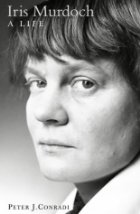
The first entry in January 2004 is Iris by A N Wilson. A year earlier I’d read John Bayley’s iris-by-conradibiographies of Iris, which I found rather uncomfortable reading with maybe too many personal details for my liking. Iris had died in February 1999 after suffering from Alzheimer’s Disease. I’d also read Iris Murdoch: a Life by Peter J Conradi. This is a very different account of Iris. I’d noted that it was “very long and detailed – mainly a literary biography – OK when I had read the books – most interesting when about events and descriptions of her and John.”
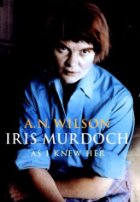
iris-by-wilsonA N Wilson’s biography is very different yet again and all I noted was that it was interesting because of that. This book received some very critical reviews, but I didn’t know that when I read it.  It made me want to read more of her books so I then read The Italian Girl as that was the only book by her on the shelf in the library. I thought it was “quite strange with unattractive characters”. I enjoyed it though and thought it “does make you want to know more about them, what happens and why. Not a book to re-read.”
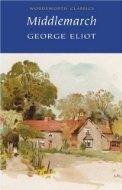
Unlike the next book I read – Middlemarch by George Eliot, which I thought was “very good, middlemarchvery long and in places too wordy, but excellent in character description, analysis and plot development. I’d seen it on TV but long enough ago to forget what the characters looked like so it was easy to use my own imagination. Lots of different characters and much social background of 19th century England.” I still dislike having TV or film adaptations of books intruding into my own vision of how the characters look.
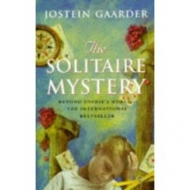
solitaireThe last book I wrote about in January 2004 was The Solitaire Mystery by Jostein Gaarder (who wrote Sophie’s World, that I’d read earlier). I described this as full of philosophical ideas, a story within a story – fantasy/reality/philosophy – about a boy and his father travelling from Norway to Greece in search of the boy’s mother. A dwarf gives the boy a magnifying glass and a baker gives him a miniature book telling the story of a sailor shipwrecked on a desert island in 1790. There is also a pack of playing cards with lives of their own, including a Joker (his father collects Jokers). These are all things he needs to solve the mystery. Unlike Sophie’s World this doesn’t mention specific philosophers but discusses ideas about destiny, the supernatural, conincidences and the reality of the everday world.

I wouldn’t mind re-reading these books, even The Italian Girl!

The Sunday Salon – Reading Notes

tssbadge1After enjoying Fire in the Blood I’m now reading Suite Française by Irène Némirovsky. I’m interested in knowing more about her, so am pleased that the copy I’m reading has a couple of Appendices and a translation of the Preface to the French Edition published in 2004. suite-f1Appendix I is a transcript  of her handwriiten notes on the situation in France and her plans for Suite Française and Appendix II is correspondence 1936 -1945.

The manuscript of Suite Française survived after Irène was arrested and deported to Auschwitz where she died in 1942, because her daughter, Denise put it into a suitcase as she and her sister fled from Issy l’Eveque. She took it as a momento and didn’t read it for many years.


the-hiddenAnother book I started to read yesterday is The Hidden by Tobias Hill. I’d been looking forward to reading this book since last November as part of LibraryThing’s Early Reviewer Programme. It arrived on Thursday just as I had given up hope of receiving it. So far it looks extremely promising as the story alternates between Ben in Greece after the breakup of his marriage and the archaeology of Sparta. My knowledge of Sparta is limited but reading this book it appears that this is not just down to my ignorance but to the fact that little remains of their civilisation. My limited knowledge remembered vaguely from school is that the Spartans were fierce fighters and they put babies out on the hillside to see if they would survive.

Inspired

btt button

Since ‘Inspiration’ is (or should be) the theme this week €¦ what is your reading inspired by?

It should be easy to say what influences or motivates me to read – I love reading and books, it’s what I do whenever I have the time and I make time to do it. But it’s not that simple, reading is a learned skill; it doesn’t come naturally like breathing for example. I suppose I was influenced by my parents, by my mother who always had a book on the go and my father who loved reading and telling me stories. I learned to read before I went to school, probably because I wanted to read the stories to myself and then because I loved the way stories take you into another world.

woman-reading-mascha_djakoffskyI read to learn and find out more about a subject, when I’m bored, when I want entertainment – something funny, something serious, something to make me think. Sometimes I want to read something different to broaden my horizons, about places I can never hope to visit and people I can never meet. Sometimes it’s the words themselves that are inspiring, the way they flow and sound and bring scenes to life before my inner eye; and sometimes it’s the plot, the story and the characters that interest me and I want to know what happens next.

 I’m inspired to read by many things – libraries, bookshops, TV, radio, book reviews, book lists, nature, science, religion, philosphy etc, etc and by other people – personally and through their blogs. Really, I can’t think of anything that doesn’t inspire me to read.