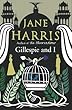
Gillespie and I by Jane Harris: a Book Review

Gillespie and I by Jane Harris is a cleverly told story, narrated by Harriet Baxter, alternating between events in 1888-90 (in Glasgow) and those in 1933 (in London). In 1888 Harriet moved to Glasgow where she got to know the painter, Ned Gillespie and his family. At first I liked Harriet but as I read on I became increasingly doubtful about her character, even though she comes across as an honest, reliable person. But, as she relates what her life is like in 1933 my impression of her began to change.

All is well at first but than a tragedy occurs which forms the major part of the book. It’s signalled in advance, when Harriet refers to the ‘horrible events’ that lay in the future. To say any more would be too much of a spoiler.

The setting of the book in Glasgow of the late 19th century is well described, helped by plans in the front of the book. The characters are also convincing, even some of the minor ones and her portrayal of Ned’s disturbed daughter, Sybil is quite chilling. This is a very detailed book, both about the place, artists and, through the account of a trial, the Scottish legal system of that period. It’s a book that lingered in my mind after I finished reading and if it wasn’t so long I’d like to re-read it in the light of what I now know.

  • Hardcover: 528 pages
  • Publisher: Faber and Faber (5 May 2011)
  • Language English
  • ISBN-10: 0571275168
  • ISBN-13: 978-0571275168
  • Source:an uncorrected proof from the publishers (via LibraryThing Early Reviewers)
  • My rating 3.5/5

I haven’t read Jane Harris first book, The Observations, although I’ve owned it for a while. It’s probably time I read that one too.
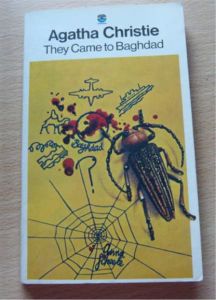
They Came to Baghdad by Agatha Christie: a Book Review

They came to Baghdad

I made copious notes as I read Agatha Christie’s They Came to Baghdad because it’s such a complex plot and there seemed to be so many significant events and people that I wanted to clarify what was happening. This is not one of Agatha Christie’s detective novels – no Miss Marple or Hercule Poirot,-  just Victoria Jones, a short-hand typist, a courageous girl with a ‘natural leaning towards adventure’ and a tendency to tell lies. Set in 1950 this is a story about international espionage and conspiracy. The heads of the ‘great powers‘ are secretly meeting in Baghdad, where if it all goes wrong ‘the balloon will go up with a vengeance.’ And an underground criminal organisation is out to make sure it does go wrong, aiming at ‘total war – total destruction. And then – the new Heaven and the new Earth.’

Victoria gets involved after one meeting with a young man, Edward, who is going out to Baghdad the following day to join an archaeological dig. She thinks he’s an incredibly good-looking man and considering herself an excellent judge of character is immediately attracted to him. As she has just been fired from her job, impulsively she decides to follow him to Baghdad, claiming to be the niece of Dr Pauncefoot Jones, Richard’s boss .

At the same time a British secret agent, Carmichael, is trying to get to Baghdad with important information, and is his life is in great danger. Will he get there? Anna Scheele, a mysterious character is also on her way to Baghdad and there are hints that she is at the centre of things. Just who is she and what side is she on?

Alongside the mystery, Agatha Christie’s descriptions of the locations, local people and of the archaeological dig are superb, no doubt taken from her experience of her own visits to Baghdad and Iraq. I enjoyed it for its entertaining plot, the authenticity of the background and its great characters, in particular I grew very fond of the amazing Victoria Jones.

  • First published in 1951 by William Collins & Co Ltd
  • My copy a secondhand paperback Fontana Books, 1980
  • My Rating: 4/5

R.I.P. VI Challenge Completed

Carl’s R.I.P. VI  challenge ended on 31 October and I’m pleased that I completed Peril the First, which was :

Read four books, any length, that you feel fit (my very broad definitions) of R.I.P. literature. It could be Stephen King or Sir Arthur Conan Doyle, Ian Fleming or Edgar Allan Poe’¦or anyone in between.

I read the following books (linked to my reviews):

These are all books that were on my to-be-read list. I think Blood Harvest has to be my favourite of the four and I thoroughly enjoyed it – a dark, scary book, disturbing, and completely gripping.  I was particularly pleased that I finally read The Turn of the Screw as I first started to read it some years ago. It’s an ideal book for the RIP Challenge. Thanks go to Carl for hosting.

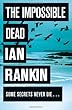
The Impossible Dead by Ian Rankin: a Book Review

The Impossible Dead, Ian Rankin’s second book featuring Inspector Malcolm Fox is very readable, with a nicely complicated plot, and good characterisation. Fox is still in the Complaints, now officially called Professional Ethics and Standards, but it soon becomes apparent that really he wants to be in CID. I’m not sure what to make of Fox. He’s:

… diligent and scrupulous, never a shirker. He had put in the hours, been commended for his error-free paperwork and ability to lead a team: no egos and no heroes. He hadn’t been unhappy. He had learned much and kept out of trouble. If a problem  arose, he either dealt with it or ensured it was moved elsewhere. (page 105)

And yet, he’s another loner, working best on his own, not letting on to his boss what he is working on, disregarding procedure and getting involved in cases outside his remit. He doesn’t drink because he’s an alcoholic, his marriage failed and his relationship with his sister leaves a lot to be desired (although it does improve in this book). Fox’s family life intrudes into his work and gives insight into his background and his relationship with his father and sister. He’s a complex character and I began to think that maybe he’s turning into Rebus.

Detective Constable Paul Carter has been found guilty of misconduct and Fox and his team are called to investigate whether his colleagues have covered up for him. When Paul’s uncle, Alan, a retired policeman, is found dead Fox is convinced it was murder and not suicide and begins his own independent investigations, despite being told it’s a CID case. He oversteps his remit too by investigating a cold case. When his investigations reveal links back to 1985, a time of turmoil when Scottish militants were intent on a split between Scotland and the rest of the UK, he discovers new evidence concerning the unsolved murder of one of the activists at that time.

In the second half of the book the pace and tension increase as Fox delves deeper and puts his own life in danger. I found it quite easy to see who the culprits were because their identity was signalled, but nevertheless it was a satisfying conclusion to the book.

  • Hardcover: 384 pages
  • Publisher: Orion (13 Oct 2011)
  • Language English
  • ISBN-10: 0752889532
  • ISBN-13: 978-0752889535
  • Source: I bought it
  • My Rating 3.5/5

One Book … a Meme

Simon at Stuck in a Book posted this meme on Friday and I thought I’d join in as I did the last time he ran it. It’s all about the books you’re currently reading, have just read and want to read next.

Do have a go yourself, if you like – and if you do, let me know in the comments so I can come over and have a look!

1.) The book I’m currently reading. I’m reading two:

Gillespie and I by Jane Harris.This has been sitting in a pile by my bed for a few months now and I’ve been wanting to read it ever since I got it, but other books have got in the way. I decided this morning that the time to read it is now and I’ve just read the Preface and the first two chapters. It looks as though I’m going to enjoy it very much.

The other book I’m reading is:

Faulks on Fiction by Sebastian Faulks.I’ve been reading this a chapter at a time and have just finished the one on Jane Austen’s Mr Darcy. It’s a companion book to the TV series on the history of the novel – which I didn’t get round to watching. It tracks the development of the novel through looking at heroes, lovers, snobs and villains. Interesting.

2.) The last book I finished: 

They Came to Baghdad by Agatha Christie. I finished this yesterday and my review will come later. Wonderful descriptions of Baghdad, based no doubt on Agatha Christie’s own experience. With an international plot to get the world’s two major powers at war this is a fast moving book with intriguing characters – no Miss Marple or Poirot – but a most resourceful shorthand typist,Victoria Jones.

3.) The next book I want to read:

King Solomon’s Carpet by Barbara Vine – one from my to-be-read books. Another dark, tense psychological thriller by Ruth Rendell writing as Barbara Vine.

4.) The last book I bought:

Westwood by Stella Gibbons. This is the next book at my local book group meeting at the end of November. It should make a nice change to read a ‘comic and wistful tale of love and longing‘ as The Times describes it on the back cover.

5.) The last book I was given: 

The Things We Cherished by Pam Jenoff – a review copy, sent to me by the publishers. This has two plots running parallel – set between the present day and wartime Germany.

Saturday Snapshots – Great Hetha Walk

We’ve been having a mix of weather recently what with wet days, windy days, dull grey days and a few beautiful sunny days. Wednesday was one of the days when the sun shone the sky was blue and it even felt a bit spring-like. So that afternoon Dave and I decided it was time we took a walk in the Cheviot Hills.

We’ve lived just north of the Cheviots for nearly two years now and have been saying ever since we arrived that we must go walking in the hills. I don’t know how many hills there are that form the range, but there are many of these rounded hills bisected by valleys. They straddle the border between England and Scotland, that area of land fought over in the past, a land where the Border Reivers held sway. The Cheviot, itself is the highest point at 815 metres and the last major peak in England, but we decided to start small with Great Hetha above College Valley and work up to walking the Marilyns.

The photo above shows the view at the start of our walk with Great Hetha on the skyline. It’s 210 metres at the summit where there are the remains of an ancient hillfort. We parked in the car park just south of Hethpool and the walk began easily enough along the private road through the Valley. The photo below shows the Valley looking south:

After a short distance and turning right it’s a steep uphill climb described in Walks in the Cheviot Hills by David Haffey as a ‘strenuous climb‘! I was soon struggling for breath. We stopped halfway up to look at the view northwards to Scotland (and to get our breath back!).

Looking up at that point we could see a small cairn on the summit, still a steep climb ahead.

It was worth the climb to reach the hillfort. This is an Iron Age hillfort dating from about 500BC. The remains of the stone ramparts are still there and it was easy to imagine what it must have been like in such an isolated place, being able to see for miles around, aware of any approach to the hill. According to the Walks guidebook such hillforts would have contained several timber-built round-houses within the stone ramparts, probably being occupied for several centuries.

From there we left the route in the guidebook and walked down the other side of the hill to the valley below and crossed the Elsdon Burn. The sky was most dramatic:

It was getting towards the end of the afternoon and as we headed back to the car, the sheep were being rounded up in the field, below a wooded dome-shaped hill known locally as the Collingwood Oaks (after Admiral Lord Collingwood – there is a hotel in Cornhill called the Collingwood Arms, more about that another time maybe). I wasn’t quick enough to take a photo of the running sheep (they were galloping!) but I managed to snap the farmer and his three sheepdogs on their way back, with the Collingwood Oaks in the background.

There are more photos of our walk on Flickr.

Saturday Snapshot is hosted by Alyce, At Home With Books.