The Last Day by Andrew Hunter Murray

A thriller set in a world which has spun to a halt, bringing civilisation to the brink of collapse
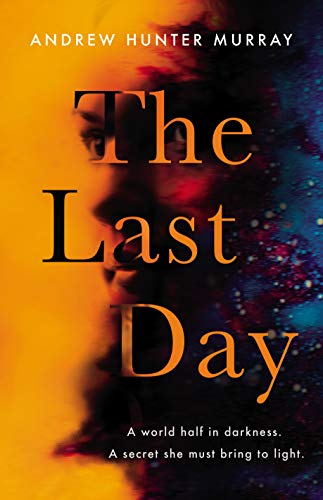
The last day

Cornerstone| 6 February 2020| 432 pages| e-book| review copy via NetGalley| 5 stars

It’s not often I read dystopian fiction, a bit wary that I won’t like it, but I’m glad to say that I was fascinated by The Last Day by Andrew Hunter Murray. I’m not sure about the plausibility of the concept but I was gripped by the story of a world coming to an end and the effects that had on the planet and the population.

A white dwarf star, the size of earth but two hundred thousand times as dense had barrelled through space, and travelling at two thousand kilometres a second its trajectory and gravity had dragged the earth backwards. The earth’s rotation had gradually slowed and eventually came to a full stop. Chaos followed, earthquakes, volcanic eruptions and gales swept the earth’s surface, but gravity still functioned as the planet was still the same mass and exerted gravitational force. As the planet stopped on the dawning of the last day in 2029 the boundaries of day and night were locked in place, with a slender ring of borderlands that varied between total darkness and a fractional glimpse of light. Europe was in the constant light of the sun with an isolationist Britain on the warm side far enough in to raise crops but far enough out to still be habitable.

Set in 2059, thirty years after the earth had finally stopped spinning The Last Day presents a totalitarian world, and gives such a vivid picture of what life has become for the people who live on the burning sun side of the planet. There is, of course, no night, but there is a curfew during the ‘night’ hours.  I warmed to Ellen Hopper, a scientist working on a rig two hundred miles off the south-west coast of England in the North Atlantic, where it is always dawn, as she studies the ocean’s currents. She receives a letter from Dr Edward Thorne her old college tutor at Oxford who is dying. He has something important to tell her, information that would ruin the British government and that they would do anything to keep hidden. Prior to his appointment at Oxford he had  been a scientist and an adviser to the British Prime Minister, Richard Davenport, until he had been ignominiously sacked. 

What follows is Hopper’s search to discover the details of this secret, interspersed with flashbacks to her past and her family history, in particular about what happened to her parents, her relationship with her brother, who works in security, her fears that she shouldn’t trust him, and her ex-husband David. It is full of political intrigue and danger with a high body count and builds to a dramatic conclusion. I thoroughly enjoyed it, was glued to the pages and by the end of the book I was convinced of the reality of this implausible world (at least I hope it is). 

Andrew Hunter Murray, is a writer and journalist from London. The Last Day is his first novel. when he’s not writing fiction he works for the TV show QI, as one of the ‘Elves’ finding out Quite Interesting facts about everything under the sun. He also co-hosts the podcast No Such Thing As A Fish, and write jokes and journalism for Private Eye, the UK’s leading satirical magazine. No Such Thing As A Fish has also led to a spin-off TV series, No Such Thing As The News, and three books co-written with his colleagues on the show – the Book Of The Year, The Book Of The Year 2018, and the Book Of The Year 2019.

He is already working on his next novel idea. I definitely want to read it when he’s finished it!

Many thanks to Cornerstone for a review copy via NetGalley.
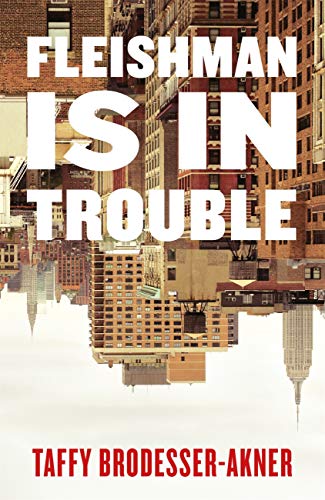
Six Degrees of Separation: from Fleishman is in Trouble to …

I love doing Six Degrees of Separation, a monthly link-up hosted by Kate at Books Are My Favourite and Best. Each month a book is chosen as a starting point and linked to six other books to form a chain. A book doesn’t need to be connected to all the other books on the list, only to the one next to it in the chain.

Fleishman

This month the chain begins with Fleishman is in Trouble by Taffy Brodesser-Akner,  a novel described as ‘a blistering satirical novel about Marriage, Divorce and Modern relationships‘. It’s a book that so many people declare is incredibly wise, a powerful feminist book, with depth, wit, nuance and life, shrewdly observed and and utterly of this moment. It is a book I have not read and also one that I doubt I will read.

Where to go from there? I had trouble deciding!

In the end I decided to go with the word ‘trouble‘ and that made me think of Bill Bryson’s book Troublesome Words, a book about the use of words, which is probably as far removed from Fleishman is in Trouble that you could get. It’s arranged like a dictionary, so a book to dip into rather than one to read straight through. For example if you want to know the difference between ‘that’ and ‘which’ this is the book to go to. And how about starting a sentence with the word ‘and’?  I was taught at school that you should never do that, not so says Bryson.

From Troublesome Words my mind jumped to The Sentence is Death by Anthony Horowitz, as a sentence is made up of words. Rosemary, the wife of wealthy George Barton dies suddenly at her birthday party at a West End Restaurant, the Luxembourg, after drinking a glass of champagne laced with cyanide.

And so onto Sparkling Cyanide by Agatha Christie. Rosemary, the wife of wealthy George Barton dies suddenly at her birthday party at a West End Restaurant, the Luxembourg, after drinking a glass of champagne laced with cyanide.

A birthday party features in Nicola Upson’s Fear in the Sunlight, the fourth novel featuring Josephine Tey. Summer, 1936. The writer, Josephine Tey, joins her friends in the holiday village of Portmeirion in Wales to celebrate her fortieth birthday. Alfred Hitchcock and his wife, Alma Reville, are there to sign a deal to film Josephine Tey’s novel, A Shilling for Candles.

So, my next link is to another book set in Wales, but in the Brecon Beacons not the coast. It’s Do Not Disturb by Claire Douglas. It also links back to Fleishman is in Trouble in that it’s about the trouble caused when Selena, Kirsty’s cousin, arrives at their new guesthouse and murder follows.

Finally, another troublesome character called Selena appears in Sweet Tooth by Ian McEwan. She was a spy whose mission failed – a story of deception, about writers and writing and readers and reading, with multiple stories within stories.

My chain begins and ends with a book about trouble, linked by a book about troublesome words, and murder mysteries involving the use of cyanide, birthday parties, books set in Wales and books with even more troublesome characters – a real mixed bag of connections.

Next month (7 March 2020), we’ll begin with Lucy Treloar’s Wolfe Island, a book that I know nothing about. (Bryson says it’s OK to end  sentence with a preposition).

Latest Additions at BooksPlease

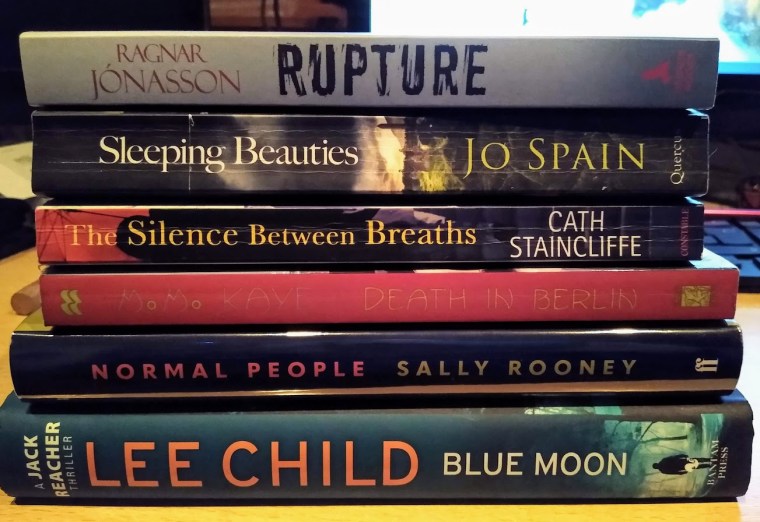
Yesterday I brought this little pile of books home from Barter Books in Alnwick, my favourite bookshop. (This is where you can ‘swap’ books for credit that you can then use to get more books from the Barter Books shelves.)

BB bks Jan 2020

From top to bottom they are:

Rupture by Ragnar Jónasson, the fourth book in the Dark Iceland series. Two young couples move to the uninhabited, isolated fjord of Hedinsfjordur. Their stay ends abruptly when one of the women meets her death in mysterious circumstances. I’ve read one of his Hidden Iceland series, The Island which I thoroughly enjoyed.

Sleeping Beauties by Jo Spain, who is one of my favourite authors. It’s the third book in the Inspector Tom Reynolds Mystery series. A young woman, Fiona Holland, has gone missing from a small Irish village. A search is mounted, but there are whispers. Fiona had a wild reputation. Was she abducted, or has she run away?

The Silence Between Breaths by Cath Staincliffe. I’ve seen some of her books reviewed on other book blogs and thought I’d look for one of hers. It’s set on a train travelling from Manchester to London, where one of the passengers is carrying a deadly rucksack. Cath Staincliffe is a Manchester based crime writer, the creator and scriptwriter of ITV’s police series, Blue Murder and writes the Scott & Bailey books, based on the ITV1 police series.

Death in Berlin by M M Kaye. Years ago I read The Far Pavilions and it is only in recent years that I discovered she wrote the Death in … series. This is the 2nd book in the series first published in 1955. A murder mystery set in post-war Berlin.

The last two books are hardbacks that look brand new – Normal People by Sally Rooney. This is a not the usual type of book that I read, and a bit out of my comfort zone. It’s described on the dust jacket as a story of mutual fascination, friendship and love in which a couple try to stay apart but find they can’t.

And finally  – Blue Moon by Lee Child, a Jack Reacher thriller. I’m not sure this one is my cup of tea either, as two rival gangs are competing for control in the city – maybe too violent for me.

Have you read any of these books?  Do any of them tempt you? 

WWW Wednesday: 29 January 2020

IMG_1384-0

WWW Wednesday is run by Taking on a World of Words.

The Three Ws are:

What are you currently reading?
What did you recently finish reading?
What do you think you’ll read next?

Currently reading: I’m still reading, very slowly, The John Lennon Letters edited by Hunter Davies and The Windsor Story by J Bryan III and Charles V Murphy.

 And I’m also enjoying Hunter Davies’ memoir Happy Old Me: How to Live a Long Life and Really Enjoy It. This is an account of one year in his life after his wife, Margaret Forster died – poignant, moving and very interesting.

Recently Finished: Death Has Deep Roots: a Second World War Mystery by Michael Gilbert. Set in 1950 it’s a mix of courtroom drama, spy novel and an adventure thriller. Victoria Lamartine, a hotel worker, and an ex-French Resistance fighter is on trial for the murder of Major Eric Thoseby, her supposed lover, and alleged father of her dead child. My full review is in this post.

Silence between breathsReading Next: This is a movable feast, as I rarely decide until the time comes.

Yesterday I picked up several books in Barter Books, and am itching to read The Silence Between Breaths by Cath Staincliffe – Passengers boarding the 10.35 train from Manchester Piccadilly to London Euston are bound for work, assignations, reunions, holidays or new starts, with no idea that their journey is about to be brutally curtailed.

I did begin reading it whilst having a cup of coffee in Barter Books and the opening chapters make me want to read more.

Or it could be one of my TBRs – I simply don’t know yet.

Have you read any of these books?  Do any of them tempt you? 

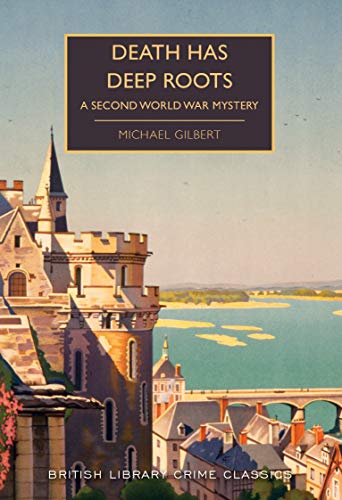
Death Has Deep Roots by Michael Gilbert (British Library Crime Classics)


Death has deep roots

Poisoned Pen Press| 5 November 2019| 288 pages|reprint edition| 4.5*

Death Has Deep Roots: a Second World War Mystery by Michael Gilbert was first published in 1951. This edition, published in association with the British Library, has an introduction by Martin Edwards.

I thoroughly enjoyed Death Has Deep Roots. Set in 1950 it’s a mix of courtroom drama, spy novel and an adventure thriller. Victoria Lamartine, a hotel worker, and an ex-French Resistance fighter is on trial for the murder of Major Eric Thoseby, her supposed lover, and alleged father of her dead child. The story alternates between the courtroom scenes, where QC Hargest Macrea is in charge of Vicky’s defence, and the investigations of solicitor Nap Rumbold in France, and his friend Major Angus McCann, who now keeps a pub in Shepherd Market.

Vicky is the obvious suspect – she was found standing over Thoseby’s dead body in his room at the Family Hotel in Soho, a room that was only accessed by one staircase – making this a variation on a locked room murder mystery. In evidence was also against her as Thoseby had been stabbed using the same method that the Resistance fighters had been taught. But she insists that she is not guilty.  Macrea and Nap believe her and Nap sets out to find the Englishman, Julian West, who Vicky says is the father of her dead child, whilst McCann investigates events in London.

I always like courtroom dramas and I think the courtroom scenes are impressive and persuasive as Macrea questions the prosecutions witnesses and manages to stall proceedings whilst Nap is away in France. It is, of course, much more complicated than I’ve described – there is a lot of information about the war in France and the work of the French Resistance, and the dangers that confront Nap as he digs deeper into what had happened to Wells. And I enjoyed the thrill of the chase as he travels through France with only a week to discover the truth.

I think what makes this book so good is not just the murder mystery, which I couldn’t solve, but also the setting and the characters. It was written not long after the end of the Second World War and it conveys a vivid impression of what life was like in both France and England, with memories of the war still fresh on people’s minds. Whilst Vicky is maybe a stereotypical character Nap, in particular, comes across as a more developed character – and a very likeable one too. It’s described as a book in the Inspector Hazelrigg series, but he only makes a brief appearance, with Nap, Macrea and McCann doing the main investigations.

Michael Gilbert was a British lawyer who wrote police procedurals, spy novels and many short stories, courtroom dramas, classical mysteries, adventure thrillers, and crime novels. I have another one of his to read, Smallbone Deceased and I hope to get round to it soon.

Many thanks to Poisoned Pen Press for a review copy via NetGalley.

Library Loans 24 January 2020

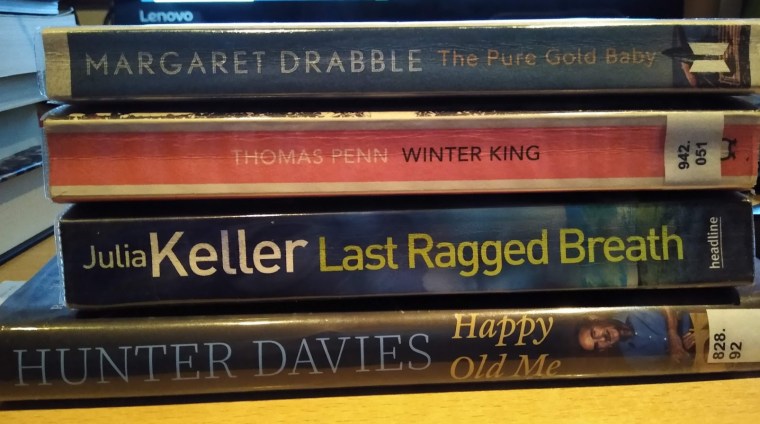
I regularly borrow books from the library, although I haven’t written about them for a few months. These are the ones I have on loan at the moment:

Lib loans Jan 2020

The Pure Gold Baby by Margaret Drabble. This novel was on the mobile library van shelves and caught my eye because I’ve enjoyed the other books by her that I’ve read. Anna is a child of special, unknowable qualities. She is happy, always willing to smile at the world around her, but she also presents profound challenges. For her mother Jess, still in her early 20s, her arrival will prove life-transforming.

Winter King: The Dawn of Tudor England by Thomas Penn, non-fiction about Henry VII. I reserved this after FictionFan recommended it, describing it as: ‘very detailed but well written and not too academic in tone‘. Hilary Mantel is quoted on the cover: ‘Compelling … Fascinating‘. With two such recommendations how could I resist reading it? So I was delighted to find the library has a copy.

The Last Ragged Breath by Julia Keller, the 4th book in her Bell Elkin’s mystery series set in West Virginia. I haven’t read any of her books before but I was reading about her latest book on Kay’s Reading Life and found this book on the shelves when I went to the library yesterday. Royce Dillard doesn’t remember much about the day his parents-and one hundred and twenty-three other souls-died in the 1972 Buffalo Creek disaster. But now Dillard, who lives off the grid with only a passel of dogs for company, is fighting for his life one more time: He’s on trial for murder.

Happy Old Me:How to Live a Long Life and Really Enjoy It by Hunter Davies. This is another book I reserved. Davies is the editor of The John Lennon Letters (which I’m currently reading) and the author of Wainwright: The Biography (which my husband is currently reading and I want to read it too). This is his third autobiographical book, described on the book sleeve as ‘part memoir, part self-help … a moving, uplifting and often amusing account of one year in Hunter Davies’ life, navigating bereavement and finding hope for the future.‘ I’m currently reading it and so far (up to chapter 4) I’m loving it.

I love libraries and have used them all my life (well from the age of 3). At the moment the library service is carrying out a survey about our use of the libraries, how often we borrow books etc, etc  – and especially about our use of the mobile library service, and I fear that cutbacks may follow, so I make sure I use the libraries whilst I still can.