Recent Additions at BooksPlease

My TBR piles have been growing again this week with two new additions, books that will be published soon.

First up is a book by an author whose books I’ve enjoyed reading in the past – Sandlands by Rosy Thornton, a book of sixteen short stories, which she has kindly sent to me for review – I have read the first story and am itching to read the rest.
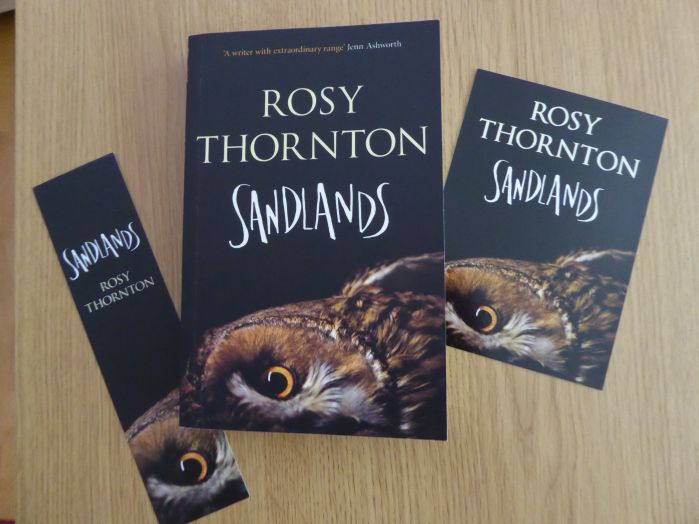
Sandlands P1020059

Rosy Thornton’s email to me explained that the stories are all are set in and around the same small village in coastal Suffolk and, as well as sharing a setting and one or two minor characters, are all closely connected in thematic terms: the natural world, wildlife and the relationship of people to their landscape, and also how the past can make itself felt in the present in various unexpected ways. Some of the stories are ghostly or magical; some are poignant and sad; one or two are (she hopes) funny.

How could I resist this book? Rosy Thornton is an author of contemporary fiction, published originally by Headline Review and more recently by Sandstone Press. In her novels and short stories she enjoys exploring family relationships (especially mothers and daughters), and the way people relate to place and landscape. In real life she lectures in Law at the University of Cambridge, where she is a Fellow of Emmanuel College. She shares her home with her partner and two lunatic spaniels.

Her earlier books I’ve read are Hearts and Minds,  The Tapestry of Love, and Ninepins. I recommend each one, although I think The Tapestry of Love is my favourite.

  • Paperback: 320 pages
  • Publisher: Sandstone Press Ltd (21 July 2016)
  • Language: English
  • ISBN-10: 191098504X
  • ISBN-13: 978-1910985045

The other book is an e-book, one of the Kindle First choices for July – Doubt by C E Tobisman, described as a Caroline Auden legal thriller.
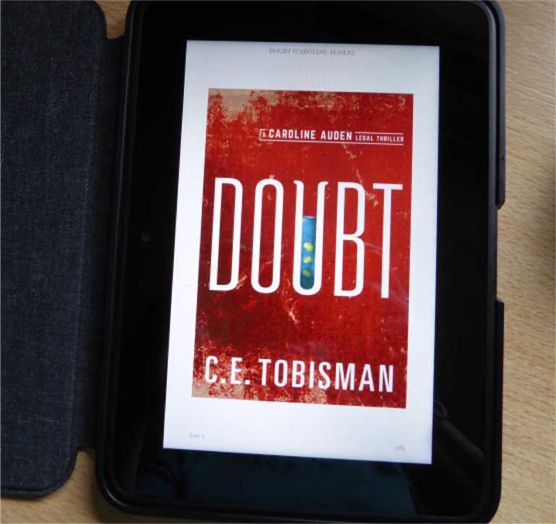
Doubt cover

Blurb:

When Caroline Auden lands a job at a top Los Angeles law firm, she’s excited for the challenge – and grateful for the chance to put her dark past as a computer hacker behind her. Right away, her new boss asks her to find out whether a popular GMO [a genetically modified organism] causes healthy people to fall ill. Caroline is only supposed to dig in the trenches and report up the ladder, but her tech background and intuition take her further than planned. When she suspects a link between the death of a prominent scientist and the shadowy biotech giant, she cries foul and soon finds herself in the crosshairs. The clock is ticking and thousands of lives are on the line’¦including her own.

Now this rookie lawyer with a troubled past and a penchant for hacking must prove a billion-dollar company is responsible for thousands of deaths’¦before they come after her.

I haven’t read anything by C E Tobisman, an American author.

  • Format: Kindle Edition
  • File Size: 3935 KB
  • Print Length: 346 pages
  • Publisher: Thomas & Mercer (1 Aug. 2016)

My Friday Post

Book Beginnings ButtonEvery Friday Book Beginnings on Friday is hosted by Gillion at Rose City Reader where you can share the first sentence (or so) of the book you are reading, along with your initial thoughts about the sentence, impressions of the book, or anything else the opener inspires.

This week’s book is Leaving Everything Most Loved by Jacqueline Winspear, the 10th Maisie Dobbs novel. It begins:

Prologue – London, July 1933

Edith Billings – Mrs Edith Billings, that is, proprietor of Billings’ Bakery – watched as the dark woman walked past the shop window, her black head with its oiled ebony hair appearing to bob up and down between the top shelf of cottage loaves and the middle shelf of fancy cakes as she made her way along with a confidence to her step.

Blurb:

London, 1933. Some two months after an Indian woman, Usha Pramal, is found murdered in a South London canal, her brother turns to Maisie Dobbs to find the truth about her death. Not only has Scotland Yard made no arrests, but evidence indicates they failed to conduct a full and thorough investigation. Before her death, Usha was staying at an ayah’s hostel, a refuge for Indian women whose British employers had turned them out. As Maisie learns, Usha was different from the hostel’s other lodgers. But with this discovery comes new danger – soon another Indian woman who was close to Usha is found murdered before she can speak out. As Maisie is pulled deeper into an unfamiliar yet alluring subculture, her investigation becomes clouded by the unfinished business of a previous case. And at the same time her lover, James Compton, gives her an ultimatum she cannot ignore …

Friday 56Also every Friday there is The Friday 56, hosted by Freda at Freda’s Voice.

These are the rules:

  1. Grab a book, any book.
  2. Turn to page 56, or 56% on your eReader.
  3. Find any sentence (or a few, just don’t spoil it) that grabs you.
  4. Post it.
  5. Add the URL to your post in the link on Freda’s most recent Friday 56 post.

Page 56:

Maisie felt her skin prickle when she read the more common name for the Camberwell Beauty: the Mourning Cloak. It was not a clue, not an element of great import of her investigation, but there was something in the picture before her that touched her heart. That something beautiful was so bold, yet at once so fragile.

I’ve read a few of the Maisie Dobbs books and like them. I’ve read just the first chapter of this book so far and it promises to be as good as the others. I don’t know the significance of the Camberwell Beauty butterfly but I know it under that name – not as the Mourning Cloak. It’s a rare butterfly here in the UK.

No Man’s Nightingale by Ruth Rendell

Last month I read books from my own shelves for the Mount TBR Reading Challenge (books owned before 1 January 2016) and the 20 Books of Summer Challenge, but then the urge to read other books took over, mainly because I’ve been adding books to my shelves. For the time being I won’t be reading for the Mount TBR Challenge as I have several books that I’ve acquired this year that I want to read first.
One of them is Ruth Rendell’s No Man’s Nightingale.

Blurb:

The woman vicar of St Peter’s Church may not be popular among the community of Kingsmarkham. But it still comes as a profound shock when she is found strangled in her vicarage.

Inspector Wexford is retired, but he retains a relish for solving mysteries especially when they are as close to home as this one is. So when he’s asked whether he will assist on the case, he readily agrees.

But why did the vicar die? And is anyone else in Kingsmarkham in danger? What Wexford doesn’t know is that the killer is far closer than he, or anyone else, thinks.

My thoughts:

I like Wexford, so I was predisposed to like this book (who in my mind looks like George Baker in the TV Wexford series) and I did enjoy it, although not as much as some of her other books.

Maxine Sams has several cleaning jobs, including cleaning for Reg and Dora Wexford – she talks all the time and regales Wexford with stories about her family, interrupting his reading of Gibbons’ Decline and Fall of the Roman Empire, which she thinks is a holiday guide to Rome. One of Maxine’s clients is the Reverend Sarah Hussain – and it is Maxine who finds her body, lying on the living room floor. She had been strangled.

Wexford, although enjoying his retirement, is pleased when Detective Superintendent Mike Burden asks if he would like to be involved as a consultant in the investigation into Sarah’s murder. It’s interesting to see how Wexford approaches this as he does not agree with Burden’s methods, thinking he has too many team meetings and ignores things Wexford would have concentrated on, nor can he express his opinions openly. And he isn’t sure just what he should or should not report back to Burden. As most of the book is written from Wexford’s point of view we can see how his mind works and the way he views his former colleagues and society in general and I was glad to see that as a retired person he is portrayed with an agile and observant mind.

There are plenty of red herrings and sub-plots that had me wondering as I read. At times it was rather confusing and I noticed a few continuity problems. Various issues are raised, not just the position of the elderly in society, but also questions of race and gender, religious intolerance, rape, single mothers and family relationships. I liked Wexford’s thoughts on The Decline and Fall of the Roman Empire, his musings on religion – he is a’committed atheist’ ( I don’t remember that from earlier books) and the self-doubt he reveals. I also liked the comic elements as Wexford tries to escape from Maxine’s non-stop chatter.

Overall I enjoyed the book, but think I prefer Ruth Rendell’s standalone books and those she wrote under the name of Barbara Vine.

Six in Six 2016

Jo at The Book Jotter  is running this meme again this year to summarise six months of reading, sorting the books into six categories ‘“ you can choose from the ones Jo suggests or come up with your own. The same book can obviously feature in more than one category.

Here is my version for 2016, with links to my posts on the books where appropriate. I’ve not listed the books in order of preference and some of the books could just as well fit into more than one category:

  • Six books I loved
  1. People of the Book by Geraldine Brooks
  2. A House Divided by Margaret Skea
  3. Asta’s Book by Barbara Vine
  4. The Watchmaker of Filigree Street by Natasha Pulley
  5. The Glass Room by Simon Mawer
  6. Slade House by David Mitchell
  • Six new authors to me:
  1. In Bitter Chill by Sarah Ward
  2. A Month in the Country by J L Carr
  3. The Madness of July by James Naughtie
  4. The Legacy of Elizabeth Pringle by Kirsty Wark
  5. The Sea Detective by Mark Douglas-Home
  6. Talking to the Dead by Harry Bingham
  • Six authors I have read before
  1. Death Comes as the End by Agatha Christie
  2. The Bean Trees by Barbara Kingsolver
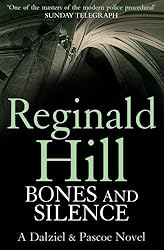
  3. Bones and Silence by Reginald Hill
  4. Crystal Nights by Dorte Hummelshoj Jakobsen
  5. Doctor Thorne by Anthony Trollope
  6. Miss Pym Disposes by Josephine Tey
  • Six historical fiction books 
  1. Lustrum by Robert Harris (Ancient Rome 63 ‘“ 58 BC)
  2. Dictator by Robert Harris (Ancient Rome 58 – 43 BC)
  3. Six Tudor Queens: Katherine of Aragon, The True Queen by Alison Weir (England 1501 ‘“ 1536)
  4. Gilead by Marilynne Robinson (Gilead, Iowa, America 1956 and earlier)
  5. Styx and Stones by Carola Dunn (England 1920s)
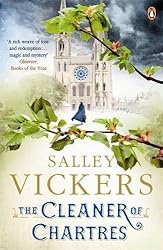
  6. The Cleaner of Chartres by Salley Vickers (France past and present)

Six Crime Fiction Books

  1. Sparkling Cyanide by Agatha Christie
  2. The Secret Hangman by Peter Lovesey
  3. Wycliffe and the Tangled Web by W J Burley
  4. Before the Fact by Francis Iles
  5. A Shilling for Candles by Josephine Tey
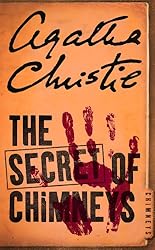
  6. The Secret of Chimneys by Agatha Christie

  • Six authors I read last year ‘“ but not so far this year and their books that I have sitting on my shelves waiting to be read
  1. Dorothy L Sayers ‘“ Clouds of Witness, Hangman’s Holiday
  2. Sadies Jones ‘“ Small Wars
  3. Frances Brody ‘“ Murder in the Afternoon
  4. Colin Dexter ‘“ The Wench is Dead
  5. Charles Dickens ‘“ Little Dorrit
  6. Bill Bryson ‘“ The Road to Little Dribbling: More Notes from a Small Island

Wycliffe and the Quiet Virgin by W J Burley

It’s that time of year again when I have less time for blogging – summer when the grass and the weeds grow in abundance. So what with that and a host of other things this post is shorter than I would like it to be.

I like W J Burley’s Wycliffe books. I’ve read several of them up to now and enjoyed each one. Set in Cornwall, they have a strong sense of place, and Wycliffe is a quiet, thoughtful detective.

In Wycliffe and the Quiet Virgin Chief Superintendent Wycliffe is staying with a Penzance lawyer, Ernest Bishop and his family for a few days over Christmas at the Bishops’ hill-top house. With his wife away in Kenya, Wycliffe is not looking forward to Christmas, and the welcome from the family is polite rather than welcoming. The situation only gets worse when a young girl goes missing after playing the part of the Virgin Mary in the local nativity play, and then her father also goes missing and her mother is found dead in their cottage. Wycliffe moves out of the Bishops’ house as it appears they may be suspects.

What follows is Wycliffe’s investigation which goes back to a crime committed five years earlier, involving many twists and turns. It was a quick and entertaining read with a lot of characters, but all are clearly distinguishable. The plot is complex and it was only as I was getting near the end that I began to have an inkling about the identity of the murderer.

W J Burley (1914 – 2002) lived near Newquay in Cornwall and was a teacher until he retired to concentrate on his writing. He wrote 22 Wycliffe novels. Wycliffe and the Quiet Virgin was the 13th, first published in 1986 and as such fits into Bev’s Vintage Mystery Cover Scavenger Hunt in the Silver Age (Vintage Mysteries first published any time from 1960 to 1989) in the category of ‘Spooky/House’ on its cover. It is also one of my 20 Books of Summer 2016.

More TBR Books

Whilst I’ve been busy reading books from my own shelves, I’ve also been busy replacing them with more TBRs.  These two piles are the result of a visit to Barter Books in Alnwick, my favourite bookshop, and from the secondhand book table at my local village hall.

I’m not completely sure just how many TBRs I have, but the figure on LibraryThing stands at 304. There may be more books hiding on my shelves I haven’t added and then there are the e-books which I have never attempted to count.

These are my recent additions:

TBR Bks June 2016 P1020053


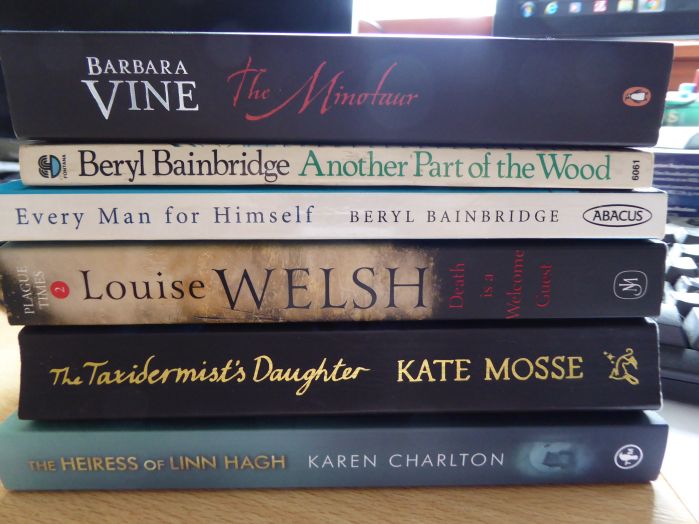
These books are all by authors whose books I’ve enjoyed in the past. From top to bottom they are:

  • The Minotaur by Barbara Vine – a psychological suspense drama about a sinister family who wish to remain isolated.
  • Another Part of the Wood by Beryl Bainbridge – a short novel about a holiday in Wales where ‘catastrophe lurks behind every tree‘.
  • Every Man for Himself by Beryl Bainbridge – a novel about the sinking of the Titanic.
  • Death is a Welcome Guest by Louise Welsh – the second of her Plague Times trilogy, set in a dystopian England ravaged by the Sweats pandemic.
  • The Taxidermist’s Daughter by Kate Mosse – set in 1912 in a Sussex village where a grisly murder has taken place, this is part ghost story and part psychological thriller.
  • The Heiress of Linn Hagh by Karen Charlton – set in Northumberland in 1809, a beautiful heiress disappears from her locked bedroom.

TBR Bks June 2016 Picture1


  • The Plot Against America by Philip Roth – alternative history in which the celebrated aviator Charles Lindbergh becomes President of the United States.
  • ‘Tis by Frank McCourt – a sequel to ‘˜Angela’s Ashes‘, in which McCourt tells tales of his life.
  • Swimming to Ithaca by Simon Mawer – 1950s in Cyprus, a ‘world of carob trees, cocktails and rebellion‘.
  • The Girl Who Fell from the Sky by Simon Mawer – historical fiction, a gripping novel set in wartime France.
  • An Uncertain Place by Fred Vargas – a Commissaire Adamsberg investigation. Severed feet are found outside Highgate Cemetery and a violent murder is committed in Paris.

I’m not going to run out of anything to read yet!