The Glass Guardian by Linda Gillard: a Book Review

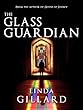
The Glass Guardian, Linda Gillard’s latest book, kept me spellbound. It’s a ghost story and a love story, with a bit of a mystery thrown in too. Ruth Travers is in her early forties and has just had a difficult year with the deaths of her lover, father and most recently her beloved aunt, Janet. Janet had lived in a house on the Isle of Skye, Tigh-na-Linne, the house where she had been born, and where her mother had lived with her three brothers who had all been killed in the First World War; the house where Ruth spent many childhood summers and the house Janet left to her in her will. After Janet’s death Ruth goes to live in the house to grieve and decide what to do next.

Set in a beautiful location, Tigh-na-Linnne is in a sorry state:

 Rattling windows, water-stained ceilings and idiosyncratic plumbing paled into insignificance when one looked out of the big windows at the view over Loch Eishort, a sea loch, to the Black Cuillin mountains beyond and the distant islands of Canna and Rhum.

Ruth is in a very fragile state, having nightmares and is pleased to find that Tom, Janet’s gardener is her childhood friend, Tommy. But then she realises that everything in her childhood was not quite as she thought it was, or as she remembered it. As Ruth attempts to sort through her aunt’s belongings and decide whether to sell the house it becomes clear that there is more about her aunt and her family history than she ever knew before. And then she realises there is someone else in the house and there is a stained glass window behind a large wardrobe, which she never knew existed:

It’s a memorial window. There were three originally. One for each son who fell in the Great War. One of the windows was badly damaged in a storm and another got taken out when Janet had the conservatory built. But there’s one left. It’s behind that wardrobe.

From there on Ruth is unsure whether she is in her ‘Sane Mind’ or her ‘Insane Mind’, as she hears the wardrobe being dragged from its position in the dead of night.

I do like ghost stories and I had no trouble suspending my disbelief reading this book. The setting is so convincing, the characters so believable and even if I did see where the story was going to end that didn’t spoil it. This is a book that brought tears to my eyes and there aren’t many that do that! It deals so poignantly with death and the pain of loss, but it’s never sentimental and even though there are moments where you have to hold your breath, the supernatural element is not horrific.

N.B. I previously posted the opening paragraphs of this book.

Crime Fiction Alphabet: J is for …

ithe letter Js for … Peter James

Peter James is an author I’ve been aware of for a while and although I’ve owned a couple of his books until recently I hadn’t read them. Now I’ve read Dead Simple I realise I should have read it years ago – I didn’t know what I was missing. It’s really good.

Peter James is currently the Chair of the Crime Writers’ Association. As well as being a crime fiction writer he is also a film producer and script writer. He has sold more than a million books internationally and has been translated into 35 languages. His most recent books, set in Brighton, feature Detective Superintendent Roy Grace – there are 8 in the series, the first being Dead Simple.There is full list of all his books with summaries on his website.

Dead Simple is anything but simple. There are plenty of twists and turns in this story of a race against time to find Michael Harrison who disappeared after what was supposed to be a harmless stag night prank three days before his wedding. Michael’s fiancée, Ashley and his mother are frantic with worry, but surely Mark, his best man and business partner must have some idea where he is, even though he missed the stag night himself.

Detective Superintendent Roy Grace is in charge of the investigation, which has added impetus for him as his wife disappeared eight years earlier and has never been found. When all the usual sources had failed to find her he had turned to psychics and mediums for help and he eventually resorts to consulting them again in this case.

It’s told from a number of viewpoints which gives a rounded view of the events and yet the full picture is never quite in view. There are hints that led me to suspect the outcome, but not completely. Some of it does seem rather far-fetched but it’s totally gripping, building to a tremendous climax.

I shall certainly be seeking out the other 7 books in his Grace series, and his earlier books too, which according to the author information in Dead Simple, all reflect his ‘deep interest in medicine, science and the paranormal.’

For more blog posts featuring the letter J in The Crime Fiction Alphabet go to Mysteries in Paradise.

Death at the President’s Lodging by Michael Innes: a Book Review

A Golden Age Mystery

Death at the President's Lodging 001

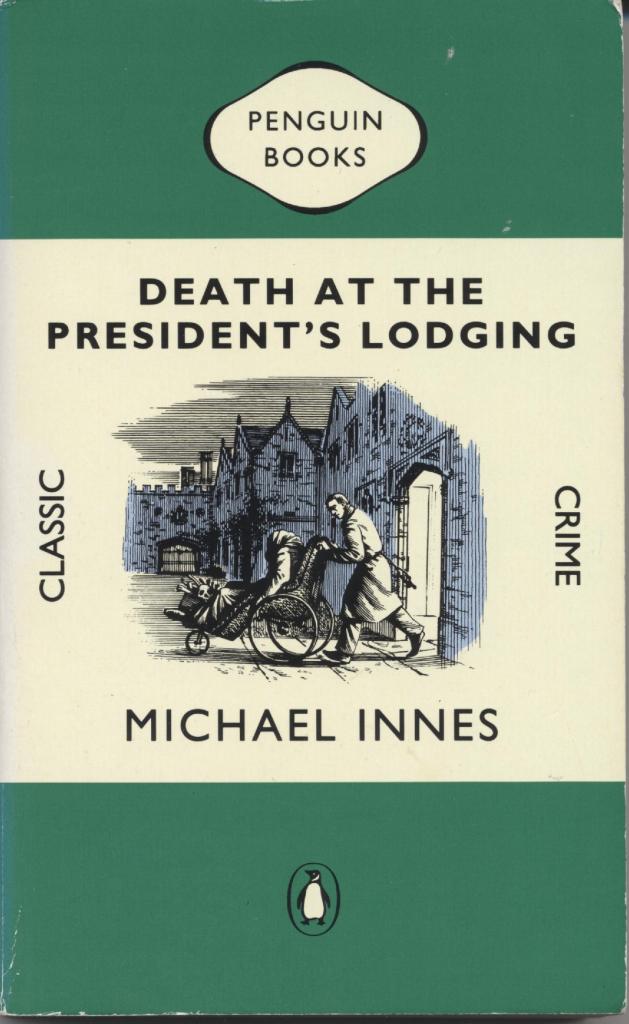
This is the first Inspector Appleby mystery by Michael Innes. What struck me most about Death at the President’s Lodging is that it is essentially a ‘locked room’ mystery. Dr Umpleby, the unpopular president of St Anthony’s College (a fictional college similar to an Oxford college)  is found in his study, shot through the head.


The crime was at once intriguing and bizarre, efficient and theatrical. It was efficient because nobody knew who had committed it. And it was theatrical because of a macabre and necessary act of fantasy with which the criminal, it was quickly rumoured, had accompanied his deed. (page 1)

Inspector Appleby from Scotland Yard is in charge of the investigation, helped by Inspector Dodd from the local police force. They provide an interesting contrast, both in appearance, age and methods. Appleby is an intellectual, contemplative, preferring to study human nature rather than rely on the use of finger prints and material evidence. Dodd is reliant on routine and although untrained and unspecialised is shrewd and thorough. They know each other and make a good pair. This passage sums up their working relationship:

And now Dodd for all his fifteen stone and an uncommon tiredness (he had been working on the case since early morning), sprang up with decent cordiality to welcome his colleague. ‘The detective arrives,’ he said with a deep chuckle when greetings had been exchanged, ‘and the village policeman hands over the body with all the misunderstood clues to date.’ (page 5)

What follows is an extremely convoluted and complex investigation of the strange crime. Without the plan at the beginning of the book I would have been lost. The college is divided into different areas and each area is locked each evening, shutting it off from the outside world and shutting one part of the college off from the rest. Dodd describes it as a ‘submarine within a submarine’. The questions are how did the murderer get in and out, who had keys, and why was Umpleby murdered?

Appleby and Dodd interview the Fellows of the College, each of whom it seems at first could have had reason to murder Umpleby. Who is telling the truth? I couldn’t tell and there are innumerable clues to mystify both the police and the reader. Appleby watches and listens, recognising that he is not going to get a quick result in such a complicated case. Of course, in the end he works it all out. He gathers together the Fellows and calls on a number of them to give their statements of the facts as they know them. They each suspect a different person as the culprit, but Appleby gradually eliminates the suspects to reveal the murderer.

It was masterly. It’s also a book that you can’t read quickly. It requires concentration. There is little action, much description and a lot of analysis. I enjoyed it very much, but after reading it I felt my brain needed a little rest.

I also wrote about Michael Innes in my Crime Fiction Alphabet series of posts – I is for Innes.

Crime Fiction Alphabet: H is for The Hanging in the Hotel

The Crime Fiction Alphabet has reached the letter H this week and I’ve chosen Simon Brett’s The Hanging in the Hotel. I listened to the audiobook read by Simon Brett. This is the fifth book in his Fethering Mysteries series.

Synopsis from Fantastic Fiction:

A young solicitor is found hanged from his four-poster bed in a country house hotel following an all-male society dinner the night before. Jude doesn’t believe it was suicide, and with her friend Carole’s help, it would appear that The Pillars of Sussex are involved in a grand collusion. 

Jude and Carole are neighbours and they often find themselves involved in solving murders! They’re an interesting pair, Carole a retired civil servant, cautious and analytical, Jude, impulsive, an alternative healer and very inquisitive (nosey). Jude perseveres in believing the young solicitor’s death was murder, despite the police insistence that it was suicide. Her belief is reinforced when her friend Suzy Longthorne, the hotel’s owner, wants to keep things hushed up and accepts it was suicide. There are too many inconsistencies for Jude to accept that idea. The Pillars of Society are an obnoxious bunch, misogynists, who drink too much and are very fond of themselves, and they are the prime suspects.

Jude and Carole go over and over the events, discussing the whys and wherefores, talking to everyone concerned, who all seem to have impeccable alibis, and following up lots of red herrings.There was just too much speculation and introspection which slowed down the action.  The murderer could have been anyone and by the end I didn’t much care who it was.

I didn’t like this book as much as the others that I’ve read, namely The Body on the Beach, the first in the Fethering series, The Stabbing in the Stables and Murder in the Museum. It may be because I was listening, rather than reading, so I shall still read more of the Fethering books.

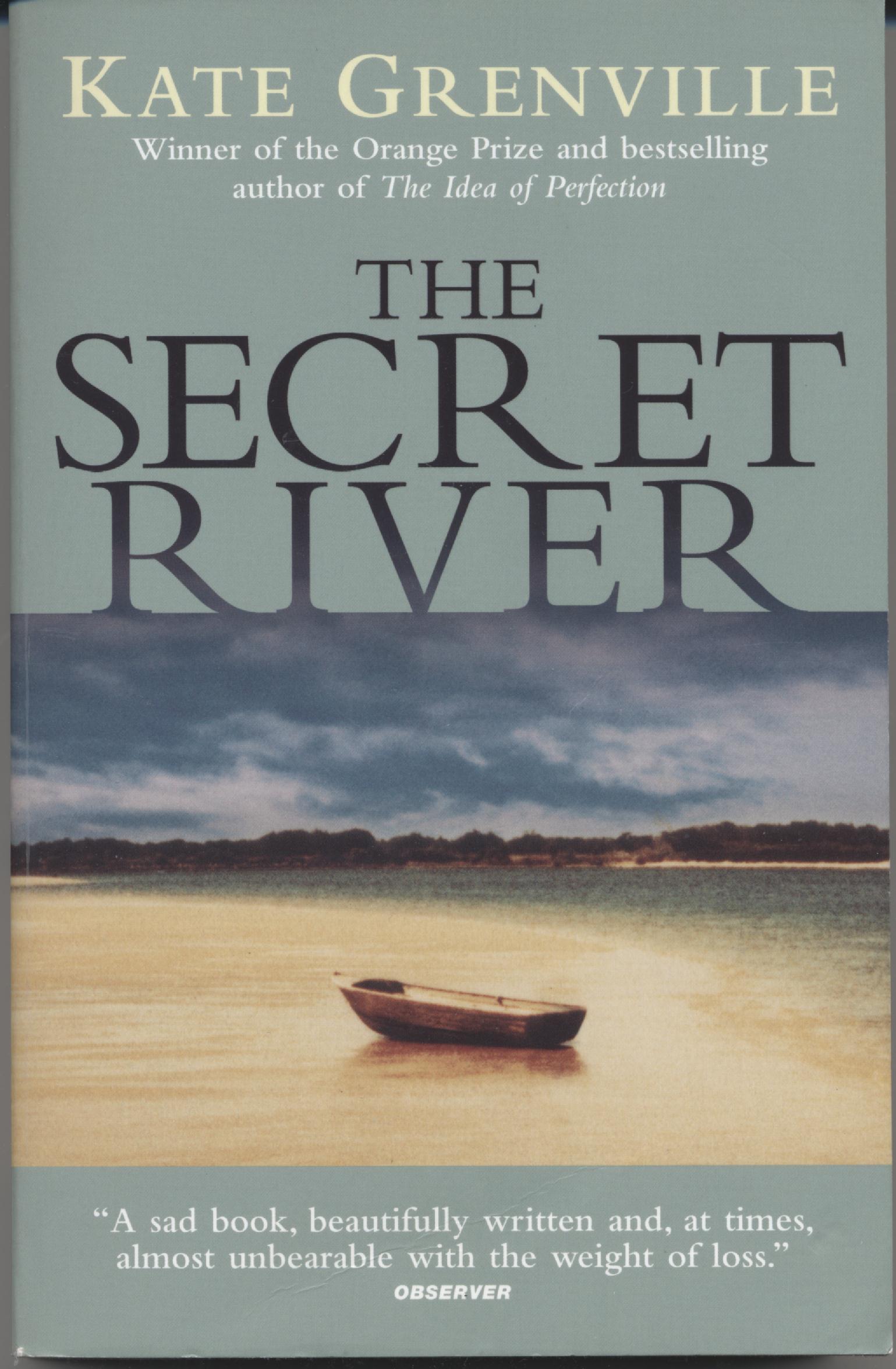
The Secret River by Kate Grenville: a Book Review

Every now and then I read a book that completely captivates me and transports me to another world and The Secret River by Kate Grenville is one of those books. I know a book is a good book for me if I abandon any other books I’m reading and can’t wait to get back to it each time I have to put it down. This is one of those books.

It begins:

The Alexander, with its cargo of convicts, had bucked over the face of the ocean for the better part of a year. Now it had fetched up at the end of the earth. There was no lock on the door of the hut where William Thornhill, transported for the term of his natural life in the Year of Our Lord eighteen hundred and six, was passing his first night in His Majesty’s penal colony of New South Wales. There was hardly a door, barely a wall: only a flap of bark, a screen of sticks and mud. There was no need of lock, of door, of wall: this was a prison whose bars were ten thousand miles of water.

This is historical fiction, straight-forward story-telling following William Thornhill from his childhood in the slums of London to Australia. He was a Thames waterman transported for stealing timber; his wife,Sal and child went with him and together they make a new life for themselves. It’s about struggle for survival as William is eventually pardoned and becomes a waterman on the Hawkesbury River and then a settler with his own land and servants.

The novel raises several issues – about crime and punishment, about landownership, defence of property, power, class and colonisation. The settlers take land owned by the ‘blacks’ – the Aborigines – with the inevitable resulting conflicts and atrocities on both sides. It begins with confrontation between William and the ‘blacks’ as William tries to negotiate a relationship with the Aborigines who unknown to him owned the land he had been granted. But it’s not the only conflict he has to deal with because he also has to contend with some of the  other English settlers on neighbouring land who have a much more violent attitude towards the Aborigines. Although William has a longing for the land he does not have the same identification with it as the Aborigines do:

‘˜Jack slapped his hand on the ground so hard a puff of dust flew up and wafted away.  This me, he said. My place. He smoothed the dirt with his palm so it left a patch’¦ Sit down hereabouts.’ …

… there was an emptiness as he [Thornhill] watched Jack’s hand caressing the dirt. This was something he did not have: a place that was part of his flesh and spirit. (page 344)

It’s a well-paced narrative with good descriptive writing setting the scenes vividly in their locations. It’s rhythmic expressing moods, the differences in cultures and the mounting tension. There are some stereotypical characters, but the main characters, William in particular, are convincing. Their dilemmas they face come over as real as they struggle to come to terms with their situations.

I found this book difficult to put down and it has lived in my mind for days – a dramatic and vivid story and thought -provoking as well. There are two more novels by Kate Grenville about Australia’s history – The Lieutenant, published in 2008, and Sarah Thornhill, published earlier this year. I hope they’re as good.

Crime Fiction Pick of the Month – June 2012

The Crime Fiction Pick of the Month meme is hosted at Mysteries in Paradise by Kerrie. I read 5 crime fiction books this month and my pick of the month is:

Red Bones by Ann Cleeves

Red Bones is the third book in Ann Cleeves’s Shetland Quartet. It’s set on Whalsay, where two young archaeologists, excavating a site on Mima Williams’s land, discover human bones. They are sent away for testing – are they an ancient  find or are the bones more contemporary? Sandy Wilson, Inspector Jimmy Perez’s sergeant is Mima’s grandson. He is visiting his family when late one night he finds Mima’s body. It appears she was shot accidently by his cousin Ronald, out shooting rabbits. Then one of the archaeologists is also found dead, and even though it appears to be suicide Jimmy and Sandy are not convinced, thinking it could be murder.

I really like these Shetland mysteries. They are complicated and slow-moving books that enable you to immerse yourself in the mystery. The characters have depth and the locations are superbly described. In this book Ann Cleeves explores both the history of the island, its close-knit community, its traditions and the intricacies of the close family relationships. In contrast to the rest of the series the novel is narrated by Sandy as well as Jimmy and consequently both their innermost thoughts and feelings are revealed.

Red Bones is currently being filmed for a two-part TV drama. More good news – Ann Cleeves’s website reveals that there is another Jimmy Perez mystery in progress  – Dead Water to be published in January 2013.

The four books in the Shetland series are: