Our Mutual Friend by Charles Dickens

It’s hard to know just what to write about Our Mutual Friend by Charles Dickens. The General Introduction to the book advises that you enjoy the book before reading the Introduction (which I did), so I have tried not to reveal any spoilers in this post.

  • It’s Dickens’s last complete book, first published in 19 monthly instalments from May 1864 to November 1865. It’s meant to be read at a leisurely pace.
  • It’s a long multiplot novel, with a multitude of characters.
  • In it Dickens comments on the ills of contemporary society.
  • It concerns mysteries, lost identities, hidden wills, corruption and violence.
  • It’s varied in style, sometimes comic, other times serious, sometimes sombre and dark and at others ironic and flippant.
  • It’s written in both the past and present tense and from the characters’ differing perspectives.

Brief synopsis (from the back cover of the Wordsworth Classic edition)

The chief of its several plots centres on John Harmon who returns to England as his father’s heir. He is believed drowned under suspicious circumstances – a situation convenient to his wish for anonymity until he can evaluate Bella Wilfer whom he must marry to secure his inheritance. The story is filled with colourful characters and incidents – the faded aristocrats and parvenus gathered at the Veneering’s dinner table, Betty Higden and her terror of the workhouse and the greedy plottings of Silas Wegg.

My view

Although it nows reads like historical fiction, in the mid 1860s Our Mutual Friend was modern up-to-date fiction, beginning with the words:  ‘In these times of ours’, in case there was any doubt in the readers’ minds.

The opening chapter reveals a darkly atmospheric scene on the River Thames, a modern scene for its first readers,with a macabre story of a boatman, Gaffer Hexham and his daughter, Lizzie, searching the Thames for human corpses:

Allied to the bottom of the river rather than the surface, by reason of the slime and ooze with which it was covered, and its sodden state, this boat and the two figures in it obviously were doing something that they often did, and were seeking what they often sought. (pages 3-4)

In direct contrast in the next chapter Dickens moves to the nouveau-riche setting of the Veneerings house:

Mr and Mrs Veneering were bran-new people in a bran-new house in a bran-new quarter of London. Everything about the Veneerings was spick-and-span new. (page 7)

Just like their name the Veneerings are all show, all surface, without any depth. They collect people as well as objects. Their standing in society is dependent on their wealth – just as Gaffer Hexham’s is at the other end of the financial strata. And there is a great emphasis on money, wealth and poverty in Our Mutual Friend.

There are some wonderful characters, such as the Boffins, Silas Wegg and Jenny Wren to name but a few. As John Harmon is presumed to have been drowned in  the Thames (the body found by Gaffer Hexham), it is his father’s faithful servants, Mr and Mrs Boffin who inherit the miserly and incredibly wealthy ‘dust’ contractor’s fortune. This pair are at first unchanged by their good fortune and take in Bella Wilfer, the socially ambitious young woman who would have married Harmon, had he lived. Through these characters Dickens shows the effect that greed in all its forms can have.

I particularly like Dickens’s depiction of Wegg, who is employed by Mr Boffin to read to him what he calls the ‘Decline-And-Fall-Off-The-Rooshan-Empire.’ Wegg is a hard, rascally character, out for anything he can get. His wooden leg reflects his nature:

Wegg was a knotty man, and a close-grained, with a face carved out of very hard material, that had just as much play of expression as a watchman’s rattle. … Sooth to say, he was so wooden a man that he seemed to have taken his wooden leg naturally, and rather suggested to the fanciful observer, that he might be expected — if his development received no untimely check — to be completely set up with a pair of wooden legs in about six months. (page 43)

Wegg is one of the characters that Dickens also uses to inject some humour. He is obsessed with his lost leg and goes to Mr Venus’s shop to see if he can find it for him – Venus is an articulator of skeletons and a taxidermist, who has great skill in piecing things together. He boasts:

Mr Wegg, if you was brought here loose in a bag to be articulated, I’d name your smallest bones blindfold equally with your largest, as fast as I could pick ’em out, and I’d sort them all, and sort your wertebrae, in a manner that would equally surprise and charm you. (page 77)

Wegg is positive that he doesn’t want anyone’s bones:

… I tell you openly I should not like – under such circumstances, to be what I call dispersed, a part of me here, and a part of me there, but should wish to collect myself like a genteel person. (page 77)

It’s not just social injustices, the class system, the importance of money, property, greed and materialism that Dickens highlights, but also family relationships – in particular that of fathers and daughters and the position of women. He also concentrates on instances of violence, through drownings and physical assaults.

There is so much in this novel, more that I can explore in this (long) post. I haven’t even touched on the majority of the major characters.

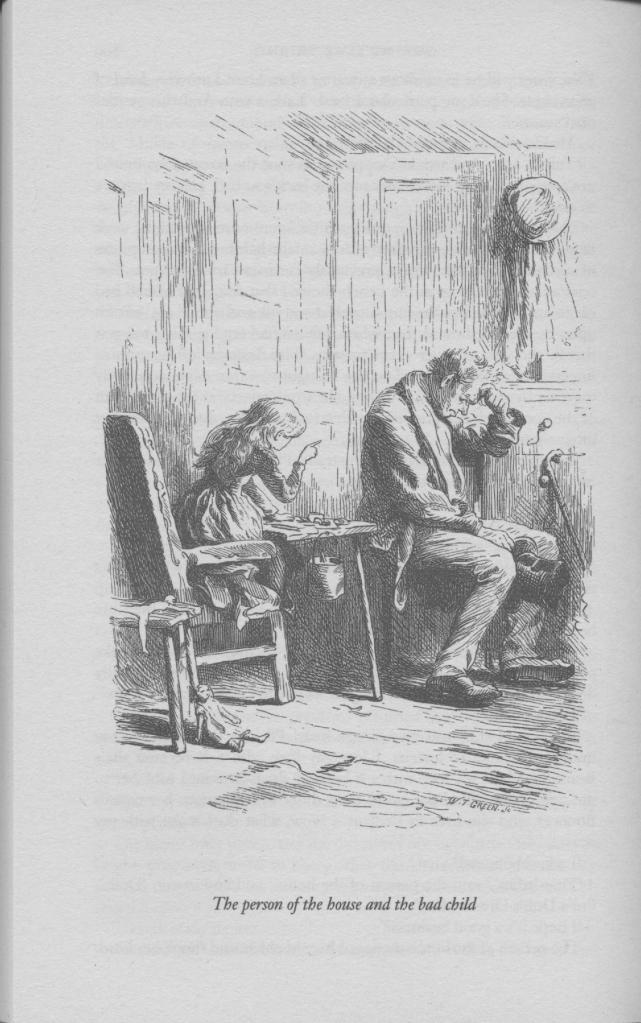
This Wentworth Classics edition includes the original illustrations by Marcus Stone. The one shown below is ‘The person of the house and the bad child‘ – this shows ‘Jenny Wren’, the dolls’ dressmaker, whose back is ‘so bad‘ and whose legs are ‘so queer‘, and her drunken father, who she calls her ‘bad child‘ and treats him as such.
  • Paperback: 832 pages
  • Publisher: Wordsworth Editions Ltd; New Ed edition (1 Jan 1998)
  • Language: English
  • ISBN-10: 1853261947
  • ISBN-13: 978-1853261947
  • Source: my own copy
  • My Rating 3.5/5

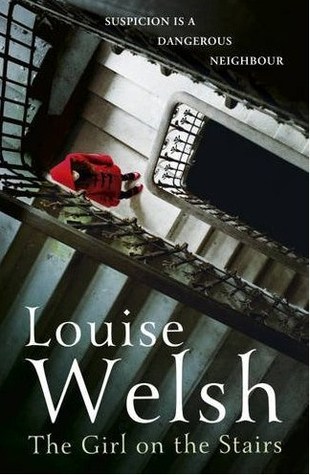
The Girl on the Stairs by Louise Welsh: a Book Review

The Girl on the Stairs

The Girl on the Stairs is Louise Welsh’s latest book. It’s a book that once I started reading it I just had to finish it. It’s full of suspense and increasing tension as Jane moves to an apartment in Berlin to join her partner, Petra. Everything is new to her, she only speaks a little German, she doesn’t know the area and has no friends there. And she’s pregnant.

It begins slowly and calmly, with Jane alone in the flat. Whilst Petra is out at work, she explores the neighbourhood, the streets, the church and the forbidding, derelict building (the backhouse) that overlooks their apartment building at the back.

She meets some of the other residents of the apartment building, their neighbour Dr Mann and his daughter Anna – the girl on the stairs. She hears them arguing and fears Dr Mann is abusing Anna. She ventures out at 3.00am one dark morning drawn by a flickering light in the backhouse, worried that Anna was hiding in there:

Jane looked up towards the looming bulk of the backhouse, hearing the sound of her own breath, shallow and uneven. the light was gone from the window. This was her cue to turn back, but she stepped on, into the dimness of the courtyard, tensing against the cold and the sensation of unseen eyes. The backhouse door gaped; beyond it, nothing but blackness. (page 55)

Then there are the Beckers, who live in the ground-floor flat. Heike Becker is suffering from dementia and insists that Dr Mann had killed his wife and buried her beneath the floorboards in the backhouse.

Jane’s suspicions about her neighbours grow, and her sense of isolation mounts when Petra has to go to Vienna for a week for her work. The book is narrated by Jane, which means that there is only Jane’s perspective on events and as more secrets are revealed I began to wonder just how paranoid Jane was and how much was down to her imagination. Jane tries to befriend Anna, who regards her with suspicion and contempt – are Jane’s fears justified or is she delusional? The uncertainties and ambiguities kept me guessing to the end.

The Girl on the Stairs is a dark, psychological thriller, full of atmosphere and claustrophobic tension. I really enjoyed it.

  • Hardcover: 288 pages
  • Publisher: John Murray (2 Aug 2012)
  • Language: English
  • ISBN-10: 1848546483
  • ISBN-13: 978-1848546486
  • Source: Review copy from the publishers
  • My rating: 4.5/5

Crime Fiction Alphabet: Letter O

Kerrie’s Crime Fiction Alphabet has reached the letter O.

I was surprised quite recently to discover that Baroness Orczy had not only written books about the Scarlet Pimpernel, but had also written crime fiction.

Emmuska Orczy (1865 – 1947) was born in Hungary and she and her family moved to London in 1880, where she went to the West London School of Art and then Heatherley’s School of Fine Art.  Several of her paintings were exhibited at the Royal Academy. She married Montague MacLean Barstow in 1894 and encouraged by him, she began writing in 1900. As well as the Scarlet Pimpernel stories she wrote mysteries for the Royal Magazine and Cassell’s Magazine. She created one of the earliest female detectives in a collection of short stories about Molly Robertson-Kirk – Lady Molly of Scotland Yard in 1910.

The Old Man in the Corner
The Old Man in the Corner, Greening & Co. 1910, Design by H. M. Brock. From Flickr

Her book of short stories, The Old Man in the Corner features one of the earliest armchair detectives. It was first published in 1909, although she had written the stories before that and published them in magazines. The ‘Old Man’ sits in the corner of an A. B. C. (Aerated Bread Company) tearoom and relates the mysteries to Polly Burton of the Evening Observer. She was amused by his appearance:

Polly thought to herself that she had never seen anyone so pale  so thin, with such funny light-coloured hair, brushed very smoothly across the top of a very obviously bald crown. He looked so timid and nervous as he fidgeted incessantly with a piece of string; his long, lean and trembling fingers tying and untying it into knots of wonderful and complicated proportions. (Location 47 of 2760)

Tying knots in a piece of string seems to be essential to his deductive powers, for as he unravels the knots so he solves the mysteries. His philosophy is:

There is no such thing as a mystery in connection with any crime, provided intelligence is brought to bear upon its investigation.  (Location 29)

Very like Hercule Poirot, I thought, but the resemblance ends there. The Old Man’s sympathies are with the criminal rather than the police; he solves the mysteries just for the love of doing it, to discover the motive and method. He doesn’t pass his information onto the police and in most of the cases there is still an element of doubt.

The mysteries included in The Old Man in the Corner are:

The Fenchurch Street Mystery
The Robbery in Phillimore Terrace
The York Mystery
The Mysterious Death on the Underground Railway
The Liverpool Mystery
The Edinburgh Mystery
The Theft at the English Provident Bank
The Dublin Mystery
An Unparalleled Outrage (The Brighton Mystery)
The Regent’s Park Murder
The De Genneville Peerage (The Birmingham Mystery)
The Mysterious Death in Percy Street

They seem to be the most baffling cases that the police had been unable to solve, involving murder, blackmail, forgeries and puzzling crimes. I enjoyed reading them, although they don’t overtax the brain.

  • Format: Kindle Edition
  • File Size: 302 KB
  • Print Length: 186 pages
  • Sold by: Amazon Media EU S.à r.l.
  • Language: English
  • ASIN: B0084BMM6W
  • Source: my own copy
  • My Rating 3/5


Crime Fiction Alphabet: N is for …

 … Now You See Me by S J Bolton

I’ve enjoyed S J Bolton’s earlier books, but I hesitated several times before deciding to read Now You See Me, because it begins with such a brutal killing. I’d read the opening pages on Amazon using the ‘Click to Look Inside‘ feature and didn’t like it. I usually steer clear of books with such graphic descriptions of murder, but I knew that I liked S J Bolton’s writing and that others had given it good reviews, so eventually I read further on.

I’m glad I did because, despite the brutal murders, it is compelling reading, with a complex plot and convincing characters.

Summary from S J Bolton’s website:

Despite her life-long fascination with Jack the Ripper, young detective constable Lacey Flint has never worked a murder case or seen a corpse up close. Until now ‘¦

As she arrives at her car one evening, Lacey is horrified to find a woman slumped over the door. She has been brutally stabbed, and dies in Lacey’s arms.

Thrown headlong into her first murder hunt, Lacey will stop at nothing to find this savage killer. But her big case will also be the start of a very personal nightmare.

When Lacey receives a familiar letter, written in blood, pre-fixed Dear Boss, and hand delivered, it is clear that a Ripper copycat is at large. And one who is fixated on Lacey herself. Can this inexperienced detective outwit a killer whose infamous role model has never been found?

I don’t have a fascination with Jack the Ripper and began to be a bit  weary about the copycat nature of the killings, but then the scenario changed and it became clear that there was more to the killings than just copying the Ripper. It’s narrated by Lacey, a strong character, one who thinks for herself, is a loner, and is not content to merely follow police procedure. But I didn’t warm to her until near the end of the book. She knows more than she is letting on to her fellow police officers and I was very suspicious of her motives and conscious that she was not a reliable narrator.

S J Bolton is very skilled in leading the reader up the garden path, providing plenty of hints that could be significant or be dead ends. This book (like her others) is fast-paced, full of suspense and tension, with a chilling and dramatic ending.

  • Paperback: 512 pages
  • Publisher: Corgi (26 April 2012)
  • Language: English
  • ISBN-10: 0552159816
  • ISBN-13: 978-0552159814
  • Source: My own copy
  • My Rating: 3.5/5

For more Crime Fiction Alphabet posts see Kerrie’s blog Mysteries in Paradise. The posts must be related to either the first letter of a book’s title, the first letter of an author’s first name, or the first letter of the author’s surname, or even maybe a crime fiction “topic”. But above all, it has to be crime fiction.

Crime Fiction Alphabet: M is for …

… M R Hall

Biography summarised from M R Hall’s website:

Matthew Hall was born in London in 1967, he was educated at Hereford Cathedral School and Worcester College, Oxford,where he graduated in law. He lives and works in the Wye valley in South Wales. He spends much of his spare time looking after his sixteen acres of woodland and working for the conservation of the countryside.

After working as a barrister, mostly in the field of criminal law he then went on to become a screen writer and producer, including writing episodes of such dramas as  Kavanagh QC starring John Thaw and Dalziel and Pascoe. His first season of writing the Channel 5 series, Wing And A Prayer earned him a BAFTA nomination in the best series category.

Novels:

I’ve read his debut novel, The Coroner, which was published in 2009 and was nominated for the Crime Writer’s Association Gold Dagger in the best novel category. In this book Jenny Cooper, a newly appointed Coroner, divorced, and recovering from a nervous breakdown gets involved in investigating the deaths of several teenagers at local detention centres. Has her predecessor neglected some crucial information in this area? As Jenny digs deeper, she encounters a solid wall of bureaucratic resistance. But Jenny just won’t give in until she gets to the truth.

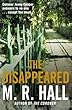
The second novel in the Jenny Cooper series, The Disappeared, was published in the USA by Simon and Schuster on December 1st 2009 and in the UK by Pan Macmillan in January 2010. I’ve yet to read this book in which Jenny investigates the disappearance of a British student, Nazim Jamal. She is beginning to settle into her role as Coroner for the Severn Valley. But as the inquest gets under way, a code of silence is imposed on the inquest and events begin to spiral out of all control, pushing Jenny to breaking point.

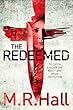
I thoroughly enjoyed the third novel in the same series, The Redeemed, which was published in April 2011 in the UK and May 2011 in the USA. With an accusation of murder hanging over Jenny’s head her lone quest for justice takes her to the heart of the fight between good and evil, sex and the supernatural, and on a dark inner journey to confront ghosts that have haunted her for a lifetime.

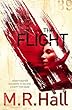
The fourth in the series, The Flight was published in the UK on 2 February 2012. I’ve recently read this one and have to say that I don’t think it’s as good as the other two I’ve read.

Flight 189 has plunged into the Severn Estuary, an area outside Jenny Cooper’s jurisdiction, but she is handling the cases of a sailor, washed up on her side of the river and that of a 10 year old girl, who was a passenger on the flight. Jenny is never one to back away from handling sensitive issues and when the authorities want her cases to be dealt with by Sir James Kendall, a recently retired High Court judge,the coroner for the inquest into the crash, she resists and insists she carries out her own investigations. Each time they try to halt her inquest she finds ways of carrying on.

My problem with this book wasn’t Jenny’s role.  I like the way Jenny perseveres, her sympathies for the bereaved parents, her own fragile psychological make-up and how she deals with her problems with her father. These elements are in the other books too, but in The Flight I thought they were overwhelmed by all the technical details of the aircraft and how it came to crash. I prefer the smaller scale inquests, rather than this ‘disaster film’ genre – but, I think, it would make a good disaster film.

If you’re nervous about flying, (which I’m not, although I did feel glad I’m not booked on a flight soon as I was reading it) it is definitely a scary book, even though M R Hall in his Author’s Note at the end of the book says this about the safety of flying:

Next time you fly – or perhaps you are in a plane right now? – remember that a short drive through town remains statistically far more dangerous than your flight by a factor of many thousands to one. The most perilous parts of your journey are the ones to and from the airport. I am reliably informed that you are precisely eighty-seven times more likely to choke on the ice cube in your gin and tonic than to perish in a crash. So sit back and enjoy the movie – the numbers say it’ll never happen to you.

Mmm – do I really find that comforting?

A Crime Fiction Alphabet post for the letter M. For more posts see Kerrie’s blog Mysteries in Paradise.

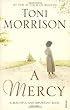
A Mercy by Toni Morrison

Toni Morrison is the author of ten novels, from The Bluest Eye(1970) to A Mercy (2008). She has received the National Book Critics Circle Award and the Pulitzer Prize. In 1993 she was awarded the Nobel Prize in Literature. She lives in New York.

I recently read A Mercy. I found it a difficult book, both to understand and to appreciate. In fact once I’d read it I went back to the beginning and read it again, almost straight away and then found myself turning back to the first page again.The narration moves between the characters and at times I wasn’t sure whose voice I was reading and had to backtrack several times. Even on the second reading, I was not sure, even though the characters have different ways of talking.

From the back cover:

On the day that Jacob, an Anglo-Dutch trader and adventurer, agrees to accept a slave in lieu of payment of a debt from a plantation owner, little Florens’ life changes. With her intelligence and passion for wearing the cast-off shoes of her mistress Florens has never blended into the background and now at the age of eight she is taken from her family to begin a new life. She ends up part of Jacob’s household, along with his wife Rebekka, Lina their Native American servant and the strange and melancholy Sorrow who was rescued from a shipwreck. Together these women face the trials of their harsh environment as Jacob attempts to carve out a place for himself in the brutal landscape of the north of America in the seventeenth century.

It’s definitely character-based, and the plot is hard to follow (at least I thought so), although on the second reading it was much clearer. It begins with a confession:

Don’t be afraid. My telling can’t hurt you in spite of what I have done and I promise to lie quietly in the dark – weeping perhaps or occasionally seeing the blood once more – but I will never unfold my limbs to rise up and bare teeth.

and it was only at the end that I could understand the beginning.The writing is lovely, the mood is melancholy and touching.The setting is America in the 1680s – 1690. It’s a land still largely unknown territory that regularly changed hands, a land where you couldn’t be sure who was friend or foe. The themes of this novel are slavery, racism and religion, with a mighty emphasis on motherhood and the position of women in that time and place.

A Mercy is not my favourite Toni Morrison book and I wouldn’t recommend it to anyone who hasn’t read any of her other books, but it is thought provoking and moving. I prefer Song of Solomon and Beloved.

  • Source: my own copy
  • Rating: 3/5