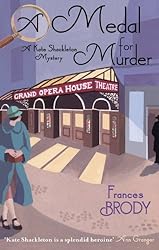
A Medal for Murder by Frances Brody

Last year I read and enjoyed Dying in the Wool, the first of Frances Brody’s series of historical crime fiction books set in 1920s Yorkshire and featuring Kate Shackleton. The second book, A Medal for Murder is even better and I was thoroughly immersed in the mystery.

A pawn shop robbery brings Kate and her assistant Jim Sykes, an ex-policeman,  their second case. It leads on to her discovery of a dead body, that of Lawrence Milner, outside a Harrogate theatre where Kate had been watching a production of a dramatisation of Arnold Bennett’s novel, Anna of the Five Towns. Then Captain Wolfendale, a Boer War veteran asks Kate to find his granddaughter, Lucy, who had starred in the play, as she has disappeared and he had received a ransom note. The murder  brings Kate into contact again with Inspector Marcus Charles of Scotland Yard (she had first met him in Dying in the Wool).

The book is told from the different characters’ perspective, but mainly from Kate’s, with flashbacks to the Boer War at the turn of the century. This is a detailed, complex plot which kept me guessing almost to the end about the identity of the murderer.  What is Captain Wolfendale hiding in his attic that he doesn’t want Kate to see? Just what is his relationship with Lawrence Milner who had also fought in the Boer War? How/is the pawn shop robbery connected to the murder? Will Lucy be rescued? And why doesn’t Dan Root, a watch maker, who also rents a room in the Captain’s house want to Kate to see inside his workroom?

There is so much going on in this book, and yet it was easy to read and each sub-plot fitted in so well with the main mystery that I didn’t get confused – I just couldn’t see who could have killed Milner. I had several suspects, all of whom turned out to be innocent of the crime. I liked the historical setting and the characters rang true. I’m left wondering whether Kate’s relationship with Inspector Charles will develop further, and whether she will ever hear what happened to her husband, reported missing in the 1914-18 War.

These are the books in the Kate Shackleton Mystery series:

1. Dying in the Wool (2009)
2. A Medal For Murder (2010)
3. Murder in the Afternoon (2011)
4. A Woman Unknown (2012)
5. Murder on a Summer’s Day (2013)
6. Death of an Avid Reader (2014)
7. A Death in the Dales (2015) to be published 1 October 2015

For more information about the author and her books see Frances Brody’s blog and website.

Reading Challenges: Mount TBR Reading Challenge, 10 Books of Summer, Historical Fiction Reading Challenge.

Come, Tell Me How You Live by Agatha Christie Mallowan

Agatha Christie had visited the Middle East in 1929 travelling on the Orient Express to Istanbul and then on to Damascus and Baghdad. She visited the excavations at Ur and returned there the following spring where she met archaeologist Max Mallowan – by the end of the summer they had decided to marry, which they did on 11 September 1930. 

Come Tell Me How You Live: an archaeological memoir is her answer to her friends’ questions about what life was like when she accompanied Max on his excavations in Syria and Iraq in the 1930s.
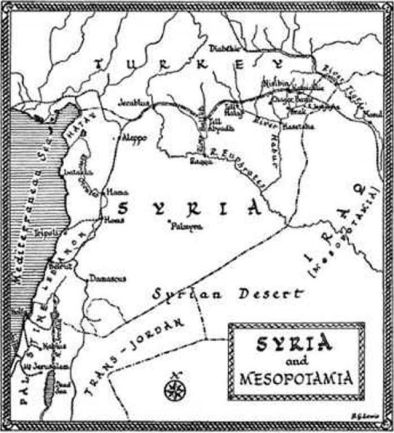
She began writing it before the Second World War and then laid it aside. After four years of the war she picked it up again, using her notes and diaries to complete this memoir, writing about her life with  Max Mallowan and his team excavating the ancient sites at Chagar Bazar, Tell Brak and other sites in the Habur and Jaghjagha region in what was then north western Syria. This map shows the area they were working in:

Syria 1930s

She wrote in the Epilogue  (written in 1944) that in remembering and recording that time it had been

… not a task, but a labour of love. Not an escape to something that was, but the bringing into the hard work and sorrow of today of something imperishable that one not only had but still has!

For I love that fertile country and its simple people, who know how to laugh and how to enjoy life, who are idle and gay, and who have dignity, good manners, and a great sense of humour, and to whom death is not terrible.

Inshallah, I shall go there again, and the things that I love shall not have perished from this earth.

With regard to her statement about death earlier in the book Agatha Christie had explained the difference between the Western and Oriental attitudes to life and death:

Accustomed as we are to our Western ideas of the importance of life, it is difficult to adjust our thoughts to a different scale of values. And yet to the Oriental mind it is simple enough. Death is bound to come – it is as inevitable as birth; whether it comes early or late is entirely at the will of Allah. And that belief, that acquiescence, does away with what has become the curse of our modern day world – anxiety. (page 96)

The emphasis in the book is on the everyday life on a dig and Agatha took an active part, helping to catalogue, label and clean the items they found as well as taking photographs and developing them. She also found time to spend on writing her books. So, although she gives a detailed account of how they worked, how they employed workmen for the excavations and servants who looked after Max and his team of archaeologists, there is not much about what they found.

Although she described the local people in her Epilogue as people, who know how to laugh and how to enjoy life, who are idle and gay, and who have dignity, good manners, and a great sense of humour, she also recorded their disputes:

Quarrelling is, in any case, almost continuous. All our workmen have hot tempers, and all carry with them the means of expressing themselves – large knives, bludgeons, and a kind of mace or knobkerry. Heads are cut open, and furious figures are entangled with each other in fierce struggles … page 86

And she also recorded this chilling statement:

We come to the question of religions generally – a very vexed question in this particular part of the world, for Syria is full of fiercely fanatical sects of all kinds, all willing to cut each other’s throats for the good cause! (page 166)

How sad and horrified she would be if she could see Syria today, but in the light of the extract above I don’t think she would have been too surprised! And sadly the places she loved are no longer the same. Here is her description of the shrine Sheikh ‘Ada near Mosul

There  can be, I think, no spot in the world so beautiful  or so peaceful. You wind far up into the hills through oak trees and pomegranites (sic), following a mountain stream. The air is fresh and clear and pure. …

And then suddenly, you come to the white spires of the Shrine. All is calm and gentle and peaceful there. Gentle-faced custodians bring you refreshments and you sit in perfect peace, sipping tea. (page 109)

Compare that with the description in The Guardian last August of the area as ‘hell on earth‘.

This book is written with love and humour – for example Agatha’s description of buying clothes for her visit to Syria because her last year’s summer clothes  are Shrunk, Faded and Peculiar – and too tight everywhere.  In the Foreword she stated that it is a book full of everyday doings and happenings with ‘no beautiful descriptions of scenery, no treating of economic problems, no racial reflections, no history.‘ I think she was under estimating her writing, because this little book has all that and more. I loved it.

A Change of Climate by Hilary Mantel

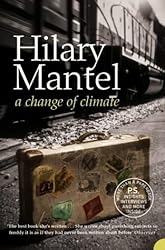
A Change of Climate is one of Hilary Mantel’s early books, first published in 1994 and  described on the back cover as ‘˜a literary family saga’ and ‘˜a first rate thriller’.

I quoted from the beginning of this book in this post. I noted that at the end of the book there is an About the Author section, which I’d just glanced over. In answer to one of the interviewer’s questions about the theme of the book, Hilary Mantel replied that there is a central secret, an enormous destructive secret. I didn’t want to spoil the book for myself so I didn’t read any more of her answers. And I don’t want to spoil it for anyone else so I’m not saying what that secret is in this post.

The ‘enormous destructive secret‘ Hilary Mantel referred to is revealed just over halfway into the book. But the book abounds in secrets and it’s also about family, trust, disillusionment and tragedy, about bereavement and loss of faith, as one character observes, ‘faith is something people chase after, simply to give life meaning‘.

Hilary Mantel writes a compelling story, subtly mixing the past and the present, moving seamlessly between the Eldred family’s current life (in the 1980s) in Norfolk, with their earlier life in Africa in the 1950s. I like her writing very much, never drawing attention to its style and drawing me in effortlessly into both time frames and places.

It’s a family saga (most definitely not an Aga Saga) about Ralph and Anna Eldred, their four children and Ralph’s sister Emma. Ralph and Anna devote their lives to charity, filling their house with ‘Visitors’, described as either ‘Good Souls’ or ‘ Sad Cases’. Just after they were married Ralph and Anna went to South Africa as missionaries and under the system of apartheid there they ran up against the authorities, then moved to Beuchuanaland (Botswana) where a terrible and horrific event occurred and they returned to England.  However, their memories of these traumatic events refused to remain buried, eventually bringing their lives and those of their children into terrible turmoil.

There are many issues raised in this book – chief among them the struggle between good and evil. Ralph thinks:

If we are not to be mere animals, or babies, we must always choose, and choose to do good. In choosing evil we collude with the principal of decay, we become mere vehicles of chaos, we become subject to the laws of a universe which tends back towards dissolution, the universe the devil owns. In choosing to do good we show we have free will, that we are God-designed creatures who stand against all such laws.

So I will be good, Ralph thought. That is all I have to do. (page 235)

But he discovered that it’s not that simple, as the rest of the book goes on to relate. Ralph and Anna can’t escape their past, Anna in particular cannot come to terms with what happened. The book explores questions about forgiveness and tragedy, as well as how to cope with grief.

Hilary Mantel states in the About the Author section that she found it the most difficult of her books to write – the secret just resisted being told:

I found that I was going round and round the point, yet I couldn’t put it on the page. I remember really struggling with it; it was like a wild animal that had to be civilised somehow, and in the end I just wrestled it on to the page by saying to myself, ‘Look, you’ve done this before and you can do it again’. Writing this book stands out as one of the most difficult times of my writing life.

A great book on all counts, characters and locations beautifully described and a well constructed and convincing plot, powerful and challenging on several levels.

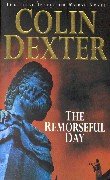
The Remorseful Day by Colin Dexter

Chief Inspector Morse is one of my favourite fictional detectives (maybe even the favourite). I first ‘met’ him years ago in the ITV series Inspector Morse and so, just as Joan Hickson is forever in my mind as Miss Marple and David Suchet is Poirot, John Thaw is Morse. The series was first broadcast in 1987, but I don’t intend to write about the books versus the TV adaptations – I’ve enjoyed both. This post is just about the last book in the series – The Remorseful Day.

I’ve delayed reading this for so long (I watched the TV version when it was first broadcast, which was 15 years ago!) because it’s the last of the Morse books and sadly the end of Morse too. So if you’ve not read any of the Morse books I suggest that you don’t start with this one.

Needless to say that I loved it. The plot is detailed, complex and as usual with Morse a puzzle type murder mystery with plenty of challenging clues. Sergeant Lewis is left to investigate the murder of nurse Yvonne Harrison that had remained unsolved for a year – Morse initially refused to work on the case, despite Chief Superintendent Strange’s wishes. Sergeant Lewis is concerned as this looks just the sort of puzzle Morse excels in solving … and Morse’s behaviour has been worrying Lewis recently.  Lewis can’t believe that Morse could have a personal reason to keep out of the investigation. And when Morse phones to say he is feeling unwell Lewis is most concerned – Morse seldom mentioned his health, what is wrong with him?

The plot is complex, but the real focus of the book is on Morse and how he copes with his illness and his drinking habits and it becomes obvious just how alone he is in the world and how devastating his situation is to Lewis. The novel also reveals more about Strange’s character and also about his understanding of Morse. I found it both a most satisfying book and a very sad one.

There are only 13 Morse books. The links are to my posts on the books – I read some before I began to write this blog and I’m hoping to re-read those in due course.

  1. Last Bus to Woodstock (1975)
  2. Last Seen Wearing (1976)
  3. The Silent World of Nicholas Quinn (1977)
  4. Service of All the Dead (1979)
  5. The Dead of Jericho (1981)
  6. The Riddle of the Third Mile (1983)
  7. The Secret of Annexe 3 (1986)
  8. The Wench is Dead (1989)
  9. The Jewel That Was Ours (1991)
  10. The Way Through the Woods (1992)
  11. The Daughters of Cain (1994)
  12. Death is Now My Neighbour (1996)
  13. The Remorseful Day (1999)

As The Remorseful Day has sat unread on my shelves for so long it obviously qualifies for the Mount TBR Challenge 2015. I also included it as one of My 10 Books of Summer, which brings my total to 5.

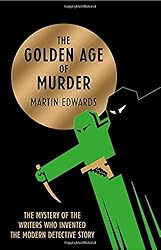
The Golden Age of Murder by Martin Edwards

Although I read a lot of crime fiction my knowledge of the authors and their books written during the ‘Golden Age’ so far has been limited to Agatha Christie, Dorothy L Sayers, Margery Allingham, and Michael Innes so when I saw that Martin Edwards had written The Golden Age of Murder: The Mystery of the Writers Who Invented the Modern Detective Story I thought it would be the ideal book to find out more. And I was absolutely right and the works of a whole host of authors has been opened up to me.

This is the story of the writers who formed the Detection Club between the two World Wars. Edwards sets the authors and their works in context – that period when Britain was recovering from the horrors of the First World War, living through an age of austerity as unemployment grew, the cost of living soared leading to the General Strike whilst the rich partied and saw the beginnings of the end of the British Empire. But the writers and the works although well grounded in their own time and culture have a lasting appeal and influence on current story telling and film and television.

The Club grew out of the dinners Anthony Berkeley and his wife Peggy hosted at their home in the late 1920s, attended by people including Agatha Christie, Dorothy L Sayers, Douglas and Margaret Cole, Ronald Knox, Henry Wade, H C Bailey and John Rhode. Eventually the Club was formed, with Rules and a Constitution and a Committee. The members benefited in various ways, meeting fellow detective novelists, discussing ideas, supporting each other and even working together on collaborative writing projects – such as The Floating Admiral, in which a dozen writers each wrote one chapter. The main aim of the Club was to encourage and maintain a high standard of work in writing detective novels.

I was fascinated by the number of real crimes that influenced the writers, both current at the time and crimes from the past. Their interest as they discussed these cases, such as Dr Crippen’s poisoning of his wife, in turn inspired them not only to write but also to play the detective themselves. Indeed, Edwards shows that the image of the Golden Age as ‘cosy’ murder mysteries is false:

Their novels are often sneered at as ‘cosy’, and the claim that their characters were made from cardboard has become a lazy critical cliché. The very idea that detective fiction between the wars represented a ‘Golden Age’ seems like a misty-eyed nostalgia of an aged romantic hankering after a past that never existed.

The best detective novels of the Thirties

were exhilarating, innovative and unforgettable. They explored miscarriages of justice, forensic pathology and serial killings long before these topics became fashionable (and before the term’serial killer’ was invented). …

The climax of one of Berkeley’s novels was so shocking that when Alfred Hitchcock came to film it, even the legendary master of suspense, the man who would direct Psycho, lost his nerve. He substituted a final scene that was a feeble cop-out in comparison to Berkeley’s dark and horrific vision. (page 9)

There is no way I can do justice to this book in a short post; it is simply a tour de force, comprehensive, crammed full of fascinating information about the period and the authors.

Martin Edwards’ love of Golden Age fiction shines throughout the book, (skilfully writing about books without giving away any spoilers) and has spurred me on to read more books from this period.

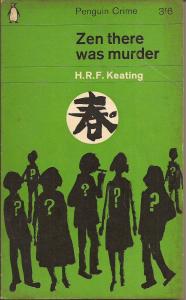
Zen There Was Murder by H. R. F. Keating

I don’t think I’ve read anything like Zen There Was Murder, a mixture of Zen Buddhism and murder. It was the second book H R F Keating wrote, first published in 1960 and then published in 1963 by Penguin Books in their green Penguin Crime series. (This cover is much more appropriate than the Bloomsbury Reader e-book cover showing guns)

It was the Zen Buddhist setting that made it difficult for me to get to grips with the murder. In fact it is practically halfway into the book before the murder actually takes place. The first half is taken up with introducing the characters, gathered together for a course on Zen Buddhism.  There is a schoolteacher, Alasdair Stuart, a clergyman, the Rev. Cyprian Applecheek, Miss Olive Rohan, Miss Flaveen Mills, Honor Brentt, a jounalist and her husband, Gerry Manvers, and Jim Henderson, an Irishman from Ulster.

None of them know anything about Zen and much time is spent with them trying to understand what it is. Mr Utamaro, the lecturer comes out with various sentences, such as ‘Books about Zen are legs on a snake‘, saying you cannot understand Zen by reading a book about it and applying the principles of logic to what you read, and tweaking Alasdair’s nose saying, ‘this is Zen‘, as well as using koans, such as ‘what is the sound of one hand clapping?‘ But they fail to understand, saying it is nonsense. Mr Utamaro agrees.

Mr Utamaro shows them a sword, locked in a glass showcase. The sword, a wakizashi, is one of pair used by samurai for hari-kiri, and on the evening of the first day Mr Utamaro discovers that the sword has been taken from the case, leaving it intact and without setting off the alarm. And then Flaveen is found dead, the sword driven into her body up to the hilt.

The clue to discovering the identity of the murderer is in solving who is telling lies  and why.  For most of the time I was completely bamboozled and kept wondering just how the two German girls employed to make the beds and do the cooking fitted into the mystery. Their conversations regularly interrupt the narrative as they comment on the characters and the events taking place.

All in all this book has a surreal feel about it. It’s not just a puzzle type of murder mystery but as Keating explained in an interview with Dale Salwek in Mystery Voices: Interviews with British Crime Writers it is also making a point about something you believed:

And the thing I believed in, one of the things that bugged me most, was the subject of telling lies, which is fine for a detective story. And that was how I came to write my second, Zen There Was Murder, which is really more about telling lies than about Zen.

When writing the second book, I thought I could say something about telling lies. At that time, too, Zen Buddhism was a fad over here, and so for the background of the book, I took Zen, which does reflect very much on lies. I found I could say things about lies by giving each of the characters a different viewpoint on telling lies – ranging from one of those people who absolutely objects to lying in any way to the sort of pathological liar. And I made the whole book turn on that. (pages 64-65)

H R F Keating (1926 – 2011) was chairman of the Crime Writers’ Association (CWA) (1970’“71), chairman of the Society of Authors (1983’“84) and president of the Detection Club (1985’“2000). He was a fellow of the Royal Society of Literature.  His most famous novels are the Inspector Ghote books (I have just one on my TBR shelves – Inspector Ghote’s Good Crusade, the second in the series).  For more information about Keating see this article by Martin Edwards.

I’ve had this book for about three years, so it qualifies for the Mount TBR Reading Challenge 2015 and it is also one of the books I listed for the 10 Books of Summer Challenge, and the TBR Pile Challenge.