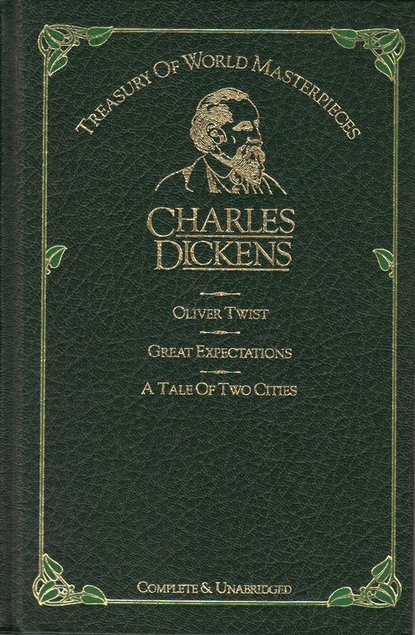
Oliver Twist by Charles Dickens

Charles Dickens oliver twist etc

5*

Oliver Twist by Charles Dickens was my latest Classics Club Spin book. I finished reading it on 16th January well before the finish date for the Spin, 31st January. It’s a well known story, although I realised that I only knew the beginning – Oliver’s birth in the workhouse and his early years, that famous scene where he has the audacity to ask for more, and then his escape from the workhouse only to end up in Fagin’s clutches – a den of thieves and pickpockets.
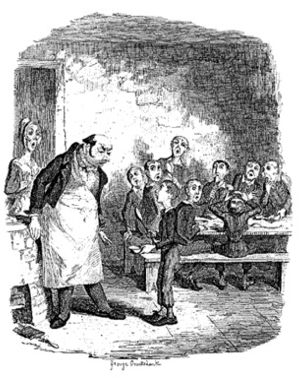
Oliver Twist
‘Please, sir, I want some more.’

I don’t intended to go into any more detail about the story, other than to say that whilst out with the Artful Dodger, attempting to steal handkerchiefs Oliver is caught by the police and rescued by Mr Brownlow. After that the story was new to me, although I knew the names of the other main characters, Nancy and the villain Bill Sykes, with his vicious dog, Bull’s Eye. But other characters in the later parts of the book, such as the Maylie family, Rose, adopted by Mrs Maylie, and her son, Harry and the mysterious man, Monks were new to me. 

Oliver Twist was first published as a serial from 1837-1839, under Charles Dickens’ pseudonym, ‘Boz’. It was his second novel, published in three volumes in November 1839. It’s full of terrific descriptions of the state of society at the time – the grim conditions that the poor suffered, the shocking revelations of what went on in the workhouse, and the depiction of the criminal underworld – the contrast of good and evil. Despite everything that happens to Oliver he remains a good boy, pure and innocent, whereas the villains are evil personified; whilst living with Fagin and his gang he existed in a state of both fascination and terror. Dickens was merciless in the satire he used in this book.

And yet in the middle of the book there is a romantic interlude full of sentimentality and melodrama. Rose Maylie is really a very pale character, being both virtuous and self-sacrificing but she contrasts well with the prostitute Nancy, who pities Oliver and tries to protect him from Fagin and Sykes. As the mystery surrounding Monks’ identity is revealed, Oliver is in more danger than anything he has faced before in his life.

My copy also contains Great Expectations and A Tale of Two Cities (both of which I read as a teenager) and was a birthday present as long ago as 1981, so this is one of my TBRs as well as a Classics Club Spin book. In the introduction to this volume Oliver Twist is described as follows:

The story of Oliver … has become an immortal one. Hitherto Dickens had been content to entertain … with Oliver he tried to reach the deeper passions of his audience, rouse their indignation at the harsh injustice of the Poor Law and open their eyes to the horror of the London slums, while at the same time show that there is  a certain innocence in humanity (personified by Oliver) that can never be sullied. There have been some critics who have found that the two themes make uneasy bedfellows and certain contemporaries of Dickens complained that he was being purely sensational in his horrific descriptions of life in the criminal underworld. Most of his readership, however, have been both fascinated and moved.

And I can say that I too found it shocking, fascinating and moving.
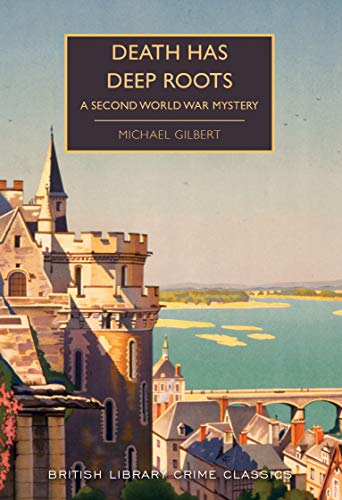
Death Has Deep Roots by Michael Gilbert (British Library Crime Classics)


Death has deep roots

Poisoned Pen Press| 5 November 2019| 288 pages|reprint edition| 4.5*

Death Has Deep Roots: a Second World War Mystery by Michael Gilbert was first published in 1951. This edition, published in association with the British Library, has an introduction by Martin Edwards.

I thoroughly enjoyed Death Has Deep Roots. Set in 1950 it’s a mix of courtroom drama, spy novel and an adventure thriller. Victoria Lamartine, a hotel worker, and an ex-French Resistance fighter is on trial for the murder of Major Eric Thoseby, her supposed lover, and alleged father of her dead child. The story alternates between the courtroom scenes, where QC Hargest Macrea is in charge of Vicky’s defence, and the investigations of solicitor Nap Rumbold in France, and his friend Major Angus McCann, who now keeps a pub in Shepherd Market.

Vicky is the obvious suspect – she was found standing over Thoseby’s dead body in his room at the Family Hotel in Soho, a room that was only accessed by one staircase – making this a variation on a locked room murder mystery. In evidence was also against her as Thoseby had been stabbed using the same method that the Resistance fighters had been taught. But she insists that she is not guilty.  Macrea and Nap believe her and Nap sets out to find the Englishman, Julian West, who Vicky says is the father of her dead child, whilst McCann investigates events in London.

I always like courtroom dramas and I think the courtroom scenes are impressive and persuasive as Macrea questions the prosecutions witnesses and manages to stall proceedings whilst Nap is away in France. It is, of course, much more complicated than I’ve described – there is a lot of information about the war in France and the work of the French Resistance, and the dangers that confront Nap as he digs deeper into what had happened to Wells. And I enjoyed the thrill of the chase as he travels through France with only a week to discover the truth.

I think what makes this book so good is not just the murder mystery, which I couldn’t solve, but also the setting and the characters. It was written not long after the end of the Second World War and it conveys a vivid impression of what life was like in both France and England, with memories of the war still fresh on people’s minds. Whilst Vicky is maybe a stereotypical character Nap, in particular, comes across as a more developed character – and a very likeable one too. It’s described as a book in the Inspector Hazelrigg series, but he only makes a brief appearance, with Nap, Macrea and McCann doing the main investigations.

Michael Gilbert was a British lawyer who wrote police procedurals, spy novels and many short stories, courtroom dramas, classical mysteries, adventure thrillers, and crime novels. I have another one of his to read, Smallbone Deceased and I hope to get round to it soon.

Many thanks to Poisoned Pen Press for a review copy via NetGalley.

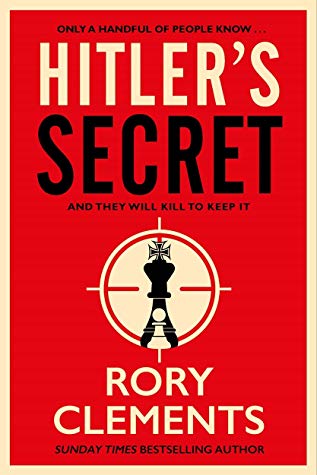
Hitler’s Secret by Rory Clements

Hitler's secret

Bonnier Zaffre| 23 January 2020| 339 pages| e-book| review copy via NetGalley| 4 stars

Description from the author’s website:

In late autumn 1941, Nazi Germany has conquered most of western Europe and is now laying waste to the Soviet Union with a relentless drive towards the East. But a secret from Hitler’s past life threatens to destabilise the Nazi regime – and there are men who will stop at nothing to prevent it coming out. 

My thoughts

I enjoyed Rory Clements’ first book in his Tom Wilde series, Corpus so much that I decided to look out for more of his books. But somehow I missed the next two books as Hitler’s Secret is the fourth book in the series. Luckily for me, it reads perfectly as a standalone, although at some point I would like to read the books I missed.

This is a complicated novel and I am not going to attempt to describe all the details.  Just before the USA’s entry into the Second World War, Cambridge professor Tom Wilde, an American, is smuggled into Nazi Germany at the instigation of an American intelligence officer to collect a mysterious package from Berlin. He isn’t told what is in the package, but I thought it was obvious from quite early in the book what it was.  I think that increased the tension and suspense throughout the book and at several points in the story, I just couldn’t imagine how Tom would succeed in his mission as he is pursued by numerous people including the powerful Nazi, Martin Borman and his agents. Hermann Goering and his wife Emmy also play an important role in the story as does the internal struggle for power under Hitler, whereas Hitler himself does not appear.

I enjoyed all of it – the somewhat predictable plot, the amazing coincidences, the chase across Germany and the Baltic, the doubtful characters, as well as all the twists and turns and seemingly impossible situations that they encounter. It’s fast paced, full of action, danger, violence and double-cross – a most satisfying and compelling thriller. The ending in England is also intriguing, full of heart stopping moments in scenes that had my head whirling. Needless to say really, but I was gripped by this book and I just had to find out what happened. I think the last final twist about Hitler’s secret was very well done.

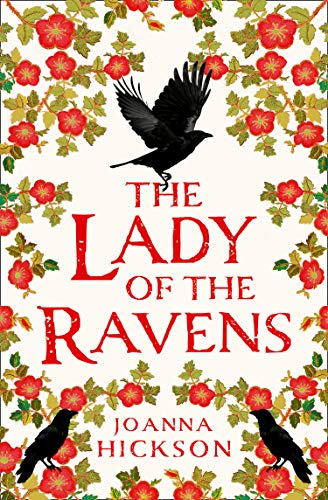
The Lady of the Ravens by Joanna Hickson

Lady of the ravens

Harper Collins|9 January 2020|400 pages|e-book via NetGalley|Review copy|5*

Publishers’ Description:

Elizabeth of York, her life already tainted by dishonour and tragedy, now queen to the first Tudor king, Henry the VII.

Joan Vaux, servant of the court, straining against marriage and motherhood and privy to the deepest and darkest secrets of her queen. Like the ravens, Joan must use her eyes and her senses, as conspiracy whispers through the dark corridors of the Tower.

Through Joan’s eyes, The Lady of the Ravens inhabits the squalid streets of Tudor London, the imposing walls of its most fearsome fortress and the glamorous court of a kingdom in crisis.

My thoughts:

The Lady of the Ravens opens in 1485 just weeks after Henry Tudor had taken the throne to become King Henry VII of England and Lord of Ireland. This is historical fiction about the early years of Henry’s reign as seen through the eyes of Joan Vaux, a lady in waiting to Elizabeth of York, whose marriage in 1486 to Henry united the Houses of Lancaster and York after the end of the Wars of the Roses.

Henry comes across as a competent king, which is really all I knew of his reign before reading this book. I’ve read Joanna Hickson’s earlier book about him, The Tudor Crown, which is about his early life and how he gained the English throne. Joan Vaux also features in a small way in this book. In The Lady of the Ravens he is shown to be determined to hold on to his throne, dealing with several Yorkists’ claims to the throne, in particular those of Lambert Simnel, who claimed to be Edward Plantagenet, 17th Earl of Warwick, Elizabeth’s cousin, and Perkin Warbeck, who claimed to be Richard of Shrewsbury, Duke of York, who was the second son of Edward IV, Elizabeth’s brother, one of the so-called Princes in the Tower. It is also about his family life – his marriage to Elizabeth,,the births of their children (three of them died in childhood), and his concern for his subjects – for example both he and Elizabeth were present at Joan’s wedding and we also see him enjoying dancing at court.

Joan Vaux is also a real historical character – her mother, Katherine was French and had been a lady-in-waiting to the former queen Margaret of Anjou (the wife of Henry VI).. Joan had served Elizabeth as a woman of her bedchamber before Elizabeth’s marriage to Henry and, after her own marriage to Sir Richard Guildford, as a lady-in-waiting. And before that she had been brought up in the household of Lady Margaret Beaufort, Henry’s mother. Joan became a good friend and confidante of Elizabeth, even after her marriage and the birth of her son Henry, known as Hal, who also became a good friend to the young Prince Henry.

The fictional element is in the story of Joan’s fascination for and care of the ravens of the Tower of London firmly believing in the legend that should the ravens leave the Tower for good then the crown will fall and ruin will return to the nation. I came to really like Joan, a warm and caring woman. Joanna Hickson goes into detail describing the traumatic birth of her son and the lives of ordinary people outside the royal court. It is a rich and vibrant novel, full of action and political unrest.

I particularly like the glimpses we see of the ill-fated Prince Arthur and his bride, Katherine of Aragon. And I was especially delighted by the portrait of Prince Henry (who later became Henry VIII) as a young charismatic child of nearly three. His father was  furious about the imposters’ claims to the throne and had decided the best response was to invest his younger son as the trueborn and genuine Duke of York. Little Henry, with his bright red Tudor hair, was mounted on a gleaming black warhorse strapped into a specially made high-backed jousting saddle and escorted by his great-uncles, the Yeoman of the Guard and the King’s Archers as they processed around the streets of London to Westminster.  He was in his element, waving to the crowd who cheered and threw flowers as he went by.

This novel is beautifully written, grounded in its historical context, full of colour and life. I loved all the descriptions of the various settings, especially the Tower of London, and the ravens. My grasp of English history in this period was very hazy and I learned a lot reading this book, especially as the characters came to life on the pages, but most of all I loved the portrayal of Joan Vaux, Lady Guildford. And I see from the Author’s Note at the end of the book that there is more to come about her, including a mystery, her second marriage and her close relationship with Katherine of Aragon and the early years of Henry VIII’s reign. I’m looking forward to reading that!

The Author:

Joanna Hickson became fascinated with history when she studied Shakespeare’s history plays at school. However, having taken a degree in Politics and English she took up a career in broadcast journalism with the BBC, presenting and producing news, current affairs and arts programmes on both television and radio. Now she writes full time. The Lady of the Ravens is her sixth novel. 

My thanks to the publishers for my review copy via NetGalley.

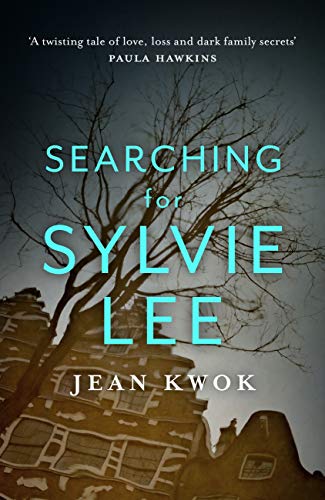
Searching for Sylvie Lee by Jean Kwok

Searching for Sylvie Lee

John Murray|17 October 2019|341 pages|e-book via NetGalley|Review copy|4*

Description extracted from the publishers’ blurb:

It begins with a mystery. Sylvie, the beautiful, brilliant, successful older daughter of the Lee family, flies to the Netherlands for one final visit with her dying grandmother – and then vanishes.

Amy, the sheltered baby of the Lee family, is too young to remember a time when her parents were newly immigrated and too poor to keep Sylvie. Seven years older, Sylvie was raised by a distant relative in a faraway, foreign place, and didn’t rejoin her family in America until age nine. Timid and shy, Amy has always looked up to her sister, the fierce and fearless protector who showered her with unconditional love.

But what happened to Sylvie? Amy and her parents are distraught and desperate for answers. Sylvie has always looked out for them. Now, it’s Amy’s turn to help. 

My thoughts:

I loved Searching For Sylvie Lee by Jean Kwok.  I enjoyed reading its beautiful descriptive language and the mystery of what had happened to Sylvie. I think the characterisation is very good, the three main characters, Sylvie, her younger sister Amy and their mother Ma are each clearly recognisable by the way they speak. The story alternates between the two sisters and their mother’s perspectives, as the details of what happened to Sylvie are revealed.

Sylvie had left her home in the USA to visit her dying grandmother in the Netherlands where she had lived until she was nine. After the funeral she was supposed to return home, but she never arrived. Amy and her parents are distraught and she flies to the Netherlands to find out what had happened to her.

This is a mystery full of suspense and it is also a story about family relationships, about secrets and the barriers that language can raise – Amy’s dominant language is English, whereas her mother and father, Chinese immigrants living in America, have just a basic grasp of English and still speak Chinese. Sylvie also speaks Dutch as until the age of nine she had lived with the Tan family, Chinese immigrants living in the Netherlands. It’s not just the language but also the different cultures and the racism they experienced that separated the characters.

I had realised quite early on what the family secret was and what had happened to Sylvie, but that didn’t spoil my enjoyment of the book. My only criticism is that in the latter part of the book, particularly as Sylvie describes her visit to Venice I thought that the book veered offline. Although the episode is essential to the plot the detailed description took away the momentum of the mystery and my attention wandered a bit. But the ending made up for that!

The Author:

I would like to read more of Jean Kwok’s books. She is trilingual, fluent in Dutch, Chinese, and English, and studied Latin for seven years. Jean immigrated from Hong Kong to Brooklyn when she was five and worked in a Chinatown clothing factory for much of her childhood. She received her bachelor’s degree from Harvard and completed an MFA in fiction at Columbia University. She currently lives in the Netherlands. Her work has been published in twenty countries and taught in universities, colleges, and high schools across the world.  

My thanks to the publishers for my review copy via NetGalley.

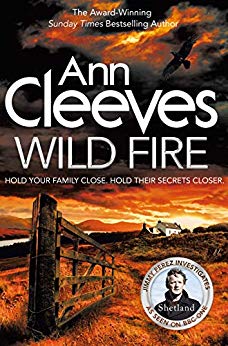
Wild Fire by Ann Cleeves

Wild Fire

Macmillan|6 September 2018|417 pages| paperback|4*

Wild Fire is the 8th and last book in Ann Cleeves’ Shetland series. I have loved this series ever since I read the first book, Raven Black, back in 2010. And because I began reading the books before they were televised my picture of Inspector Jimmy Perez is drawn from them rather than from the dramatisations. There are some significant changes  between the TV dramatisations and the books – notably in the characters of Cassie, Fran’s daughter who is still a child in the books is older in the TV stories, and the relationship between her father, Duncan Hunter and Perez is different. And Douglas Henshall, who plays the part of Perez, is not physically like Jimmy Perez – Perez has long dark hair with Spanish ancestry in his blood, whereas Douglas Henshall is a redheaded Scot.

It’s not necessary to have read the earlier books in the series as each one works well on their own, but I think it helps enormously if you have as the personal stories of the main characters form a continuous thread.

Wild Fire is set in Deltaness, an invented village in Northmavine where the Fleming family, Helen, a knitwear designer, her architect husband, Daniel, and their children, autistic Christopher, and Ellie,  have recently relocated from London. They are finding it hard to settle and matters were only made worse when the previous owner of their house is founding hanging in their barn. But they have made friends with the Moncrieff family, Belle, her husband Robert the local doctor and their four children – the eldest two,Martha and Charlie are teenagers, with a younger brother and sister. 

Things go from bad to worse for the Flemings when Christopher discovers the hanged body of the Moncrieff’s nanny, Emma Shearer in the barn. Suspicion immediately falls on Daniel and Helena as the rumours spread like wild fire that Emma and Daniel had been having an affair. Chief Inspector Willow Reeves, Jimmy’s boss returns to Shetland to lead the investigation and it is immediately obvious that they have personal issues to resolve as well as finding the murderer.

But of course it is not that straight forward. Emma comes from a dysfunctional family and has issues of her own to work through, and the Moncrieffs are also suspects. In fact there are plenty of people who bear grudges against the incomers and they become a focus of resentment and jealousy. Emma’s boyfriend Magnie Riddell and his mother Margaret are two more people whose motives and movements come under suspicion.

The main interest for me is the relationship between Jimmy and Willow and how Jimmy reacts to her news. It causes him to question what he really feels and what form his life will take for the future. I don’t think it is giving away any spoilers, as this is the last book in the series, to say that things are about to change for them both. As in all the Shetland books it is Ann Cleeves’ beautiful descriptions of the islands that stand out – that and the characters themselves who have become like real people to me and I shall miss reading about them. But then, I can always re-read the series!

Reading Challenges – Calendar of Crime (the main action takes place in May), and Mount TBR 2019 (a book I’ve owned for 2 years)

As it is the last day of the year, this is my last post in 2019 (you may have noticed that I’ve written three posts today to complete my entries in the two Reading Challenges above).

And now I’m looking forward to the start of a new decade and lots of books to read.