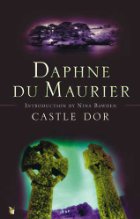
Castle Dor

Castle Dor

Castle Dor by Sir Arthur Quiller-Couch and Daphne du Maurier is the first book I’ve read for the What’s In a Name 2 Challenge ( a book with a “building” in its title). It’s also been on my to-be-read list for at least a year. Sir Arthur Quiller-Couch was born in Fowey, an English professor, writer and critic, the editor of The Oxford Book of English Verse (1900), who wrote under the pseudonym “Q”.

Although not as good as Rebecca it’s an interesting book, mainly because of its joint authorship and its retelling of the legend of the tragic lovers Tristan and Isolde. It was Sir Arthur Quiller-Couch’s last unfinished novel and Daphne took it over at the request of his daughter after his death. It came at a low point in her life and I think she struggled to complete the book. The first part (by Quiller-Couch) has a more mysterious, mystical and dreamlike atmosphere than the latter part which is written in a more straight forward and somewhat chatty style.

Place and time are fluid as events from the past are repeated in the present and the characters are held by something stronger than themselves, linking them inexorably to the past. The land itself, its history and above all the ancient earthworks at Castle Dor are central to the story. Castle Dor, an “ancient cirque, deserted, bramble-grown”, once a bastion “filled with men commanding this whole wilderness now grass mounds, sleeping under a quiet sky.”

There are different versions of the Tristan and Isolde legend and these are explored in the story by Dr Carfax and his patient Mr Tregentil. Set in Cornwall in the 1860s, Dr Carfax recognises the signs that Linnet and Amyot Trestane are unknowingly re-enacting the tragic events that befell Tristan and Isolde. He tries to to keep them apart but from the moment she heard his name and met him

… she had a strange sensation of something breaking out of the past to connect itself with something immediately to come.

And Linnet too late realises

 … that bliss is transient, that nothing perfect lasts…

Cider With Rosie

Woolpack Slad1
Woolpack Inn, Slad

Cider with Rosie by Laurie Lee was one of the best books I read last year. It’s one of those books that I’ve been meaning to read for years. The in 2007 D and I had a holiday in a cottage at Wick Street near Painswick  and one day we walked from the cottage to Slad where Laurie Lee used to live. We dropped into the Woolpack for a drink and had a look at the church.

Slad church
Slad Church

Knowing what a place looks like makes reading about it much more real and so when I finally read Cider with Rosie I could easily visualise what it was like when Laurie Lee lived there as a child. He was born in Stroud (another place we visited) and moved to Slad when he was three in 1917. Cider with Rosie covers his childhood years and it is absolutely fascinating. His love for his mother permeates the book (his father had left his wife with seven young children):

 She lived by the easy laws of the hedgerow, loved the world, and made no plans, had a quick holy eye for natural wonders and couldn’t have kept a neat house in her life. What my father wished for was something quite different, something she could never give him – the protective order of an unimpeachable suburbia, which is what he got in the end. (page 121)

Although they never had enough money they were happy, his mother “possessed an indestructible gaiety which welled up like a thermal spring.”

I’ve already written a bit about the book – about how village of Laurie Lee’s childhood is no more. The village was still linked to the past. It …

had not, as yet, been tidied up, or scrubbed clean by electric light, or suburbanized by a Victorian church, or papered by cinema screens.

It was something we just had time to inherit, to inherit and dimly know – the blood and beliefs of generations who had been in this valley since the Stone Age. That continuous contact has at last been broken, the deeper caves sealed off for ever. But arriving, as I did, at the end of that age, I caught whiffs of something as old as the glaciers.

There was a frank and unfearful attitude to death, and an acceptance of violence as a kind of ritual which no one accused or pardoned. (pages 104 -5)

I feel I could reach back and experience some of that way of life through this book. Slad even today is a beautiful place, set in a valley in the Cotswolds, surrounded by fields, streams and woodland.

woodland-near-slad
Woodland near Slad

Book Notes – Les Misérables

I’m so behind with writing about the books I’ve read. I now have eight to do – five from the end of last year and three that I’ve read this month.

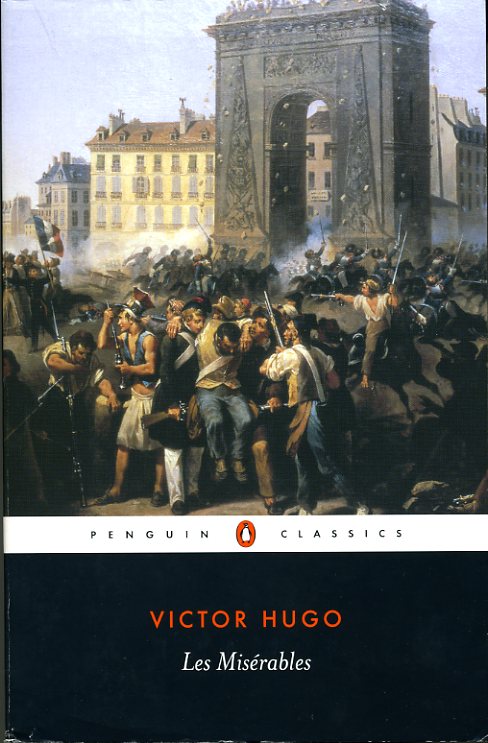
I’ve already written a snippet (see this post) about Les Misérables, so I’ll begin with this book. My first encounter with the story was many years ago watching a serialisation on TV and what stood out in my mind from that was the horror of Fantine, desperate for money selling her two front teeth and then towards the end of the book seeing Valjean trudging through the French sewers surrounded by excrement and rats. Reading it last year I realised there is so much more, with a huge cast of characters and covering a sweep of French history in the early 19th century; there’s the Battle of Waterloo and the July Revolution of 1830 which Hugo describes in great detail; there are many digressions and meditations, but basically it’s the story of Jean Valjean the ex-prisoner who is transformed by the actions of Monseigneur Bienvenue, the Bishop of Digne and is pursued by the indefatigable Inspector Javert.

Parts of the book are quite easy reading and I read them quickly. These were parts about the main characters, Valjean, Fantine, her daughter Cosette who Valjean is dedicated to protect, Marius who falls in love with Cosette, the evil Thénardiers and Éponine and Gavroche, their daughter and son. But other parts had me yawning and dragged, when there was too much detail about battles and sieges. Les Misérables cannot compete with Tolstoy’s War and Peace, which I think is just so beautifully descriptive that I forget that I don’t like reading about battles and war. Having said that, it is a remarkable book about the forces of good and evil and I enjoyed reading it.

Book Notes – Crime Fiction

I’ve recently read the following books:

The Tiger In the Smoke by Margarey Allingham (first published 1952).  Jack Havoc is on the loose in post-war London, resulting in murder, mystery and mayhem.  I was immediately struck by the imagery – the fog pervades everything. At times I wished there was a bit less description but at other times I was completely caught up in the story and could feel the tension and fear in the characters. I expected Inspector Campion to take the lead but he only appears as a minor character. I thought the attitude to women was a bit condescending, and Meg, the young widow, didn’t really engage my sympathy.  However, Canon Avril is one of the best characters (along with Tiddy Doll), and forms a complete contrast with Havoc – good/evil.  His view of anger is that it is “the alcohol of the body”, which “deadens the perceptions.” And l liked his thoughts on the soul: “When I was a child I thought of it as a little ghostly bean, kidney shaped, I don’t know why. Now I think of it as the man I am with when I’m alone.”  After a slow start I read with increasing anticipation to find out what happened next.

Detection Unlimited by Georgette Heyer. Published in 1953 a year after Tiger In the Smoke this is a much lighter novel. As the title implies there are many suspects for the murder of Sampson Warrenby, found dead under a tree in his garden with a bullet through his brain and many people all too ready to tell Inspector Hemingway who did it. I was immediately drawn into a world gone by in a small village, with characters such as Mrs Midgeholme with her pack of Pekes, whose names all begin with ‘U’, Mr Drybeck, the old-fashioned solicitor, Warrenby’s long-suffering niece, Mavis, the country squire and his lady-wife, the maiden aunt Miss Patterdale, and the village bobby on his bicycle. A spot of blackmail, and a  number of twists and turns in the plot kept me interested to the end.

I thought A Christmas Visitor by Anne Perry was a little disappointing. The only Christmas connection I could see is that it is set just before Christmas. The good thing about this book is that it is very short (133 pages). The bad thing is that it is rather tedious. It began well set sometime in the 19th century with Henry Rathbone’s visit to the Dreghorn family near Ullswater in the Lake District for Christmas.  Judah, a judge in the local court at Penrith, had been found drowned in a stream, having gone out late at night. It was assumed at first that it was an accident. Antonia, Judah’s widow tells Henry of the death of her husband and then one by one Judah’s brothers, Benjamin, Ephraim and Naomi, his sister-in-law arrive and are met by Henry and he relates the account of Judah’s death to each one and I started to get tired of the repetition. The chief suspect is Ashton Gower, who has just been released from prison, sentenced by Judah to twelve years for forgery. Gower claims to be the rightful owner of the Dreghorns’ house. Not the most riveting of mysteries.

Stillmeadow and Sugarbridge

I finished reading Stillmeadow and Sugarbridge by Gladys Taber and Barbara Webster in November. The book is composed of letters between  Gladys Taber in Stillmeadow, Southbury, Connecticut and Barbara Webster in Sugarbridge in Pennsylvania over one year in the 1950s, illustrated by Edward Shenton, Barbara’s husband.  Stillmeadow Friends is a good site for information about Gladys Taber and her books.

 I started to read Stillmeadow and Sugarbridge in August and decided then to take my time and read it slowly and at first I managed to limit my reading to a few letters each time I picked up the book. I wrote about the months of June and July in my Sunday Salon post  at the beginning of November. Since then I couldn’t stop myself from reading it and I finished it by the end of November.

The letters give a good picture of their lives and are full of the love of the countryside, gardening, cooking and their families. I love this  book (thanks again to my friend, Nan of Letters from a Hill Farm who sent it to me). There are so many extracts I could quote that I don’t quite know where to start. Here are a few.

Gladys, writing to Barbara in January:

Do you ever have a moment that is absolutely exquisite? Such moments are rare, they are like holding a pink pearl in your palm. Happiness, I think, is being able to live these moments when they come.

Barbara to Gladys on humour:

A great humorist, I think, is a top blessing to the world. It’s all very well to write grim things, profound tragedies, but we all need a little bright sun to encourage us. I also think it’s harder to be funny.

Barbara, writing about women writers:

I considered for a moment, the fine and fertile individualism of most English women writers, herself [Elizabeth Bowen], Virginia Woolf, shy and fey, fanciful and profound, with a gentle musing face; Edith Sitwell, fierce and inspired, with the air of an Elizabeth high priestess; Rebecca West, a keen and subtle reporter, a powerful novelist.

Gladys on time:

When I hear people doing things to pass the time, I shudder. For the one precious and irreplaceable gift is time, and surely we are in sorrowful state if we merely want to toss it out as fast as possible.

A day is a fine thing, and we shall never see this day again.

It is not a thing to take too easily.

I could go on and on, they write about the natural wants of man, getting inside of others, life as an orange – bitter and sweet, the intoxication of words,  writing, living each minute whilst still looking to the future, the ethics of hunting – to kill or not to kill, books, poetry, dogs, cats, children, flowers, vegetables, birds, the beauty of nature, Halloween, Thanksgiving, Christmas, and a whole host of other topics; a picture of full and rewarding lives. This is most cetainly a book I shall re-read and re-read.

One last quote from Gladys, with which I can sadly agree. She had been dieting, at least between weekends (oh I know just what she’s saying) and was discouraged when she had worked out:

… that at the rate I am losing, I will be just right by the time I am a hundred and seventy three.

The Arsenic Labyrinth by Martin Edwards

The Arsenic Labyrinth (Lake District Mystery, #3)

The Arsenic Labyrinth by Martin Edwards is such a good book that I had to put to one side the other books I was reading in order to concentrate on this one alone. It is a fascinating book. Not only is it set in the Lake District, a beautiful part of the country but it is a mystery of the best kind. Ten years earlier Emma Bestwick had disappeared. At the time there had been no apparent reason why she vanished into thin air but more information is revealed following an article in the local paper appealing for the case to be re-opened on the tenth anniversary of her disappearance. There are many twists and turns as Detective Inspector Hannah Scarlett’s Cold Case Review Team carries out its investigation.

This is the third book in Martin Edwards’ Lake District mystery series but it stands well on its own. I haven’t read the first two yet – The Coffin Trail and The Cipher Garden – but I will. I only wish I’d come across these books before. Martin has a very good website giving much more information – see here.

The central characters are Guy, aka R L Stevenson, (you know someone is not who he says he is when he introduces himself as R L Stevenson and Guy has many secrets!), Hannah Scarlett and Daniel Kind, a former historian who has left Oxford to live in the Lake District. As Miranda, Daniel’s partner becomes less enchanted with living in the Lakes,  preferring to live in London, the relationship between Daniel and Hannah is resumed (there is obviously some history to their relationship in the earlier books – I think I’ll have to read those books soon). Daniel meanwhile carries on with researching Ruskin’s life and his dread of “industry encroaching on the glory of the Lakes”, but also gets caught up in Hannah’s investigation.

Soon attention turns to the Arsenic Labyrinth, hidden in the hills on Mispickel Scar. The labyrinth was on the ground level with “shafts and tunnels from the mines winding around the length and breadth of the Scar.” (The author’s note at the end reveals that arsenic was never mined in Cumbria.) The arsenic works brought about the ruin of the Inchmore family and Mispickel Scar is said to be cursed.  Alban Clough, the fount of all knowledge on local mythology, is the owner of the Museum of Myth and Legend, where Emma had worked for a while. But just where did the legend  of the curse of Mispickel Scar originate? And what is the connection between the Clough and Inchmore families and Emma’s disappearance? Tom Inchmore, was the only suspect at the time of Emma’s disappearance but he died some years ago – did he kill her? How does her sister, Karen cope with Emma’s death and where do Francis and Vanessa, who Emma lodged with, fit in? To complicate matters it turns out that Vanessa was previously married to Jeremy, Karen’s husband. The overlapping and complex relationships are eventually sorted out, but just when you think you’ve worked it all out there are yet more complications. I never guessed who-did-it until just before the end.

There is mystery upon mystery as the secrets of the Arsenic Labyrinth are revealed. An engrossing book that had me racing through it and itching to get back to it each time I put it down.