Some of January’s books – two quick reviews:
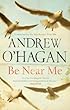 Be Near Me by Andrew O’Hagan is a beautifully written and moving book about David, a parish priest in a small Scottish parish and as I read it I gradually became aware of just how naive he is. The prologue foreshadows the problems he encounters when his mother comments that he has been through such a lot and that in her experience “nothing is ever behind anyone.” He tells her that he is looking forward to
Just working in an ordinary parish and greeting the faith of ordinary people.
What follows is a troubling story of what happened and what he did in that ordinary parish full of ordinary people. It’s a very sad and nasty tale, about prejudice, religious bigotry and it’s full of regret and despair.
Information about Andrew O’Hagan is here. I would like to read his earlier books, maybe The Missing, which is part autobiography and part looking at what happens to communities when people go missing.
That, quite coincidentally brings me on to another book I read in January:
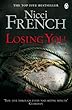 Losing You by Nicci French is a fast paced, take-your-breath-away book about Nina whose teenage daughter, Charlie goes missing. I read it a break-neck speed, switching between being completely engrossed and desperate for her to find her daughter before it’s too late and being annoyed by her attitude to the police.
It’s set on Sandling Island, off the east coast of England and the feelings of isolation and oppression fill the book. Nina is a newcomer to the island and is not really accepted as “one of us”. She struggles to get people, friends, neighbours and the police to take Charlie’s disappearance as anything serious. It’s the portrayal of the police as inept, inefficient and casual that bugged me – would that really be the case? Anyway, even if some of it was barely believable it is a real page-turner and I will be reading more of Nikki French’s books.
‘Nicci French’ is the pseudonym of wife and husband Nicci Gerard and Sean French. More information is on this website and they have a blog.

 I read
 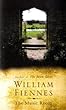 The Music Room

 n and Paris. The mystery begins with Oscar Wilde finding the naked body of Billy Wood, a 16 year old boy in the candle-lit room in a small terraced house in Westminster, close to the Houses of Parliament. Billy’s throat has been cut and he is laid out as though on a funeral bier, surrounded by candles, with the smell of incense still in the air. It’s a combination of fiction and fact, with both real and imaginary characters. Wilde with the help of his friends Arthur Conan Doyle and Robert Sherard sets out to solve the crime. Sherard (the great grandson of William Wordsworth) who wrote poems, novels, biographies (including five of Oscar Wilde) and social studies is the narrator.
