Drood by Dan Simmons

Drood was the first book I finished reading this year and I do hope I’m going to read better books than this, this year. My complaints about it are:

  • It’s too long
  • It’s too wordy
  • It’s too full of facts described in great length
  • It’s too full of Wilkie Collins
  • It’s too full of hallucinatory nightmares, involving in particular a black beetle scarab.

I  began to dislike all the characters, in particular Wilkie Collins, but then I realised this is fiction, not biography and I disliked it even more for initially lulling me into thinking this is what Collins and Dickens were like. But perhaps that’s a good point  – I began to believe what I was reading. I began to believe Dickens and Collins were involved in trying to find Drood, that Drood really existed, that he wasn’t just a figment of Dickens’s imagination, or Collins’s opium induced nightmares and that Collins actually planned to kill Dickens.

Wilkie comes over as a bombastic hypocrite full of his own self-importance and with a chip on his shoulder as far as Dickens is concerned. He’s not a well man, riddled with rheumatic gout, living with a woman he refuses to marry and with a mistress who has three children by him. He sees a green- skinned woman with teeth like long, yellow curved tusks who wants to fling him down the stairs and he is haunted by the ‘Other Wilkie’. He takes laudanum by the jugful, but insists the Other Wilkie has been with him all his life and is not a laudanum-induced dream. The Other Wilkie sits and watches him, lunging for the pen as Wilkie writes and eventually writing his novels for him.

Drood as portrayed in this book is horrific, a half-Egyptian fiend, who, according to Inspector Field is a serial killer. I suspect that this bears little relationship to Dickens’s Drood. I haven’t read The Mystery of Edwin Drood, but having read Drood, I feel I really should.

The plus points for Drood are that it does contain some vivid descriptions bringing the period to life for me – the slums of London, the train accident at Staplehurst and the fantastical “Undertown” with its miles of tunnels, catacombs, caverns and sewers are good examples. It has also made me keen to read more books by Dickens and Collins and biographies of them. There is a list of biographical and other sources in the Acknowledgements at the end of the book, so I’m adding some to my wishlist such as Dickens by Peter Ackroyd.

Alphabet in Crime Fiction: J and K

Whilst I’ve been busy moving house Kerrie’s A-Z Crime Fiction meme has featured the letters J and K. Now that I have the computer up and working (well D actually did that for me) I’m having a little break from unpacking boxes to add to the series. I’ve written about the following books earlier in this blog and have adapted my reviews for this post.

the letter JJ is for A Judgment in Stone by Ruth Rendell.

This portrays Eunice, an illiterate woman and a psychopath who does anything to stop anyone from finding out that she can’t read or write.  Her ingenuity and resourcefulness is amazing. She blackmails people and killed her father. I found the whole premise of such a damaged person apparently functioning normally in society scary.

She is employed by the Coverdales as their housekeeper and in the interests of having their house kept clean and tidy they tried to make her comfortable. But part of the problem was that they looked on her as little more than a machine, not as a person. They meant well, wanting to make other people happy, but they were interferers and things went from bad to worse. Then Eunice met Joan, who was completely unstable, in fact she was insane. Joan is a religious fanatic, a sinner who delights in telling people of her past sins and wanting them to seek God’s forgiveness.  Their friendship ends in tragedy.

I felt helpless whilst reading this, desperately wanting the Coverdales to realise Eunice’s problems, but they were blind to the fact that Eunice was illiterate and although they tried to prevent her meeting Joan they were unaware of the danger they were in.  This inflamed Eunice and pushed her into taking the actions she did.

Although Eunice’s crime is known right from the start, that does not detract from the suspense. It actually makes it worse – you know that the murder is going to happen and as  the reasons why it happens become clear, the tension builds relentlessly.

letter Kis for King of the Streets by John Baker.

I read this over two years ago. It depicts violent murder in graphic detail, which I found hard to stomach and the subject matter of the abuse and murder of children is neither easy nor pleasant to contemplate, but it’s a quick read. This was the third book I’d read by Baker, all set in York and featuring the private detective, Sam Turner and his assistant Geordie (naive, but street-wise). Sam is investigating the murder of a blackmailer and the death of a teenage runaway, hampered by a gangster and his “minders”.

It’s well written, giving insight into the minds of both the detective and the criminal characters. I particularly liked the nickname ‘Gog’ for one of the ‘minders’, who trashes Sam’s office. Gog is, as the name suggests, a huge giant of a man, with little reasoning power, but plenty of brawn, looked after (not very successfully) by his brother, Ben. Baker also refers to Gulliver’s Travels in describing Gog as ‘Brobdingnagian’. At times I even felt sorry for Gog.

I enjoyed this book immensely, despite the violence it portrays.

Crime Fiction Alphabet: I

Continuing with the Crime Fiction Alphabet,  I is for Ian Rankin and Inspector Rebus.

Earlier this year I decided to read Rankin’s Inspector Rebus books in order, starting with the first, Knots and Crosses, published in 1987. Recently I finished the fifth – The Black Book, published in 1993. In all there are 17 in the series, so I’ve a few to go yet. I have read a couple out of sequence – Set in Darkness (2000) and The Falls (2001).

My copy of The Black Book is packed away with our belongings in storage, so this is going to be a bit brief. This is the first book in which both Big Ger Cafferty the ruthless gangster boss, organiser of crime in Edinburgh and DC Siobhan Clarke appear as main characters. DS Brian Holmes has been mugged and is in a coma in hospital, so Rebus with the help of Siobhan, is investigating his attack in the carpark of the Heartbreak Cafe.  (I liked the references to Elvis in this book, with dishes such as ‘Love Me Tenderloin”.) When Rebus finds Brian’s little black book, with his coded notes on various criminals and old cases he is drawn back to investigate the fire that five years earlier had destroyed an Edinburgh hotel leaving an unidentified dead body. His team are also running Operation Moneybags, aimed at busting Big Ger’s moneylending  business.

Rebus has plenty of personal problems in this book. His girlfriend, fed up with his unreliable hours has locked him out of her flat and his brother and ex-con Michael has turned up in Edinburgh, sleeping in the box room in Rebus’s flat. So Rebus, who has let his flat to students has to sleep on the sofa in the living room. As usual with the Rebus books there are a number of twists and turns, with different sub-plots running at the same time as the main plot.

You don’t have to read the books in order as they each stand alone, but I think it helps to see Rebus’s character as it develops. The next book in the series is Mortal Causes, and as I have kept this handy (not in storage) I’ll be reading this next.

Crime Fiction Alphabet: H is for Hercule Poirot’s Christmas

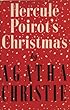
This week’s letter in the Crime Fiction Alphabet series is H for Hercule Poirot’s Christmas by Agatha Christie.

I think this is one of the best Agatha Christie crime_fiction_alphabetbooks I’ve read recently. Poirot investigates the death of Simeon Lee, the head of the Lee family. None of his family like him, in fact most of them hate him and there are plenty of suspects for his murder. He is found dead with his throat cut in a locked room – locked from the inside.
He lived with Alfred his eldest son and his daughter-in-law Lydia. Their lives are dominated by him and they agree to his every demand. He has invited his other two sons and their wives to stay for Christmas – David and Hilda and George and Madeleine. Then Simeon annouces he has invited two more guests, who happen to be another son Harry, who left home years ago, a disreputable character who is at loggerheads with Alfred, and Pilar his granddaughter, his daughter Jennifer’s child. Jennifer had recently died in Spain where she had married a Spanish artist.  Pilar quickly gains her grandfather’s favour and when he annouces he is going to remake his will she hopes she will be included. Another unexpected guest turns up – Stephen Farr, the son of Simeon’s former partner in a diamond mine in South Africa.

The mystery is just how was Simeon killed? The family are dispersed through the house and on hearing a blood curdling scream they all rush to Simeon’s room. Pilar finds a small piece of rubber and a peg on the floor – just what do they signify? And the uncut diamonds Simeon kept locked in a safe in his room have gone missing – who has stolen them?

This story kept me guessing all the way through, with lots of red herrings and Tressilian, the butler’s confusion about the identity of the guests. He is old with poor eyesight and can’t be sure who is who. Poirot who is staying nearby with Colonel Johnson, the Chief Constable, unravels the mystery with the aid of a false moustache and then gathers the family together to go through the evidence and reveal the identity of the murderer.

There are a variety of themes, including the psychological hold Simeon has over his family, the effect of heredity, the distortion of the past through holding on to obsessions, jealousy amongst the siblings, and the effect of holding grudges for many years. Lydia and Hilda are level headed women, both of them suspicious of Simeon’s motives and supporting their husbands. Lydia maintains that evil exists and Hilda believes that it is the present that matters and not the past.  But the past has cast a long and evil shadow over the present.

NB see more Christmas titles here – Suggest a Christmas Title.

An Evening With Susan Hill

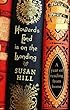
Last night D and I went to Abingdon for “An Evening With Susan Hill“, arranged by Mostly Books bookshop. Susan talked about her latest book Howards End is on the Landing, which I’m part way through. She read extracts from the book – one about Roald Dahl when they were both judges for literary competitions and the other about Iris Murdoch, who she knew when they both lived in Oxford. That extract was sad because her last meeting with Iris was when Iris was already suffering from Altzheimer’s and showed little recognition of Susan.

Susan’s favourite book by Iris Murdoch is my favourite too – The Bell. It was touching to hear her talk about Iris and the time she and John Bayley, her husband sang the Silver Swan madrigal in

… light wavering but not untuneful voices and everyone fell silent to listen. It could have been funny, a madrigal sung by these two small, oddly gnome-like figures, one of the country’s leading novelists and a distinguished don and man of letters. In fact it was rather moving. (page 117)

Howards End is on the Landing is an interesting little book which takes a look at some of the books in Susan’s three storey country house in Gloucestershire. She had decided to take a year off  from buying new books and to read or re-read books from her own collection. There are books in every room and although she says they’re not arranged it appears that they are in some sort of order with books grouped together in different rooms even though they may be in strange combinations such as Medieval Monastic history books together with 400 Ladybird Books in one small room. I was amused to hear her say she has a Richard Dawkins’ book on a shelf next to an commentary on the Old Testament. I had a look this morning to see who he is next to on our shelves (until the removal men pack all the books away) – he is between a cookery book High Fibre Meals: a delicious range of menus to increase fibre in your diet and Ian Rankin’s novel Set in Darkness – quite an odd combination really. My books all started out sorted into fiction and non fiction and soon found their own order. Like Susan I know where they all are but every now and then some of them go missing.

In the book she has a few sharp words about e-readers and last night expanded on why she thinks there is a place for both “real” books and e-books. I haven’t ventured into the e-world just yet, but no doubt I will at some point as I think an e-reader would be useful in some situations – I wouldn’t have to leave a box of books handy for instance during our house move as I could load a few on an e-reader. She also has little room for book bloggers who

… boast of getting through twenty plus books in a week, as if they were trying for a place in the Guinness Book of Records. Why has reading turned into a form of speed dating? And then there is fashion and the desire to have the very latest book – which doesn’t matter a scrap so long as the book is wanted for itself, not just because it is one everybody is talking about, and so long as plenty of other, unfashionable books are desired as well. (page 171)

Thankfully I don’t fall into those categories, but I do blog, which Susan hasn’t got time for thinking

The internet can also have a pernicious influence on reading because it is full of book-related gossip and chatter on which it is fatally easy to waste time that should be spent actually paying close, careful attention to the books themselves, whether writing them or reading them. (page 3)

Phew! Personally I find blogging helps me concentrate more on my reading and writing. I no longer read a book and put it down thinking that was good, or not. It makes me think more about the book, what I liked and didn’t and analyse the themes, the way it was written and so on. Of course you have to be discerning about what you read and how much time you spend on the internet – it is easy to pass several hours without noticing, but for me it certainly hasn’t stopped me from being able to concentrate on single topics or tackle difficult long books.

Having said that I like Howards End is on the Landing very much. It’s full of lots of references to books and authors, some known to me and others not and Susan’s personal anecdotes. I just wish it had an index. It’s a bit like the blog she used to write.

It was an enjoyable evening, sadly the last I’ll be able to go to as soon we won’t be living in the area. It was nice to meet up again with Abigail from Gaskella and to meet Simon from Stuck in a Book and Becca from Oxford Reader.

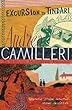
Teaser Tuesday:Excursion to Tindari by Andrea Camilleri

teaser-tuesdayI’m just going to write a short note about Excursion to Tindari by Andrea Camilleri because it’s a library book and I’m going to return it this afternoon in one of my last trips to my local library.

This is the fifth Inspector Montalbano mystery but the first one I’ve read. My impression of the book as a whole is that it is well constructed, with plenty of colourful characters, and the mystery kept me guessing to the end. Montalbano investigates the death of a young man, Nene Sanfilippo and the disappearance of an elderly couple, the Griffos. They had lived in the same apartment building, but at first this seems to be merely a coincidence. Montalbano is soon plunged into the dangerous world of Sciliy’s “New Mafia”. (This much is revealed on the back cover).

I particularly liked the way Montalbano’s thoughts are revealed and his relationship with his bosses. He’s another detective who works well on his own and with his own team independently of his superiors. He loves food and there are various desciptions of the meals he savours with great relish. He is also a bit of a philosopher – sitting in an old olive tree whilst musing on life and his work:

Straddling one of the lower branches, he would light a cigarette and begin to reflect on problems in need of resolution.

He had discovered that, in some mysterious way, the entanglement, contortion, overlapping, in short, the labyrinth of branches, almost mimetically mirrored what was happening inside his head, the intertwining hypotheses and accumulating arguments. And if some conjecture happened to seem at first too reckless or rash, the sight of a branch tracing an even more far-fetched path than his thought would reassure him and allow him to proceed.

Ensconced among the silvery-green leaves, he could stay there for hours without moving. (pages 99 – 100)

At times this book reads like a comedy, with some of the police talking in dialect before plunging back into the dark criminal world. I couldn’t work out what was behind the crimes at all, which for me was immensely satisfying. When you can see the end coming chapters away and have worked out who “did it” I sometimes feel let down – not so with this book.