The Second Sleep by Robert Harris

Rating: 4 out of 5.

I decided to read The Second Sleep because I enjoy Robert Harris’ books and when I saw him on a TV programme talking about this book I thought it sounded interesting and a bit different. I’m glad I did because I thoroughly enjoyed most of it – it was the ending that I felt was rather flat.

I read it at the end of June and I wish I’d written about it straight away – but I didn’t, it got left because I’ve been finding it difficult to concentrate on writing reviews. So, this is one of my catching up posts that can’t do justice to the books. But, I really do think that you should go into reading this book with an open mind, without knowing too much about it.

The blurb certainly made me want to read it:

Dusk is gathering as a young priest, Christopher Fairfax, rides across a silent land.

It’s a crime to be out after dark, and Fairfax knows he must arrive at his destination – a remote village in the wilds of Exmoor – before night falls and curfew is imposed.

He’s lost and he’s becoming anxious as he slowly picks his way across a countryside strewn with the ancient artefacts of a civilisation that seems to have ended in cataclysm.

What Fairfax cannot know is that, in the days and weeks to come, everything he believes in will be tested to destruction, as he uncovers a secret that is as dangerous as it is terrifying …

As I began reading I had that feeling that this is a book I was going to enjoy – historical fiction, with a mystery to it as well. There is something not quite right about Faifax’s mission as he approaches that remote village in the dark, something menacing and dangerous. The signs are all there – a cataclysmic disaster and a terrifying secret await him when he reaches that village.

But then – all is not as it first appears and I wondered if all this is a smoke screen – what is really going on, is this really the medieval England I’ve read about in history books? And here it is – the nub of the matter – what is going on, where and when are these events taking place? This is an imagined world, a piece of speculative fiction, a bleak and brutal world under a strict authoritarian rule. It’s about progress, or lack of it, about the rule of law, and the power of knowledge.

As I expect in Harris’ novels, apart from that abrupt ending, it is paced well, as more and more information about this strange time and place are revealed the tension rises and rises. The characters became real to me and I could easily visualise all the scenes – in other words I was gripped and involved in the story. So, it was with a sense of an anti-climax that I reached the ending – was that it? I wanted to know more. Even so, I can say that this is a book I thoroughly enjoyed and I think I’d like to re-read it sometime, prepared for the ending.

I was interested in the title, the second sleep, referring to the characters’ sleep pattern of having a period of wakefulness of a couple of hours in the middle of the night and then returning to bed for a second period of sleep. I wondered if that was historical fact – these days it’s not considered to be good to have a broken sleep pattern. It was – I found this BBC article, which explains there is a wealth of historical evidence that humans used to sleep in two distinct chunks and that during the waking period people were quite active – as they are in this book. They often got up, went to the toilet or smoked tobacco and some even visited neighbours. Most people stayed in bed, read, wrote and often prayed. Countless prayer manuals from the late 15th Century offered special prayers for the hours in between sleeps.

  • Format: Kindle Edition
  • File Size: 2384 KB
  • Print Length: 330 pages
  • Publisher: Cornerstone Digital (5 Sept. 2019)
  • Source: I bought it

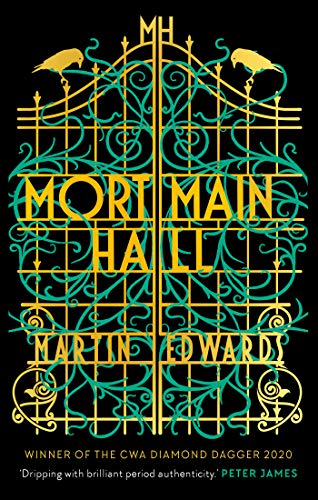
Mortmain Hall by Martin Edwards

a perfect crime

Rating: 4 out of 4.

Mortmain Hall by Martin Edwards is the sequel to Gallows Court. Both books are set in 1930 in London and reflect Martin Edwards’ fascination with that period in history and his love of Golden Age detective fiction.

1930. A chilling encounter on London’s Necropolis Railway leads to murder and a man escapes the gallows after a witness gives sensational evidence. After this string of strange, fatal events, journalist Jacob Flint discovers that he has been framed for murder. To save himself, he flees to Mortmain Hall, a remote estate on the northern coast. There, an eccentric female criminologist hosts a gathering of eclectic people who have all escaped miscarriages of cruel justice. This strange group puts Jacob a little on edge, but they may be his only hope to clear his name.

When a body is found beneath the cliffs near the house, it seems this gathering might be an ingenious plot to get away with murder. Are these eccentrics victims or are they orchestrators of the great deception? Jacob must now set out to uncover the labyrinthine of secrets within Mortmain Hall, alongside Rachel Savernake, woman whose relentless quest for the truth might just bring down the British establishment…

This is one of those books that I find difficult to review – it is complex with several plot lines. So, I’m going to be brief. It begins most unusually with an Epilogue in which Rachel Savernake is talking to a dying man about a ‘perfect crime’ and asks him what had happened at Mortmain Hall. Then chapter one begins with this strange statement, ‘The ghost climbed out of a hackney carriage‘ and I was hooked. Rachel followed the ‘ghost’ as he entered a funeral train run by the London Necropolis Company for privileged first-class passengers. What was going on?

The novel moves on to a scene in the Old Bailey where Jacob Flint, a journalist is watching the trial of Clive Daneskin, accused of murder. After the trial he meets Leonora Dobell, a mysterious woman. Then the book gets very detailed, as more murder cases were described at length and I couldn’t see, at first, how they were connected, or how Mortmain Hall came into the story. But then I thought about the Epilogue and I realised that this is a book about ‘a perfect crime’, so I persevered and eventually it all became much clearer.

And there is further clarification when you reach the end of the book where the Epilogue, in its right place, is continued, followed by a chapter called Cluefinder, in which Martin Edwards lists 30 clues in the narrative, in the tradition of the Golden Age detective novels. Mortmain Hall is not a quick read because it is so detailed, but I did enjoy it.

Mortmain Hall was first published in the UK by Head of Zeus in April 2020 and is scheduled to be published in the US by Poisoned Pen Press on 20 September 2020. My thanks to Poisoned Press and NetGalley for a review copy.

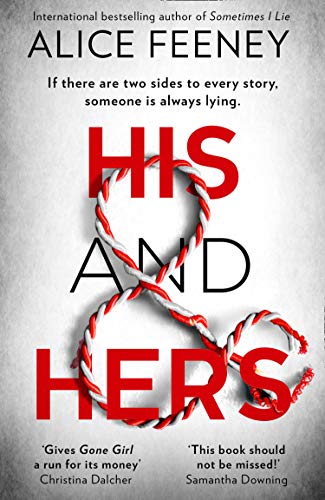
His and Hers by Alice Feeney

HQ| 28 May 2020| 384 pages| Review copy| 4*

I read Alice Feeney’s debut novel, Sometimes I Lie three years ago and loved it. His and Hers is her third book and just like her first book I was utterly gripped by it and compelled to read it, puzzled and amazed by the cleverness of the plot. It’s a standalone psychological thriller.

Blurb:

Jack: Three words to describe my wife: Beautiful. Ambitious. Unforgiving.
Anna: I only need one word to describe my husband: Liar.

When a woman is murdered in Blackdown village, newsreader Anna Andrews is reluctant to cover the case. Anna’s ex-husband, DCI Jack Harper, is suspicious of her involvement, until he becomes a suspect in his own murder investigation.

Someone is lying, and some secrets are worth killing to keep.

The narrative moves between two characters ‘Him’, Jack Harper and ‘Her’, Anna Andrews and there is also a third narrator, the unnamed killer. Anna lives in London, working for the BBC. She grew up in Blackdown, and is an alcoholic, who is still recovering from a recent tragedy that pushed her to drink. Jack is a Detective Chief Inspector, who has recently moved to Blackdown from London to be in charge of the Major Crime Team based in Surrey. He knows Blackdown well as he also grew up there and Anna is his ex wife.

There is so much ambiguity and misdirection that there were times when I thought the killer could just as easily be Jack, or Anna, or one of the other characters – and wondered just which one was the narrator. More murders follow after that first one. But these are not random killings – and it’s soon apparent that the victims are all connected. They had all been at to the same school and had been guests at Anna’s sixteenth birthday party.

I read it quickly, suspending my disbelief and disliking most of the main characters – they really are downright nasty – cheating, lying, manipulating and abusing others, bullying and blackmailing them. – and worse. It kept me guessing throughout, changing my mind about the culprit, or culprits, as I read on. It’s not a comfortable read, dark and twisted with some gruesomely graphic scenes, which is why I’m giving this book 4 stars instead of 5. It’s one of those books I didn’t really like, but I did enjoy working out the puzzle of who could be trusted, who to be wary of and most of all who was doing the murders.

Many thanks to NetGalley and the publishers HQ for an ARC.

Alice Feeney’s second book, I Know Who You Are, is one of the books lost in the depths of my Kindle library – I must dig it out.

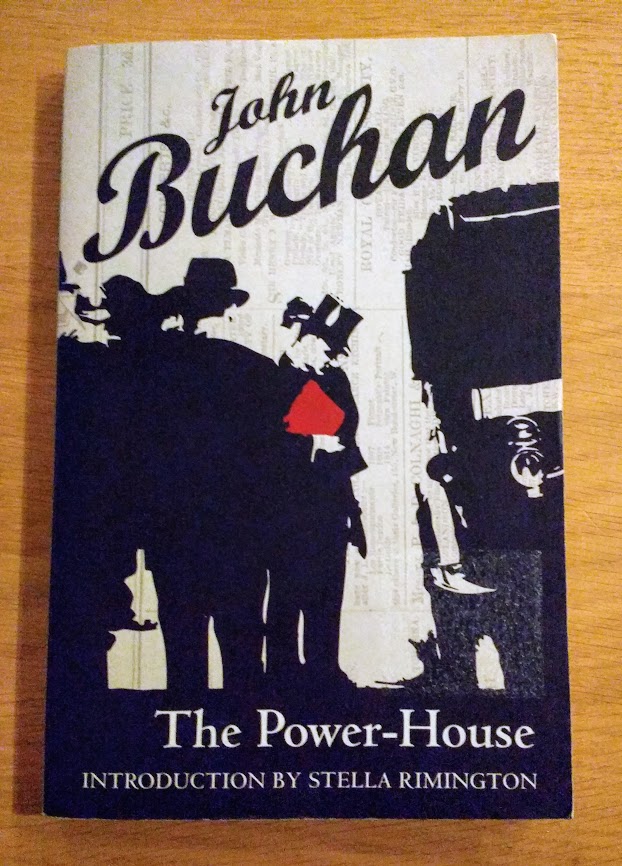
The Power-House by John Buchan

As usual I am behind with writing book reviews, but whilst it is still relatively fresh in my mind I’m going to begin catching up with the latest book I read. It’s only short – 108 pages – and I enjoyed it far more than I thought I would.

Rating: 5 out of 5.

John Buchan’s The Power-House, was written in 1913 when it was serialised in Blackwood’s Magazine and then published in book form in 1916. In her Introduction to the Polygon Books edition Stella Rimington described it as:

Pure essence of Buchan – a demonstration of his magical power to weave a tale out of no materials but the threads and colours of his imagination. It does, however, possess a theme – John Bunyan’s idea, in Pilgrim’s Progress, of men of goodwill and courage struggling with an intelligent, evil power at the root of all the world’s troubles and confessions. (page vii)

The narrator is Edward Leithen, a barrister and MP. His friend and fellow MP Tommy Deloraine tells him is off to Moscow to track down one of their Oxford contemporaries, Charles Pitt-Heron, who had disappeared without letting his wife where he was going. He told her he’d be home for luncheon, but never came back. Whilst Tommy goes off in pursuit of Pitt-Heron, Leithen stays in London, but soon his curiosity draws him into the mystery, because, as he tells himself, ‘every man at the bottom of his heart believes that he is a born detective.’ And so, having collected a few items of information merely by accident and coincidence, he finds the connecting link between them in the person of Andrew Lumley, a wealthy Englishman. Lumley, an elderly man, with menacing, pale eyes, hidden behind his tinted glasses is the key to the whole mystery.

Just as Hannay in Buchan’s later novel, The Thirty-nine Steps, meets the villain Von Schwabing in the library of his country house, so Leithen meets Lumley in his gentleman’s country house, High Ashes, in his library. The two men dine together and then settle themselves in armchairs to smoke cigars and proceed to talk about many things. Leithen is perplexed by him and his speculations on the nature of civilisation, and of power.

I was struck by these thoughts: Lumley states that civilisation is a conspiracy to which Leithen responds that it is in the interests ‘of all the best brains in the world to keep up the conspiracy.‘ To which Lumley replies:

Do we really get the all the best brains working on the side of the compact? Take the business of Government. When all is said, we are ruled by amateurs and the second-rate. The methods of our departments would bring any private firm to bankruptcy. The methods of Parliament – pardon me – would disgrace any board of directors. Our rulers pretend to buy expert knowledge, but they never pay the price of it that a business man would pay, and if they get it they have not the courage to use it. (pages 33 -34)

Lumley continues in this vein and concludes that what is needed is some sort of Power-House to start the ‘age of miracles‘. Leithen is unsettled, to say the least, by his talk and his ‘eerie persuasiveness’.

From an somewhat slow start and a middle consisting mainly of conversation, the novel then picks up pace dramatically. Just as in The Thirty-nine Steps when Hannay goes on the run, fearing for his life, over the moors, so Leithen, in danger of his life, flees his pursuers through the streets of London, as he is lured in deserted buildings, taxis and a decidedly dodgy restaurant. He realises how thin the protection of civilisation is and how there were dozens of ways of spiriting him out of ‘this gay, bustling world‘, alone in a crowd with no one to help him, only his own wits.

Buchan tells a good story, even if I had little idea what the Power-House really was. It’s an international anarchist network, but who they were, what they were actually after, or how they hoped to achieve their ends was never clear to me. But I really enjoyed this book. As Stella Rimington says it has an ‘intoxicating blend of madness with scents of home and countryside.’ And

… the thinness of the crust of civilisation, whatever that may be these days, is as relevant in our time as it was when Buchan was writing in the early war-torn years of the twentieth century. (page xi)

Moonflower Murders by Anthony Horowitz

A labyrinth of clues. A mystery novel hiding a deadly secret. A killer with a fiendish plot: a brilliantly intricate and original thriller from the bestselling author of Magpie Murders

Random House Cornerstone| 20 August 2020| 400 pages| Review copy| 5*

Moonflower Murders is a follow up novel to Magpie Murders. It has the same format – that of a book within the book. Although I don’t think you have to read Magpie Murders first as this stands well on its own merits, I think it would help to know the background and some of the characters if you do.

Susan Ryeland, the main character, has retired as a publisher and is running a small hotel on a Greek island with her long-term boyfriend, Andreas. Their hotel is in debt, they’re in danger of going bankrupt and she is missing her literary life in London. So, when Lawrence and Pauline Trehearn, the owners of an hotel, Branlow Hall in Suffolk visit her and ask if she would investigate the disappearance of their daughter Cecily from their hotel for a fee, she decides to go – and at the same time visit London.

Before she had disappeared Cecily had read Alan Conway’s murder mystery, Atticus Pund Takes the Case, based on a murder that happened at Brownlow Hall eight years earlier. At that time, the evidence against Stefan, the general maintenance man was overwhelming and he was convicted. Cecily was convinced that there was something in the novel that proved Stefan wasn’t responsible for the crime. Unfortunately she hadn’t told anyone what had convinced her. The Trehearnes had read the book, but they couldn’t see any connection, although there are similarities – the characters are clearly based on the people at Brownlow Hall, with the same or similar names.

Susan had published Conway’s books, but thought that if he had indeed discovered that an innocent man was in prison he would have gone straight to the police and not turned it into a novel. But investigating Cecily’s disappearance, she re-reads his book and examines the evidence relating to the murder of eight years ago.

Moonflower Murders combines elements of vintage-style golden age crime novels with word-play, cryptic clues and anagrams. I thoroughly enjoyed trying to work it all out. it – Anthony Horowitz’s style of writing suits me – so easy to read, I whizzed through it, no doubt missing all the intricacies and clues along the way. But it is such an enjoyable way to read – no need to puzzle about the structure, or who is who as the characters all come across as individual people. Of course it’s not a straightforward mystery and along the way I was easily distracted by the red herrings. I thoroughly enjoyed trying to work it all out.

Many thanks to NetGalley and the publishers Cornerstone for an ARC.

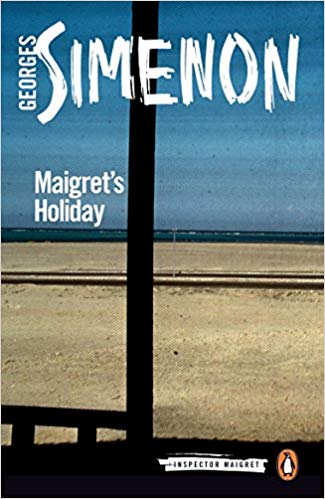
Maigret’s Holiday by Georges Simenon

I am way behind with writing about the books I’ve read, so I thought it’s best to start catching up by writing about the last book I finished, whilst it is still relatively fresh in my mind.

Rating: 5 out of 5.

Maigret’s Holiday, translated by Ros Schwartz, is one of Penguin Classics’ new translations of the entire series of Georges Simenon’s Maigret novels. This edition was published 4 February 2016. It was first published in French as Les Vacances de Maigret in 1948 (the 28th book in the series) and has previously been published in translations as No Vacation for Maigret and A Summer Holiday.

It is August; Maigret and his wife are on holiday in the seaside town of Les Sables d’Olonne. On their first evening they’d eaten a huge dish of freshly caught mussels and they’d both been ill. Maigret quickly recovered but next day on the beach Madame Maigret complained of vague pains and their second night she developed a fever. Admitted to hospital the next day, she was still there nine days later after an emergency operation for acute appendicitis. When a young woman in room 15 in another ward died, Maigret was unable to resist investigating the circumstances of her death, especially as he had received an anonymous note that had been slipped into his pocket; the words irritated him:

For pity’s sake, ask to see the patient in room 15.

The young woman had died after being flung from a moving car. Of course, it is not a straightforward death and the mystery deepened with the disappearance of her brother.

Maigret visited his wife everyday for half an hour. But he was bored with his routine as he strolled around the resort, along the promenade, Le Remblai, feeling he couldn’t go and sit alone on the vast beach among all the mothers and their children. He wandered from stall to stall in the covered market and stopped at cafes and various favourite places for a glass of white wine or of Calvados. Each afternoon he went to the Brasserie du Remblai, overlooking the beach, where a group of important men, including the local chief inspector of police, Monsieur Mansuy, met to play bridge. Maigret sat and watched them play. And it is through Mansuy that Maigret learns about the local characters, which proves essential for him in solving the mystery.

I loved the way Simenon sets the scene. His writing is direct and lucid with just the right amount of description. I could imagine myself in Les Sables d’Olonne, walking on the narrow cobblestone streets and going into the hospital with its atmosphere that reminded Maigret of his childhood when he was a choirboy – ‘the purity of silence had a quality that cannot be found anywhere other than a convent.’ A hospital where the nurses were nuns.

Maigret relieved his boredom by investigating the mystery surrounding the patient in room 15. He gradually peeled back the layers and without him, no one would have had any idea what had really happened or why. Maigret worked methodically and thoroughly, as he tried to understand the locals and their reactions to the police. In the end he painstakingly visited the shops and cafes asking questions and realised that there was at least one other person in danger. But he knew nothing about that person, not even whether it was a man or a woman and he couldn’t guess their age or profession. As he got closer to the solution he became agitated, so much so that it seemed to him that he was no longer breathing, as he tried to avert a further tragedy.

I thoroughly enjoyed reading this book. It is perfectly paced, building in intensity and complexity, over just 199 pages. A note about the author reveals that Simenon acknowledged that he and his fictional detective shared an important characteristic:

My motto, to the extent that I have one, has been noted often enough, and I’ve always conformed to it. It’s the one I’ve given to old Maigret, who resembles me in certain points … ‘understand and judge not.’

I think that is exactly what Maigret does in this book.