Two Chief Inspector Macdonald Books by E C R Lorac

E C R Lorac was a pen name of Edith Caroline Rivett (1894-1958) who was a prolific writer of crime fiction from the 1930s to the 1950s, and a member of the prestigious Detection Club. She formed her pseudonym by using her initials and for the surname, the first part of her middle name spelled backwards. She also wrote under the name of Carol Carnac.

I’ve read just a few of her Chief Inspector Robert Macdonald books., written under the name E C R Lorac – Bats in the Belfry (1937) , Fell Murder (1944), Murder by Matchlight (1945) and Fire in the Thatch (1946).

And recently I’ve read two more : Checkmate to Murder, first published in 1944 and Murder in the Mill Race, first published in 1952. These have been recently re-published by the British Library as part of the British Library Crime Classics, with introductions by Martin Edwards.
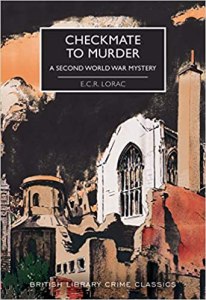
On a dismally foggy night in Hampstead, London, a curious party has gathered in an artist’s studio to weather the wartime blackout. A civil servant and a government scientist match wits in a game of chess, while Bruce Manaton paints the portrait of his characterful sitter, bedecked in Cardinal’s robes at the other end of the room. In the kitchen, Rosanne Manaton prepares tea for the charlady of Mr. Folliner, the secretive miser next door.

When the brutal murder of ‘Old Mr. F’ is discovered by his Canadian infantryman nephew, it’s not long before Inspector Macdonald of Scotland Yard is called to the scene to take the young soldier away. But even at first glance the case looks far from black-and-white. Faced with a bevy of perplexing alibis and suspicious circumstances, Macdonald and the C.I.D. set to work separating the players from the pawns to shed light on this toppling of a lonely king in the dead of night.

What I found fascinating in this book is the insight into what life was like in wartime London, complete with the London fog and the details of the blackout and although the Blitz was over there were still plenty of bangs and noise so that a gunshot wasn’t easily heard. The setting in a large studio that opens the book is a quiet scene as Bruce paints his sitter dressed as Cardinal Richelieu and two friends play a game of chess. Roseanne, Bruce’s sister is busy in the kitchen cooking their supper.Their evening is disrupted when a Special Constable bursts in with a young soldier in tow, claiming that he had killed his great-uncle in the next door building. This turns out to be more complicated than it first seemed. Even with just a limited number of suspects I couldn’t didn’t work out who the murderer was, nor how the murder had been committed. Macdonald explains it all at the end, having worked out ‘a reconstruction of the possibilities.’

~~~
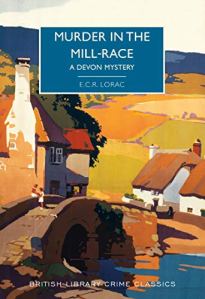
When Dr Raymond Ferens moves to a practice at Milham in the Moor in North Devon, he and his wife are enchanted with the beautiful hilltop village lying so close to moor and sky. At first they see only its charm, but soon they begin to uncover its secrets – envy, hatred and malice.

Everyone says that Sister Monica, warden of a children’s home, is a saint – but is she? A few months after the Ferens’ arrival her body is found drowned in the mill race. Chief Inspector Macdonald faces one of his most difficult cases in a village determined not to betray its dark secrets to a stranger.

One of the things I think that Lorac excelled in was her settings. Each one is described so that you can easily picture the scenery and the landscape. And that is important in this book as Sister Monica drowned in the mill race, the stream leading into the water mill. She sets out through Macdonald exactly how that could have happened. She also conveys the atmosphere and the social interactions of an isolated village in Devon in the years just after the end of the Second World War. On the surface this is an idyllic village, but it is just like any other community, with a cross-section of personalities, and a mix of neighbourliness and an undercurrent of envy, hatred and malice. Sister Monica, a formidable woman, revered by some, is in charge of a children’s home, which she rules with a rod of iron and knows everything about everybody. Others regard her with caution, as the bailiff, Sanderson tells Anne Ferens, the doctor’s wife:

She is one of those people who can not only lie plausibly and with conviction, but she can tell a lie to your face without batting an eyelid, knowing that you know it’s a lie, and it’s very hard to bowl her out. (page 34)

But the village close ranks when she is found dead in the mill race and it is hard for Macdonald and Detective Inspector Reeeve to get the villagers to open up and and talk about what she was really like. It appears to be suicide, but is it?
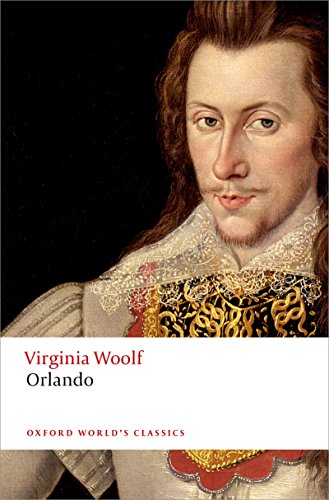
Orlando by Virginia Woolf

Rating: 4 out of 5.

Orlando: a Biography has been on my TBR shelves for nearly five years now, so I was glad it came up in the Classics Club spin as this gave me the push to actually read it. I won Orlando in one of Heaven Ali’s Woolfalong giveaways in May 2016 and I’m sorry that I haven’t read it before now. I did start it when I first got it, but found it a bit ‘difficult to get into it’ and left it on my bookshelves for while – the while turned out to be nearly five years!

I’ve read some of Virginia Woolf’s books before – Mrs Dalloway, To The Lighthouse, Kew Gardens (a short story), Flush: a biography of Elizabeth Barrett Browning’s dog, A Room of One’s Own and The Three Guineas (in one volume and more recently, I’ve read The Voyage Out, and Death of a Moth and other essays.

Synopsis:

Orlando tells the tale of an extraordinary individual who lives through centuries of English history, first as a man, then as a woman; of his/her encounters with queens, kings, novelists, playwrights, and poets, and of his/her struggle to find fame and immortality not through actions, but through the written word. At its heart are the life and works of Woolf’s friend and lover, Vita Sackville-West, and Knole, the historic home of the Sackvilles. But as well as being a love letter to Vita, Orlando mocks the conventions of biography and history, teases the pretensions of contemporary men of letters, and wryly examines sexual double standards.

My thoughts:

Orlando is a fictionalised biography of Vita Sackville-West, based on her life. They had met in 1922 when Woolf was 40 and Vita was 30, when Wolf described her as ‘lovely’ and ‘aristocratic’. I was a bit overwhelmed at times reading Orlando – such a fantastical novel, spanning 500 years. There are copious literary, historical, and personal allusions and despite continually referring to the Explanatory Notes at the end of the book I’m sure I missed a lot of them. And it makes for a fragmentary reading experience, having to stop reading and flip backwards and forwards between the text and the notes, so that I was a bit confused about the story and what happened when.

But having said that the plot is extraordinary, beginning towards the end of Elizabeth I’s reign when Orlando is a young nobleman, and continuing for the next five hundred years to the start of the twentieth century. You have to completely suspend your disbelief, not just for the length of his life, but also for his/her gender as in the late 17th century whilst he is an ambassador for Charles II he falls into a trance for seven days, only to find when he comes to that ‘he’ has become a young woman. As a woman she lives with a group of Turkish gypsies and then returns to England in the 18th century, when she has difficulty in being identified as a woman. In the 19th century she falls in love with a young romantic traveller, finally finding freedom in finishing the poem she began in the 16th century and in experiencing the delights of motoring in the early years of the 20th century.

What I’ve described here is just the bare bones of the book, because there are many vivid passages – such as her description of the ‘Great Frost’ of 1608, when the Thames was frozen for six weeks and Frost Fairs were held on the ice. It hit the country people the hardest:

But while the country people suffered the extremity of want, and the trade of the country was at a stand still, London enjoyed a carnival of the utmost brilliance. The Court was at Greenwich, and the new King seized the opportunity that his coronation gave him to curry favour with the citizens. He directed that the river, which was frozen to a depth of twenty feet and more for six or seven miles on either side should be swept, decorated and given all the semblance of a park or pleasure ground with arbours, mazes, alleys, drinking booths, etc at his expense. For himself and his courtiers, he reserved a certain space immediately opposite the Palace gates; which railed off from the public only by a silken rope, became at once the centre of the most brilliant society in England. (pages 22-23)

She also writes about writing and about books, about the nature of gender, and about the position of women in society over the centuries. One theme that fascinates me is her depiction of the passage of time, particularly in the final section of the book set as the 20th century reached 1928 (the year Orlando was published). Overall it is a book steeped in history showing how the passage of time had changed both the landscape and climate of England along with its society – and I have only scratched the surface in this post. It is a book packed with detail that deserves to be read more than once to appreciate it fully.

  • Publisher : OUP Oxford; 2nd edition (11 Dec. 2014)
  • Language : English
  • Paperback : 288 pages
  • ISBN-10 : 019965073X
  • ISBN-13 : 978-0199650736

Back to the Classics Challenge 2021

This is the 8th year that Karen at Books and Chocolate has hosted the Back to the Classics Challenge and this is the first time I’ll be joining in. See Karen’s sign-up post on Books and Chocolate for more details about the challenge.

There are twelve categories and these are the books I’ve initially chosen – but there are others I could choose, so this list may/probably will change.

  1. A 19th century classic: any book first published from 1800 to 1899 – Little Dorrit by Charles Dickens 1857.
  2. A 20th century classic: any book first published from 1900 to 1971. All books must have been published at least 50 years ago; the only exceptions are books which were written by 1971 and posthumously published – Parade’s End by Ford Madox Ford – 1924 – 1928.
  3. A classic by a woman author – Orlando by Virginia Woolf – 1927.
  4. A classic in translation, meaning any book first published in a language that is not your primary language. You may read it in translation or in its original language, if you prefer. Love in the Time of Cholera by Gabriel Garcia Marquez.
  5. A classic by BIPOC author; that is, a non-white author. The Count of Monte Cristo by Alexandre Dumas.
  6. A classic by a new-to-you author, i.e., an author whose work you have never read. Heart of Darkness by Joseph Conrad.
  7. A new-to-you classic by a favourite author — a new book by an author whose works you have already read. Framley Parsonage by Anthony Trollope.
  8. A classic about an animal, or with an animal in the title. The animal can be real or metaphorical. (i.e., To Kill a Mockingbird). Black Beauty by Anna Sewell.
  9. A children’s classic – The Railway Children by Edith Nesbit.
  10. A humorous or satirical classic. Three Men on the Bummel by Jerome K Jerome.
  11. A travel or adventure classic (fiction or non-fiction). It can be a travelogue or a classic in which the main character travels or has an adventure. Gulliver’s Travels by Jonathan Swift.
  12. A classic play. Romeo and Juliet by William Shakespeare – I’ve seen the play and the film, but haven’t read the book.