Book Beginnings & The Friday 56: Blood, Sweat and Tyres: The Autobiography by Si King and Dave Myers (The Hairy Bikers)

Every Friday Book Beginnings on Friday is hosted by Gillion at Rose City Reader where you can share the first sentence (or so) of the book you are reading. You can also share from a book you want to highlight just because it caught your fancy.

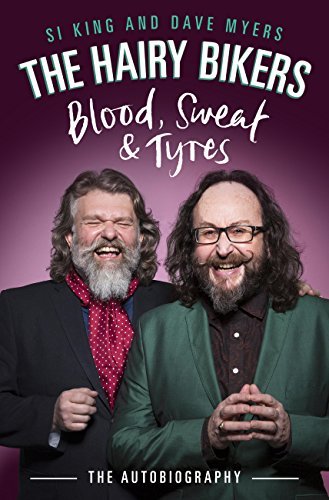
This week the book I’m highlighting is Blood, Sweat and Tyres The Autobiography by Si King and Dave Myers, who are The Hairy Bikers. I love their TV programmes and we own some of their cookbooks, so when my husband said how good this book is I thought I’ll have to read it too. It’s their autobiography. They tell their stories in alternating chapters.

The opening chapter is by Dave telling how he made a cheese-and-potato pie for tea when he was seven years old.


‘Mam can’t cook, she’s not very well. I’ve made your tea.’

Also every Friday there is The Friday 56, hosted by Freda at Freda’s Voice, where you grab a book and turn to page 56 (or 56% of an eBook), find one or more interesting sentences (no spoilers), and post them.

Page 56: (also one of Dave’s chapters)

Mr Eaton arranged lots of trips to art galleries in Manchester and Liverpool and, thanks to him, I became obsessed with the Pre-Raphaelites, which incidentally was my specialist subject when I went on Celebrity Mastermind a few years back.

Mr Eaton was Dave’s art teacher at school.

Description from Goodreads:

Si King and Dave Myers, AKA the Hairy Bikers have travelled an interesting road. Born in the north of England, both Si and Dave had their childhood challenges. For Si, being bullied as the fat kid in class was part of his daily school routine. For Dave, his life changed when he became a childhood carer for his mother. But through the challenges of their early years came a love of really good food.

And it was food that brought Si and Dave together. Their eyes met over a curry and a pint on the set of a Catherine Cookson drama, and they knew they would be firm and fast friends for life.

From deserts to desserts, potholes to pot roasts, the nation’s favourite cooking duo reveals what’s made their friendship such a special and lasting one. They’ve eaten their way around the world a good few times, but have never lost sight of what matters: great friends, great family and great food.

In this heartwarming memoir of friendship and hilarious misadventure, Si and Dave take you on the ride of their lives!

What do you think, does it appeal to you? What are you currently reading?

New Additions to BooksPlease

Yesterday we went Barter Books in Alnwick, my favourite bookshop (this is a secondhand bookshop where you can ‘swap’ books for credit that you can then use to get more books from the Barter Books shelves). It’s only the second time we’ve visited since January 2020 before the first lockdown.

It’s almost back to ‘normal’ now, so there was no queue to get in. Some people, but not all, were wearing face masks and it was busy, busier than I would have liked and in some sections such as crime fiction and paperback fiction in particular where the bookcases are close together, people were crowded together choosing books, so I didn’t linger, as I would normally do. Consequently I didn’t get any crime fiction books. I did manage to get three historical novels, seizing the opportunity when people had moved away.

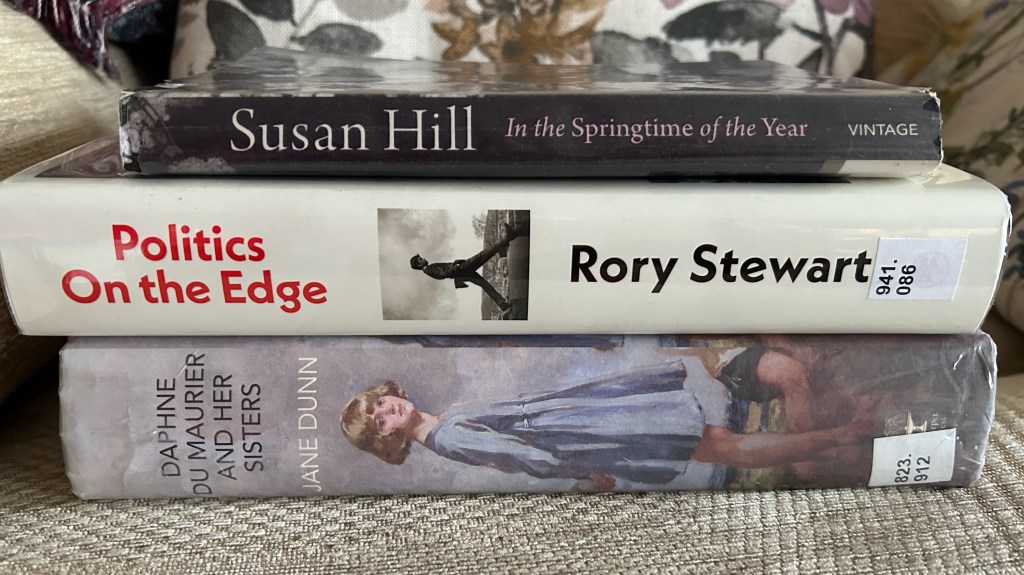
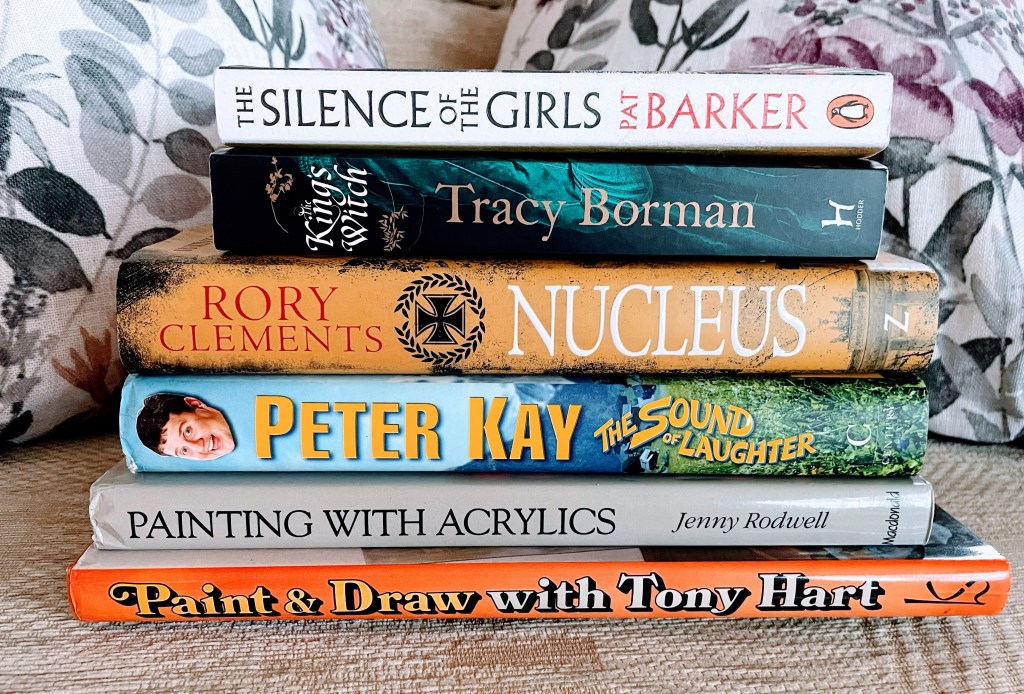
I took back 18 books and brought home 6, so I’m still in credit:

The descriptions are from Amazon and from top to bottom the books are:

The Silence of the Girls by Pat Barker, the first book in the Troy series.

There was a woman at the heart of the Trojan War whose voice has been silent – until now. Discover the greatest Greek myth of all – retold by the witness that history forgot . . . Briseis was a queen until her city was destroyed. Now she is a slave to the man who butchered her husband and brothers. Trapped in a world defined by men, can she survive to become the author of her own story?

The King’s Witch – this is historian, Tracy Borman’s debut novel.

As she helps to nurse the dying Queen Elizabeth, Frances Gorges longs for the fields and ancient woods of her parents’ Hampshire estate, where she has learned to use the flowers and herbs to become a much-loved healer.

Frances is happy to stay in her beloved countryside when the new King arrives from Scotland, bringing change, fear and suspicion. His court may be shockingly decadent, but James’s religion is Puritan, intolerant of all the old ways; he has already put to death many men for treason and women for witchcraft.

So when her ambitious uncle forcibly brings Frances to court, she is trapped in a claustrophobic world of intrigue and betrayal – and a ready target for the twisted scheming of Lord Cecil, the King’s first minister. Surrounded by mortal dangers, Frances finds happiness only with the precocious young Princess Elizabeth, and Tom Wintour, the one courtier she can trust.

Nucleus by Roy Clemens – the second in the Tom Wilde series. I’ve already read book 1, Corpus and book 4, Hitler’s Secret.

June 1939. England is partying like there’s no tomorrow . . . but the good times won’t last. The Nazis have invaded Czechoslovakia, in Germany Jewish persecution is widespread and, closer to home, the IRA has embarked on a bombing campaign.

Perhaps most worryingly of all, in Germany Otto Hahn has produced man-made fission and an atomic device is now possible. German High Command knows Cambridge’s Cavendish Laboratory is also close, and when one of the Cavendish’s finest brains is murdered, Professor Tom Wilde is drawn into the investigation. In a conspiracy that stretches from Cambridge to Berlin, and from the US to Ireland, can he discover the truth before it’s too late?

The Sound of Laughter: the Autobiography of Peter Kay – this is my husband’s choice, but I like Peter Kay too, so I’ll probably read this one too.

Peter Kay’s unerring gift for observing the absurdities and eccentricities of family life has earned himself a widespread, everyman appeal. These vivid observations coupled with a kind of nostalgia that never fails to grab his audience’s shared understanding, have earned him comparisons with Alan Bennett and Ronnie Barker.

In his award winning TV series’ he creates worlds populated by degenerate, bitter, useless, endearing and always recognisable characters which have attracted a huge and loyal following.In many ways he’s an old fashioned kind of comedian and the scope and enormity of his fanbase reflects this. He doesn’t tell jokes about politics or sex, but rather rejoices in the far funnier areas of life: elderly relatives and answering machines, dads dancing badly at weddings, garlic bread and cheesecake, your mum’s HRT…

His autobiography is full of this kind of humour and nostalgia, beginning with Kay’s first ever driving lesson, taking him back through his Bolton childhood, the numerous jobs he held after school and leading up until the time he passed his driving test and found fame. 

And finally two books on painting – both to encourage me to actually do some painting, rather than just reading about it.

Painting with Acrylics by Jenny Rodwell – 27 Acrylics Painting Projects, Illustrated Step-By-Step With Advice on Materials and Techniques with demonstrations of how to paint a variety of project, such as landscapes, portraits and still life etc.

Paint and Draw with Tony Hart – I remember enjoying watching Tony Hart’s TV programmes. This book contains 50 projects in a variety of materials – oil, watercolour, acrylic, gouache, pastel, crayon and other material. It looks excellent.

Nonfiction November: Week 3: Be the Expert

Week 3: (November 15-19) – Be The Expert/ Ask the Expert/ Become the Expert with Veronica at The Thousand Book Project: Three ways to join in this week! You can either share 3 or more books on a single topic that you have read and can recommend (be the expert), you can put the call out for good nonfiction on a specific topic that you have been dying to read (ask the expert), or you can create your own list of books on a topic that you’d like to read (become the expert). 

I’m doing Be the Expert, but I am not an expert! My post is about a subject that I read a lot and enjoy enormously, and that is Autobiography/ Biography and Memoir.

These are just some of my favourites.

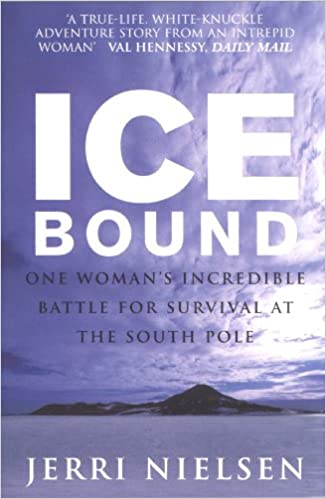
  1. Ice Bound:  One Woman’s Incredible Battle for Survival by Jerri Nielsen. Dr Jerri Nielsen was a forty-six year old doctor working in Ohio when in 1998 she made the decision to take a year’s sabbatical at the Amundsen-Scott South Pole Research Station in Antarctica, the most remote and perilous place on earth. Whilst she was there during the dark Antarctic winter of 1999 she discovered a lump in her breast. This is a true story of survival under extreme circumstances, of courage and endurance. 
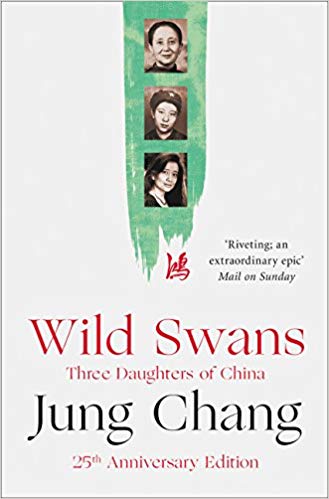
  2. Wild Swans: Three Daughters of China by Jung Chang – Jung Chang’s book about her grandmother, her mother and herself, telling of their lives in China up to and during the years of the violent Cultural Revolution. Her family suffered atrociously, her father and grandmother both dying painful deaths and both her mother and father were imprisoned and tortured.
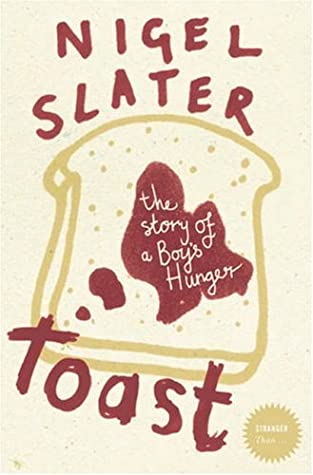
  3. Toast by Nigel Slater – the story of his childhood and adolescence told through food; food he liked and food he hated. Reading it was a nostalgic remembrance of my childhood, even though mine was so very different from his, apart from the food.
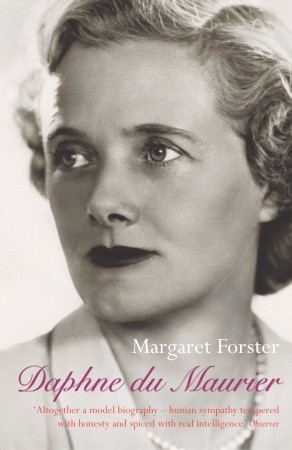
  4. Daphne by Margaret Forster – an extremely well researched and informative account of Daphne Du Maurier’s life, taken from her letters and private papers, with personal memories of her from her children, grandchildren and friends. It is a candid account of her relationships, eg her troubled married life; wartime love affair; and friendships with Gertrude Lawrence and Ellen Doubleday, as well as an excellent source of information on Du Maurier’s method of writing and views on life. 
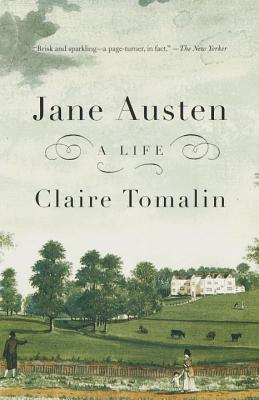
  5. Jane Austen by Claire Tomalin – I was surprised by how detailed it is given the fact that few records of her life have survived. Claire Tomalin admits that it was not an easy story to investigate, as Jane Austen wrote no autobiographical notes and if she kept any diaries they did not survive her. Most of her letters to her sister Cassandra were destroyed by Cassandra and a niece destroyed those she had written to one of her brothers. But as Tomalin discovered her life was “full of events, of distress and even trauma, which left marks upon her as permanent as any blacking factory.”
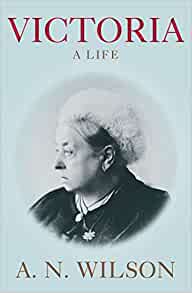
  6. Victoria: A Life by A N Wilson – masterful and detailed and like all good biographies this is well researched and illustrated, with copious notes, an extensive bibliography and an index. He had access to the Royal Archives and permission from Her Majesty Queen Elizabeth II to quote from materials in royal copyright. He portrays her both as a woman, a wife and mother as well as a queen set against the backdrop of the political scene in Britain and Europe.
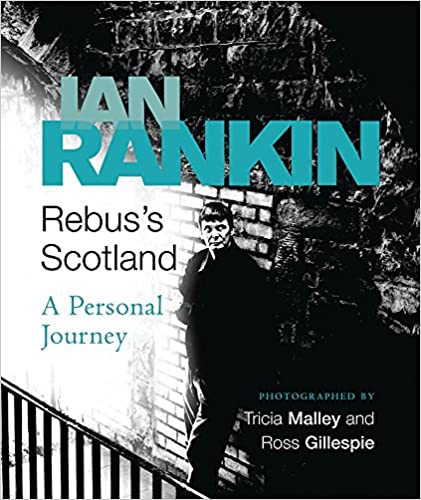
  7. Rebus’s Scotland: A Personal Journey by Ian Rankin is fascinating, with insights into Ian Rankin’s own life and that of the character he has invented, along with his thoughts on Scotland and the Scottish character. It’s partly autobiographical, blending his own life with Rebus’s biography. It also describes many of the real life locations of the books, in particular Edinburgh, Rebus’s own territory.
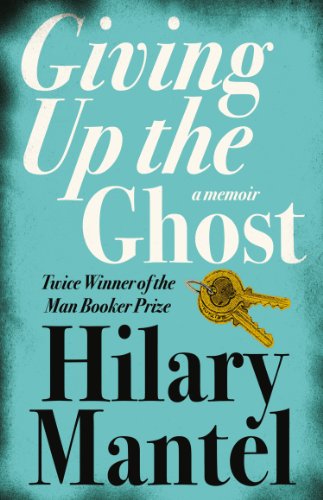
  8. Giving Up the Ghost a memoir by Hilary Mantel, which she states she wrote to take charge of her memories, her childhood and childlessness, feeling that it was necessary to write herself into being. From the age of 4 she believed that she had done something wrong and she was ‘beyond remedy and beyond redemption’. She thought it was because of her that her parents were not happy and that without her they would have had a chance in life. Home was a place where secrets were kept and opinions were not voiced. Her experience of ghosts at the age of 7 was horrifying she felt as though something came inside her, ‘some formless, borderless evil’.

Books Read in October 2021: Part One

I won’t be able to finish reading any more books this month, but it’s been a bumper month of reading, with a total of 8 books. Five of them are nonfiction (including one audiobook) which is probably the first time I’ve read more nonfiction than fiction during one month. But I’ve only written posts about 2 of them! I’ve definitely spent more time reading than writing this month.

These are books I’ve reviewed with links to my posts:

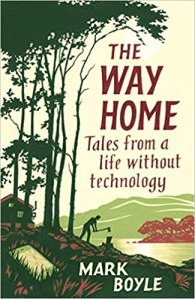
The Way Home: Tales from a life without technology by Mark Boyle 4* – This is not a ‘how to’ book, nor is it a guide to living without technology. It’s an account of what it was like for him, living in a wooden cabin he built on a smallholding in Ireland. He has no running water, no car, no electricity or any of the things it powers: the internet, phone, washing machine, radio or light bulb. He writes about the loneliness he experienced, the lack of contact with his parents and friends, and the damage to his relationships. The book follows the seasons of the year and is a collection of tales about his experiences and his observations about attempting to live a technology-free life.

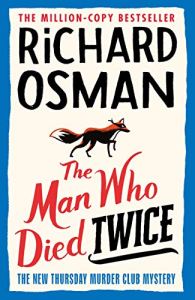
The Man Who Died Twice by Richard Osman 1* – light, easy to read crime fiction, this is a follow up to The Thursday Murder Club. Many people have written glowing reviews of this book, but Richard Osmond’s style of humour differs from mine, so I didn’t find it very funny. I don’t like being so negative about a book but I think the characters are rather stereotypical and the plot is over complicated and unconvincing. In addition it’s written in the present tense which usually irritates me – and it did.

And here are a few notes about 2 of the remaining 6 books with links to Amazon:

The Library of the Dead by T L Huchu 4* – I loved this fantasy novel, set in a future or alternative Edinburgh, with a wealth of dark secrets in its underground. Teenager Ropa, has dropped out of school to become a ghost talker and when a child goes missing in Edinburgh’s darkest streets, Ropa investigates his disappearance. It’s a dark story, but with flashes of humour to lighten the darkness, and is a mix of Zimbabwean and Scottish magic and culture. If you enjoy Ben Aaronvitch’s Rivers of London novels, you’d enjoy this book.

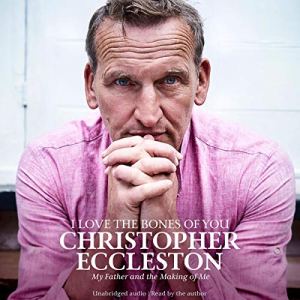
I Love the Bones of You by Christopher Eccleston 5* an audiobook read by actor, Christopher Eccleston, who has played many roles. He is probably my favourite Doctor Who and I especially loved his portrayal of Maurice Scott in the BBC drama The A Word. Maurice is an eccentric and lovable man who has an autistic grandson. I Love the Bones of you is not the usual celebrity autobiography that is just all about him and his work. This is a really vivid portrait of his relationship with his family and particularly with his father who had dementia at the end of his life. He talks about his lack of confidence in his acting ability together with his experiences with anorexia, depression and breakdowns and talks honestly about his struggles with mental health..

~~~

Part Two of Books Read in October 2021 will follow shortly.

Ice Bound by Jerri Nielsen with Maryanne Vollers

Ebury Press | 2001 | 379 p | Own copy | 5*

I read Ice Bound: One Woman’s Incredible Battle for Survival over two months, taking my time. Dr Jerri Nielsen was a forty-six year old doctor working in Ohio when in 1998 she made the decision to take a year’s sabbatical at the Amundsen-Scott South Pole Research Station in Antarctica, the most remote and perilous place on earth. She had just been through an acrimonious divorce and could no longer see her children.

The first part of the book describes life at the South Pole in detail, the layers of clothing needed in the extreme cold, the adjustments to living at 11,000 feet above sea level, and the difficulties of living at the pole with power failures, fires, frostbite, boredom, memory loss, nausea, and getting lost in the darkness and total whiteout. But she also describes the friendships she made and how she felt about celebrating her forty-seventh birthday at the South Pole:

It was the best birthday I had had since childhood. I was forty-seven and surrounded by friends, in a community that needed me, in a place that I loved, discovering more every day about what truly mattered in life. (page 138)

It’s about half way into the book that she describes when in the dark Antarctic winter of 1999 she discovered a lump in her breast. Whilst the Pole was cut off from the rest of the world in total darkness she treated herself, taking biopsies and having chemotherapy, until she was rescued by the Air National Guard in October 1999. She said this about her experience:

I can say that after living at the South Pole nothing can possibly terrify me, even looking at my own death. That is one of the many things this place does to you. Nothing after that really matters. (page 190)

The descriptions of the polar landscape are just beautiful:

I was fascinated by the concept of twilight and its three discrete stages. Yet all I truly understood was that the world outside the Dome seemed beautiful and alien every day. Now the sky was deep purple with bands of orange on the horizon. I was outside watching the sky one day when I saw my first aura. It looked like a shimmering green curtain, rolling in a solar wind, with pink searchlights shooting into the atmosphere like heaven’s own movie premier. The rest was silence and space. (page 147)

This is a true story of survival under extreme circumstances, of courage and endurance. Even without cancer I cannot imagine coping with life at the South Pole. I was diagnosed with breast cancer in 2011 and had a lumpectomy and radiotherapy so I have experienced some of what she went through, but it was nothing compared to what Jerri Nielssen had to go through. To take my own biopsies and administer my own chemotherapy like she did would be beyond me. It is hard for me to read even now years later and I found it immensely moving.

The book alternates between narrative and personal letters and emails and in her acknowledgments Jerri Nielssen thanks Maryanne Vollers for her help in telling her story. It held me spellbound from beginning to end.

I wanted to know what happened next to her. The book has an Epilogue that describes how she was treated – mastectomy, more chemotherapy and radiation. The cancer then went into remission, but in 2005 it returned in her bones and liver, later spreading to her brain and she died in June 2009. A brave and truly inspirational woman.

My Friday Post: The Salt Path by Raynor Winn

Every Friday Book Beginnings on Friday is hosted by Gillion at Rose City Reader where you can share the first sentence (or so) of the book you are reading. You can also share from a book you want to highlight just because it caught your fancy.

This week I’m featuring a book I’m about to start. It’s The Salt Path by Raynor Winn. It was her first book and it was shortlisted for the 2018 Costa Biography Award and the Wainwright Prize. I want to read it because it’s a true story about a couple, Raynor and Moth, her husband who is terminally ill, who had lost their home and their business. Faced with this terrible situation they decided to buy a tent and walk the Salt Path, the south-west coastal path, from Minehead in Somerset to Poole in Dorset, via Devon and Cornwall.

There’s a sound to breaking waves when they are close, a sound like nothing else. The background roar is unmistakable, overlaid by the swash of the landing wave and then the sucking noise of the backwash as it retreats.

Also every Friday there is The Friday 56, hosted by Freda at Freda’s Voice. *Grab a book, any book. *Turn to Page 56 or 56% on your  ereader . If you have to improvise, that is okay. *Find a snippet, short and sweet, but no spoilers!

  1. Grab a book, any book.
  2. Turn to page 56, or 56% on your eReader. If you have to improvise, that is okay.
  3. Find any sentence (or a few, just don’t spoil it) that grabs you.
  4. Post it.
  5. Add the URL to your post in the link on Freda’s most recent Friday 56 post.

Page 56:

The first time I saw Moth across the sixth-form college canteen I was eighteen. He was wearing a white collarless shirt as he dipped a Mars bar in a cup of tea. I was mesmerised.

Since travelling the South West Coastal Path, Raynor Winn became a regular long-distance walker and writes about nature, homelessness and wild camping. She lives in Cornwall. Her second book, The Wild Silence, is her follow-up book. I bought The Salt Path in 2018 and was keen to read it, but so many other books intervened, and it was only when I saw Raynor Winn on Kate Humble’s Coastal Walks programme on the South West Coastal Path that I remembered about her book.