
The Hollow by Agatha Christie is a country house mystery in which Hercule Poirot comes across what he decribes as “A set scene. A stage scene”; a murder scene specifically staged, he thinks at first, to deceive him.
Gerda and her husband John Christow, a Harley Street doctor were visiting Sir Henry and Lucy, Lady Angkatell at their house, The Hollow. John is an agressive dominant personality. Also down for the weekend were Lucy’s cousins Midge, who works in a London dress shop, Henrietta, a sculptress, Edward, a rather pale character and David, a student.
Lucy is sure it will be a difficult weekend – Gerda always appears vacant and lost, completely dominated by John, who is having an affair with Henrietta. Edward is in love with Henrietta and Midge is in turn in love with Edward. David is too intellectual and Lucy herself is vague, charming and completely eccentric. As a distraction she has invited the “Crime man“, Poirot, whose weekend cottage is next door, to lunch on the Sunday. She describes Poirot’s house disparagingly as
… one of those funny new cottages – you know, beams that bump your head and a lot of new plumbing and quite the wrong kind of garden. London people like that sort of thing. (page 13)
As Poirot arrives and is taken through the garden to the swimming pool all the characters are there, with Gerda, revolver in hand, standing over the dying body of her husband, as his blood drips gently over the edge of the concrete into the pool. Poirot hears his final word “Henrietta”.
I found Lucy’s reaction amusing. It’s typical of her vague, almost detached nature. She says:
Of course, say what you like, a murder is an awkward thing – it upsets the servants and puts the general routine out – we were having ducks for lunch – fortunately they are quite nice eaten cold. (page 102)
Later she observes:
There would be something very gross, just after the death of a friend, in eating one’s favourite pudding. But caramel custard is so easy – slippery if you know what I mean – and then one leaves a little on one’s plate. (page 113)

This is now one of my favourite Agatha Christie books. She herself described it in her autobiography as “in some ways rather more of a novel than a detective story.” I agree, the characters are well drawn and the setting of both The Hollow and Ainswick, the larger country house Edward has inherited from his uncle, Lucy’s father are described with nostalgia. Agatha Christie also revealed that she thought she had ruined the book by the introduction of Poirot:
I had got used to having Poirot in my books and so naturally he had to come into this one, but he was all wrong there. He did his stuff all right, but how much better, I kept thinking, would the book have been without him. So when I came to sketch out the play, out went Poirot.(page 489-490)
Poirot has a small role, the investigation into John’s death is headed by Inspector Grange and it is a comment he makes that leads Poirot to discover the culprit. I’m used to having Poirot in her books too, so I didn’t find too much wrong with him being there.
It seems that everyone could have committed the murder and I swung from one to the other as I read, no doubt as Agatha Christie intended, but I did work it out before Poirot unveiled the killer. As Poirot says:
That is why every clue looked promising and then petered out and ended in nothing. (page 249)
 books I’ve read recently. Poirot investigates the death of Simeon Lee, the head of the Lee family. None of his family like him, in fact most of them hate him and there are plenty of suspects for his murder. He is found dead with his throat cut in a locked room – locked from the inside.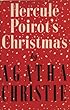
 BooksPlease