Spell the Month in Books – July 2023

Spell the Month in Books is a linkup hosted by Jana on Reviews From the Stacks on the second Saturday of each month. The goal is to spell the current month with the first letter of book titles, excluding articles such as ‘the’ and ‘a’ as needed. That’s all there is to it! Some months there are optional theme challenges, such as “books with an orange cover” or books of a particular genre, but for the most part, any book you want to use is fair game!

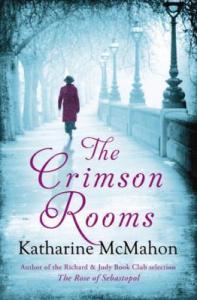
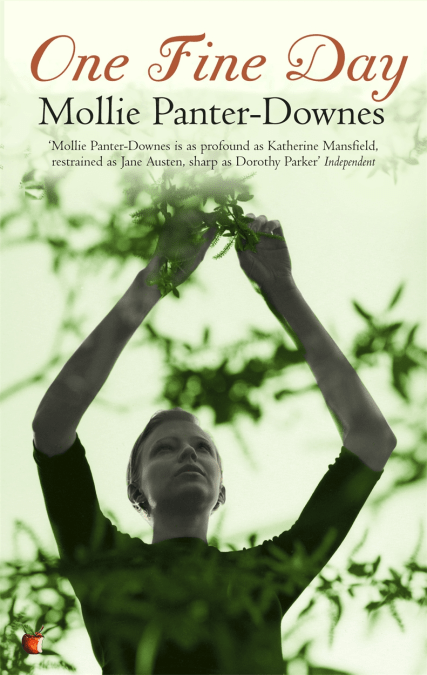
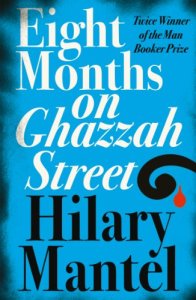
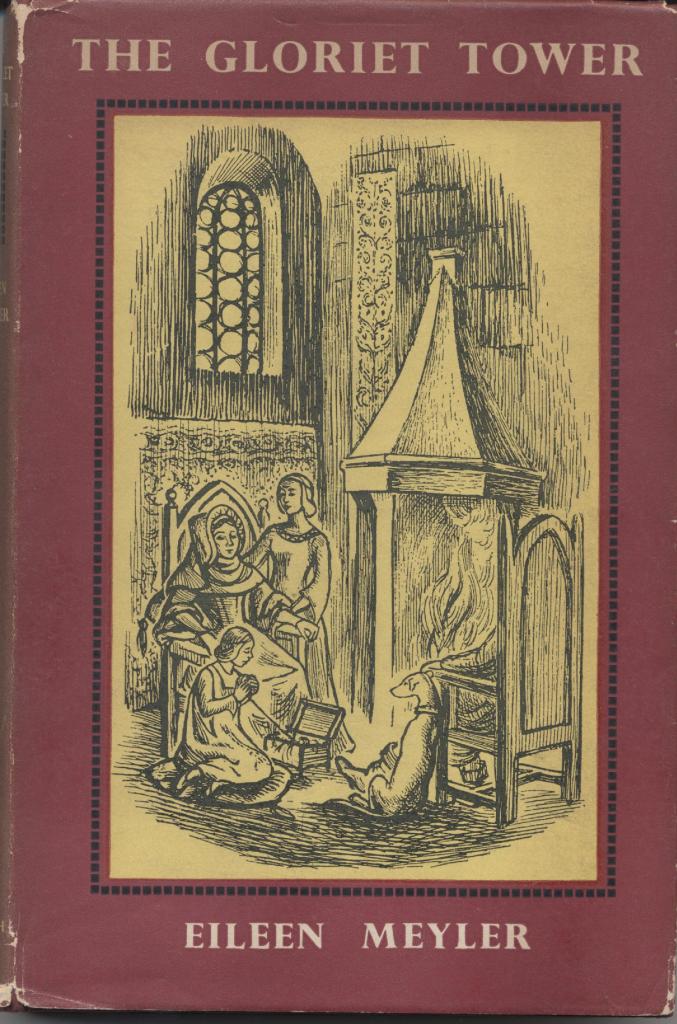
The theme this month is Red, White, and/or Blue on the cover or in the title. I’m featuring two books with predominantly blue covers and two with white covers.

These are all books I’ve enjoyed – the links to my reviews are in the titles of each book.

J is for The Jigsaw Maker by Adrienne Dines

Lizzie Flynn has a shop in a village near Kilkenny, a sort of knick-knack shop selling a variety of goods, cards, flower arrangements, home-made sweets, that needs brightening up and bringing up to date. Her settled life is turned upside down with the arrival of the Jigsaw Maker – Jim Nealon, a stranger who walks into her shop one morning and asks her to sell his beautiful jigsaws.

This is a beautifully written book, one with pace and tension in just the right places. There are plenty of repressed secrets that come to the surface as Lizzie helps Jim by writing about the scenes in his jigsaws. But who is Jim? Why has he come to the village and why did he ask Lizzie in particular to help him?

U is for The Uncommon Reader by Alan Bennett

This tells the story of Her Majesty, not named, but she has dogs, and is married to a duke. She comes across the travelling library, thanks to the dogs, parked next to the bins outside one of the kitchen doors at Buckingham Palace and ends up borrowing a book to save the driver/librarian’s embarrassment.

She borrows books regularly and this changes her life. This little book is full of interesting ideas about books and the nature of reading and society. As the Queen expands her range she realises that ‘Books did not care who was reading them, or whether one read them or not. All readers were equal, herself included. Literature, she thought, is a commonwealth: letters a republic.’

L is for Life After Life by Kate Atkinson

Ursula Todd was born on 11 February 1910 at Fox Corner during a wild snowstorm. But in the course of the book Ursula dies many deaths and there are several different versions that her life takes over the course of the twentieth century – through both World Wars and beyond. Each time as she approaches death she experiences a vague unease, before the darkness falls. As she grows older she experiences different outcomes to the events that lead up to that feeling of unease, and finds that sometimes she can prevent the darkness from falling. By the end of the book I had a complete picture of a life lived to the full.

The whole book is full of ‘what ifs’ – what if this character had behaved differently, what if that had not happened, what if you’d made a different choice of subject to study or a different career, or married a different person?  

Y is for The Year Without Summer by Guinevere Glasfurd

This is a most remarkable book, telling how the volcanic eruption of Mount Tambora on Sumbawa Island in Indonesia in 1815 had a profound and far reaching impact on the world. It led to sudden cooling across the northern hemisphere, crop failures, famine and social unrest in the following year, which became known as The Year Without Summer and in North America as Eighteen hundred and froze to death. But it wasn’t until the mid twentieth century that volcanic eruptions were shown to affect climate change.

I thoroughly enjoyed this book. It’s more like a collection of short stories than a novel, but it works very well for me, highlighting the global connections. It is of course about climate change, showing the far-reaching effects of the Tambora eruption, which weren’t limited to 1815 and 1816. It led to hardships in 1817 and 1818 with the outbreak of cholera and typhoid epidemics triggered by the failure of monsoons.

The next link up will be on August 5, 2023 when the theme will be Series – Books that are part of a series, or the name of the series itself.

Six Degrees of Separation from Time Shelter to The Girl Who Died

It’s time again for Six Degrees of Separation, a monthly link-up hosted by Kate at Books Are My Favourite and Best. Each month a book is chosen as a starting point and linked to six other books to form a chain. A book doesn’t need to be connected to all the other books on the list, only to the one next to it in the chain.

This month we begin with Time Shelter by Georgi Gospodinov and translated by Angela Rodel, the winner of the International Booker Prize 2023, in which an enigmatic flâneur named Gaustine opens a ‘clinic for the past’ that offers a promising treatment for Alzheimer’s sufferers: each floor reproduces a decade in minute detail, transporting patients back in time. But soon the past begins to invade the present.This is not a book I’ve read but I think I might like it.

I’m beginning my chain with David Shenk’s The Forgetting: understanding Alzheimer’s: the biography of a disease. This is a remarkable book about the wasting away of the mind, inside a still vigorous body. Shenk’s history of Alzheimer’s is both poignant and scientific, grounded by the fundamental belief that memory forms the basis of our selves, our souls, and the meaning in our lives.

Another book about memory, but about remembering not forgetting, is my second link – Footfalls in the Memory by Terry Waite. Waite was the Assistant for Anglican Communion Affairs for the then Archbishop of Canterbury, Robert Runcie, in the 1980s. As an envoy for the Church of England, he travelled to Lebanon to try to secure the release of four hostages, including the journalist John McCarthy. He was himself kidnapped and held captive from 1987 to 1991. [Wikipedia] During his captivity he wrote his autobiography in his head, and also attempted to remember the books, poems and prayers he had read during his life.

My third link is one of the books Waite described – Busman’s Honeymoon by Dorothy L Sayers. Lord Peter Wimsey and his bride, Harriet Vane are on their honeymoon. They are staying in a remote country house when they find the previous owner’s body in the cellar. It’s Dorothy L. Sayers’ last full-length detective novel. Variously described as a love story with detective interruptions and a detective story with romantic interruptions, it lives up to both descriptions with style.

‘Honeymoon’ is the link to my fourth link as Peter Pascoe is away on his honeymoon in An April Shroud by Reginald Hill, whilst Dalziel is on holiday. He meets the Fielding family on their way back home after Conrad Fielding’s funeral. Although the police had decided that Conrad’s death had been an accident, Dalziel cannot help but ferret out what really happened to him.

‘April’ is the link for my fifth link in my chain because I read Giving Up the Ghost by Hilary Mantel in April 2008. It’s a remarkable memoir that came across to me as being clear, honest and very moving. She’s not looking for sympathy but has written this memoir to take charge of her memories, her childhood and childlessness, feeling that it is necessary to write herself into being. As a child she believed their house was haunted and she was often very frightened. Home was a place where secrets were kept and opinions were not voiced. Her experience of ghosts at the age of 7 was horrifying as she felt as though something came inside her, ‘some formless, borderless evil’. She saw the children she never had as ghosts within her life; ghost children who never age, who never leave home. 

My final link is to a novel featuring a ghost – The Girl Who Died by Ragnar Jonasson. It is Icelandic noir, a mix of horror and psychological thriller. When Una arrived in Skálar, she had the feeling that it was like being a folk tale, an ominous supernatural tale set in a vague shifting world where nothing was solid or real, almost like a ghost town. The feeling grows stronger when she sees a little girl with long, pale hair in the window of Salka’s house – but Salka tells her that Edda was in bed. Later she discovers that the ghost of a young girl who had died fifty years earlier was said to haunt the house.

My chain begins and ends with books translated into English. In between are non fiction books about memory and crime fiction novels.

Next month (August 5, 2023), we’ll start with Romantic Comedy by Curtis Sittenfeld.

My Blog Break is over & The Man With No Face

I’m back home and looking forward to getting back into blogging. I was in hospital for three weeks – but now I’m recovering, trying to get back to ‘normal’.

It has been very odd as I lacked the desire to read, or concentrate on anything really. I’ve read just one book so far this month – The Man With No Face by Peter May, which I’d started before I went into hospital. This was first published in 1981. May made ‘some very minor changes’, before it was republished in 2018.

Rating: 5 out of 5.

Description from Goodreads:

A POWERFUL AND PRESCIENT THRILLER FROM THE MILLION-SELLING AUTHOR OF I’LL KEEP YOU SAFECOFFIN ROAD AND THE BLACKHOUSE.

A REPORTER WITH NO FEAR

Jaded Edinburgh journalist Neil Bannerman is sent to Brussels, intent on digging up dirt. Yet it is danger he discovers, when two British men are found murdered.

A CHILD WITH NO FATHER

One victim is a journalist, the other a Cabinet Minister: the double-assassination witnessed by the former’s autistic daughter. This girl recalls every detail about her father’s killer – except for one.

THE MAN WITH NO FACE

With the city rocked by the tragedy, Bannerman is compelled to follow his instincts. He is now fighting to expose a murderous conspiracy, protect a helpless child, and unmask a remorseless killer.

I did find it a bit repetitive, which for once was good as it kept reminding me what was going on. It’s a complex plot told mainly from Bannerman’s perspective with insights into the hired assassin’s and daughter’s viewpoints. It’s called ‘The Man with no Face’ because Tania, the daughter is a talented artist and she draws the scene with the assassin’s face left blank.

There’s a lot more I could say about the book. It’s a thriller with some violence but nothing I couldn’t cope with – and I’m squeamish! I thoroughly enjoyed it with all its twists and turns and increasing level of danger right up to the climax. Highly recommended!

Book Beginnings on Friday & The Friday 56: The Man With No Face by Peter May

Every Friday Book Beginnings on Friday is hosted by Gillion at Rose City Reader where you can share the first sentence (or so) of the book you are reading. You can also share from a book you want to highlight just because it caught your fancy.

I’m featuring another book by Peter May this week – The Man With No Face. This was first published in 1981. He made ‘some very minor changes’, before it was republished in 2018.

Kale watched the train through the rain-spattered glass and thought, this time will be the last. But even as the thought formed in his mind it clotted and he knew he would kill again.

Also every Friday there is The Friday 56, hosted by Freda at Freda’s Voice, where you grab a book and turn to page 56 (or 56% of an eBook), find one or more interesting sentences (no spoilers), and post them.

Page 56:

They took their first sips in silence before Bannerman said, ‘Tell me about yourself.’

‘There’s not much to tell.

‘Now why do people always say that?

‘Maybe because it’s true.’

He shook his head. ‘No. Everyone’s got a story to tell.’

Description from Goodreads:

A POWERFUL AND PRESCIENT THRILLER FROM THE MILLION-SELLING AUTHOR OF I’LL KEEP YOU SAFECOFFIN ROAD AND THE BLACKHOUSE.

A REPORTER WITH NO FEAR

Jaded Edinburgh journalist Neil Bannerman is sent to Brussels, intent on digging up dirt. Yet it is danger he discovers, when two British men are found murdered.

A CHILD WITH NO FATHER

One victim is a journalist, the other a Cabinet Minister: the double-assassination witnessed by the former’s autistic daughter. This girl recalls every detail about her father’s killer – except for one.

THE MAN WITH NO FACE

With the city rocked by the tragedy, Bannerman is compelled to follow his instincts. He is now fighting to expose a murderous conspiracy, protect a helpless child, and unmask a remorseless killer.

~~~

What do you think, does it appeal to you? What are you currently reading?

Elizabeth Macarthur by Michelle Scott Tucker

In 1788 a young gentlewoman raised in the vicarage of an English village married a handsome, haughty and penniless army officer. In any Austen novel that would be the end of the story, but for the real-life woman who became an Australian farming entrepreneur, it was just the beginning.

John Macarthur took credit for establishing the Australian wool industry and would feature on the two-dollar note, but it was practical Elizabeth who managed their holdings—while dealing with the results of John’s manias: duels, quarrels, court cases, a military coup, long absences overseas, grandiose construction projects and, finally, his descent into certified insanity.

Michelle Scott Tucker shines a light on an often-overlooked aspect of Australia’s history in this fascinating story of a remarkable woman.

My thoughts

Two years ago I read A Room Made of Leaves by Kate Grenville, historical fiction telling the story of Elizabeth and John Macarthur, who settled in Australia at the end of the eighteenth century, which made me keen to find out more about them. In particular it was the epigraph ‘ Believe not too quickly‘, which is a quotation from one of Elizabeth’s letters, that highlighted for me that A Room Made of Leaves is a work of fiction. And then I came across Michelle Scott Tucker’s biography: Elizabeth Macarthur: A Life at the Edge of the World and I was delighted to see that Kate Grenville references this book as the standard biography in her Acknowledgements. So I bought a copy.

Elizabeth was born on 14 August 1766 in Devon, England and she married John Macarthur in October 1788. In June 1789 they sailed with their first child, Edward, initially on the Neptune, and then on the convict ship Scarborough to New South Wales where John joined his regiment, the New South Wales Corps, in the recently established colony of New South Wales. They went on to have four more sons, James (1793-1794), John (1794-1831), James (1798-1867) and William (1800-1882), and three daughters, Elizabeth (1792-1842), Mary (Mrs Bowman, b.1795) and Emmeline (b.1808).

For sixty years, Elizabeth ran the family farm in Parramatta, west of Sydney town – on her own during her husband’s long absences abroad, four years during her husband’s first absence, and nine years during the second, when she was responsible for the care of their valuable merino flocks, as well as the Camden Park estate and the direction of its convict labourers. By the time Macarthur came back from that second absence, he was overwhelmed by mental illness, and they spent the last few years of his life apart. He died in 1834. The house and gardens of her farm, aptly named ‘Elizabeth Farm’ is now an ‘access all areas’ museum. In 1850, she died in her daughter and son-in-law’s house at Watson’s Bay outside Sydney, overlooking the Pacific Ocean.

I was interested to see how the biography differed from Kate Grenville’s novel. Both interpret the facts, based on Elizabeth Macarthur’s letters, journals and official documents of the early years of the New South Wales colony, trying to explain what happened and why, dependent on the available evidence. However, fiction is more flexible than a biography and can fill in the gaps where the documentary evidence is lacking. And Kate Grenville has used her storytelling imagination in filling in the gaps in the records, in particular about her relationship with William Dawes, an astronomer with the Corps, who was mapping the night sky. He had an observatory near Elizabeth’s farm and it was there that she attempted to learn from him about astronomy. However, in A Room Made of Leaves, Kate Grenville embellishes the basic facts, whilst exploring what it could have been that made Elizabeth ‘blush at my error‘, as she described it in a letter to her friend, Bridget, claiming she had mistaken her abilities and she ended her astronomical studies. Michelle Scott Tucker comments that the evening visits to Dawes’ observatory were open to misinterpretation, whereas Kate Grenville’s version is much more explicit as she imagines what might have happened. Her book, whilst it is based on history is fiction, as she makes clear in her Author’s Note at the end of the book.

I have only just skimmed the surface of this book – there is so much more detail about the landscape, the indigenous population, the disputes between various sections of the colony, about farming and the establishment of the wool industry, not forgetting the details of the Macarthur family members, illnesses, and the position of the women within the community – Elizabeth wasn’t the only colonial woman who was responsible for her family farm. She was resourceful, a good farm manager and business woman, was respected within the colony, and was loved by her family. There are a number of reasons I recommend this book. There is a ‘Select Bibliography’ which looks comprehensive to me, copious notes citing sources and a family tree. It is thorough, well researched and It provides an insight into the early years of Australia’s colonial history and it is an extremely readable biography of a fascinating woman.