Recent Additions – Waiting to be Read

I’ve got more books waiting to be read than I can possibly read in the near future, so many that they’re sitting around making me feel just a bit guilty that I can’t get round to them. So this post is just to list some of the titles, quoting the publishers’ blurbs.

Here are a few in no particular order and with no recommendation to read them, these are simply books that have been sent to me by the author/publisher to read and review. I may post my own thoughts on these books at a later date.
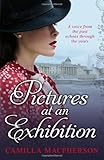
Pictures at an Exhibition by Camilla Macpherson – published April 2012

Blurb from the Back Cover

London, 1942 – With bombs raining down on London, the National Gallery’s most treasured paintings have been hidden away. The authorities have decided that only one masterpiece will be displayed each month. And each month, Daisy Milton writes to her cousin Elizabeth to tell her about the paintings, her life – and the man she loves.

London, present day – A terrible tragedy has left Claire’s marriage to Rob in tatters and there seems little hope of reconciliation. Then she finds Daisy’s letters, written to Rob’s grandmother, and gradually, picture by picture, month by month, Daisy’s world in the 1940s becomes more real to Claire than her own. Slowly, too, she begins to notice intriguing parallels between both their lives.

But Daisy is from another time, and unless Claire can find a way to make sense of the past, she risks losing everything that she cares about in the present.
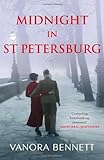
Midnight in St Petersburg by Vanora Bennett – published April 2013

Blurb from Amazon:

St Petersburg,1911: Inna Feldman has fled the pogroms of the south to take refuge with distant relatives in Russia’s capital city. Welcomed into the flamboyant Leman family, she is apprenticed into their violin-making workshop. With her looks and talents, she feels instantly at home in their bohemian circle of friends. But revolution is in the air and, as society begins to fracture, she is forced to choose between her heart and her head.She loves her brooding cousin, Yasha, but he is wild, destructive and bent on revolution; Horace Wallich, the Englishman who works for Fabergé, is older and promises security and respectability.

As the revolution descends into anarchy and blood-letting, a commission to repair a priceless Stradivarius violin offers Inna a means of escape. But will man will she choose to take with her? And is it already too late?

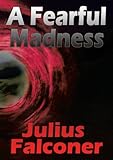
A Fearful Madness by Julius Falconer – published March 2013 
Blurb from the back cover:

If you think that religion, sex, the aristocracy and mystery might make a good crime novel, TRY THIS ONE! A police investigation into the violent death of a part-time cathedral verger stalls for lack of incriminating evidence. However, three people have a close interest in clearing the matter up where the police have failed: the dead man’s sister, anxious to see justice done, and two of the police suspects, both released without charge but keen to clear their names.

Striking out on their own, each approaches the murder from a different perspective: book-trafficking on the black market; revenge by an extremist religious organisation for the dead man’s betrayal of them; and retaliation in a case of blackmail. The police continue to maintain that the murder was committed out of sexual anger, even though they have no proof apart from the circumstances of the verger’s death.

Eventually DI Moat and his assistant DS Stockwell, from the North Yorkshire Force, take a hand. Moat pays his predecessors in the investigation, both professional and amateur, the compliment of taking their findings seriously – but comes up with an idea of his own.

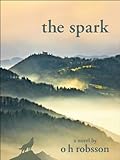
The Spark by O H Robsson – Kindle edition, oublished February 2013
Blurb from Amazon:

He steps off the train and they’re there, watching and waiting, anticipating the moment when his head will turn and their eyes will meet. But there are too many people. The platform’s crowded and for ten seconds nothing happens, until suddenly somebody moves, a gap opens up and he sees them off to his right. There’s a pause, then they start to run. Eva with the dogs, Kristoffer with his bags, the four of them pushing through and around people, desperate to be together once more.

They hold each other tight, breathing each other in. It’s been too long. He reaches down to the dogs and she whispers into his ear that everything’s fine now, everything’s great. He nods his head and picks up his bags. She uses the word four more times before they reach the car. It seems everything’s great.

Except something’s wrong.

Enchanting and calming, ‘the spark’ is o h robsson’s classic tale of life and love, set amidst the breath-taking beauty of Norway’s west coast. Exclusive to this ebook edition are two behind-the-scenes photo galleries, and an in-depth author interview.

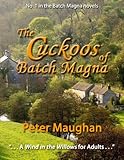
The Cuckoos of Batch Magna by Peter Maughan, published March 2103
Blurb from Amazon:

When Sir Humphrey Miles Pinkerton Strange, 8th baronet and huntin’ shooting’ and fishin’ squire of the village of Batch Magna in the Welsh Marches, departs this world for the Upper House (as he had long vaguely thought of it, where God no doubt presides in ermine over a Heaven as reassuringly familiar as White’s or Boodle’s), what’s left of his decaying estate passes, through the ancient law of entailment, to distant relative Humph, an amiable, overweight short-order cook from the Bronx.

Sir Humphrey Franklin T Strange, 9th baronet and squire of Batch Magna, as Humph now most remarkably finds himself to be, is persuaded by his Uncle Frank, a small time Wall Street broker with an eye on the big time, to make a killing by turning the sleepy backwater into a theme-park image of rural England €“ a vacation paradise for free-spending US millionaires.

But while the village pub and shop, with the lure of the dollar in their eyes, put out the Stars and Stripes in welcome, the tenants of the estate’s dilapidated houseboats are above any consideration of filthy lucre and stand their ground for tradition’s sake €¦ and because they consider eviction notices not to be cricket.

Each disgruntled faction sees the other as the unwelcome cuckoo in the family nest.

So, led by randy pulp-crime writer Phineas Cook, and Lt-Commander James Cunningham DSO, DSC and Bar, RN (ret) €“ a man with a glass eye for each day of the week, painted with scenes from famous British naval victories and landscapes that speak of England €“ the motley crew run up the Union Jack and battle ensign and prepare to engage.

But this is Batch Magna, a place where anything might happen. And does €¦

First Chapter, First Paragraph

First chapterEvery Tuesday Diane at  Bibliophile by the Sea hosts First Chapter First Paragraph Tuesday Intros, sharing the first paragraph or (a few) of a book she’s reading or thinking about reading soon.

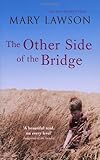
This is a book I’ve had for some time and haven’t read yet. It’s The Other Side of the Bridge by Mary Lawson. I bought this book because I’d read and loved Mary Lawson’s book, Crow Lake (link to my post on the book).

The Other Side of the Bridge begins: 

Prologue

There was a summer back when they were kids, when Arthur Dunn was thirteen or fourteen and his brother Jake was eight or nine, when for weeks on end Jake pestered Arthur to play the game he called knives. Jake had a great collection of knives at the time, everything from fancy little Swiss Army jack-knives with dozens of attachments to a big sleek hunting knife with a runnel down one side for blood. It was the hunting knife that was to be used in the game because according to Jake it was the best for throwing.

The only reason I haven’t read it yet is pressure of time  – and lots of other books that I’m dying to read. But should I read this one soon?

This is the blurb on the back cover:

Arthur and Jake are brothers, yet worlds apart. Arthur is older, shy, dutiful, and set to inherit his father’s farm. Jake is younger and reckless, a dangerous man to know. When Laura arrives in their 1939s rural community, an already uneasy relationship is driven to breaking point …

And this is what Penelope Lively wrote about it in the Guardian:

This is a fine book – an enthralling read, both straightforward and wonderfully intricate.

I think I’ll move it up the list of books-to-be-read.

Berwick's Elizabethan Ramparts

Following on from last Saturday’s Saturday Snapshots here are a few more photos of Berwick-upon-Tweed, which is the northernmost town in England. It’s a Border town that changed hands between England and Scotland 14 times until it finally became part of England in 1482. It’s a walled town; the original medieval walls were built in the 13th century and the Elizabethan Ramparts, dating from 1558 are virtually intact.

Berwick Elizabethan Ramparts

The fortifications replaced the medieval wall on the North and East sides of the town. The photo above shows part of the Elizabethan wall that is now the boundary wall of a car park.

Below are two photos of sections of the walls:

Berwick Ramparts 1

Berwick walls & bridges

The photo below shows a Russian cannon, captured in the Crimea. Before the Second World War this part of part of the walls was once bristling with artillery. All that remains now is this cannon which was brought back as one of the trophies at the end of the Crimean War (1854-56). The top of the barrel of the gun is embossed with the double-headed eagle emblem of the Russian Tzar.

Berwick Ramparts Canon

For more Saturday Snapshots see Alyce’s blog At Home With Books.

Book Beginnings

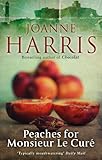
Peaches for Monsieur Le Curé: I really shouldn’t be reading this book yet as I’m still reading Joanne Harris’s The Lollipop Shoes, the book that precedes Peaches for Monsieur Le Curé, but I just had to see how it starts.

This is the beginning (and the whole of Chapter One):

Someone once told me that, in France alone, a quarter of a million letters are delivered every year to the dead.

What she didn’t tell me is that sometimes the dead write back.

Well, that seemed so familiar – and it is because here is the opening sentence of The Lollipop Shoes:

It is a relatively little-known fact that, over the course of a single year, about twenty million letters are delivered to the dead.

I’ve had The Lollipop Shoes for nearly five years and have only just got round to reading it. I bought it when it came out in hardback because I’d loved reading Chocolat and wanted to read more about Vianne Rocher – my post on Chocolat explains my love of this book. So far, though, it just doesn’t have the same enchantment as Chocolat and it’s giving me uneasy feelings. I don’t want to say too much just yet as I’ve only read half the book – but one of the characters is definitely not ‘nice’, she’s dangerous and devious, out to  change Vianne’s world.

In fact, when I first looked at The Lollipop Shoes I found I didn’t want to read it – it’s so different in mood from Chocolat. So it went back on the shelf until this week, when I read Christine’s review of Peaches for Monsieur Le Curé and I knew it was time to read Joanne Harris’s books. It sounds as though  Peaches for Monsieur Le Curé is just as enjoyable as Chocolat and maybe not quite so dark as The Lollipop Shoes, because she wrote: ‘it’s the kind of novel I’ll turn to on a grey day, when the world seems against me, and I want my spirits lifting without having to think too deeply about anything’.

For more Book Beginnings on Friday see Gilion’s blog Rose City Reader.

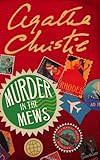
Murder in the Mews by Agatha Christie

I don’t usually find short stories as satisfying as novels, but the stories in Murder in the Mews are good, mainly, I think, because with one exception they are novellas, longer than the average short stories. The collection was first published in 1937.

There are four stories about crimes solved by Hercule Poirot:

  •  Murder in the Mews – at first it looks as though a young widow, Mrs Allen has committed suicide, but as the doctor pointed out the pistol is in her right hand and the wound was close to her head just above the left ear, so it’s obvious that someone else shot her and tried to make it look like suicide. The plot is tightly constructed, with a few red herrings to misguide Poirot and Inspector Japp and a moral question at the end. The book begins on Guy Fawkes Day and I like this conversation between Poirot and Inspector Japp:

(J): ‘Don’t suppose many of those kids really know who Guy Fawkes was.’

(P): ‘And soon, doubtless, there will be confusion of thought. Is it in honour or in execration that on the fifth of November the feux d’artifice are sent up? To blow up an English Parliament, was it a sin or a noble deed?’

Japp chuckled. ‘Some people would say undoubtedly the latter.’ (page 7)


  • The Incredible Theft – Poirot is called in to investigate the theft of top secret plans of a new bomber from the home of a Cabinet Minister, Lord Mayfield, where a number of guests are gathered for a house party: Mrs Vanderlyn is an American siren who had formed friendships with ‘a European party’ (this was written in 1936). Air Marshall Sir George Carrington  wonders why she is there. Lady Julia Carrington, Sir George’s wife is a keen bridge player, who has ‘the most frightful overdraft’ and their son Reggie, fancies the French maid. Also present are Mrs Macatta MP, and Mr Carlile, Lord Mayfield’s private secretary. This is perhaps the weakest story in the collection.
  • Dead Man’s Mirror – a conventional murder mystery. Sir Gervase Chevenix-Gore is found dead in his locked study, shot through the head. The bullet had shattered the mirror on the wall behind his desk. Again it looks like suicide, but the question is why he should kill himself. Poirot considers it’s all wrong psychologically – Sir Gervase was known as The Bold Bad Baronet, with a huge ego, much like Poirot, considering himself to be a man of great importance. This is another story, complicated by family relationships. Things of interest I noted are that Poirot studies the footprints in the garden outside the study, Mr Satterthwaite (seen in later stories) makes an appearance, and on a personal note I wondered if this was Agatha Christie’s cynical view of divorce?

 I can’t see it makes a ha’p’orth of difference who you marry nowadays. Divorce is so easy. If you’re not hitting it off, nothing is easier than to cut the tangle and start again. (page 115)


  • Triangle at Rhodes – although this is the shortest story, not my preferred length, I think this is the best one in the book. It’s similar to her later book Evil Under the Sun in that it is about a love triangle and a crime of passion. Poirot is on holiday in Rhodes and observes the jealousy and passion between two couples as he sits in the sun on the beach. He foresees trouble ahead and is worried as he traces a triangle in the sand. There aren’t many people on holiday there and he wonders if he is imagining things , reproaching himself for being ‘crime-minded‘. But he is not wrong and Valentine Chantry, a famous beauty, married to a commander in the navy, a strong, silent man, is murdered.

These stories demonstrate some of Agatha Christie’s plot elements and endings – the locked room murder, the murderer conceals the motive, Poirot foresees murder, the clues (often odd clues) are there hidden or in plain sight, there are red herrings and bluffs, chance remarks that have significance, and the final denouement, explaining the solution to the mystery.

The Classics Spin

The Classics ClubThe Classics Club Spin

  • Pick twenty unread books from your list. This could be five you are dreading/hesitant to read, five you can’t WAIT to read, five you are neutral about, and five free choice.
  • Number them from one to twenty.
  • On Monday a number will be drawn.
  • That’s the book to read by July 1.

I decided the simplest list way to do this was to choose books from different centuries, which gave me three sections and for the final five I’ve listed five really long books. These are all books I want to read but I am hesitant about some of them, especially some of the longer books – even some of the books not included in the ‘Long books’ section are long too! I’m really hoping for a shorter book.

The first five are 17th & 18th century, the second group are 19th century, the third 20th century and the last five are ‘Long books’.

  1. Don Quixote by Miguel de Cervantes Saavedra 1605 
  2. A Journal of the Plague Year by Daniel Defoe 1722
  3. Moll Flanders by Daniel Defoe 1722
  4. Gulliver’s Travels by Jonathan Swift 1726
  5. Lady Susan, The Watsons, Sanditon by Jane Austen poss 1794 first pub 1871
  6. Barnaby Rudge by Charles Dickens 1841
  7. Mary Barton by Elizabeth Gaskell 1848
  8. Barchester Towers (Barsetshire Chronicles, 2) by Anthony Trollope 1857
  9. The Mill on the Floss by George Eliot 1860
  10. Lorna Doone: A Romance of Exmoor by R D Blackmore 1869
  11. Ethan Frome by Edith Wharton 1911
  12. The Voyage Out by Virginia Woolf 1915
  13. Out of Africa €“ Isak Dinesen 1937 
  14. To Kill a Mockingbird by Harper Lee 1960
  15. Love in the Time of Cholera by Gabriel Garcia Marquez 1985
  16. Gone with the Wind by Margaret Mitchell 1936
  17. Of Human Bondage by W. Somerset Maugham 1915
  18. No Name by Wilkie Collins 1862
  19. The Count of Monte Cristo by Alexandre Dumas 1844
  20. Parade’s End by Ford Maddox Ford 1924 – 28