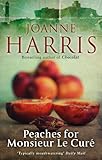
Peaches for Monsieur Le Curé by Joanne Harris

After I finished reading The Lollipop Shoes by Joanne Harris I was in two minds about reading her next book about Vianne Rocher Peaches for Monsieur Le Curé, but as I’d reserved it from the library and spurred on by other reviews I decided to read it. I was hoping I would like it more than The Lollipop Shoes.

From the book jacket:

When Vianne Rocher receives a letter from beyond the grave, she has no choice but to follow the wind that blows her back to the village in south-west France where, eight years ago, she opened up a chocolate shop. But Vianne is completely unprepared for what she finds there.Women veiled in black, the scent of spices and peppermint tea, and there, on the bank of the river Tannes, facing the square little tower of the church of Saint-Jerome, like a piece on a chessboard – slender, bone-white and crowned with a silver crescent moon – a minaret.

 Nor is it only the incomers from North Africa that have brought big changes to the community. Father Reynaud, Vianne’s erstwhile adversary, is now disgraced and under threat. Could it be that Vianne is the only one who can save him?

My view:

Peaches for Monsieur Le Curé is a diluted version of Chocolat; it is too long and drawn out for the story line. It’s told from two viewpoints, that of Vianne and Father Reynaud, but I found that this resulted in too much ‘telling’, too much explanation and repetition. This means that the storyline gets padded out with too much detail. It became predictable and I wanted it to end before it actually did. I read on to the end because I wanted to know what happened. Although I hadn’t foreseen the detail I had foreseen the end.

I should like it more than I did, because it is so similar to Chocolat, covering many of the same themes: fear of the outsider, religious conflict, intolerance and prejudice, with issues of gender and race. It’s also about how people interact and how their lives intersect and above all about the importance of communication, love, and understanding and respecting the others’ point of view. But, the magic is missing for me.
May's Books 2013 & Crime Fiction Pick of the Month

I’ve read ten books this month and have only written about five of them – I don’t think I’ll get round to writing about all of them now. More reading means less writing!

I read five crime fiction novels:

May bks

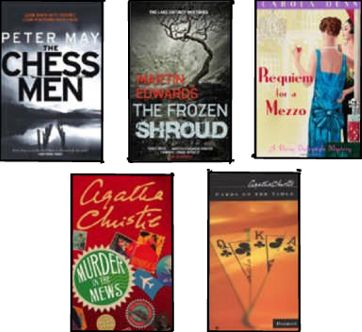
  • The Chessmen by Peter May. This is the third in his Lewis Trilogy, a fascinating and compelling book in which the body of an old friend of Fin McLeod’s is discovered seventeen years after he had disappeared. Whilst the books in this trilogy can be read as stand-alones I think it’s best to read them in sequence, because the second and third books refer to events and characters covered in the first book.
  • The Frozen Shroud by Martin Edwards, the sixth in his Lake District Mysteries with another cold case and a possible copycat murder five years later for Daniel Kind and DI Hannah Scarlett to solve. An excellent book.
  • Requiem for a Mezzo by Carola Dunn, Daisy Dalrymple and DI Alex Fletcher are faced with the murder of an opera singer during a performance of Verdi’s Requiem. A quick, easy read.
  • Murder in the Mews by Agatha Christie (Poirot 4 short stories), longer than the average short stories (and so more satisfying) these feature some of Agatha Christie’s plot elements and endings, with Poirot performing his usual final denouements.
  • Cards on the Table by Agatha Christie – an excellent murder mystery – I want to write about this in more detail in a later post.

My Crime Fiction Pick of the Month is The Frozen Shroud by Martin Edwards. See Kerrie’s blog, Mysteries in Paradise for more Crime Fiction Picks of the Month.

The other five books I finished reading in May are:

  • The Lollipop Shoes by Joanne Harris – I wasn’t too keen on this one.
  • Peaches for Monsieur Le Curé by Joanne Harris and again was rather disappointed. I may write more about the latter book and feel a bit differently about it. Sometimes writing about a book makes me appreciate it more. It’s as though it crystallises my thoughts and I can evaluate it better.

I may also write about these books:

May bks

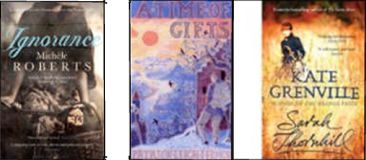
  • Ignorance by Michèle Roberts on Kindle – historical fiction set in France before and during the Second World War. a book about guilt, desire and love.
  • Patrick Leigh Fermor’s A Time of Gifts, non-fiction, about his journey from the Hook of Holland to Constantinople, although this book only covers his journey to the Danube between what were in 1934 Slovakia and Hungary.
  • Sarah Thornhill by Kate Grenville – a beautiful book, also historical fiction set in Australia during the early/mid 19th century. A book about race, family, secrets and love.

Saturday Snapshots

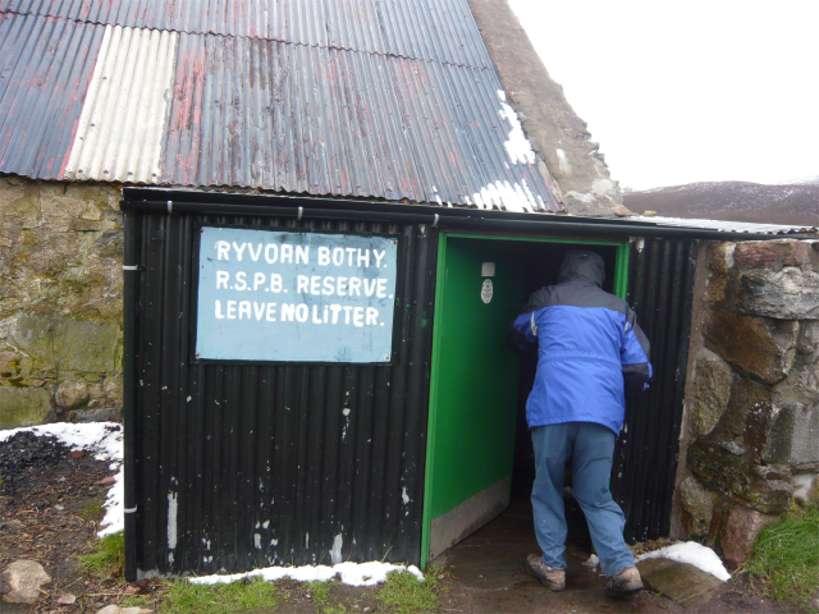
Last Saturday I posted photos of An Lochan Uaine near the path on our walk through Glenmore Forest Park. Today here are some more photos of our walk  after we left the lochan. The route continued along the Ryvoan Pass on the old Rathad nam Mearlach – or Thieves Road. Cattle raiders used hill tracks like this to move their spoils avoiding the more well-used routes.

As we went gradually up the hill this building came into view:

Bothy1 P1080705

Bothy2P1080706It’s a bothy – see this article explaining what a bothy is. The photo below shows the entrance:

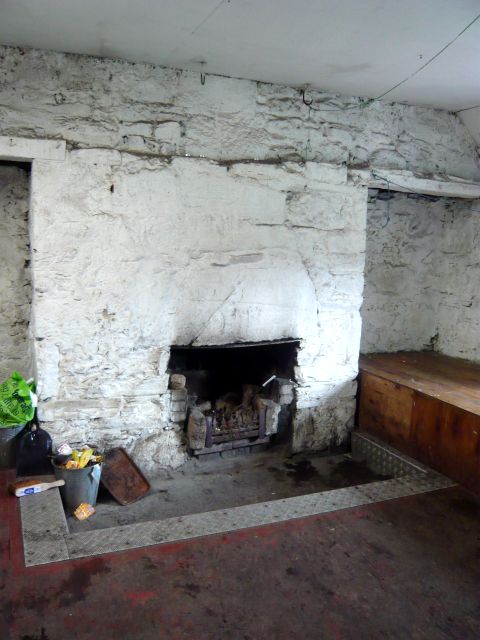
Bothy3P1080709and this is what is inside:

Bothy4P1080710 - Copy

There are some rules:

Bothy rules P1080722It’s a very welcome shelter – especially on a wet, windy day!

For more Saturday Snapshots see Melinda’s blog West Metro Mommy.

Sarah Thornhill by Kate Grenville: a Book Beginnings post

Book Beginnings Button

Book Beginnings on Friday at Gilion’s blog Rose City Reader is the place to share the first sentence (or so) of the book you are reading, along with your initial thoughts about the sentence, impressions of the book, or anything else the opener inspires.

I’m currently reading Sarah Thornhill by Kate Grenville. It begins:

The Hawkesbury was a lovely river, wide and calm, the water dimply green, the cliffs golden in the sun, and white birds roosting in the trees like so much washing. It was a sweet thing of a still morning, the river-oaks whispering and the land standing upside down in the water.

They called us the Colony of New South Wales. I never liked that. We wasn’t new anything. We was ourselves. (page 3)

I heaved a sigh of relief when I read these opening paragraphs. They paint such a beautiful picture in the first paragraph – I love the peaceful image of a dimply green river reflecting the world upside down – and then the contrast of the strongly individual statements in the second paragraph. The narrator is Sarah Thornhill, a young girl at the beginning of the book, the youngest daughter of William Thornhill, who had been transported to Australia for stealing timber and whose story is told in Kate Grenville’s book The Secret River.

My sigh of relief is because recently I’ve been rather disappointed in my choice of books. Sarah Thornhill is the follow up book to The Secret River, a book I absolutely loved and I was concerned that this book wouldn’t live up to my expectations (see my previous post on Joanne Harris’s book The Lollipop Shoes).

I’m now over half way through the book and although it’s written in different style from The Secret River, so far it’s living up to its early promise. My sigh of relief is now a sigh of contentment.

The Lollipop Shoes by Joanne Harris

ChocolatI read Chocolat by Joanne Harris in 2008 and loved it. Here’s an extract from my post at that time.

It’s the story about Vianne Rocher who arrives in Lansquenet-sous-Tannes, a place that is’ no more than a blip on the fast road between Toulouse and Bordeaux’ on Shrove Tuesday. She takes over the old bakery and transforms it into La Celeste Praline Chocolaterie Artisanale €“ in other words the most enticing, the most delicious and sensuous Chocolaterie, selling not only all sorts and types of chocolate treats but delicious chocolate drinks. Together with Anouk her daughter and Anouk’s imaginary friend Pantoufle the rabbit, she also transforms everyone’s life along the way.

It’s not just a story about a chocolaterie – it’s about fear of the outsider, prejudice against ‘these people’ €“ immigrants, vagrants, and gypsies; bigotry; fear of death, old age and illness; and fear that the Church will lose its purity and that the community will be corrupted by liberal and heretic beliefs. It’s also about how so many lives intersect and interact and above all about the importance of love and understanding in everyone’s life.

So, I had high expectations about the next two books about Vianne Rocher – The Lollipop Shoes (in the US this is published as The Girl With No Shadow) and Peaches for Monsieur Le Curé (in the US – Peaches for Father Francis). Maybe my expectations were too high because I was disappointed – neither book is as good, or as enchanting as Chocolat.

The Lollipop Shoes continues Vianne’s story four years later in Paris with Anouk and a second daughter Rosette. Blown there by the wind, Vianne now goes by the name of Yanne Charbonneau and Anouk, now eleven years old, is known as Annie. Rosette who is nearly four years old has an imaginary friend, a monkey called Bam. Yanne is now trying to live a ‘normal’ life, without using magic, trying to fit in with the people around them. However, her efforts are disrupted by the arrival of Zozie de l’Alba, the young lady with the shiny red shoes – the ‘lollipop’ shoes, Annie calls them. Zozie has no scruples and doesn’t hesitate to practise her own kind of magic, bewitching Annie with her spells and the power of her mind. Zozie’s magic though, is dark magic, evil and dangerous. She’s a stealer of lives and plans to take Vianne’s identity and make Annie her own.

As in Lansquenet-sous-Tannes, Yanne is living above a chocolaterie. This one in Montmarre is owned by Thierry le Tresset, ‘fifty-one; divorced, one son, a churchgoer, a man of rock’. He wants to marry Yanne, but she isn’t sure. Annie is having problems at school, fitting in with the other children and Rosette is a child living very much in her own world, she hardly speaks and communicates by signs. Is Bam just an imaginary friend or is there more to him?

This is really a story about good versus evil and where Chocolat was about the power of love, The Lollipop Shoes is about the strength and destructive power of evil. But there is something missing, there is no sparkle; it’s flat. The story is narrated by Annie, Zozie and Yanne and sometimes I found it difficult to decide which character was the narrator, and had to check the little symbol at the beginning of each chapter. Maybe it’s just me, because other people have really enjoyed this book – there are lots of 4 and 5 stars on both Goodreads and Amazon.

This book qualifies for two challenges – Mount To-Be-Read 2013 and Once Upon a Time VII (Fantasy).

Saturday Snapshot

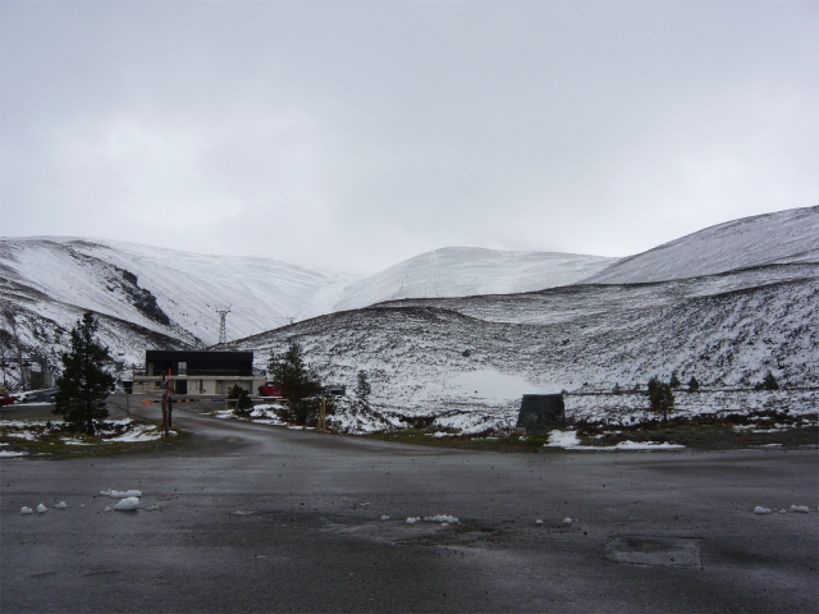
We’ve been away last week – we went here:

Caringorms P1080750the Cairngorms – and there was snow in May.

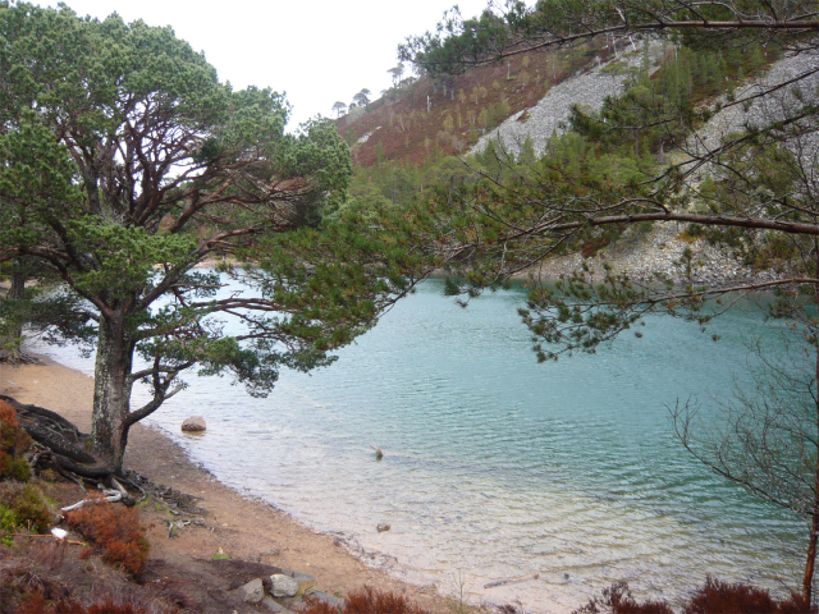
Cairngorm shop P1080752Lower down the snow fell too but didn’t stick. The photo below is of a beautiful little loch in the Glenmore Forest Park, An Lochan Uaine the ‘green lochan’ (although in my photo it looks blue – it was really green!). ‘Lochan’ is Gaelic for ‘ a small loch, or lake’.
An Lochan Uaine P1080677The green shows up more in this photo:

An Lochan Uaine P1080681

We have many more photos, which no doubt, I’ll be posting and writing about later. Click on the photos to see them enlarged.

For more Saturday Snapshots see Melinda’s blog West Metro Mommy.