Washington Square by Henry James

When I read  The Turn of the Screw by Henry James I was completely engrossed in the book, even with its long convoluted sentences. It’s a dark and melodramatic story, about good and evil and with hints of sexual relations, reflecting the Victorian society of the time.
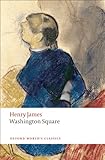
So I was expecting to be just as engrossed  with Washington Square – especially as I soon realised that the sentence structure is much simpler. It’s much easier to read, but sadly it just didn’t catch my imagination. I found it rather tedious as Catherine Sloper grew older and older, in conflict with her father over whether she should marry Morris Townsend.

It’s all about will /won’t Catherine and Morris get married. Catherine is an adult, living at home in Washington Square with her father the wealthy Dr Sloper. She has money of her own left to her by her mother. It is her father’s money that she will lose if she marries Morris. At first she is completely obedient to her domineering father and is taken in by the handsome Morris who is clearly after her for her money. I think this description of her sums her up so well and her father’s attitude towards her –

‘She is about as intelligent as the bundle of shawls,’ the Doctor said.’

Spoiler alert – if you don’t want to know how the book ends, don’t read on!

But then she does begin to see through Morris, acknowledges her father’s overbearing manipulation and her aunt’s meddling interference and I began to think this is similar to Jane Austen’s Persuasion, but no, this romance just fizzles out as Morris eventually marries someone else, gets bald and fat and widowed. He returns to see Catherine and she finally rejects his advances. She had forgiven him, but she couldn’t forget the past:

‘I can’t forget – I don’t forget,’ said Catherine. ‘You treated me too badly. I felt it very much; I felt it for years.’ And then she went on, with her wish to show him that he must not come to her in this way, ‘I can’t begin again – I can’t take it up. Everything is dead and buried. It was too serious; it made a great change in my life. I never expected to see you here.’ (page 153)

This was number 10 on my Classics Club Spin list, the number picked as the November/December book – not a success for me.

Mount TBR 2013 Final Checkpoint

Mount TBRTime for the final Mount TBR post.  Bev asks: 

1. Tell us how many miles you made it up your mountain (# of books read). If you’ve planted your flag on the peak, then tell us and celebrate (and wave!).  

I was aiming to reach Mount Ararat (48 books from my own bookshelves), but I didn’t get there. I read 34, just two books short of Mt Vancouver, which is 8 more TBRs than I read last year, so an improvement!

These are the books I read:

  1. The Case of the Curious Bride by Erle Stanley Gardner
  2. The Lacuna by Barbara Kingsolver
  3. Cat Among the Pigeons by Agatha Christie
  4. Small Kindnesses by Fiona Robyn
  5. The Hobbit by J R R Tolkien
  6. The Distant Hours by Kate Morton
  7. Daughters of Fire by Barbara Erskine
  8. Balthazar Jones and the Tower of London Zoo by Julia Stuart
  9. The Lewis Man by Peter May
  10. The Lollipop Shoes by Joanne Harris
  11. The Owl Killers by Karen Maitland
  12. Kissing the Gunner’s Daughter by Ruth Rendell
  13. Barnaby Rudge by Charles Dickens
  14. Falling Angels by Tracy Chevalier
  15. Tamburlaine Must Die by Louise Welsh
  16. The Sense of an Ending by Julian Barnes
  17. The Case of the Howling Dog by Erle Stanley Gardner
  18. The Red Coffin by Sam Eastland
  19. To Kill a Mockingbird by Harper Lee
  20. Third Girl (Poirot) by Agatha Christie
  21. Agatha Christie at Home by Hilary Macaskill
  22. The Birthday Boys by Beryl Bainbridge
  23. The Pillars of the Earth by Ken Follett
  24. The Death Maze by Ariana Franklin
  25. Relics of the Dead by Ariana Franklin
  26. Not the End of the World by Christopher Brookmyre
  27. A Murder is Announced by Agatha Christie
  28. Mrs Harris Goes to Moscow by Paul Gallico
  29. Julius by Daphne du Maurier
  30. N or M? by Agatha Christie
  31. St Mawr by D H Lawrence
  32. The Rendezvous and Other Stories by Daphne du Maurier
  33. Stowaway to Mars by John Wyndham
  34. On the Black Hill by Bruce Chatwin

2. My Life According to Mount TBR: Using the titles of the books you read this year, please associate each statement with a book read on your journey up the Mountain. 

This was quite difficult – I couldn’t fit titles to all the questions from the books I read!

Are you male or female?:  Third Girl
Describe yourself: I’m one of The Daughters of Fire
Describe where you currently live:  On the Black Hill
If you could go anywhere where would you go?: to see Balthazar Jones and the Tower of London Zoo
Your favorite form of transportation: Stowaway to Mars (not really!!)
What’s the weather like?:  
Favorite time of day?: The Distant Hours
Your relationships: Cat among the Pigeons (no, not at all!!)
You fear:  The Owl Killers
What is the best advice you have to give?:  it’s Not the End of the World
If you could change your name, you would change it to: I wouldn’t want to change it to any of the names in the book titles
My soul’s present condition: 

Thanks, Bev for hosting and for your encouragement this year to climb mountains – I’m looking forward to climbing more mountains next year.

On the Black Hill by Bruce Chatwin

On The Black Hill (Vintage classics) by€¦

Synopsis (from the Vintage Books website):

On the Black Hill is an elegantly written tale of identical twin brothers who grow up on a farm in rural Wales and never leave home. They till the rough soil and sleep in the same bed, touched only occasionally by the advances of the 20th century. In depicting the lives of Benjamin and Lewis and their interactions with their small local community Chatwin comments movingly on the larger questions of human experience. 

The book was awarded the 1982 James Tait Black Memorial Prize and Whitbread First Novel of the Year Award.

I quoted the opening paragraphs in a Book Beginnings post back in 2011, when I first bought this book, but I think it’s worth repeating them here as they are typical of the style of the book:

For forty-two years, Lewis and Benjamin Jones slept side by side, in their parents’ bed, at their farm which was known as -˜The Vision’.

The bedstead, an oak four-poster, came from their mother’s home at Bryn-Draenog when she married in 1899. Its faded cretonne hangings, printed with a design of larkspur and roses shut out the mosquitoes of summer, and the draughts in winter. Calloused heels had worn holes in the linen sheets, and parts of the patchwork quilt had frayed. Under the goose-feather mattress, there was a second mattress, of horsehair, and this had sunk into two troughs, leaving a ridge between the sleepers. (page (9)

I love this book with its rich descriptions of both the landscape and the characters on the border between England and Wales. It follows the lives of identical twins, Lewis and Benjamin Jones on a farm, barely touched by the 20th century, a period of over 80 years. They are inseparable, Benjamin in particular suffering whenever they are apart. Their lives are hard, lonely, brutal at times, but full of love for their mother and the land they farm.

Most of all I love they way Chatwin brings the characters to life, not just Lewis and Benjamin, but all the other personalities, some eccentric, some comic and some tragic. His attention to detail is remarkable – at no time does it seem excessive, or intrusive but all the little minutiae of daily life are essential to the book. At the same time Chatwin highlights questions of love, religion, death and above all relationships. It is most definitely not a book to race through to find out what happens, although I did want to know, but one to savour – and one to re-read.

2014 Historical Fiction Reading Challenge

Historical Tapestry will be hosting the challenge again next year. The challenge runs from Historical Fiction 20141 January to 31 December 2014 and you can choose from the following levels:

20th century reader €“ 2 books
Victorian reader €“ 5 books
Renaissance Reader €“ 10 books
Medieval €“ 15 books
Ancient History €“ 25 books
Prehistoric €“ 50+ books

I’ve been thinking about the definition of ‘historical fiction’. It’s not as straight forward as it seems – a historical novel is obviously one set in the past. But have far back in the past? Does it have to have been written by someone who did not live through the events described?

I’ve been a bit unsure sometimes whether a book is actually historical fiction, for example yesterday, 5 years ago, 10, 20 years ago are all in the past, but are books set so recently ‘historical fiction’? I don’t think so. So to make it clear for myself I have decided that next year I will be using the Historical Novel Society’s definition:

To be deemed historical (in our sense), a novel must have been written at least fifty years after the events described, or have been written by someone who was not alive at the time of those events (who therefore approaches them only by research).

We also consider the following styles of novel to be historical fiction for our purposes: alternate histories (e.g. Robert Harris’ Fatherland), pseudo-histories (eg. Umberto Eco’sIsland of the Day Before), time-slip novels (e.g. Barbara Erskine’s Lady of Hay), historical fantasies (eg. Bernard Cornwell’s King Arthur trilogy) and multiple-time novels (e.g. Michael Cunningham’s The Hours).

I will be aiming for Ancient History (25 books) again but will see how close I can get to the Prehistoric level!

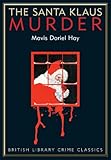
The Santa Klaus Murder by Mavis Doriel Hay

When I saw that The Santa Klaus Murder was available for loan from the Kindle Lending Library I wondered if it was worth looking at. I’d never heard of Mavis Doriel Hay before, but I thoroughly enjoyed reading this book, one of the British Library Crime Classics.

Mavis Doriel Hay (1894-1979) was a novelist of the golden age of British crime fiction. Her three detective novels were published in the 1930s and are now rare and highly collectable books. She was an expert on rural handicraft and wrote several books on the subject.

Summary from the British Library:

A classic country-house murder mystery, The Santa Klaus Murder begins with Aunt Mildred declaring that no good could come of the Melbury family Christmas gathering at their country residence Flaxmere. So when Sir Osmond Melbury, the family patriarch, is discovered€”by a guest dressed as Santa Klaus€”with a bullet in his head on Christmas Day, the festivities are plunged into chaos.

Nearly every member of the party stands to reap some sort of benefit from Sir Osmond’s death, but Santa Klaus, the one person who seems to have every opportunity to fire the shot, has no apparent motive. Various members of the family have their private suspicions about the identity of the murderer, but in the midst of mistrust, suspicion, and hatred, it emerges that there was not one Santa Klaus but two.

My view:

This was first published in 1936 and it is a classic locked room murder mystery. There are lots of suspects, especially as there were rumours that Sir Osmond was about to re-write his will. The story has several narrators, including – Sir Osmond’s daughter, Jennifer and her fiancé, Philip (Sir Osmond has withheld his blessing to their engagement), his daughter Hilda, a widow, Mildred, his sister, Grace, his young and vivacious secretary, and Colonel Halstock, the Chief Constable, investigating the crime. The suspects all seem to have alibis, but are they all telling the truth?

In short, it seems impossible to be sure of anyone’s exact movements during that half-hour.

No one admits seeing anyone enter the study after Oliver Witcombe left Sir Osmond there, until Witcombe returned and found him dead. (page 81)

It is a complicated plot and I enjoyed all the twists and turns. The opening chapters are rather detailed setting out the family background, but the characters all came to life as they arrived at Flaxmere.

There is a map showing the layout of the ground floor of Flaxmere, to help the reader and I kept referring to it as I read, together with the list of characters and their relationships.

To help you even more, if you haven’t worked out who did it there is a Postscript by Colonel Haverstock listing the questions and clues to identify the murderer. So don’t look at the end if you don’t want to know how and why Sir Osmond was murdered.

Hay’s other two murder mysteries Murder Underground and Death on the Cherwell are due to be published in June 2014 – I’ll be looking out for them.