The Western Wind by Samantha Harvey

Jonathan Cape, Vintage Digital| 1 March 2018|304 p|Review copy|4.5*

Description

First Chapter First Paragraph: Gem Squash Tokoloshe by Rachel Zadok

Every Tuesday First Chapter, First Paragraph/Intros is hosted by Vicky of I’d Rather Be at the Beach sharing the first paragraph or two of a book she’s reading or plans to read soon.

I’ve been wondering what to read next and looking at my bookshelves Gem Squash Tokoloshe by Rachel Zadok caught my eye.

Gem Squash Tokoloshe


It begins with a section in a different font:

The Soul Seeker
Something wake him, stir a hunger in his guts, call. He lick the breeze, taste a morsel of fear on the icy air. His glands drip, his cheeks, taut drawn, long to stretch, distort with moans and screams. There’s pain out there.

and moves on to Chapter One

My Mother believed in magic. She told me stories of the fairies who lived on our farm as she rocked me to sleep at night. On hot summer nights, Mother left the window open, letting in the cool night breeze which carried the smell of citrus to my nostrils. That smell, mixed with the perfume of Mother’s lilac-scented soap, brings Dead Rex and Tit Tat Tay into my mind, and makes me look over my shoulder to make sure they’re not behind me. I’d lived on the farm from the day I was born, and as long as I could remember, I’d been surrounded by fairies. they lived on the peripheries of my vision, well hidden from my curious eyes, but I knew they were there. Mother was forever warning me about the dangers of bad fairies: ‘Don’t go into the orchard alone, Tit Tat Tay will steal you and turn you into a monkey child.’

Blurb

She just sat there hardly moving, staring at the drive. Black marks formed under her eyes where her lashes bled their waxy coating onto her skin. Her rouged cheeks were smudged. Mother looked like she was melting in the heat.

Faith leads an isolated existence on her family’s drought stricken farm in the Northern Transvaal of South Africa. When the rain stopped, her father took to the road as a travelling salesman, returning only at weekends. Now Faith lives with her mother Bella and dog Boesman anticipating his visits – until one day he stops coming and Bella’s health begins to go into rapid decline.

Fifteen years later Bella has died incarcerated in the Sterkfontein asylum for the criminally insane. Faith has not spoken to her mother for ten years and is on the brink of a breakdown of her own. Now, with her mother’s death, she inherits the farm and must return to confront the dark mysteries of the past . . .

In prose as lithe and imaginative as that of Alexandra Fuller, Rachel Zadok te Riele recreates the voice of a young girl growing up during the height of apartheid unrest in South Africa. As Faith struggles to make sense of the complex world in which she lives and come to terms with the beliefs her society and upbringing have inculcated in her, what emerges is a richly compelling, emotionally resonant tale of courage set against the backdrop of a chaotically divided and deeply beautiful country.

∼ ∼ ∼

The Soul Seeker section is creepy and disturbing. I flicked to the end of the book to find a final section entitled The Baby Snatcher, printed in the same font as The Soul Seeker and now I’m intrigued to find out what comes in between.

What do you think – would you read on?

Classics Club Spin

The Classics ClubIt’s time for another Classics Club Spin. I feel rather guilty because although I did read my last Spin book, Martin Chuzzlewit by Charles Dickens, I still haven’t finished writing a post about it!

The Spin rules:

  •  List any twenty books you have left to read from your Classics Club list.
  • Number them from 1 to 20.
  • On Friday 9 March the Classics Club will announce a number.
  • This is the book to read by 30 April 2018.

This is my list:

Lorna DooneNicholas NicklebyLittle DorrittOliver TwistRomola

1) Lorna Doone: A Romance of Exmoor by R D Blackmore

2) Nicholas Nickleby by Charles Dickens

3) Little Dorrit by Charles Dickens

4) Oliver Twist by Charles Dickens

5) Romola by George Eliot


BirdsongParade's EndMary BartonNorth and SouthFar from the Madding Crowd

6) Birdsong by Sebastian Faulks

7) Parade’s End by Ford Maddox Ford

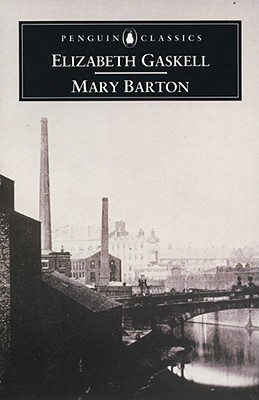
8) Mary Barton by Elizabeth Gaskell

9) North and South by Elizabeth Gaskell

10) Far from the Madding Crowd by Thomas Hardy

The Return of the NativeThree Men in a BoatLove in the Time of CholeraOne Hundred Years of SolitudeAll Quiet on the Western Front

11) The Return of the Native by Thomas Hardy

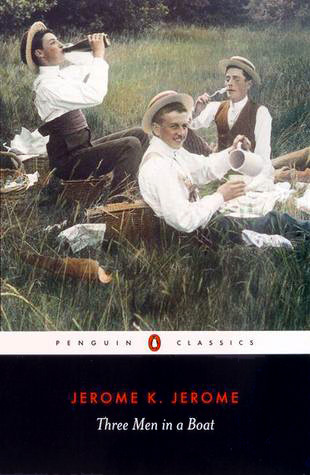
12) Three Man in a Boat by Jerome K Jerome

13) Love in the Time of Cholera by Gabriel Garcia Marquez

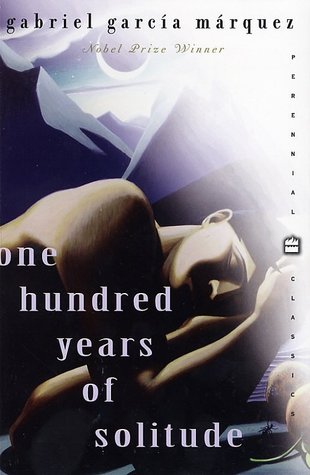
14) One Hundred Years of Solitude by Gabriel Garcia Marquez

15) All Quiet on the Western Front by Erich Maria Remarque

East of EdenThe Grapes of WrathSweet ThursdayGulliver's TravelsFramley Parsonage (Chronicles of Barsetshire #4)

16) East of Eden by John Steinbeck

17) The Grapes of Wrath by John Steinbeck

18) Sweet Thursday by John Steinbeck

19) Gulliver’s Travels by Jonathan Swift

20) Framley Parsonage by Anthony Trollope

It shouldn’t matter which one comes up as I do want to read these books – but I’d like it to be one of Steinbeck’s books, or Birdsong.

Six Degrees from The Beauty Myth to The Labours of Hercules

I love doing Six Degrees of Separation, a monthly link-up hosted by Kate at Books Are My Favourite and Best. Each month a book is chosen as a starting point and linked to six other books to form a chain. A book doesn’t need to be connected to all the other books on the list, only to the one next to it in the chain.

This month the chain begins with The Beauty Myth by Naomi Wolf.

The Beauty Myth

This book is described on Goodreads as the bestselling classic that redefined our view of the relationship between beauty and female identity.  I haven’t read it  and most probably won’t read it. So the first link in my chain is to a book about a mythical woman known for her beauty and for being the cause of the fall of Troy. It is

Helen of Troy

Helen of Troy by Margaret George, a modern retelling of the ancient myth of Helen, Paris and the Trojan War. Coincidentally we’ve been watching the BBC’s Troy: Fall of a City I’m never sure I really want to watch film or TV adaptations and yet I find myself drawn to them. This leads me on to

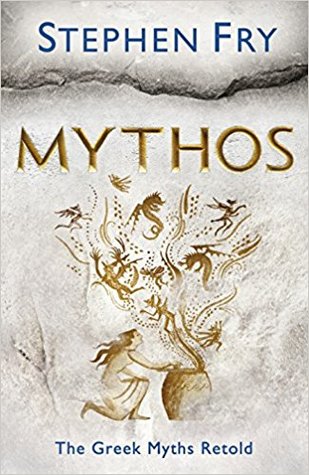
Mythos: A Retelling of the Myths of Ancient Greece

Mythos: The Greek Myths Retold by Stephen Fry, although he hasn’t included the details of the Trojan War – he begins at the beginning where the poets captured the stories told by the Greeks of their gods, monsters and heroes – but doesn’t end at the end.

But Fry does include the story of King Tantalus, who was punished for his crimes by being made to stand in a pool of water beneath a fruit tree with low branches, with the fruit ever eluding his grasp, and the water always receding before he could take a drink. A modern re-working of the story is in my next chain link:

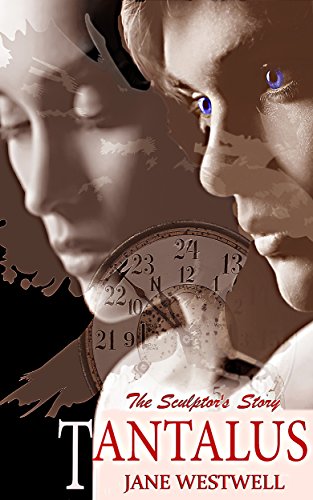
Tantalus: the sculptor's story by [Westwell, Jane]

Jane Westwell’s novel, Tantalus is the story of two lovers are separated not by barriers of race, class or creed, but by something much more devastating  – by time. They can see and can talk to each other  but can never touch. Theirs is an impossible love as each is trapped in their own time and space.

Another modern version of one of the Greek myths is that of Penelope and Odysseus in


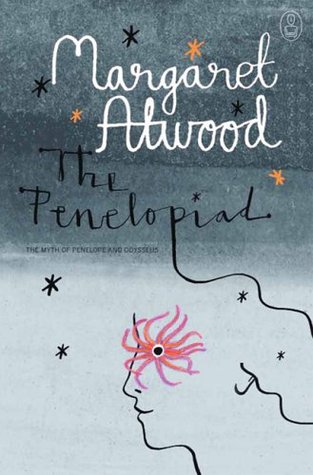
The Penelopiad

Margaret Atwood’s The Penelopiad: The Myth of Penelope and Odysseus, described by Mary Beard in the Guardian as ‘exploring the very nature of mythic story-telling.’ This is one of the Canongate Myth series of books – retelling Homer’s account in the Odyssey. It also links to Helen of Troy as she is Penelope’s cousin. Atwood’s version explores what Penelope was really up to whilst Odysseus was away for twenty years.

My next link is to another book in the Canongate series:

Weight: The Myth of Atlas and Heracles


Weight: the Myth of Atlas and Heracles by Jeanette Winterson. Atlas, the guardian of the Garden of Hesperides and its golden apples, leads a rebellion against the Olympian gods and incurs divine wrath. For this the gods force him to bear the weight of the earth and the heavens for eternity. When Heracles, for one of his twelve labours, seeks to steal the golden apples he offers to shoulder the world temporarily if Atlas will bring him the fruit.

This brings me to yet another re-working of the Greek myths, about another Heracles – also known as Hercules, and his twelve labours:

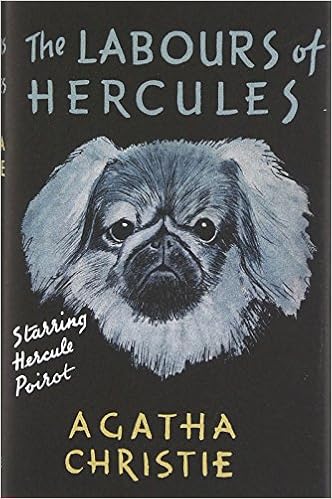
The Labours of Hercules by Agatha Christie is a collection of 12 short stories featuring Hercule Poirot, first published in 1947. The stories were all first published in periodicals between 1939 and 1947.

The labours of Hercules were set for the classical Greek hero by King Eurystheus of Tiryns as a penance. On completing them he was rewarded with immortality. Hercule Poirot is a very different figure from the Greek hero, Hercules, but there is one way in which they are alike – Christie writes: ‘Both of them, undoubtedly, had been instrumental in ridding the world of certain pests … Each of them could be described as a benefactor to the Society he lived in … ‘

Poirot has set himself the task of solving twelve cases corresponding to the Twelve Labours of Hercules, including The Apples of the Hesperides, in which Poirot’s apples are emeralds on a tree around which a dragon is coiled, on a missing Italian renaissance goblet. It seems that Poirot may have to go on a world tour to investigate locations in five different parts of the globe in order to retrieve the goblet.

My chain this month has the same link running through the book – that of myths. From the modern obsession with beauty back to ancient myths and their modern versions and ending with a collection of short stories of crime fiction based on the Greek myths.

Next month  (April 7, 2018), we’ll begin with Arthur Golden’s bestseller, Memoirs of A Geisha.

Bookworm: A Memoir of Childhood Reading by Lucy Mangan

Square Peg, Random House UK|1 March 2018|336 p|Review copy|4*

Bookworm: A Memoir of Childhood Reading by Lucy Mangan will appeal to all bookworms, but it’s more than an account of what Lucy read, it’s also a history of children’s books, details of their authors and a memoir of Lucy’s childhood. I loved it – it’s full of the joy and love of books, the intensity of reading and the ‘instant and complete absorption in a book‘. She writes with verve and humour, in a chatty style that makes it so readable. Reading her book is like being in conversation with a friend.

As I am older than Lucy, inevitably she mentions books I didn’t read as I was growing up (but have read some of them in later life) , especially in the later sections of her book, books she read as a teenager, but I was quite surprised and pleased to find that our reading in early childhood was so similar, and just like her, books have made me the person I am – why else would I be writing a blog called ‘BooksPlease‘.

As long as I can remember I have loved books and I can’t remember a time when I couldn’t read. So I was delighted to find that she too loved Teddy Robinson by Joan L Robinson.  This is the first book I remember borrowing from the library. I loved it so much I was dreadfully upset that I had to return it. Teddy Robinson was owned by a little girl named Deborah and I am so envious that Lucy Mangan has actually met Deborah, who showed her the original drawings for the books her mother wrote.

And then there are some of my most loved books when I was young such as Milly-Molly-Mandy, Alice’s Adventures in Wonderland, the Katy books, Little Women, Good Wives and Jo’s Boys, The Borrowers, the Narnia books, Ballet Shoes, and The Secret Garden. I re-read them many times over.

There’s a whole section on Enid Blyton – The Blyton Interregnum. I was very interested to see her view of this writer whose books I too adored. Blyton wrote around 760 books during her fifty-year writing career! Despite the criticism of her books as mediocre material, formulaic books with fantastical plots Lucy considers, correctly I think, that they are books that provided comfort reading during and in the aftermath of the Second World War. Not only that, they are satisfying stories that lay down a base for future reading, providing books that are fun to read and opening up the ‘pleasure-filled world of reading’. Then there are the questions about prejudice, sexism, class snobbery and racism, in Blyton’s books, which Lucy (and I) missed completely whilst reading as children.

She writes about re-reading the books as an adult as a ‘discombobulating experience‘ – stories that once wholly enraptured you no longer have that same magic, and about her disappointment in returning to Enid Blyton’s books and finding them unreadable. It’s the main reason I don’t go back to the books I loved as a child – I really don’t want to lose the magic they held for me then.

There is so much in this book I could write about, it’s packed with the magic of books and reading it has given me hours of nostalgic pleasure – but the best thing I think is to leave you to read this lovely book for yourself.

Many thanks to Random House UK for a review copy via NetGalley.

My Week in Books: 28 February 2018

This Week in Books is a weekly round-up hosted by Lypsyy Lost & Found, about what I’ve been reading Now, Then & Next.

IMG_1384-0

A similar meme,  WWW Wednesday is run by Taking on a World of Words.

Now:

51IBFwYPBfLMunich by Robert Harris, set in 1938, beginning in September as Hitler is determined to start a war and Chamberlain is desperate to preserve the peace. I’ve read about half the book and am finding it fascinating.

Blurb

As Chamberlain’s plane judders over the Channel and the Führer’s train steams relentlessly south from Berlin, two young men travel with secrets of their own. 

Hugh Legat is one of Chamberlain’s private secretaries; Paul Hartmann a German diplomat and member of the anti-Hitler resistance. Great friends at Oxford before Hitler came to power, they haven’t seen one another since they were last in Munich six years earlier. Now, as the future of Europe hangs in the balance, their paths are destined to cross again. 

When the stakes are this high, who are you willing to betray? Your friends, your family, your country or your conscience?

Bookworm: A Memoir of Childhood Reading by Lucy Mangan, due to be published tomorrow, 1 March 2018. This is a delightful book taking me back to the books of my childhood as Lucy Mangan describes the books she loved. I’ve nearly finished it, so I’ll post my review soon.

Blurb

The Cat in the Hat? Barbar? The Very Hungry Caterpillar? Whoever it was for you, it’s very hard to forget the vivid intensity of your first encounter with a book.

As a bespectacled young bookworm, Lucy Mangan devoured books: from early picture books, to Swallows and Amazons, Enid Blyton to Little Women, and from trashy teen romances to her first proper ‘grown-up’ novels. In Bookworm, she revisits this early enthusiasm; celebrating the enduring classics, and disinterring some forgotten treasures.

This is a love letter to the joys of childhood reading, full of enthusiasm and wit, telling the colourful story of our best-loved children’s books, the extraordinary people who created them, and the thousand subtle ways they shape our lives. It also comes packed with brilliant recommendations to inspire the next generation of bookworms and set them on their way.

This impassioned book will bring the unforgettable characters of our collective childhoods back to life – prompting endless re-readings, rediscoveries, and, inevitably, fierce debate. It will also act as an invaluable guide to anyone looking to build a children’s library and wondering where to start, or where to go next.

Then:

The last book I finished is Dry Bones in the Valley by Tom Bouman. This book has won several awards: Los Angeles Times Book Prize for Mystery/Thriller (2014), Edgar Award for Best First Novel (2015), Strand Critics Award Nominee for Best First Novel (2014). I really enjoyed it. My review will be up soon.

Blurb

When an elderly recluse discovers a corpse on his land, Officer Henry Farrell follows the investigation to strange places in the countryside, and into the depths of his own frayed soul.

In Wild Thyme, Pennsylvania, secrets and feuds go back generations. The lone policeman in a small township on the sparse northern border, Henry Farrell expected to spend his mornings hunting and fishing, his evenings playing old-time music. Instead, he has watched the dual encroachment of fracking companies and drug dealers bring money and troubles to the area. As a second body turns up, Henry’s search for the killer opens old wounds and dredges up ancient crimes which some people desperately want to keep hidden.

With vivid characters and flawless pacing, Tom Bouman immerses readers in this changing landscape. In these derelict woods, full of whitetail deer and history, the hunt is on…

Next:

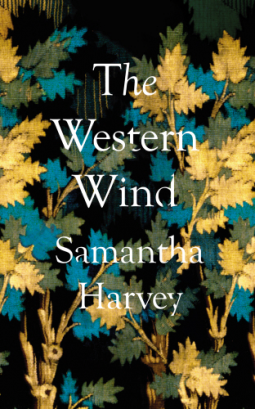
The Western Wind by Samantha Harvey, also due to be published tomorrow, 1 March 2018.

Blurb (Amazon):

15th century Oakham, in Somerset; a tiny village cut off by a big river with no bridge. When a man is swept away by the river in the early hours of Shrove Saturday, an explanation has to be found: accident, suicide or murder? The village priest, John Reve, is privy to many secrets in his role as confessor. But will he be able to unravel what happened to the victim, Thomas Newman, the wealthiest, most capable and industrious man in the village? And what will happen if he can’t?

Moving back in time towards the moment of Thomas Newman’s death, the story is related by Reve – an extraordinary creation, a patient shepherd to his wayward flock, and a man with secrets of his own to keep. Through his eyes, and his indelible voice, Harvey creates a medieval world entirely tangible in its immediacy.

Have you read any of these books?  Do any of them tempt you?