Top Ten Tuesday is a weekly meme created by The Broke and the Bookish and now hosted by Jana at That Artsy Reader Girl. For the rules see her blog.
The topic this week is2021 Releases I Was Excited to Read But Didn’t Get To but I decided to change it a bit and list ten of the books I bought in 2021 that I didn’t get round to reading. The only reason I haven’t read them yet is that I’ve been reading other books … I can only read one book at a time, regardless of how many I have on the go at once.
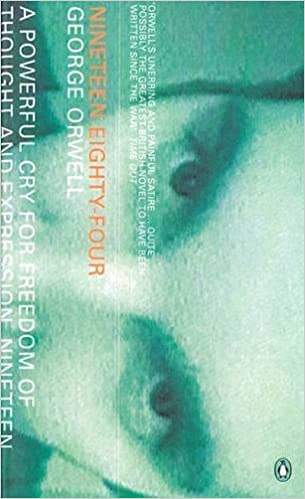
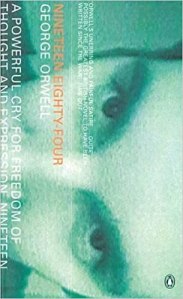
I bought a paperback copy of Nineteen Eighty-Four (its original title) in 2008, but have only just read it. It is George Orwell’s last novel, written in 1948 and presents his vision of a dystopian society, a totalitarian state complete with mass surveillance, where individuality is brutally suppressed.
Synopsis from the back cover:
In Orwell’s frightening vision of the future, society is under the control of Big Brother. Every aspect of life is closely monitored, whilst any hint of unorthodoxy is ruthlessly suppressed by the Thought Police. The Ministry of Truth, where Winston Smith works, is the Party’s Propaganda Machine. A secret rebel, Winston yearns for liberty and finds new hope when he falls in love with the earthy, uncomplicated Julia. Instead he discovers a nightmare world of terror where the price of freedom is betrayal.
Winston Smith’s attempt to find liberty and individuality plunges him into a truly horrific version of hell. The world is ravaged by war with three superstates, Oceania, Eurasia and Eastasia battling for total control. Winston lives in Airstrip One (Britain) in Oceania. His job is to rewrite history and destroy the old records, in accordance with the current circumstances. He secretly opposes the Party’s rule, led by the mysterious Big Brother, and dreams of rebellion. But faced with the Thought Police, the Hate Week sessions the surveillance through the television screens, cameras and hidden microphones monitoring his every move and thought, he realises it is a futile hope and that he is likely to be caught.
This really is the most depressing book and in places it is boring, especially in the middle section of the book devoted to Goldstein’s book. Goldstein, the leader of the Opposition Party to Big Brother, is always the subject of hatred at the Hate Week sessions. There are also passages that I could hardly bear to read – torture scenes that I did not want to visualise – it is a harrowing book. But it was interesting to see where the terms, Big Brother is Watching You, Room 101 (you do not want to be sent there!) Thought Police, Newspeak, Doublethink, holding two contradictory thoughts at the same time, and Thoughtcrime originated.
Nineteen Eighty -Four has received very many accolades and 94% of the people who have rated it on Goodreads ‘liked’ it – 79% giving it 5 or 4 stars .This is possibly the least enjoyable book I’ve read, horrific in content, lacking in convincing characterisation, and has a poor plot. It is depressing and dreary in the extreme, but I can see why it can be considered a brilliant book in its depiction of a dystopian society. It is seriously thought provoking!
‘George Orwell’ was the pen name of EricArthur Blair (25 June 1903 – 21 January 1950). He ‘was an English author and journalist. His work is marked by keen intelligence and wit, a profound awareness of social injustice, an intense opposition to totalitarianism, a passion for clarity in language, and a belief in democratic socialism.’ (Goodreads)
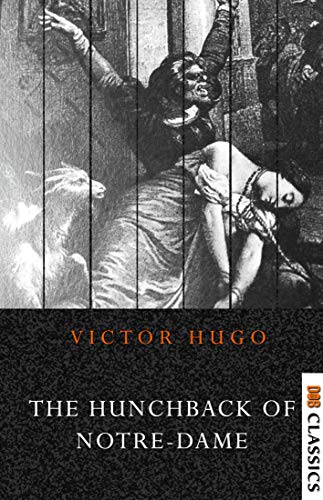
The Hunchback Of Notre-Dame by Victor Hugo – This extraordinary historical novel, set in Medieval Paris under the twin towers of its greatest structure and supreme symbol, the cathedral of Notre-Dame, is the haunting drama of Quasimodo, the hunchback; Esmeralda, the gypsy dancer; and Claude Frollo, the priest tortured by the specter of his own damnation.
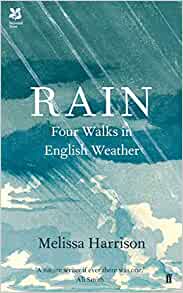
Rain: Four Walks in English Weather by Melissa Harrison – she explores our relationship with the weather as she follows the course of four rain showers, in four seasons, across Wicken Fen, Shropshire, the Darent Valley and Dartmoor, and reveals how rain is not just an essential element of the world around us, but a key part of our own identity too.
The Three Theban Plays: Antigone; Oedipus the King; Oedipus at Colonus by Sophocles, translated by Robert Fagles – the story of the ill fated Theban royal family. Oedipus, a mythical king, accidentally fulfilled a prophecy that he would end up killing his father and marrying his mother, bringing disaster to his city and family. I have a vague memory that I read Oedipus the King at school – but maybe I didn’t. I definitely haven’t read the other two.
Around the World in Eighty Days by Jules Verne – I bought this after watching the first episode of the TV adaptation with David Tenant as Phileas Fogg, who bet his friends in the Reform Club that he can travel across the globe in just eighty days.
How to Catch a Mole: and Find Yourself in Nature by Marc Hamer – A calming, life-affirming book about the British countryside, the cycle of nature, solitude and contentment, by a brilliant new nature writer who spent time homeless as a young man, sleeping in the hedgerows he now knows so well. I’m currently reading this and enjoying it very much.
The Dark Remains by Ian Rankin, William McIlvanney – In this scorching crime prequel, New York Times best-selling author Ian Rankin and Scottish crime-writing legend William McIlvanney join forces for the first ever case of D.I. Laidlaw, Glasgow’s original gritty detective.
Elizabeth Macarthur: A Life at the Edge of the World by Michelle Scott Tucker, a biography. After reading Kate Grenville’s novel, A Room Made of Leaves I wanted to know more about the Macarthurs who settled in Australia in the late 1700s.
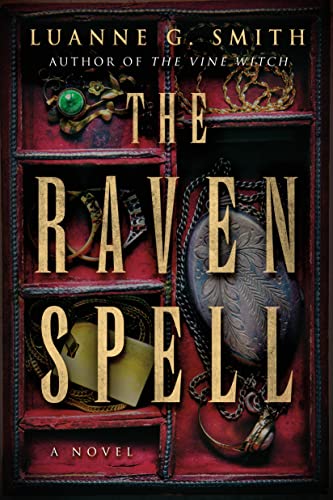
The Raven Spell: A Novel (A Conspiracy of Magic Book 1) by Luanne G. Smith – In Victorian England a witch and a detective are on the hunt for a serial killer in an enthralling novel of magic and murder. It’s my Amazon First Reads choice for January.
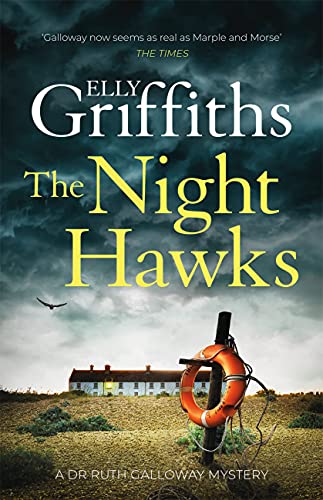
The Night Hawks: Dr Ruth Galloway Mysteries 13 (The Dr Ruth Galloway Mysteries) by Elly Griffiths. I still have books 10 – 12 to read before I can read this one! The Night Hawks, a group of metal detectorists, are searching for buried treasure when they find a body on the beach in North Norfolk. At first Nelson thinks that the dead man might be an asylum seeker but he turns out to be a local boy, Jem Taylor, recently released from prison. Ruth is more interested in the treasure, a hoard of Bronze Age weapons.
The Classics Club is a club created to inspire people to read and blog about classic books. There’s no time limit to join. You simply sign up to read and write on your blog about at least 50 classic books in at most five years
This is my second list of books to read for the Classics Club. I’ve been hesitating about making a second list as it has taken me almost 10 years to read through my first list! So I hope this second list won’t take me that long. It doesn’t have to be a fixed list as you can alter it at any time. I’ll be using this list once I’ve finished reading the last book on my first list.
I’ve listed the books in a-z author order.
Sense and Sensibility by Jane Austen – I’m not sure that I’ve read this before, so it may turn out to be a re-read.
Another Part of the Wood by Beryl Bainbridge
Death in the Tunnel by Miles Burton
In Cold Blood by Truman Capote
The Awakening by Kate Chopin
The Mousetrap and Selected Plays by Agatha Christie
Heart of Darkness by Joseph Conrad
Lord Jim by Joseph Conrad
The Case of the Gilded Fly by Edmund Crispin
Buried for Pleasure by Edmund Crispin
The Stars Look Down by A J Cronin
Moll Flanders by Daniel Defoe
David Copperfield by Charles Dickens
Dickens at Christmas by Charles Dickens
Dombey and Son by Charles Dickens
Nicholas Nickleby by Charles Dickens
The Lost World by Arthur Conan Doyle
The Black Tulip by Alexandre Dumas
Parade’s End by Ford Madox Ford
A Room with a View by E M Forster
The Man of Property by John Galsworthy Forsyte Saga (1)
North and South by Elizabeth Gaskell
Brighton Rock by Graham Greene
Daisy Miller by Henry James
Catch 22 by Joseph Heller
Strangers on a Train by Patricia Highsmith
The Hunchback of Notre Dame by Victor Hugo
Brave New World by Aldous Huxley
The Night Manager by John le Carre
Go Set a Watchman by Harper Lee
Picnic at Hanging Rock by Joan Lindsay – read
How Green was My Valley by Richard Llewellyn
Lady Chatterley’s Lover by D H Lawrence
Friends and Heroes by Olivia Manning
Of Human Bondage by Somerset Maugham
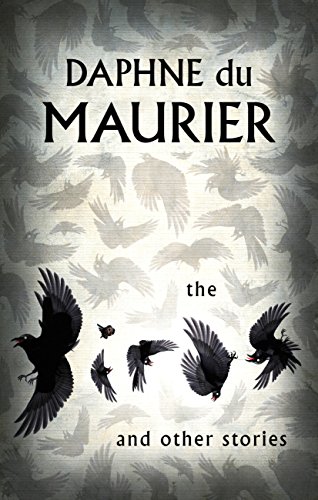
The Birds and other short stories by Daphne du Maurier
Every Friday Book Beginnings on Friday is hosted by Gillion at Rose City Readerwhere you can share the first sentence (or so) of the book you are reading. You can also share from a book you want to highlight just because it caught your fancy.
1984 is one of the books I’m currently reading. It’s one of those books I’ve had for years and never read.
The Book Begins:
It was a bright cold day in April, and the clocks were striking thirteen,
Also every Friday there is The Friday 56, hosted by Freda at Freda’s Voice. *Grab a book, any book. *Turn to Page 56 or 56% on your ereader . If you have to improvise, that is okay. *Find a snippet, short and sweet, but no spoilers!
These are the rules:
Grab a book, any book.
Turn to page 56, or 56% on your eReader. If you have to improvise, that is okay.
Find any sentence (or a few, just don’t spoil it) that grabs you.
Post it.
Add the URL to your post in the link on Freda’s most recent Friday 56 post.
Page 56:
‘By 2050 – earlier, probably – all real knowledge of Oldspeak will have disappeared. The whole literature of the past will have been destroyed. Chaucer, Shakespeare, Milton, Byron – they’ll exist only in Newspwak versions, not merely changed into something different, but actually changed into something contradictory of what they used to be.
Summary:
The year 1984 has come and gone, but George Orwell’s prophetic, nightmarish vision in 1949 of the world we were becoming is timelier than ever. 1984 is still the great modern classic of “negative utopia”—a startlingly original and haunting novel that creates an imaginary world that is completely convincing, from the first sentence to the last four words. No one can deny the novel’s hold on the imaginations of whole generations, or the power of its admonitions—a power that seems to grow, not lessen, with the passage of time. (Goodreads)
It’s back! This is the 9th year that Karen at Books and Chocolate has hosted the Back to the Classics Challenge and this is the second time I’ll be joining in. Last year I completed 6 of the categories and this year I’m hoping to do more,
There are twelve categories and these are the books I’ve initially chosen for some of the categories – but there are others I could choose, so this list may/probably will change.
A 19th century classic. Any book first published from 1800 to 1899 – David Copperfield by Charles Dickens
A 20th century classic. Any book first published from 1900 to 1972. All books must have been published at least 50 years ago; the only exceptions are books which were written by 1972 and posthumously published. Another Part of the Wood by Beryl Bainbridge
A classic by a woman author.Strangers on a Train by Patricia Highsmith
A classic in translation. Any book first published in a language that is not your primary language. You may read it in translation or in its original language, if you prefer.
A classic by BIPOC author. Any book published by a non-white author. The Black Tulip by Alexandre Dumas
Mystery/Detective/Crime Classic. It can be fiction or non-fiction (true crime). The Mousetrap by Agatha Christie
A Classic Short Story Collection. Any single volume that contains at least six short stories. The book can have a single author or can be an anthology of multiple authors. The Birds and Other Stories by Daphne du Maurier
APre-1800 Classic. Anything written before 1800. Plays and epic poems, such as the Odyssey, are acceptable in this category.
A Nonfiction Classic. Travel, memoirs, and biographies are great choices for this category. In Cold Blood. by Truman Capote
A Classic That’s Been on Your TBR List the Longest. Find the classic book that’s been hanging around unread the longest, and finally cross it off your list!
A Classic Set in a Place You’d Like to Visit. Can be real or imaginary — Paris, Tokyo, the moon, Middle Earth, etc. It can be someplace you’ve never been, or someplace you’d like to visit again.
A Wild Card Classic. Any classic you like, any category, as long as it’s at least 50 years old!




 BooksPlease