Over My Dead Body by Hazel McHaffie

Over My Dead Body by Hazel McHaffie is a novel that raises questions such as would you be an organ donor, or agree to donating your child’s heart, or eyes. I’ve never read a novel that considered these issues, so when Hazel McHaffie contacted me and asked if I would read and review her book it didn’t take me long to write back, ‘yes please’. She is very well qualified to write such a book – a nurse and midwife, with a PhD in Social Sciences, and a Research Fellow in Medical Ethics.

Synopsis (from Hazel McHaffie’s website):

Carole Beacham is in her mid-sixties and planning to leave her husband. Before she can do so her daughter, Elvira, and two little granddaughters are involved in a fatal road traffic accident. Then a stranger appears in the Intensive Care Unit claiming to be Elvira’s boyfriend, insisting Elvira wanted to donate her organs. But Carole has her own reasons for rejecting such a possibility: a dark family secret which has been hidden for thirty years.

She’s torn in two, but gradually her need to respect Elvira’s wishes overcomes her fear, and the transplants go ahead. Letters from grateful recipients bring comfort and Carole’s dread recedes. Then the barriers created to safeguard anonymity start to slip. A troubling communication from a publishing firm €¦ a moving poem from a teenager €¦ an ambitious would-be journalist €¦ and the family’s peace is in grave danger.

My view:

This is a fascinating, compassionate and informative book, the factual information fitting seamlessly into the narrative. The characters are realistic, so much so that at times I had to stop reading because their predicaments and situations were so poignant and difficult.

I’m familiar with some of the issues surrounding transplants, having watched Casualty and Holby City for years. But there is nothing to beat reading a book written by someone who knows the issues, writes with sensitivity and can go into much more depth than an isolated incident in a TV drama series can. The story is told through a number of the characters’ eyes and poses the questions, thoughts and fears they each have about organ transplants – from both the recipients’ and the donor families’ points of view. Carole fears that her daughter could recover or they could find a miracle cure and it would be too late to bring her back. Some people are worried about the personalities of the recipients – do they deserve the transplant, is their lifestyle healthy enough and so on.

Above all it is a moving story, well-told and with an element of mystery – just what is it in Elvira’s background that causes her family concern? From little hints that were dropped I guessed what it was, but that didn’t detract from my enjoyment of the book. Over My Dead Body certainly gave me much to think about.

Hazel McHaffie’s other novels cover medical ethic issues such as Alzheimer’s and the right to die. Her non-fiction books are about life and death decisions.

Saturday Snapshots

I’ve been spending more time in the garden recently and so have had less time to write on my blog. The garden has definitely been looking as though it needs tidying, deadheading and cutting back to do, and weeds are getting on top of everything!

So when the weather hasn’t been too wet I’ve been out there with my secateurs, garden fork and my dumper truck, cutting, digging and pulling up weeds – nettles, bindweed, ground elder, creeping buttercups, and other weeds whose names I don’t know.

The dumper truck is one of the best things we’ve bought recently and it has made collecting and moving weeds so much easier. Here it is empty:

Dumper truck P1010882and here it is full:

Weeds P1010892These weeds all have strong roots (don’t I know it!) and spread enormously with long, white runners forming a dense network. If you simply break them off they regenerate (I know that too!!). Even though I tried to get rid of these in the spring, they are still in the ground.

The nettles are difficult to tackle earlier in the year when their stings are so painful and they’re growing next to, behind, and in between rose bushes with particularly sharp thorns. What makes it worse is that their roots are the other side of the fence. At this time of year the effect of their sting is only minor and soon disappears and I managed to get at them better.

I hate bindweed – it chokes everything within its reach. I read in Richard Mabey’s book Weeds that the vernacular name for bindweed is ‘Devil’s guts’ – how appropriate.

I think I shall have to resort to weedkiller!

For more Saturday Snapshots see Melinda’s blog West Metro Mommy Reads.


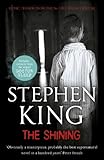
The Shining by Stephen King

Years ago I read a few of Stephen King’s books, including Carrie and Christine but I didn’t read The Shining. I saw the film with Jack Nicolson, which is terrifying. I remember his crazed face as he rampaged through the hotel, the sense of evil and terror, and I decided that was enough – I wouldn’t read the book.

Recently I changed my mind and bought a copy on Kindle and began reading – it’s an ideal book to read for Carl’s R.I.P. challenge. It has a fascinating introduction by Stephen King, in which he writes about writing horror stories and how he came to write The Shining, which was a ‘crossroads novel’ for him. He wanted to go deeper than he had in his earlier books (The Shining was his third novel) and make his characters more realistic and therefore more frightening. In my opinion he succeeded.

The Shining tells the story of Jack Torrance and his family as they move into the Overlook Hotel in the Colorada Rockies. The Overlook is closed for the winter and Jack, a recovering alcoholic is the caretaker. Just what impels him towards murder is horrifyingly revealed as the winter weather closes in on the hotel and they are cut off from the rest of the world. For terrible things had taken place at the hotel and as psychic forces gather strength ghosts begin to surface and both Jack and his five year old son, Danny are their targets. There are hints right from the start that the Overlook is not a good place to be and Jack is told that there have been scandals and suspicious deaths, and he soon discovers from records down in the basement just what has been going on. Also down in the basement is the boiler – that seems to have a life of its own – Jack has to control it, release the pressure to let off its steam.

Danny too, who has the gift of ‘shining’ was warned by Dick Hallorann, the hotel’s cook, as he was leaving, that bad things had happened in the hotel and if he should see something he should just look the other way and it would be gone. ‘Shining’ is a psychic ability – both Danny and Hallorann can hear people’s thoughts, and see visions of the past and of the future. He tells Danny to ‘call’ him if there’s trouble and he’ll come to help. Danny tries looking the other way, but it doesn’t work and he desperately needs Hallorann’s help. I didn’t remember this part in the film and as the tension built, just as the pressure in the boiler inexorably rose, I just couldn’t foresee how the book would end.

In fact there’s an awful lot of the film I don’t remember. I didn’t remember the hedge animals. These are blood-chilling as they come to life and move when you’re not looking – like the stone angels in Doctor Who! Truly terrifying. And the carpet in the hotel corridor with its deep jungle of blue and black woven vines and creepers, the light blue silk wallpaper with the embossed pattern of wavy lines and the wasps crawling and stinging again and again. Oh, no I probably couldn’t have watched that – and I couldn’t stand to watch the film again to see if these scenes were in it!

The characters are so well-drawn and so distinct. Their vulnerability, coupled with the way King gets inside each person’s head, increases the element of fear. There’s the horror of the father who has monsters inside his head, who still loves his son, but demands he should ‘take his medicine’; the evil is palpable. Then, the powerlessness of the mother to help either her husband or son makes it even more frightening. Even when it seems to have ended there is a further twist in the tale and it’s not the end. I read on breathless, almost.

It was only when I’d nearly finished read The Shining that I discovered that Stephen King has written a sequel, Doctor Sleep – I just have to read that!

A Reader's A to Z Survey

I’ve seen this meme on several blogs recently and thought I’d have a go too. It was started by Jamie at the Perpetual Page Turner, but I found it through Cath at Read Warbler and Danielle at A Work in Progress and just when I was in the middle of writing this post on Geranium Cat’s Bookshelf.

Author I’ve Read The Most Books From:
Well that’s an easy question for me – it’s Agatha Christie. And that is because she wrote so many books. I haven’t read all of them – yet.

Best Sequel Ever:
I’m not going to count crime fiction series as sequels (but if I did it would be one of Ian Rankin’s Rebus books, maybe Exit Music). I can’t decide between Elizabeth Jane Howard’s Cazelet books or Susan Howatch’s Starbridge books – both authors had me spellbound and it’s impossible to say which is the best.

Currently Reading: Over My Dead Body by Hazel McHaffie, Ten Little Niggers by Agatha Christie and Gone with the Wind by Margaret Mitchell.

Drink of Choice While Reading:
It depends on the time of day – I love a cup of coffee first thing in the morning, which is when I do most of my reading. Other times it could be a cup of tea or a glass of wine.

E-Reader or Physical Book:
Both. I prefer physical books except when the font is small and/or the book is heavy and bulky to hold. The Kindle solves that problem as I can have whatever size font I choose, highlight passages without spoiling the book and, using the search, easily find when a character first appeared and so on. But there’s nothing to beat the actual feel and smell of a book and flicking through its pages.

Fictional Character You Probably Would Have Dated in High School:
I’m not sure I have an answer to this as my reading in secondary school was mainly books I read for school – such as The Mayor of Casterbridge and no way would I have wanted to date him!

Glad You Gave This Book A Chance:
Wolf Hall by Hilary Mantel. I wasn’t sure I wanted to read this as it’s written in the present tense, but I am so glad I did as it’s one of the best books I’ve read.

Hidden Gem Book:
Fire in the Blood by Irene Nemirovsky. Although only a short book (153 pages) it is an intense story of life and death, love and burning passion. It’s about families and their relationships €“ husbands and wives, young women married to old men,  lovers, mothers, daughters and stepdaughters.

Important Moment in Your Reading Life:
Another difficult question as there have been several, but the earliest one has to be going to the library as a child and finding so many books I could borrow, and the latest one is using the internet, and finding book blogs.

Just Finished:
The Shining by Stephen King.

Kind of Books I Won’t Read:
I read most genres, but I don’t like vampire books (with the exception of Dracula) or mushy romances!

Longest Book I’ve Read:
I think it must be Les Miserables by Victor Hugo which has 1200 pages (not including the appendices). Parts of it are easy reading and I read them quickly. But other parts had me yawning and dragged, when there was too much detail about battles and sieges. Les Misérables cannot compete with Tolstoy’s War and Peace, which I think is just so beautifully descriptive that I forget that I don’t like reading about battles and war.

Major Book Hangover Because:
Not being able to make decent inroads into my to-be-read piles.

Number of Bookcases I own:
Eleven bookcases most of them double stacked and still not enough – piles of books around the house too.

One Book I have Read Multiple Times:
Most of the books I owned as a child, such as What Katy Did, Little Women & from early teenage years – Pride and Prejudice.

Preferred Place to Read:
In bed, or in a comfy armchair, or outside when the weather permits.

Quote That Inspires You/Gives You All the Feels From a Book You’ve Read:

Very difficult – there are so many! This one from To Kill a Mockingbird is a good one:

€˜First of all,’ he [Atticus] said, €˜if you can learn a simple trick, Scout, you’ll get along better with all kinds of folks. You never really understand a person until you consider things from his point of view -‘

Reading Regret:
I wish I could remember what I’ve read – not just the detail, sometimes I’ve bought/borrowed books when I’ve already got a copy at home.

Series You Started and Need To Finish (All the books are out in the series):
Olivia Manning’s third book in her Balkan TrilogyFriends and Heroes. I read the first two books in 2007 and 2008 and have been meaning to read the last one ever since!

Three of Your All-Time Favourite Books:
Only three?  Little Boy Lost by Marghanita Laski. Titus Groan by Mervyn Peake, and Blood Harvest by S J Bolton. But my choice could easily be different on another day.

Unapologetic Fangirl For:
Margaret Atwood, Carol Shields, Anita Shreve (but not her latest ones), Ian Rankin, S J Bolton, Josephine Tey, Hilary Mantel – I could go on … an on …

Very Excited For This Release More Than All The Others:
Saints of the Shadow Bible by Ian Rankin, the new Rebus book, out in November on Kindle and hardback – I’ve got it on pre-order.

Worst Bookish Habit:
Reading too many books at once – I start several before I’ve finished one, and then leave them with bookmarks in, but often have to start them again. I’ve tried several times to stick to just one, but I always go back to having several on the go.

X Marks The Spot: Start at the Top Left of Your Shelf and pick the 27th Book:
I used the books my unread bookcase for this and just counted the books at the front of the top shelf (it’s double shelved) and found The Way through the Woods by Colin Dexter, an Inspector Morse book. I’ve had this book a couple of years now.

Your Latest Book Purchase:
Pastel School by Hazel Harrison, a reference book about using pastels, with demonstrations of still life, landscapes, flowers, portraits etc.

ZZZ-Snatcher Book- Book That Kept You Up WAY Too Late:
These days, or I should nights, I can’t stay up late reading – I just nod off. But back when I could, I remember reading into the small hours to finish a book about life in Calcutta, City of Joy by Dominique Lapierre. A friend had lent it to me. She said she’d read it in one day – I couldn’t manage that, even staying up way past midnight reading it.

Book Beginnings

Book Beginnings ButtonGilion at Rose City Reader hosts Book Beginnings on Friday in which you share the first sentence (or so) of the book you are reading, along with your initial thoughts about the sentence, impressions of the book, or anything else the opener inspires.

I was looking at some of my books that I’ve had for a long time and wondering which one to read next and I came across Cloud Atlas by David Mitchell. This was immensely popular when it first came out in 2004 and so I bought a copy and began to read it. Although the opening pages intrigued me after a few more pages I put it down; I just couldn’t get into it. After a while I tried it again, and again and still found it not very interesting and when I looked forward in the book I found it looked very disjointed and I gave up. There were plenty of books to read without struggling to read one that wasn’t interesting me.

Then they made a film and people started enthusing about it again. So, how many times do I try to read this book? It begins:

Thursday, 7th November –

Beyond the Indian hamlet, on a forlorn strand, I happened upon on trail of recent footprints. Through rotting kelp, sea cocoanuts & bamboo, the tracks led me to their maker, a white man, his trowsers & Pea-jacket rolled up, sporting a kempt board & an outsized Beaver, shovelling & sifting the cindery sand with a tea-spoon so intently that he noticed me only after I hailed him from ten yards away. Thus it was, I made the acquaintance of Dr Henry Goose, surgeon to the London nobility. His nationality was no surprise. If there be any eyrie so desolate, or isle so remote that one may resort unchallenged by an Englishman, ’tis not down on any map I ever saw.

From the back cover:

Six interlocking lives – one amazing adventure. In a narrative that circles the globe and reaches from the 19th century to a post-apocalyptic future, David Mitchell erases the boundaries of time, genre and language to offer an enthralling vision of humanity’s will to power, and where it will lead us.

It knits together science fiction, political thriller and historical pastiche with musical virtuosity and linguistic exuberance …

It sounds amazing and extraordinary, but I’m still not sure because when I actually start reading it, the first chapter ends in the middle of a sentence. Is that really meant to make me want to read on when the next chapter seems totally unconnected? It reminds me of Italo Calvino’s If on a Winter’s Night a Traveller, a book I didn’t finish reading, although I loved the beginning of that book.

Is Cloud Atlas really so good! If you have read it, what do you think? Please let me know.

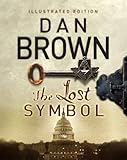
The Lost Symbol by Dan Brown: Book Notes

I read Dan Brown’s The Lost Symbol back in July and never got round to writing about it at the time, so I’ve forgotten much of the detail. For pure escapism I really like Dan Brown’s books. I know lots of people criticise his writing but I find his books hard to put down once I’ve started reading them – I’ve read The Da Vinci Code and Angels and Demons as well as this one. They’re not great literature but they are great entertainment, even though this one follows the same formula – it’s a breathtaking race over 24 hours as Robert Langdon follows the clues, to rescue the his friend, Peter Solomon, a Mason. Because it’s so formulaic I knew what to expect (although not the detail), it’s full of cliff-hangers and the characters are stereotypes.

It’s long and complicated, full of coincidences and improbable situations, all of which I had no trouble accepting, and a terrifying and crazy villain, Mal’ahk. It’s also packed with detail about the Freemasons,the art and architecture of Washington D.C., and Noetic Science – ‘a fusion of modern particle physics and ancient mysticism’,  all of which was new to me and I found it fascinating. It helped that I read the Illustrated Edition on Kindle which has many photographs and illustrations and I kept checking facts on the computer too.

I don’t think it’s as good as either The Da Vinci Code or Angels and Demons, but that may because the first had the novelty factor and the second is set in Rome, a place I’ve visited and know more about than Washington D.C. It did make me want to visit Washington D.C. though. And I do intend to read his next book Inferno. I’ve read some of Dante’s Inferno and I’ve visited Florence so I’m keen to find out where Robert Langdon’s race against time takes him and how Brown incorporates the details of the Circles of Hell.

Although I didn’t read this to take part in the What’s in a Name Challenge I’ve realised that it does fit into the category of book with the word ‘lost‘ in the title, making this the last book for me to complete the Challenge.