Wondrous Words Wednesday

wondrous2Wondrous Words Wednesday is a weekly meme hosted by Kathy at Bermuda Onion where you can share new words that you’ve encountered or spotlight words you love.

I’ve recently read A Time of Gifts by Patrick Leigh Fermor, a book that I’ll be writing about in more detail. It’s his account of his journey in 1933/4 walking  to Constantinople. He uses many words that either were completely new to me or words that I wasn’t quite sure what they mean. As I was reading it on Kindle I was able to look up their meaning without too much distraction. Most of the words I didn’t know are described as ‘archaic’ and some of the words aren’t in the Kindle dictionary.

Here are just two:

  • imberb – ‘The figure of St John the Divine –  imberb, quizzically smiling, quill in hand and at ease in a dressing-gown with his hair flowing loose like an undress-wig …’

This isn’t in the Kindle dictionary and my guess was that it meant he had a beard. I was nearly right, but also completely wrong – the online Oxford English Dictionary has this definition: adjective from the French imberbe,  Latin imberbis – a rare word meaning beardless.

  •  flocculent – ‘Ragged and flocculent, fading to grey, scattered with specks of pink from the declining sun, varying in width as random fragments were dropping away and recohering and agitated with motion as though its whole length were a single thread, a thick white line of crowding storks stretched from one side of the heavens to the other.’
I like this sentence, which draws a clear picture for me of the storks flying across the scene in front of the setting sun, but wasn’t sure about ‘flocculent’ – a flock of storks?
It means having or resembling tufts of wool, having a loosely clumped texture from the Latin floccus.
 

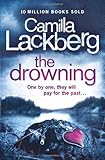
First Chapter: The Drowning

First chapterEvery Tuesday Diane at  Bibliophile by the Sea hosts First Chapter First Paragraph Tuesday Intros, sharing the first paragraph or (a few) of a book she’s reading or thinking about reading soon.

I bought a secondhand copy of this book I bought a few weeks ago and am looking forward to reading it. It’s The Drowning by Camilla Lackberg, a Swedish author whose books I keep seeing on other book blogs.

The Drowning begins:

He had known that sooner or later it would come to light again. Something like that was impossible to hide. Every word had led him closer to what was unnameable and appalling. what he had been trying for so many years to repress.

Now escape was no longer an option. He felt the morning air fill his lungs as he walked as fast as he could. His heart was pounding in his chest. He didn’t want to go there, but he had to. If someone was there, he would have to speak. If nobody was there he would continue on his way to work, as if nothing had happened.

This is a good opening that makes me want to read on, but I do have resevations after reading the Guardian blurb on the back cover – ‘Expert at mixing scenes of domestic cosiness with blood-curdling horror’. I don’t like horror – maybe I won’t be able to finish this book?

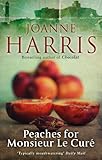
Peaches for Monsieur Le Curé by Joanne Harris

After I finished reading The Lollipop Shoes by Joanne Harris I was in two minds about reading her next book about Vianne Rocher Peaches for Monsieur Le Curé, but as I’d reserved it from the library and spurred on by other reviews I decided to read it. I was hoping I would like it more than The Lollipop Shoes.

From the book jacket:

When Vianne Rocher receives a letter from beyond the grave, she has no choice but to follow the wind that blows her back to the village in south-west France where, eight years ago, she opened up a chocolate shop. But Vianne is completely unprepared for what she finds there.Women veiled in black, the scent of spices and peppermint tea, and there, on the bank of the river Tannes, facing the square little tower of the church of Saint-Jerome, like a piece on a chessboard – slender, bone-white and crowned with a silver crescent moon – a minaret.

 Nor is it only the incomers from North Africa that have brought big changes to the community. Father Reynaud, Vianne’s erstwhile adversary, is now disgraced and under threat. Could it be that Vianne is the only one who can save him?

My view:

Peaches for Monsieur Le Curé is a diluted version of Chocolat; it is too long and drawn out for the story line. It’s told from two viewpoints, that of Vianne and Father Reynaud, but I found that this resulted in too much ‘telling’, too much explanation and repetition. This means that the storyline gets padded out with too much detail. It became predictable and I wanted it to end before it actually did. I read on to the end because I wanted to know what happened. Although I hadn’t foreseen the detail I had foreseen the end.

I should like it more than I did, because it is so similar to Chocolat, covering many of the same themes: fear of the outsider, religious conflict, intolerance and prejudice, with issues of gender and race. It’s also about how people interact and how their lives intersect and above all about the importance of communication, love, and understanding and respecting the others’ point of view. But, the magic is missing for me.

May's Books 2013 & Crime Fiction Pick of the Month

I’ve read ten books this month and have only written about five of them – I don’t think I’ll get round to writing about all of them now. More reading means less writing!

I read five crime fiction novels:

May bks

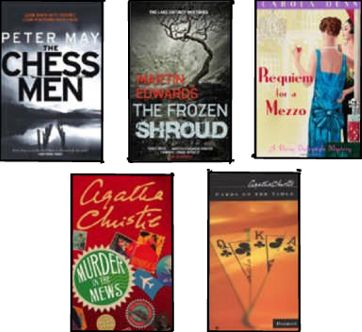
  • The Chessmen by Peter May. This is the third in his Lewis Trilogy, a fascinating and compelling book in which the body of an old friend of Fin McLeod’s is discovered seventeen years after he had disappeared. Whilst the books in this trilogy can be read as stand-alones I think it’s best to read them in sequence, because the second and third books refer to events and characters covered in the first book.
  • The Frozen Shroud by Martin Edwards, the sixth in his Lake District Mysteries with another cold case and a possible copycat murder five years later for Daniel Kind and DI Hannah Scarlett to solve. An excellent book.
  • Requiem for a Mezzo by Carola Dunn, Daisy Dalrymple and DI Alex Fletcher are faced with the murder of an opera singer during a performance of Verdi’s Requiem. A quick, easy read.
  • Murder in the Mews by Agatha Christie (Poirot 4 short stories), longer than the average short stories (and so more satisfying) these feature some of Agatha Christie’s plot elements and endings, with Poirot performing his usual final denouements.
  • Cards on the Table by Agatha Christie – an excellent murder mystery – I want to write about this in more detail in a later post.

My Crime Fiction Pick of the Month is The Frozen Shroud by Martin Edwards. See Kerrie’s blog, Mysteries in Paradise for more Crime Fiction Picks of the Month.

The other five books I finished reading in May are:

  • The Lollipop Shoes by Joanne Harris – I wasn’t too keen on this one.
  • Peaches for Monsieur Le Curé by Joanne Harris and again was rather disappointed. I may write more about the latter book and feel a bit differently about it. Sometimes writing about a book makes me appreciate it more. It’s as though it crystallises my thoughts and I can evaluate it better.

I may also write about these books:

May bks

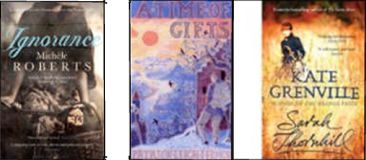
  • Ignorance by Michèle Roberts on Kindle – historical fiction set in France before and during the Second World War. a book about guilt, desire and love.
  • Patrick Leigh Fermor’s A Time of Gifts, non-fiction, about his journey from the Hook of Holland to Constantinople, although this book only covers his journey to the Danube between what were in 1934 Slovakia and Hungary.
  • Sarah Thornhill by Kate Grenville – a beautiful book, also historical fiction set in Australia during the early/mid 19th century. A book about race, family, secrets and love.

Saturday Snapshots

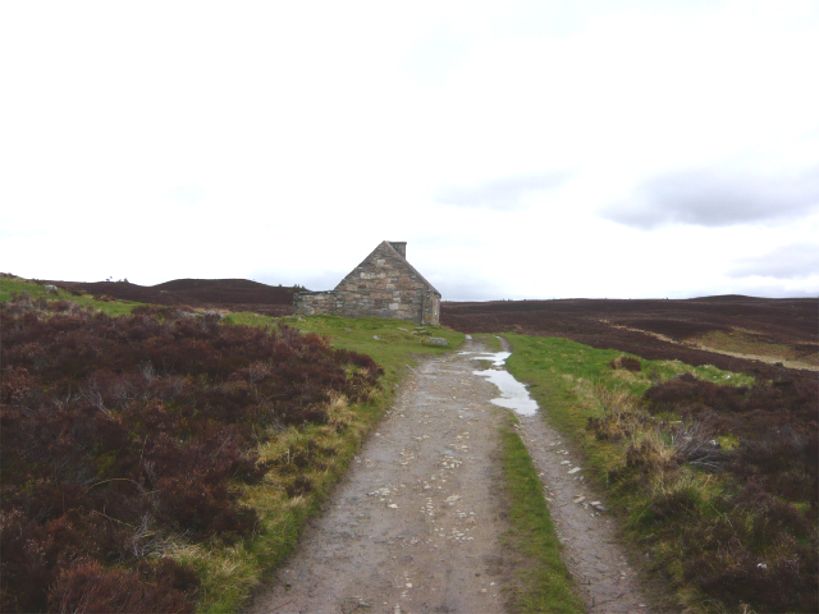
Last Saturday I posted photos of An Lochan Uaine near the path on our walk through Glenmore Forest Park. Today here are some more photos of our walk  after we left the lochan. The route continued along the Ryvoan Pass on the old Rathad nam Mearlach – or Thieves Road. Cattle raiders used hill tracks like this to move their spoils avoiding the more well-used routes.

As we went gradually up the hill this building came into view:

Bothy1 P1080705

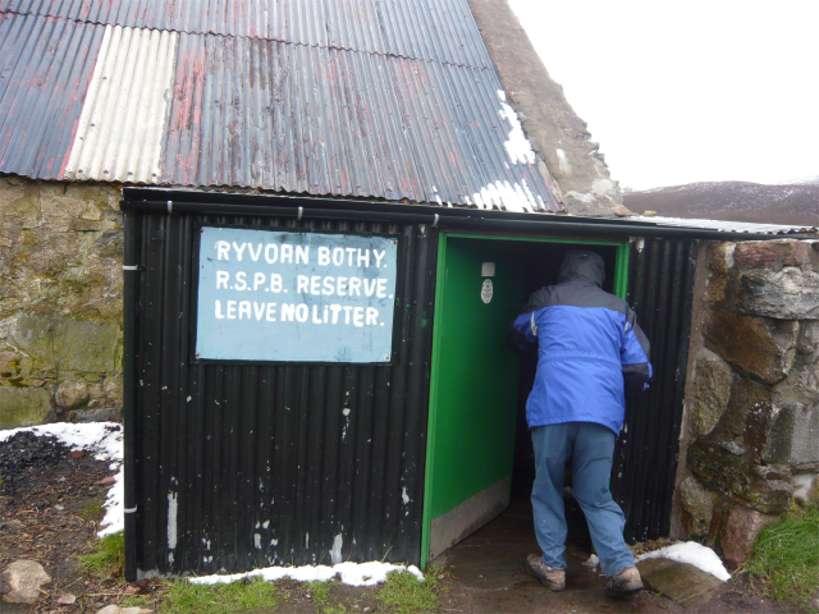
Bothy2P1080706It’s a bothy – see this article explaining what a bothy is. The photo below shows the entrance:

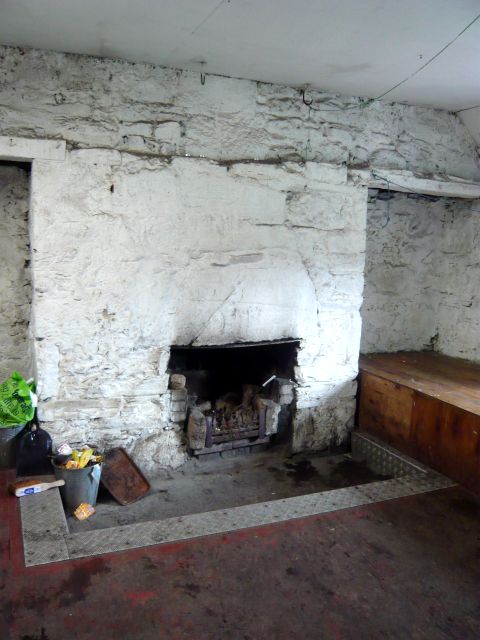
Bothy3P1080709and this is what is inside:

Bothy4P1080710 - Copy

There are some rules:

Bothy rules P1080722It’s a very welcome shelter – especially on a wet, windy day!

For more Saturday Snapshots see Melinda’s blog West Metro Mommy.