Alyce runs a series on her blog, At Home With Books, called the Best & Worst in which guest bloggers write about what they think their chosen author’s best and worst works are.
This week I’m the guest blogger, so to see what I think are the best and worst of Agatha Christie’s books have a look at this post.
Memoirs of a Fox-Hunting Man by Siegfied Sassoon is a perfect choice for the Turn of the Century Salon. It’s the first part of his fictionalised autobiography. The other two books in his trilogy are Memoirs of an Infantry Officer and Sherston’s Progress.
The Book
Siegfried Sassoon was born in 1886 and in Memoirs of a Fox-Hunting Man he relives his childhood, youth and experiences as an officer during the First World War. He wrote it in 1928, ten years after the War had ended, calling himself George Sherston. Life for young George/Siegfried was almost idyllic, living in the country as part of the privileged upper class, although his lifestyle exceeded his income. His aunt’s groom, Dixon, taught him to ride and introduced him to the fox-hunting world. At first Siegfried’s sympathies were with the fox and, at one of his first hunts, on spotting a fox he was alarmed so much that when his companion shrieked ‘Huick-holler’ (meaning the fox has been seen) he uttered the words ‘Don’t do that; they’ll catch him.’
Sassoon paints a beautiful picture of the English countryside and country life at the turn of the century. In the passage quoted below he wakes early on the morning of the local village flower show, looking forward to playing in the Flower Show Cricket Match:
When I unlocked the door into the garden the early morning air met me with its cold purity; on the stone step were the bowls of roses and delphiniums and sweet peas which Aunt Evelyn had carried out there before she went to bed [in preparation for the Flower Show]; the scarlet disc of the sun had climbed an inch above the hills. Thrushes and blackbirds hopped and pecked busily on the dew-soaked lawn, and a pigeon was cooing monotonously from the belt of woodland which sloped from the garden toward the Weald. Down there in the belt of river-mist a goods train whistled as it puffed steadily away from the station with a distinctly heard clanking of buffers. How little I knew of the enormous world beyond that valley and those low green hills. (page 53)
The first part of the book is carefree, as Siegfried passes through his school years and time at Cambridge University, which he left before completing his degree. Not a lot happens. His life, despite his lack of funds was a seemingly endless round of riding and hunting. He describes his friends and fox-hunting companions with affection and realism – the old country gentlemen, the benevolent gentry, the newly rich and the dare-devil younger riders, who were ‘reckless, insolent, unprincipled and aggressively competitive; but they were never dull, frequently amusing, and, when they chose, had charming manners.’ (page 235)
Siegfried, himself comes across as a likeable young man, shy, reserved, and modest, happy-go-lucky but aware of his own shortcomings.
All this changed with the onset of the First World War. He enlisted and was eventually posted to France, where because of his connections and abilities, he was appointed as a Transportation Officer stationed behind the trenches and the Front Line. But war brought him face to face with the grim realities of life and death. At first he was philosophical about the War – it seemed ‘inevitable and justifiable. Courage remained a virtue.’ But writing in 1928 he considered:
And that exploitation of courage, if I may be allowed to say a thing so obvious, was the essential tragedy of the War, which as everyone now agrees, was a crime against humanity. (page 256)
He sees men under his command die and suffer appallingly, his friends die, and Dixon his former groom who had enlisted died of pneumonia. Whilst home on leave as he talked to an old friend of Dixon’s he realised the past had gone …
Paperback: 320 pages
Publisher: Faber and Faber; 2nd edition (31 Jan 1974)
Language: English
ISBN-10: 057106454X
ISBN-13: 978-0571064540
Source: library book
The Author
Siegfried Sassoon 1915 (from Wikipedia)
Sassoon is one of the of the War Poets. Unlike others, such as Rupert Brooke, he survived the War. He came to the conclusion that the war was being needlessly prolonged. In 1917 he wrote a protest to his commanding officer. Its impact was reduced because rather than facing a court martial he was tried by a medical board and was judged to be suffering from severe shell shock. His account of the ruling is in the second part of his trilogy Memoirs of an Infantry Officer (1931). He was sent to Craiglockhart military hospital where he met Wilfred Owen, also one of the War Poets. It was in the hospital that Sassoon published some of his war poems. I’ll write more about those in another post and also more about his life when I’ve read Siegfried Sassoon: a biography by Max Egremont (which I’ve reserved at the library). In his later years he wrote The Old Century, The Weald of Youth andSiegfried’s Journey, three volumes of non-fictionalised autobiography.
By this time last year I’d read about twice as many books as I have this year. One reason is the length of books I’ve been reading, but another reason is that I’ve been doing a jigsaw. I enjoy doing jigsaw puzzles and once I’ve got started on one I find it simply addictive – and I’m often surprised at the length of time it can take me.
Just as I have a backlog of books waiting to be read, I have a backlog of jigsaws and I bought this one, Northumberland Castles when we first moved to the county three years ago. I put it to one side at the time, busy settling in the house and promptly forgot about it, until recently. I finished it last weekend:
Northumberland Castles
This puzzle shows from top left, looking at the photo, Dunstanburgh Castle (which we have yet to visit), Bamburgh Castle (see this post), second row from the left, Alnwick Castle (see this post), Lindisfarne (one of my favourite little castles – see this post), then Warkworth Castle (we have visited but I’ve not written a post yet) bottom row again from the left Chillingworth Castle (not visited this one), and Norham Castle, right on the Scottish Border (see this post).
Bamburgh and Lindisfarne Castles with part of Warkworth Castle
I use a PuzzleKaddy to do the jigsaw. It folds away keeping the pieces held together and has a carrying handle. When I’m not doing the puzzle I fold up the board and slide it under the sofa out of the way.
I also use a Jigsafe to hold the pieces. This is a series of nesting boxes. I think the idea is to sort the pieces by colour. Each tray has a separate cardboard base so that you can do small sections and then slide them complete onto the jigsaw board. I don’t actually do that very much but use the trays just to hold the pieces, as shown in the photo below where I’ve sorted the pieces for the next jigsaw I’m doing. I separated the side pieces into the smallest box and just put the rest in the boxes as they came to my hand. Heidi was very interested!
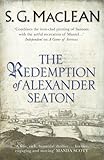
Every Tuesday Diane at Bibliophile By the Sea hosts First Chapter First Paragraph Tuesday Intros, where she shares the first paragraph or (2) of a book she is reading or thinking about reading soon. Here’s my contribution this week:
The younger of the two whores rifled the man’s pockets with expert fingers. she cursed softly. Nothing.
‘Leave off, then,’ said her sister. The baillie will be here any minute.’
Mary Dawson rolled the man back over onto his face. He groaned, then retched, and she cursed once more as he vomited bile over her foot. ‘Pig’, she said, and kicked him. The wind sent a barrel careering past them down the brae to smash into a wall below. Somewhere a dog took up a demented howling.
What do you think ? — Would you keep reading? I haven’t read much further on, but I will do.
I came across this book whilst reading blogs a few weeks ago and can’t remember which one referred to this author. I was interested firstly because I like historical mysteries,and secondly because this one is set in Banff on the Moray coast where Shona Maclean lives, and where some of my husband’s family came from. It’s a place I’d like to visit one day.
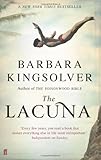
Some years ago I was browsing in a bookshop at Gatwick airport to add to the books I’d brought with me to read on holiday and I bought Barbara Kingsolver’s The Poisonwood Bible. I loved it. I’ve read some of her other books, but none as good as The Poisonwood Bible. When I saw that she had written The Lacuna and it had won the 2010 Orange Prize for Fiction, (actually beating Hilary Mantel’s Wolf Hall!) I bought it, expecting great things. That was two and half years ago and it’s only this year that I’ve read it.
I was disappointed as I don’t think it’s as good as either Wolf Hall or The Poisonwood Bible. There some good parts, but overall I was glad to finish reading it. It’s a long tale (670 pages), moving from Mexico in the 1930s to the McCarthy trials of alleged communists in the USA of the 1940s and 1950s. I thought it began and ended well, with good descriptions and fascinating characters, but I got bored several times in the middle.
It’s the story of Harrison Shepherd, the son of a Mexican mother and an American father and it’s told through his diaries and letters together with genuine newspaper articles, although whether they reported truth or lies is questionable. It begins in Mexico where Harrison’s mother took him to live when she left his father to live with a Mexican businessman, she calls Mr Produce the Cash behind his back. I thought this part came to life with lyrical descriptions of the people and the landscape. But it is only in the second half of the novel that I felt Harrison himself came alive as a character, no longer talking about himself in the third person, ‘the boy’, and referring to himself as ‘I’.
Throughout the book Kingsolver intermingles real characters and events with her fictional ones and I thought that worked well. There are the artists Diego Rivera and his wife Frida Kahlo. Harrison works for Diego, mixing plaster for his huge murals he painted in Mexico City. Whilst working for Rivera, who was a communist he met and subsequently worked for the exiled Bolshevik leader, Lev Trotsky. And it is this connection that eventually lands him in difficulties later on when he had moved to live in the USA and became a novellist writing historical fiction about the Aztecs. He is accused of being a communist and being Un-American.
I found the historical parts very interesting as I knew nothing about Rivera, or his wife, and very little about Trotsky and the McCarthy trials. But eventually I found the level of detail was just too much and the story meandered, losing impetus. Harrison himself comes across as too passive, too accepting of what ever happened to him, a victim of circumstances. Much more interesting is the second narrator, Violet Brown who becomes his secretary and friend, who saved his diaries from being burnt.
There are several instances of lacunas, missing parts and gaps, scattered throughout the book. For example, some of Harrison’s diaries and notebooks go missing. As a boy he loved swimming and diving into a cave, which is only available at certain tides:
Today the cave was gone. Saturday last it was there. Searching the whole rock face below the cliff did not turn it up. Then the tide came higher and waves crashed too hard to keep looking. How could a tunnel open in the rock and then close again? … Leandro says the tides are complicated and the rocks on that side are dangerous, to stay over here in the shallow reef. He wasn’t pleased to hear about the cave. He already knew about it, it is called something already, la lacuna. (page 45)
But although The Lacuna is well written and well researched I felt there was something missing, the personal elements that brought the story to life for me were few and far between; I couldn’t feel involved and just wanted it to end. I persevered because it has had such good reviews and recommendations, but sadly it dragged for me.
This is the 18th century Old Marriage House in Coldstream. It was also the Toll House for the bridge, which crosses the River Tweed from Coldstream in Scotland to Cornhill-on-Tweed in England. The Old Marriage House is at the Scottish end of the bridge and is now a private home. But from 1754 until 1856 it was popular (like the Smithy at Gretna Green) for runaway marriages, because during that period under Scottish law couples could get married without parental consent and without giving prior public notice.
In the 19th century 1,446 ‘irregular’ marriages, valid in Scots law were conducted by ‘priests’, whose numbers included local men such as shoemakers and molecatchers. During that period five earls and at least two, maybe three, Lord Chancellors of England were married there.
This is the Coldstream Bridge, built between 1763-6, designed by John Smeaton. It replaced the old ford across the river.


.jpg)


 I came across this book whilst reading blogs a few weeks ago and can’t remember which one referred to this author. I was interested firstly because I like historical mysteries,and secondly because this one is set in
  Some years ago I was browsing in a bookshop at Gatwick airport to add to the books I’d brought with me to read on holiday and I bought Barbara Kingsolver’s The Poisonwood Bible. I loved it. I’ve read some of her other books, but none as good as The Poisonwood Bible. When I saw that she had written

 BooksPlease