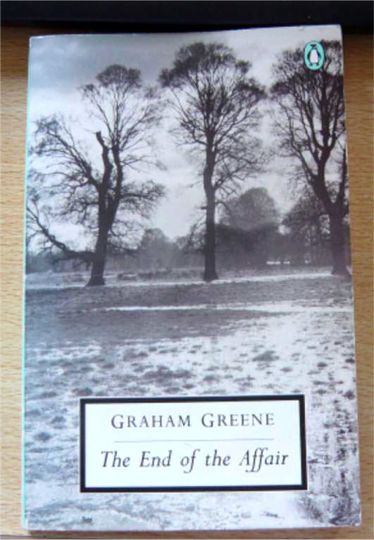
Dandy Gilver and an Unsuitable Day for a Murder by Catriona McPherson

Oh, what a tangled web we weave
When first we practise to deceive!

(from Sir Walter Scott: Marmion Canto VI, XVII)
I wasn’t very far into reading Dandy Gilver and an Unsuitable Day for a Murder when this quotation (above) came into my mind. This is a remarkably complicated plot, with the most difficult family relationships that I’ve ever come across. Fortunately there are two family trees in the opening pages of this book that go some way to sorting it all out.

This is the sixth Dandy Gilver Murder Mystery book:

When the heiress to a department store goes missing, Dandy is summoned to Dunfermline, where two warring families run rival stores. As Dandy starts to unravel family secrets, she begins to discover disturbing connections and it’s not long before she’s in over her head.

(extracted from the summary on the back of my advanced reader copy)

This summary says it all really. It’s set in Dunfermline in 1927 and the two families are the Aitkens and the Hepburns. At the beginning of the book Mirren Aitken and Dugald Hepburn, the two youngest offsprings of the families have disappeared. Rumour has it that they have eloped and both families are dead against their marriage.

But is there more to it than commercial rivalry? Dandy thinks so and when Mirren is discovered dead on the attic floor of Aitkens’ Emporium, apparently having shot herself, she is even more convinced. Added to that on the day of Mirren’s funeral Dugald is found dead on top of the lift up to the Aitkens’ attic. Together with Alec Osborne, her sleuthing partner, she sets about unravelling the truth even though this is against both families’ wishes.

There are things I like about this book. The setting in Dunfermline is convincing, the descriptions of both stores provide fascinating details of the 1920s department stores. In a note at the beginning of the book Catriona McPherson acknowledges that she has used what she describes as, ‘the insanely detailed and unexpectedly riveting‘ book From Ascending Rooms to Express Elevators: A History of the Passenger Elevator in the Nineteenth Century by Lee E Gray (2002).

I liked the puzzle aspects of this book, even though I failed to work it out completely. But I thought that most of the characters were difficult to distinguish, partly because their names were too confusing, with alternative names – Mary Aitken, also known as Mrs Aitken and Mrs Ninian Aitken or Mrs Ninian. There is also Arabella Aitken, also called Mrs Aitken, Mrs Jack Aitken, Mrs Jack or simply Bella (I liked that version best). I even found the men’s names troublesome, what with Robert and Robin, Mr Hepburn, young Mister Hepburn and Master Hepburn – I could go on. Dandy and Alec are similarly confused.

It’s a very detailed book (and not just about the lift) and at times that became confusing too so that I had to keep flipping backwards to go over passages making sure I understood it. It has a heavy sombre tone and there is quite a lot of repetition as Dandy and Alec keep reviewing what they have discovered and wondering what it all means. For me it could have been much more succinct. Despite these misgivings I did like this book, but not as much as the earlier Dandy Gilver books that I’ve read.

  • Hardcover: 304 pages
  • Publisher: Minotaur Books (22 May 2012)
  • Language English
  • ISBN-10: 1250007372
  • ISBN-13: 978-1250007377
  • Source: Advance Reader Copy
  • My Rating 3/5

Wondrous Words Wednesday

I came across this wondrous word yesterday when I visited Smailholm Tower, near Kelso in the Scottish Borders. It’s: Barmkin and here is a photo –

Smailholm Tower and Barmkin Wall

A Barmkin is a stone perimeter wall, built to protect the courtyard and tower. This one at Smailholm was originally 6 ft thick, although most of it is a ruinous state now. My photo shows it at the western end where it remains with the only entrance gate into the courtyard.

I like the sound of this Scots word which is thought to be a corruption of the word barbican, meaning the outer fortified defence  of a city or castle.

Wondrous Words Wednesday is a weekly meme created by Kathy at BermudaOnion, where you can share new words that you’ve encountered or spotlight words you love.

Crime Fiction Alphabet: Blue Lightning by Ann Cleeves

The Crime Fiction Alphabet is run by Kerrie at Mysteries in Paradise. This week’s letter is the letter B.

Blue Lightning

Blue Lightning by Ann Cleeves is the fourth in her Shetland Island Quartet, featuring Detective Jimmy Perez. I listened to the audiobook, which I borrowed from the library and I also read some of it on my Kindle. I don’t often listen to audiobooks as I prefer to read, but this was ideal for listening in the car on my recent weekday visits to Edinburgh. Listening to the audiobook was good, even though the male narrator couldn’t do a convincing female voice, especially a teenage female voice!

Synopsis (Fantastic Fiction)

Shetland Detective Jimmy Perez knows it will be a difficult homecoming when he returns to the Fair Isles to introduce his fiancee, Fran, to his parents. It’s a community where everyone knows each other, and strangers, while welcomed, are still viewed with a degree of mistrust. Challenging to live on at the best of times, with the autumn storms raging, the island feels cut off from the rest of the world. Trapped, tension is high and tempers become frayed. Enough to drive someone to murder…

When a woman’s body is discovered at the renowned Fair Isles bird observatory, with feathers threaded through her hair, the islanders react with fear and anger. With no support from the mainland and only Fran to help him – Jimmy has to investigate the old-fashioned way. He soon realizes that this is no crime of passion – but a murder of cold and calculated intention. With no way off the island until the storms abate – Jimmy knows he has to work quickly. There’s a killer on the island just waiting for the opportunity to strike again…

My thoughts

I like the ‘locked room’ aspect of the mystery. Because of the bad weather on Fair Isle no one could come or go and Jimmy had to do the best he could without his senior officer’s help. The murdered woman is Angela, the director of the field centre. Jimmy could take his time interviewing the suspects one by one and as practically everyone at the centre, staff and visitors, was a suspect it was difficult to work out who the murderer was.

Suspicion is first cast on Poppy, Angela’s teenage step-daughter, but it could have been any of them from Maurice her husband, to Ben the assistant warden, or the visiting bird watchers, or even one of the islanders. The tension is high to start with and steadily mounts as Jimmy even begins to suspect his father.

Fran, meanwhile, is not sure she wants to live on Fair Isle when she and Jimmy are married, feeling trapped there and missing her daughter, although she gets on well with his parents. She tries to help Jimmy with the investigation, but he doesn’t want to put her in any danger. But no one is safe, especially after there is a second murder.

The setting is excellent with detailed descriptions of Fair Isle, all of which made me want to visit, even though access by both boat and plane does sound precarious. This is how Fran and Jimmy approach the island:

Fran sat with her eyes closed. The small plane dropped suddenly, seemed to fall from the sky, then levelled for a moment before tilting like a fairground ride. She opened her eyes to see a grey cliff ahead of them. It was close enough for her to make out the white streaks of bird muck and last season’s nests. Below the sea was boiling. Spindrift and white froth caught by the gale-force winds spun over the surface of the water.

I’ve been watching Vera, the TV dramatisations of Ann Cleeves’s other detective series and I see from her website that the Jimmy Perez books are to be televised as well, with Douglas Henshall playing the part of Jimmy. I’ve enjoyed watching Vera, maybe because I haven’t read those books and I’m a bit wary of watching TV versions of the Jimmy Perez books simply because I have read them.

The four books in the Shetland series are:

I’ve read 1, 2 & 4. Whilst they do read OK as stand-alones I think it’s better to read them in sequence.

Saturday Snapshot

Heidi asleep

About four weeks ago I posted a photo of our new arrival. Since then she’s settled in well, after a period of hiding on top of wardrobes and anywhere out of sight. We’ve renamed her Heidi, because of that. She knows her name and comes running when we call her.

She’s not really allowed on the furniture, but she’s tired out after a session in the garden hunting for mice and there plenty out there for her. She brought a dead one in this morning. I wish she wouldn’t bring them in, but she’s proud of her catch.

See more Saturday Snapshots on Alyce’s blog At Home With Books.

Classics Challenge: May Prompt – Literary Movement

This month’s topic in the Classics Challenge is about literary movement and where the book you’re reading fits within the movement.

the end of the affair

I’ve recently read Graham Greene’s The End of the Affair, published by Penguin as one of the Twentieth Century Classics. It was originally published in 1951.

It’s very difficult, or at least I think it is, to place this book within a ‘literary movement’. I’m not the only one because William Golding wrote:

Graham Greene was in a class by himself  – He will be read and remembered as the ultimate twentieth-century chronicler of consciousness and anxiety.’ 

So maybe he fits into the ‘stream of conciousness’ movement, because The End of the Affair is full of Maurice Bendrix’s thoughts and feelings, but I don’t think it’s quite that. It moves backwards in time recollecting past events, but it certainly reveals what is going on in Maurice’s mind.

Maurice’s love affair with his friend’s wife, Sarah, had begun in 1944 during the London Blitz. They had met at a party held by Sarah’s husband, Henry. The affair had ended suddenly after his house had been bombed by a V1 and Sarah had not explained why. Two years later Maurice, still obsessed by Sarah employed Parkis, a private detective to find out the truth. So it’s maybe a romantic novel, inspired by Greene’s affair with a married woman ‘C’ (Lady Catherine Walston), but then again, maybe not. The story is narrated by Maurice but includes his reading of Sarah’s diary, which reveals her increasing fascination with religion, specifically with Catholicism. Some describe The End of the Affair as the last of Greene’s Catholic Novels (the others being Brighton Rock, The Power and the Glory and The Heart of the Matter), but Greene didn’t like that label. Nevertheless, The End of the Affair is a study of love and hate, of desire, of jealousy, of pain, of faithfulness, and of the interaction between God and people.

At the beginning Maurice states that: ‘this is a record of hate, far more than of love’. He struggles to believe in God and is full of desperation and anger. He is tormented by his efforts to understand:

But I don’t want Your peace and I don’t want Your love. I wanted something very simple and very easy: I wanted Sarah for a lifetime and You took her away. With Your great schemes You ruin our happiness like a harvester ruins a mouse’s nest: I hate You, God, I hate You as though You existed. (page 191)

It’s a powerful novel that, for me, defies being categorised. Emotional, passionate and intense it’s a  dark and compelling book, with more emphasis on character than on plot. God, whether the characters believe in ‘him’ or not, has a major part. I knew before I read this book that Greene was a convert to Roman Catholicism, but the doubts about belief and the depth of criticism of Christianity both surprised and interested me, more than the question of the affair.

Here’s a selection of passages that I noted as I read:

  • Maurice is in Henry’s study, a room Maurice feels Henry never uses: ‘I doubted whether the set of Gibbon had once been opened, and the set of Scott was only there because it had – probably – belonged to his father, like the bronze copy of the Discus Thrower. And yet he was happier in his unused room simply because it was his: his possession. I thought with bitterness and envy: if one possesses a thing securely, one need never use it.’ (page 13) How true is that I wondered? – to me the unread books on my shelves are less my own than the read books.
  • Maurice is a novelist. Throughout the book he ponders on the nature of writing, characterisation and so on. In this passage he considers his habits of working and he effects outside events have on his ability to write, listing all the obstacles that had never affected him before, concluding that: So long as one is happy one can endure any discipline: it was unhappiness that broke down the habits of work.  (pages 34-5)
  • I wondered how much of this novel is autobiographical – not just the affair, but Maurice’s own character and beliefs seem to be based on Greene’s own life and personality. Maybe that’s an unfair assumption, but I do think it’s true for his passages on writing. Another passage reveals: ‘So much of a novelist’s writing, as I have said, takes place in the unconscious: in those depths the last word is written before the first word appears on paper. We remember the details of our story, we do not invent them.’ (page 35)
  • And on the existence of God/Devil: ‘I have never understood why people who can swallow the enormous improbability of a personal God boggle at a personal Devil. I have known so intimately the way that demon works in my imagination.’ (page 59)

I can’t say that I enjoyed this novel, but it is well written, full of ideas and questions packed within its pages – a tragedy about conflict and doubt.

Crime Fiction Alphabet 2012: Letter A

Kerrie’s Crime Fiction Alphabet begins this week with the letter A.Letter A

Here are the rules:

By Friday of each week participants try to write a blog post about crime fiction related to the letter of the week.

Your post MUST be related to either the first letter of a book’s title, the first letter of an author’s first name, or the first letter of the author’s surname, or even maybe a crime fiction “topic”. But above all, it has to be crime fiction.
So you see you have lots of choice.
You could write a review, or a bio of an author, so long as it fits the rules somehow.
(It is ok too to skip a week.)

My choice for the letter A is Arthur Conan Doyle and The Sign of Four, sometimes called The Sign of the Four. Set in 1888 this is the second Sherlock Holmes book written by Sir Arthur Conan Doyle, published in 1890.

Description from Goodreads:

Yellow fog is swirling through the streets of London, and Sherlock Holmes himself is sitting in a cocaine-induced haze until the arrival of a distressed and beautiful young lady forces the great detective into action. Each year following the strange disappearance of her father, Miss Morstan has received a present of a rare and lustrous pearl. Now, on the day she is summoned to meet her anonymous benefactor, she consults Holmes and Watson.

My thoughts:

Although I have a copy of this book on my Kindle, I listened to an audiobook of the novel, narrated by Derek Jacobi. Holmes is bored, hence the cocaine and Dr Watson is concerned about the effect on his health, although he hesitates to protest at his use of the drug because:

Again and again I had registered a vow that I should deliver my soul upon the subject, but there was that cool, nonchalant air of my companion which made him the last man with whom one could care to take anything approaching to a liberty. His great powers, his masterly manner, and the experience of his many extraordinary qualities, all made me diffident and backward in crossing him.

So they are both keen to investigate the mystery Mary Morstan presents to them. Holmes is intrigued by the mystery, involving the murder of Bartholomew Sholto, the Agra treasure stolen during the Indian Mutiny of 1857 and a secret pact between the four thieves – the ‘Four’ of the title, resulting in a chase down the River Thames in a super-fast steam launch.

It’s narrated by Dr Watson, who falls in love with Mary during the course of the investigation, but it is only at the end of the novel that he plucks up his courage to propose to her. Derek Jacobi does an admirable job, with easily distinguishable voices and reasonable versions of the women’s voices. The story is complex and fast-paced, with Holmes seemingly solving the mystery from clues which he then explains to Watson. But I thought the last chapter was too long, explaining Jonathan Small’s involvement in the theft of the treasure and his attempts to retrieve it, but as Dr Watson is the narrator and he didn’t know any of this I suppose it was the only way of including it.

There are a number of minor characters that stand out, even though they have minimal involvement and are only sketched in. I’m thinking of the Scotland Yard Inspector, Athelney Jones, who Holmes describes as ‘not a bad fellow’. He arrests the whole of Sholto’s household, even his brother. There is also Toby, the dog, described as an ‘ugly long haired, lop-eared creature, half spaniel and half lurcher, brown and white in colour, with a very clumsy waddling gait.’ Also notable are the Baker Street Irregulars, a gang of ‘dirty and little street-Arabs‘ Holmes employs to chase down the criminals. He pays them a shilling a day, with a guinea prize for the first boy to find the vital clue.

All in all, an enjoyable ‘read’ and as I was listening I could visualise the scenes. It begins and ends with Holmes reaching for his cocaine.