The Body in the Library by Agatha Christie: Book Review

body-in-library001

I wrote some initial thoughts about The Body in the Library in my Sunday Salon post.  This is the mystery of who killed Ruby Keene. Ruby was eighteen, a professional dancer employed at the Majestic Hotel Danemouth as a dance hostess. Her body was found  in the Bantrys’ library at Gossington Hall in St Mary Mead. Then the charred body of another girl is found in an abandoned quarry. Who killed these girls and why?

The police are investigating the murder, including Inspector Slack, who is anything but slack, an energetic man, with a bustling manner. The police investigation is reinforced by the retired head of Scotland Yard, Sir Henry Clithering, whilst quietly in the background Miss Marple, at the request of Mrs Bantry, is also looking for the murderer.  I had little idea who it was even though I read the book very carefully. I had my suspicions and was completely wrong.

There are various suspects – Colonel Bantry, because the body was found in his library, Basil Blake who is connected with the film industry, has loud, drunken parties, George Bartlett, a rather dim-witted chap who is a guest at the Majestic, apparently the last person to see Ruby alive, and the Jefferson family – Conway Jefferson confined to a wheelchair, who was proposing adopting Ruby as his daughter, Mark, his son-in-law and Adelaide his daughter-in-law. Ruby was hired by the hotel as a dance hostess to partner Raymond Starr (also the tennis coach) after Josie Turner had sprained her ankle.

This is a satisfying murder mystery in that all the clues are there and when Miss Marple reveals who the killer is it is so clear that I don’t know why I hadn’t realised pages earlier, but that is Agatha Christie’s skill. A quick and enjoyable read.

For more reviews of Agatha Christie’s books have a look at the Agatha Christie Challenge.

A Second First Time? – Booking Through Thursday

btt button

What book would you love to be able to read again for the first time?

This is like asking what is your favourite book – I can’t decide! There are many books I’ve read that I wish I could read again as though it were the first time, just as there are many books that improve on second readings.

Off the top of my head here are a few I wish I read for the first time again (ask me again tomorrow and I’d probably tell you different books). These are all books that took my breath away the first time round:

Teaser Tuesdays

teaser-tuesdayShould Be Reading – Miz B – hosts this weekly event – quoting a couple of sentences from our current read (without spoilers, of course) to entice you to read the book.

I’n currently reading three books – all non-fiction: a biography of Jane Austen, a popular history of Britain 1900 -1952 and a political history of Britain in the 1970s. I couldn’t decide which one to choose – so here are quotes from all three.

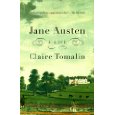
jane-austen-tomalinFirst Jane Austen: A Life by Claire Tomalin:

Jane Austen was a tough and unsentimental child, drawn to rude, anarchic imaginings and black jokes. She found a good source for this ferocious style of humour in the talk she heard, and sometimes joined in, among her parents’ pupils, bursting out of childhood into young manhood. (page 33)

after-the-victoriansThen After the Victorians: the World Our Parents Knew by A N Wilson:

One of the scientists who worked on the bomb dropped on Hiroshima, Leo Szilard, said that the idea of nuclear chain reaction first came to him when reading Wells’s The World Set Free (1914), in which atom bombs falling on world cities during the 1950s kill millions of people. These things were not possible when Wells wrote about them. We know that the twentieth century would see them happen. (page 67)

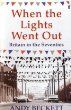
when-the-lights-went-outAnd finally When the Lights Went Out: Britian in the Seventies by Andy Beckett:

Declinism was an established British state of mind, but during the mid-seventies it truly began to pervade the national consciousness. It filled doomy books aimed at the general reader. It became a melodramatic staple for newspapers, magazines and television programmes. (page 181)

Two of those programmes were the comedy series Fawlty Towers and The Rise and Fall of Reginald Perrin – both about  middle-aged men “trapped in a decrepit England and filled with rage or dreams of escape”. Interestingly, we’re now watching a new Reggie Perrin (Martin Clunes); is it a sign of the times?

Library Loot

Hurray! Since writing my post on Gluttony last ThursdayI’ve managed not to buy any books! 

library-lootBut I had to go to the library to pick up two books I’d reserved, so I was unable to resist the temptation of browsing, which inevitably lead to finding more books that looked good – at least they’re not permanent additions to the “library at home”.  I took home a mixed bag of books – two psychological thrillers, one chick-lit, one book of short stories, an American classic, and a book shortlisted for this year’s Orange Prize for Fiction, awarded to awarded to the woman who, in the opinion of the judges, has written the best, eligible full-length novel in English.

library-loot-cather

The first two listed below are the ones I reserved:

  • The Reunion by Simone van der Vlugt, which according to the back cover is “a tour-de-force from Holland’s top-selling crime writer.” I first read about it on another blog (can’t remember which one – sorry).  Also from the back cover: “Sabine was 15 when Isabel disappeared. She remembers nothing from that hot May day. Nine years later, unwanted memories are returning to her. What if she saw something the day of Isabel’s disappearance? What if she could put a name to the shadowy figure in her dreams? What if her knowledge was dangerous?”
  • The Wilderness by Samantha Harvey – shortlisted for the Orange Prize for Fiction this year. This may be painful reading as it’s about Jake who has Alzheimer’s. He is in his early 60s, has lost his wife, his son is in prison, and he is about to lose his past.  I am both fascinated and appalled by Alzheimer’s.
  • The Fantastic Book of Everybody’s Secrets by Sophie Hannah. I keep reading Sophie’s name all over the place, so when I saw this book on the shelves I thought it was time to read something by her. This is a book of short stories. I read the first one “The Octopus Nest” yesterday and would have read more of them if I hadn’t been going out in the evening. I think I’m going to really enjoy this book, based on this first story about a stranger who keeps appearing in the background of a family’s holiday photographs.
  • Shoe Addicts Anonymous by Beth Harbison. An unknown-to-me author, but I love shoes and fancied something light and funny. This looks like chic-lit and I can’t imagine ever meeting up with friends to swap shoes, which is what the women in this book do, but maybe it’ll be entertaining.
  • A Judgement in Stone by Ruth Rendell. I still haven’t read her book “The Birthday Present”, so this should have stayed on the shelf but the first sentence hooked me: “Eunice Parchman killed the Coverdale family because she could not read or write.” So we know right away who did the murder, but not why.
  • A Lost Lady by Willa Cather. I have never read anything by Willa Cather. I liked the title, the book cover and the intriguing words on the front cover: “The Madame Bovary of the American frontier.” I opened this this morning just to look at it and read it straight through! It deserves a post of its own.

Musing Monday – Early Reading

Today’s MUSING MONDAYS post is about early reading –

Do you remember how you developed a love for reading? Was it from a particular person, or person(s)? Do you remember any books that you read, or were read to  you, as a young child? (question courtesy of Diane)

My love of reading comes from my parents. My father always read me a bedtime story and would make up stories of his own to tell me. My mother always had a book on the go and she took me to the local branch library, which was a small library with both children’s and adults’ books all in one room. This was before I started school, but according to my parents I could read by myself then.

I don’t remember learning to read and I don’t remember a time when I didn’t have books. My parents bought me books each birthday  and Christmas and so did my aunties and uncles. Some of the earliest books I remember being read to me are a book of nursery rhymes and a book about Teddy Robinson. When I was a bit older I read the Noddy books and then other Enid Blyton books and  fairy tales I loved those. I loved the Flower Fairy books too. I don’t have any of my orginal Flower Fairy books, but I’m delighted to see they’re still in print. There are many more now than when I was little and you can get the Flower Fairies Complete Collection of all eight original books – “Spring”, “Summer”, “Autumn”, “Winter”, “Wayside”, “Garden”, “Alphabet”, and “Trees” .