Sunday Salon – Review Books

tssbadge1I have had a number of books now from LibraryThing’s Early turbulence001Reviewers Programme, including  The Spare Room, which I wrote about recently, so I wasn’t expecting to get any more for a while. But yesterday I received an uncorrected proof copy of  Turbulence: a Novel of the Atmosphere by Giles Foden. Almost unbelievably, I received this only two days after receiving an email from LibraryThing that it was on its way!

Earlier in the week Maggie Dana asked if I would like a copy of her new book Beachcombing and that came one day last week as well. I have finished reading Beachcombing – more about that soon. I like getting review books, but I wish I could space them out at longer intervals – at the moment they’ve been like buses – none for ages and then several turn up at once.

I’m still reading another review book – When the Lights Went Out (see the sidebar) and I also have a few books I received months ago that I haven’t read yet. I did start them when they arrived but either because I was in the middle of other books, or because they didn’t match my expectations from their descriptions, I haven’t finished them. Or it could just have been that I wasn’t in the right frame of mind at the time to appreciate them.

Turbulence, on first glance, looks as though it’s one I’m going to enjoy, even though it’s a little different from the books I usually read. I requested it based on the description on LibraryThing, because I thought it looked interesting – about D-day and predicting the weather:

The D-day landings: the fate of 2.5 million men, 3000 landing craft and the entire future of Europe depends on the right weather conditions on the English Channel on a single day. A team of Allied scientists is charged with agreeing on an accurate forecast five days in advance. But is it even possible to predict the weather so far ahead? And what is the relationship between predictability and turbulence, one of the last great mysteries of modern physics? Wallace Ryman has devised a system that comprehends all of this — but he is a reclusive pacifist who stubbornly refuses to divulge his secrets. Mark Latchford, a young maths prodigy from the Met Office, is sent to Scotland to discover Ryman’s system and apply it to the Normandy landings. But turbulence proves more elusive than anyone could have imagined and events, like the weather, begin to spiral out of control.

I just hope it won’t be too technical; I’ve already read a few words I’ve never come across before – “nacelle”: a cover for an engine and “katabatic” defined in the book as a “gravity-fed wind”. But the language is also poetic and reflective, so I have great hopes for this book.

Friday Finds – Countryside Books

friday-finds1


map-addict-1I’m a map addict, so I like the look of Mike Parker’s book Map Addict: a Tale of Obsession, Fudge and the Ordnance Survey. According to the product description this combines history, travel, politics, memoir and oblique observation in a highly readable, and often very funny, style.


book-of-weedsThen there is The Book of Weeds by Ken Thompson. I really need help getting rid of the ground elder that’s threatening to take over our garden. Maybe this will help.


hatfields-herbalAnd finally, Hatfield’s Herbal: the Curious Stories of Britain’s Wild Plants, which “describes the properties of over 150 native plants, and the customs that surround them: from predicting the weather with seaweed to using deadly nightshade to make ladies’ pupils dilate appealingly, and from ensuring a husband’s faithfulness with butterbur to warding off witches by planting a rowan tree. Filled with stories, folklore and remedies both strange and practical, this is a memorable and eye-opening guide to the richness of Britain’s heritage.”

I’m not too sure about even picking deadly nightshade let alone using it on my eyes!

Lucy and How To Give a Cat Tablets

Thank you to everyone who commented on my post about Lucy’s hyperthyroidism. I thought I’d reply in a post rather than in the comments and include a link on how to use a pill popper – see below.

Lucy’s tablets have to be given to her whole – they cannot be crushed because they have a special coating and anyway she just won’t eat any pill that we crushed in her food. She is an expert at licking round pills even when they are crushed and leaving them.

The pill popper helps but it takes two of us to give her the tablet. The vet demonstrated how to use it using their own cat who just sits calmly on the counter and accepts it – he’s used to demonstrating how to use the pill popper. Lucy isn’t so amenable!

Avisann asked how the pill popper works – I found this video demonstrating how to use one – just click on the photo.

 How to give a cat tablets

Edited after posting: Have a look at Diane’s comment with instructions on giving a cat a pill – it’s hilarious!

Doctored Evidence by Donna Leon: Book Review

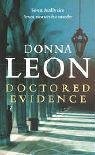
doctored-evidenceDoctored Evidence is the first book by Donna Leon that I’ve read. Maybe I should have started with the first Commissario Brunetti book, Death at La Fenice, because I felt as though I’d walked into a room where everyone else knew each other and I didn’t.

It started off well with the murder of the most unlikeable character Maria Battestini. At first Flori, her Romanian maid is suspected of her murder but it is clear from Signora Gismondi’s evidence that the maid could not have had time to kill the old woman. What follows is the investigation of the murder by Commisario Brunetti aided by Signorina Elettra and Inspector Vianello.

It was going well and then I began to get a bit bored as it became bogged with lots of possiblities for who killed Battestini. At the end when the murderer was revealed I only had a vague impression of the character and had to go back to read various scenes again. For me the minor characters were all a bit vague, with the exception of Signora Gismondi who came across very clearly. I would have liked more about her.

I liked Brunetti; he seems to be a maverick character. I think a Commissario is in charge of a police station or division or something similar, but at one point I wondered if his boss was Signora Elettra, only to discover that she works for Brunetti’s boss Vice-Questore Patta. Maybe this would all be clearer to me if I began with the first Brunetti book.

I liked the scenes with Brunetti’s family, his conversations with his wife and the descriptions of their meals. At one point when he tells his wife he won’t be home for a meal she replies “Wonderful”, because she can read while she eats. I also liked the way their discussion about the Seven Deadly Sins influences how he tries to work out the motive behind the murder and that he picks the wrong sin. The scenes with Lieutenant Scarpa, a most unlikeable character, where his antagonism towards Brunetti and the way Brunetti eventually deals with him are among the most vivid in the book.

In a way I was a bit disappointed with Doctored Evidence but overall I liked it enough to look for another book by Donna Leon.

This is the 17th library book I’ve read this year contributing to the Support Your Local Library Reading Challenge 2009.

Unread – Booking Through Thursday

btt button

Today’s question is suggested by C in DC:

Is there a book that you wish you could ‘unread’? One that  you disliked so thoroughly you wish you could just forget that you ever read it?

If there is I’ve forgotten it!

Seriously, if I really dislike a book that much I don’t read much of it beyond a few pages and usually I can tell from browsing whether I’d like a book or not. There are so many books I want to read that I just can’t waste time reading books I dislike.