Spell the Month in Books – February 2026

Spell the Month in Books is a linkup hosted by Jana on Reviews From the Stacks on the first Saturday of each month. The goal is to spell the current month with the first letter of book titles, excluding articles such as ‘the’ and ‘a’ as needed. That’s all there is to it! Some months there are optional theme challenges, such as “books with an orange cover” or books of a particular genre, but for the most part, any book you want to use is fair game!

The theme this month is a Freebie and I’m featuring books I’ve recently acquired and books I read before I started my blog, so I haven’t reviewed any of them and have linked the titles to the descriptions on Amazon.

F is for Forty Rules of Love by Elif Shafak, fiction.
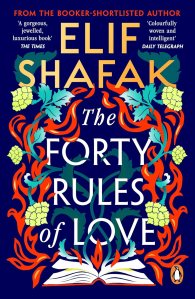
Enlightening, enthralling. An affecting paean to faith and love (Metro), fiction.

E is for Every Body Should Know This: The Science of Eating for a Lifetime of Health by Dr. Federica Amati, Medical Scientist and Head Nutritionist at ZOE, nonfiction.
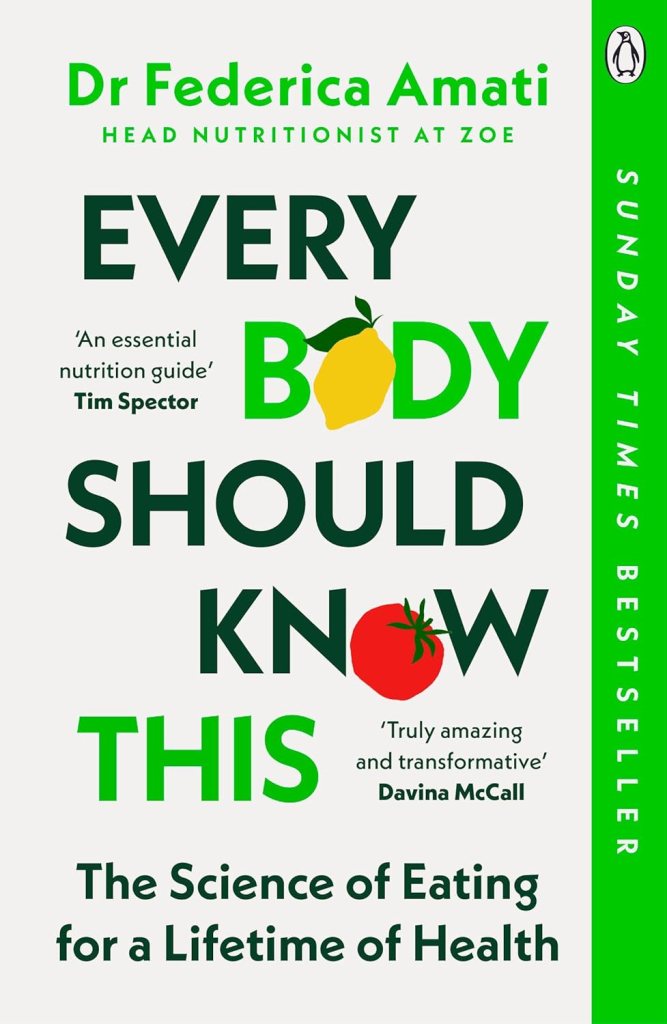
‘Dr Federica is a human encyclopaedia when it comes to the science of food and health. This book contains the most critical answers to nutrition that we’ve all been searching for. A must read’– Steven Bartlett

B is for The Bull of Mithros by Anne Zouroudi, crime fiction.
‘A cracking plot, colourful local characters and descriptions of the hot, dry countryside so strong that you can almost see the heat haze and hear the cicadas – the perfect read to curl up with’― Guardian

R is for Road Rage by Ruth Rendell, crime fiction.
‘With immaculate control, Ruth Rendell builds a menacing crescendo of tension and horror that keeps you guessing right up to the brilliantly paced finale’― Good Housekeeping

U is for Under the Greenwood Tree by Thomas Hardy, fiction.
Set in the small village of Mellstock in Thomas Hardy’s fictional Wessex, this is both a love story and a nostalgic study into the disappearance of old traditions and a move towards a more modern way of life. (Amazon)

A is for As a Jew: Reclaiming Our Story from Those Who Blame, Shame, and Try to Erase Us by Sarah Hurwitz, nonfiction.
‘This book explains antisemitism and the danger it poses—not just to Jews, but to all of us. It also reveals the breathtaking history and resilience of the Jewish people and the beauty of Jewish tradition’ – Van Jones, CNN Host and New York Times bestselling author

R is for The Return of the Soldier by Rebecca West, fiction.
Returning to his stately English home from the chaos of World War I, a shell-shocked officer finds that he has left much of his memory in the front’s muddy trenches. (Amazon)

Y is for The Years by Virginia Woolf, fiction.
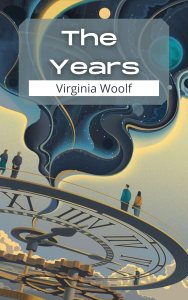
Published in 1937, this was Virginia Woolf’s most popular novel during her lifetime. It’s about one large upper-class London family, spanning three generations of the Pargiter family from the 1880s to the 1930s. (Amazon)

The next link up will be on March 7, 2026 take your pick from Pi Day, March Madness, or Green Covers.
Novellas in November 2025

It’s almost time for Novellas in November, hosted by Cathy of 746 Books and Rebecca of Bookish Beck. It’s now in it’s sixth year. I took part in 2020, 2021 and 2022.

There are no categories this year, although participants are invited to start the month with a My Year in Novellas retrospective looking at any novellas read since last NovNov, and finish it with a New to My TBR list based on the novellas that others have tempted them with over the course of the month.

There are also two buddy reads this year – Seascraper by Benjamin Wood and Sister Outsider by Audre Lorde. 

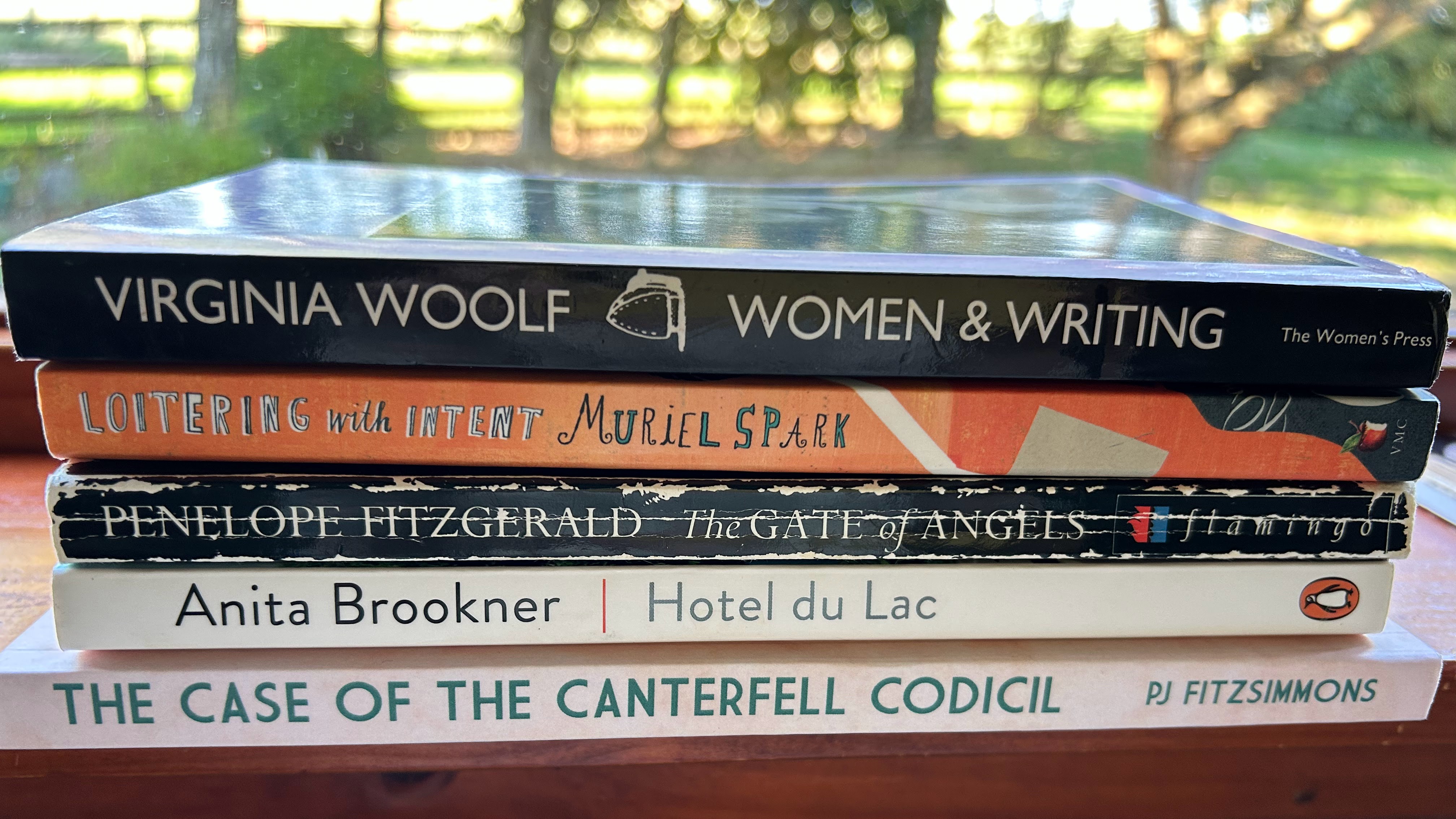
These are some of the novellas from my TBR shelves:

  • Women and Writing by Virginia Woolf – 198 pages
  • Loitering with Intent by Muriel Spark – 172 pages
  • The Gate of Angels by Penelope Fitzgerald – 167 pages
  • Hotel du Lac by Anita Brookner – 184 pages
  • The Case of the Canterell Codicil by PJ Fitzsimmons – 177 pages

At the moment I think I’ll start with The Case of the Canterell Codicil: the first Anty Boisjoly Mystery, described on the back cover:

Anty Boisjoly, nineteen-twenty-never Wodehousian gadabout and clubman , takes on his first case when his old Oxford chum and coxswain is facing the gallows, accused of the murder of his wealthy uncle.

Not one but two locked-room murders later, Anty’s pitting his wits and witticisms against a subversive butler, a senile footman, a single-minded detective-inspector, an irascible goat, and the eccentric conventions of the pastoral Sussex countryside to untangle a multi-layered mystery of secret bequests, ancient writs, love triangles, and revenge, and with a twist in the end that you’ll never see coming.

Where would you start?

Six Degrees of Separation from Theory and Practice to The Night Hawks

It’s time again for Six Degrees of Separation, a monthly link-up hosted by Kate at Books Are My Favourite and Best. Each month a book is chosen as a starting point and linked to six other books to form a chain. A book doesn’t need to be connected to all the other books on the list, only to the one next to it in the chain.

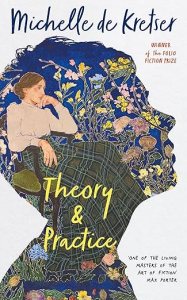
This month we start with Theory & Practice by Michelle de Kretser, the winner of the Stella Prize for Fiction 2025, praised for its innovative structure and exploration of young love, jealousy, and literary inheritance.  I’ve not read it but it looks interesting. This is Amazon’s description:

It’s 1986, and ‘beautiful, radical ideas’ are in the air. A young woman arrives in Melbourne to research the novels of Virginia Woolf. In bohemian St Kilda, she meets artists, activists, students – and Kit. He claims to be in a ‘deconstructed’ relationship, and they become lovers. Meanwhile, a dismaying discovery throws her work on ‘the Woolfmother’ into disarray.

Theory & Practice is a mesmerising account of desire and jealousy, truth and shame. It makes and unmakes fiction as we read, expanding our notion of what a novel can contain. Michelle de Kretser, one of Australia’s most celebrated writers, bends fiction, essay and memoir into exhilarating new shapes to uncover what happens when life smashes through the boundaries of art..

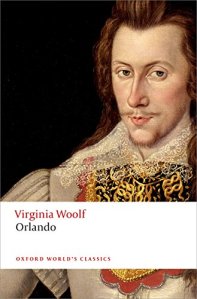
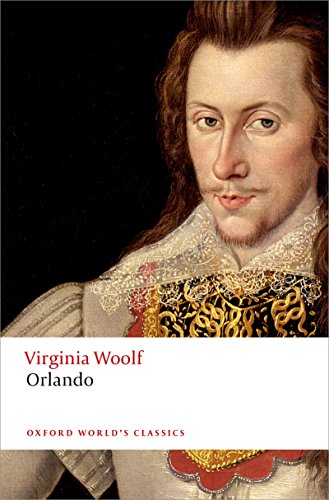
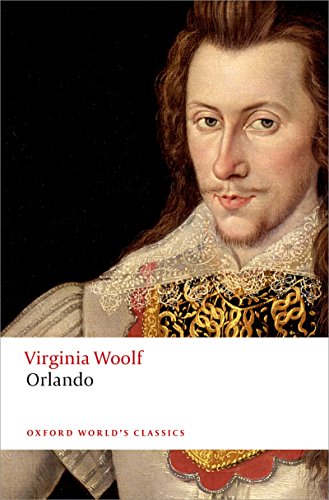
I’ve read some of Virginia Woolf’s books, including my first link: Orlando, a fictionalised biography of Vita Sackville-West, based on her life. It tells the tale of an extraordinary individual who lives through centuries of English history, first as a man, then as a woman. This is a book steeped in history showing how the passage of time had changed both the landscape and climate of England along with its society. There are many vivid passages – such as her description of the ‘Great Frost’ of 1608, when the Thames was frozen for six weeks and Frost Fairs were held on the ice.

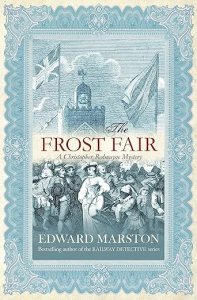
Second link: There have been several Frost Fairs over the centuries. Another one in 1669 is described in Edward Marston’s The Frost Fair, the fourth in the Christopher Redmayne Restoration series about an architect and Jonathan Bale, a parish constable. They are both visiting the fair when one of Bale’s sons gets into trouble on thin ice. They rescue the boy but in the process make a grim discovery – the frozen corpse of a man. The dead man is Jeronimo Maldini, an Italian fencing master who has been missing for some time. Redmayne is inclined to dismiss the case and leave the investigation to Bale; but all that changes when his own brother, Henry Redmayne, is charged with the murder.

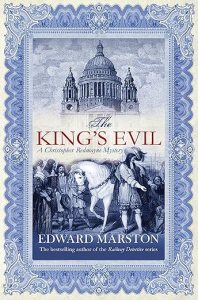
Third link: The first Christopher Redmayne book is The King’s Evil set in London in September 1666, just as the Great Fire of London has begun, eventually devastating a large part of the old medieval City of London. It’s also a murder mystery. Redmayne is working to restore London after the Fire, when he becomes involved in investigating the murder of Sir Ambrose Northcott. whose body was found in the cellars of his partly built new house.

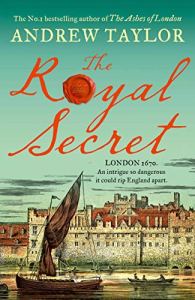
Which links nicely to my fourth link about another architect, Cat (Catherine) Hakesby: The Royal Secret by Andrew Taylor set in 1670. This is the 5th book in the Marwood and Lovett series. After designing a poultry house for the young daughter of Lord Arlington, the Secretary of State, Cat Hakesby (formerly Lovett) gains a commission to design one for Charles II’s sister, ‘Minette,’ the Duchess of Orléans. This is a complicated book, as Marwood is investigating the mysterious death of Richard Abbott, one of Lord Arlington’s men. It’s full of political intrigue, danger and conspiracy, involving witchcraft, poisonings, and tricky international relationships.

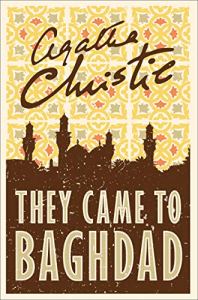
My Fifth link is conspiracy, which brings me to Agatha Christie’s They Came to Baghdad. Set in 1950 this is a story about international espionage and conspiracy. The heads of the ‘great powers‘ are secretly meeting in Baghdad, where if it all goes wrong ‘the balloon will go up with a vengeance.’ And an underground criminal organisation is out to make sure it does go wrong, aiming at ‘total war – total destruction. And then – the new Heaven and the new Earth.’ Victoria Jones, a short-hand typist, a courageous girl with a ‘natural leaning towards adventure’ and a tendency to tell lies gets involved after meeting with a young man, Edward, who is going out to Baghdad the following day to join an archaeological dig. 

My sixth link is archaeology in The Night Hawks by Elly Griffiths. Ruth Galloway is now Head of the Department of Archaeology at her old university, the fictional University of North Norfolk. The body of a young man who Detective Chief Inspector Nelson guesses is an illegal immigrant, an asylum seeker, is found on the beach at Blakeney Point. Then a skeleton, buried in a mound of what appears to be Bronze Age weapons, is also discovered on the beach by the group known as the Night Hawks when they were searching for buried treasure. Ruth, however is more interested in the hoard of Bronze Age weapons. 

My chain is mostly made up of two of my favourite genres, historical fiction and crime fiction. What is in your chain?

Next month (August 5, 2025), we’ll start with the 2025 Women’s Prize winner, The Safekeep by Yael Van Der Wouden.

Orlando by Virginia Woolf

Rating: 4 out of 5.

Orlando: a Biography has been on my TBR shelves for nearly five years now, so I was glad it came up in the Classics Club spin as this gave me the push to actually read it. I won Orlando in one of Heaven Ali’s Woolfalong giveaways in May 2016 and I’m sorry that I haven’t read it before now. I did start it when I first got it, but found it a bit ‘difficult to get into it’ and left it on my bookshelves for while – the while turned out to be nearly five years!

I’ve read some of Virginia Woolf’s books before – Mrs Dalloway, To The Lighthouse, Kew Gardens (a short story), Flush: a biography of Elizabeth Barrett Browning’s dog, A Room of One’s Own and The Three Guineas (in one volume and more recently, I’ve read The Voyage Out, and Death of a Moth and other essays.

Synopsis:

Orlando tells the tale of an extraordinary individual who lives through centuries of English history, first as a man, then as a woman; of his/her encounters with queens, kings, novelists, playwrights, and poets, and of his/her struggle to find fame and immortality not through actions, but through the written word. At its heart are the life and works of Woolf’s friend and lover, Vita Sackville-West, and Knole, the historic home of the Sackvilles. But as well as being a love letter to Vita, Orlando mocks the conventions of biography and history, teases the pretensions of contemporary men of letters, and wryly examines sexual double standards.

My thoughts:

Orlando is a fictionalised biography of Vita Sackville-West, based on her life. They had met in 1922 when Woolf was 40 and Vita was 30, when Wolf described her as ‘lovely’ and ‘aristocratic’. I was a bit overwhelmed at times reading Orlando – such a fantastical novel, spanning 500 years. There are copious literary, historical, and personal allusions and despite continually referring to the Explanatory Notes at the end of the book I’m sure I missed a lot of them. And it makes for a fragmentary reading experience, having to stop reading and flip backwards and forwards between the text and the notes, so that I was a bit confused about the story and what happened when.

But having said that the plot is extraordinary, beginning towards the end of Elizabeth I’s reign when Orlando is a young nobleman, and continuing for the next five hundred years to the start of the twentieth century. You have to completely suspend your disbelief, not just for the length of his life, but also for his/her gender as in the late 17th century whilst he is an ambassador for Charles II he falls into a trance for seven days, only to find when he comes to that ‘he’ has become a young woman. As a woman she lives with a group of Turkish gypsies and then returns to England in the 18th century, when she has difficulty in being identified as a woman. In the 19th century she falls in love with a young romantic traveller, finally finding freedom in finishing the poem she began in the 16th century and in experiencing the delights of motoring in the early years of the 20th century.

What I’ve described here is just the bare bones of the book, because there are many vivid passages – such as her description of the ‘Great Frost’ of 1608, when the Thames was frozen for six weeks and Frost Fairs were held on the ice. It hit the country people the hardest:

But while the country people suffered the extremity of want, and the trade of the country was at a stand still, London enjoyed a carnival of the utmost brilliance. The Court was at Greenwich, and the new King seized the opportunity that his coronation gave him to curry favour with the citizens. He directed that the river, which was frozen to a depth of twenty feet and more for six or seven miles on either side should be swept, decorated and given all the semblance of a park or pleasure ground with arbours, mazes, alleys, drinking booths, etc at his expense. For himself and his courtiers, he reserved a certain space immediately opposite the Palace gates; which railed off from the public only by a silken rope, became at once the centre of the most brilliant society in England. (pages 22-23)

She also writes about writing and about books, about the nature of gender, and about the position of women in society over the centuries. One theme that fascinates me is her depiction of the passage of time, particularly in the final section of the book set as the 20th century reached 1928 (the year Orlando was published). Overall it is a book steeped in history showing how the passage of time had changed both the landscape and climate of England along with its society – and I have only scratched the surface in this post. It is a book packed with detail that deserves to be read more than once to appreciate it fully.

  • Publisher : OUP Oxford; 2nd edition (11 Dec. 2014)
  • Language : English
  • Paperback : 288 pages
  • ISBN-10 : 019965073X
  • ISBN-13 : 978-0199650736

The Classics Club Spin Result

The spin number in The Classics Club Spin is number …

which for me is Orlando by Virginia Woolf. The rules of the Spin are that this is the book for me to read by 30 January, 2021.

Orlando tells the tale of an extraordinary individual who lives through centuries of English history, first as a man, then as a woman; of his/her encounters with queens, kings, novelists, playwrights, and poets, and of his/her struggle to find fame and immortality not through actions, but through the written word. At its heart are the life and works of Woolf’s friend and lover, Vita Sackville-West, and Knole, the historic home of the Sackvilles. But as well as being a love letter to Vita, Orlando mocks the conventions of biography and history, teases the pretensions of contemporary men of letters, and wryly examines sexual double standards.

I hope I get on better with this book than I did with my last Classics Club Spin book, which was Far From the Madding Crowd by Thomas Hardy. I did start reading it, but didn’t get very far – it wasn’t appealing to me at all!

Did you take part in the Classics Spin? What will you be reading?

Six Degrees from Lincoln in the Bardo to Iris

I love doing Six Degrees of Separation, a monthly link-up hosted by Kate at Books Are My Favourite and Best. Each month a book is chosen as a starting point and linked to six other books to form a chain. A book doesn’t need to be connected to all the other books on the list, only to the one next to it in the chain.

This month the chain begins with Lincoln in the Bardo by George Saunders, a book I haven’t read.

Lincoln in the Bardo

It’s about Abraham Lincoln and the death of his eleven year old son, Willie, at the dawn of the Civil War. Willie finds himself trapped in a transitional realm – called, in Tibetan tradition, the bardo – and as ghosts mingle, squabble, gripe and commiserate, and stony tendrils creep towards the boy, a monumental struggle erupts over young Willie’s soul.

Moving from a fictional and highly original book by the looks of it my chain goes next to a biographical account of Lincoln:

Team of Rivals: The Political Genius of Abraham Lincoln

Team of Rivals: the Political Genius of Abraham Lincoln, a biography of Abraham Lincoln and others, by  Doris Kearns Goodwin, a book I bought after watching the film, Lincoln, which is loosely based on this book covering the final four months of Lincoln’s life. Goodwin examines his relationships with three men he selected for his cabinet, all of whom were opponents for the Republican nomination in 1860: William H. Seward, Salmon P. Chase, and Edward Bates.

Body Parts: Essays on Life-Writing

Writing biography is the subject of Body Parts: Essays on Life Writing by Hermione Lee, a collection of essays on Shelley,  T S Eliot, J M Coetzee, Jane Austen, Eudora Welty  and Virginia Woolf, to name but a few. Lee explores the relation of biography to fiction and history and of the connection of writers’ lives to their works.

So my next link is a collection of essays by Virginia Woolf –

The Death of the Moth and Other Essays

The Death of the Moth and Other Essays, originally published in 1942 by Leonard Woolf. Virginia had been getting together essays, which she proposed to publish in the autumn of 1941, or the spring of 1942. She had left behind her many essays, sketches and short stories, some of which had been previously published in newspapers, which he decided were worth republishing and in this book he also included some of those previously unpublished.

The title essay is a meditation on the nature of life and death seen through the perspective of a moth. It flies by day, fluttering from side to side of a window pane. As the day progresses the moth tires and falls on his back. He struggles vainly to raise himself. Woolf watches, realising that it is useless to try to do anything to help and ponders the power of death over life.

Moths provide the next link  – to a novel, The Behaviour of Moths by Poppy Adams.

Behavior Of Moths

This is the story of two sisters, Ginny and Vivi. Vivi, the younger sister left the family mansion 47 years earlier and returns unexpectedly one weekend. Ginny, a reclusive moth expert has rarely left the house in all that time.  What happens when they meet again is shocking to both of them. It’s a story full of mystery and suspense as it is revealed that the two have very different memories of their childhood and the events of the past. Two events in particular affected their lives. One was when Vivi, aged 8, fell from the bell tower and nearly died. The story alternates between the past and the present as Ginny recalls their lives.

Bell‘ is the next link in my chain – to Iris Murdoch’s novel The Bell, a book with an impending sense of evil and menace. It looks at the angst and self-denial of the relationship between religion and sex.

The Bell

A lay community lives next to an enclosed order of nuns, a new bell is being installed and then the old bell, a legendary symbol of religion and magic  is retrieved from the bottom of the lake. The legend of the bell is that it fell into the lake after a 14th century Bishop had cursed the Abbey when a nun was discovered to have a lover and had drowned herself.

And my final link is to a book about the author of The Bell, Iris Murdoch – Iris: A Memoir by John Bayley.

Iris: A Memoir of Iris Murdoch

I first read this in 2003. It’s a very loving and touching account. Iris died in February 1999 after suffering from Alzheimer’s Disease. Bayley explained how he had coped emotionally and practically with the illness that beset the woman he loved and cherished.

Writing this post as disrupted my reading because I got Bayley’s book off the shelves and began reading it again. He writes in such a warm and affectionate way that I’ve decided to read it right away.

For once there is no crime fiction in my chain! It contains books pondering the nature of life and death, beginning with a meditation on the death of Willie Lincoln and ending with a memoir of the life of Iris Murdoch.

Next month (March 3, 2018), the chain begins with a controversial book that Kate reports had everyone talking in the nineties – The Beauty Myth by Naomi Wolf. Everyone that is, apart from me – I don’t know anything (yet) about this book.