Six Degrees of Separation from Theory and Practice to The Night Hawks

It’s time again for Six Degrees of Separation, a monthly link-up hosted by Kate at Books Are My Favourite and Best. Each month a book is chosen as a starting point and linked to six other books to form a chain. A book doesn’t need to be connected to all the other books on the list, only to the one next to it in the chain.

This month we start with Theory & Practice by Michelle de Kretser, the winner of the Stella Prize for Fiction 2025, praised for its innovative structure and exploration of young love, jealousy, and literary inheritance.  I’ve not read it but it looks interesting. This is Amazon’s description:
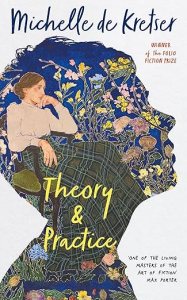
It’s 1986, and ‘beautiful, radical ideas’ are in the air. A young woman arrives in Melbourne to research the novels of Virginia Woolf. In bohemian St Kilda, she meets artists, activists, students – and Kit. He claims to be in a ‘deconstructed’ relationship, and they become lovers. Meanwhile, a dismaying discovery throws her work on ‘the Woolfmother’ into disarray.

Theory & Practice is a mesmerising account of desire and jealousy, truth and shame. It makes and unmakes fiction as we read, expanding our notion of what a novel can contain. Michelle de Kretser, one of Australia’s most celebrated writers, bends fiction, essay and memoir into exhilarating new shapes to uncover what happens when life smashes through the boundaries of art..

I’ve read some of Virginia Woolf’s books, including my first link: Orlando, a fictionalised biography of Vita Sackville-West, based on her life. It tells the tale of an extraordinary individual who lives through centuries of English history, first as a man, then as a woman. This is a book steeped in history showing how the passage of time had changed both the landscape and climate of England along with its society. There are many vivid passages – such as her description of the ‘Great Frost’ of 1608, when the Thames was frozen for six weeks and Frost Fairs were held on the ice.
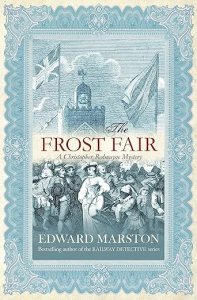
Second link: There have been several Frost Fairs over the centuries. Another one in 1669 is described in Edward Marston’s The Frost Fair, the fourth in the Christopher Redmayne Restoration series about an architect and Jonathan Bale, a parish constable. They are both visiting the fair when one of Bale’s sons gets into trouble on thin ice. They rescue the boy but in the process make a grim discovery – the frozen corpse of a man. The dead man is Jeronimo Maldini, an Italian fencing master who has been missing for some time. Redmayne is inclined to dismiss the case and leave the investigation to Bale; but all that changes when his own brother, Henry Redmayne, is charged with the murder.
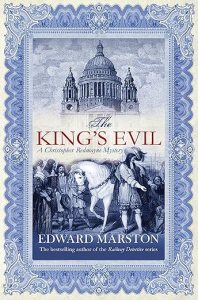
Third link: The first Christopher Redmayne book is The King’s Evil set in London in September 1666, just as the Great Fire of London has begun, eventually devastating a large part of the old medieval City of London. It’s also a murder mystery. Redmayne is working to restore London after the Fire, when he becomes involved in investigating the murder of Sir Ambrose Northcott. whose body was found in the cellars of his partly built new house.
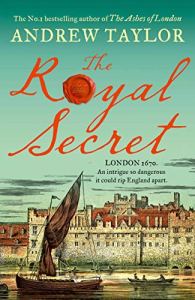
Which links nicely to my fourth link about another architect, Cat (Catherine) Hakesby: The Royal Secret by Andrew Taylor set in 1670. This is the 5th book in the Marwood and Lovett series. After designing a poultry house for the young daughter of Lord Arlington, the Secretary of State, Cat Hakesby (formerly Lovett) gains a commission to design one for Charles II’s sister, ‘Minette,’ the Duchess of Orléans. This is a complicated book, as Marwood is investigating the mysterious death of Richard Abbott, one of Lord Arlington’s men. It’s full of political intrigue, danger and conspiracy, involving witchcraft, poisonings, and tricky international relationships.
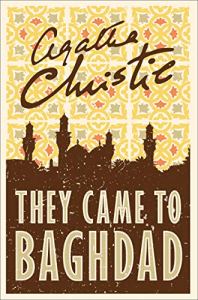
My Fifth link is conspiracy, which brings me to Agatha Christie’s They Came to Baghdad. Set in 1950 this is a story about international espionage and conspiracy. The heads of the ‘great powers‘ are secretly meeting in Baghdad, where if it all goes wrong ‘the balloon will go up with a vengeance.’ And an underground criminal organisation is out to make sure it does go wrong, aiming at ‘total war – total destruction. And then – the new Heaven and the new Earth.’ Victoria Jones, a short-hand typist, a courageous girl with a ‘natural leaning towards adventure’ and a tendency to tell lies gets involved after meeting with a young man, Edward, who is going out to Baghdad the following day to join an archaeological dig. 

My sixth link is archaeology in The Night Hawks by Elly Griffiths. Ruth Galloway is now Head of the Department of Archaeology at her old university, the fictional University of North Norfolk. The body of a young man who Detective Chief Inspector Nelson guesses is an illegal immigrant, an asylum seeker, is found on the beach at Blakeney Point. Then a skeleton, buried in a mound of what appears to be Bronze Age weapons, is also discovered on the beach by the group known as the Night Hawks when they were searching for buried treasure. Ruth, however is more interested in the hoard of Bronze Age weapons. 

My chain is mostly made up of two of my favourite genres, historical fiction and crime fiction. What is in your chain?

Next month (August 5, 2025), we’ll start with the 2025 Women’s Prize winner, The Safekeep by Yael Van Der Wouden.
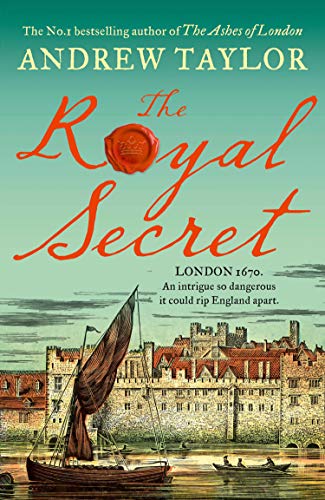
The Royal Secret by Andrew Taylor

Harper Collins UK| 29 April 2021| 476 pages| e-book| Review copy| 4*

Description:

From the No.1 bestselling author of The Last Protector and The Ashes of London comes the next book in the phenomenally successful series following James Marwood and Cat Lovett during the time of King Charles II.

Two young girls plot a murder by witchcraft. Soon afterwards a government clerk dies painfully in mysterious circumstances. His colleague James Marwood is asked to investigate – but the task brings unexpected dangers.
 
Meanwhile, architect Cat Hakesby is working for a merchant who lives on Slaughter Street, where the air smells of blood and a captive Barbary lion prowls the stables. Then a prestigious new commission arrives. Cat must design a Poultry House for the woman that the King loves most in all the world.
 
Unbeknownst to all, at the heart of this lies a royal secret so explosive that it could not only rip apart England but change the entire face of Europe

My thoughts:

I’ve read all of the previous Marwood and Lovett books, set in 17th century England, and thoroughly enjoyed each one, so I was delighted when Rachel Quin at HarperCollins asked me if I’d like a proof copy of  The Royal Secret to review. It is the 5th book in the series and although it does work as a stand-alone book I do think it’s best to read them in sequence to get the full background of the Restoration period and the relationship between James Marwood and Cat Hakesbury (formerly Lovatt).

The year is 1670, two years have passed since the end of the previous book, The Last Protector. Cat Hakesby’s work as an architect continues after her husband’s death and after designing a poultry house for the young daughter of Lord Arlington, the Secretary of State, she gains a commission to design one for Charles II’s sister, ‘Minette,’ the Duchess of Orléans. Meanwhile Marwood is a government clerk clerk to Joseph Williamson and also working for Lord Arlington. They find themselves involved in a complicated situation that is full of danger.

Marwood is instructed to investigate the mysterious death of Richard Abbott, one of Lord Arlington’s men, and retrieve some confidential papers from the victim’s home. Abbott’s step-daughter, Maria and the maid, Hannah have been dabbling in witchcraft and Maria believes she is responsible for his death. Marwood’s investigation brings him into contact with a merchant, Mr Fanshawe (also one of Cat’s clients) and through him with a mysterious Dutch gentleman, Henryke Van Riebeeck. Van Riebeeck just happens to be Anna Abbott’s brother, and Fanshawe’s son was Anna Abbott’s first husband and the father of Maria. After Abbott’s death she and Maria together with Hannah had gone to live in Fanshawe’s house. Fanshawe is an interesting character, who has recently bought a lion, who he named Caliban, a mangy bad-tempered beast that he keeps in the stables at his house in Slaughter Street.

So, Cat and Marwood are both involved with the same people, although in different circumstances. Their relationship is somewhat ambiguous. She is a strong-minded woman, a widow who values her independence in a society where women, although used to running households and dealing with their families’ financial matters, were only just beginning to find a place in society outside the home. And she doesn’t welcome Marwood’s interference in her life. That the two of them are attracted to each other is not acknowledged by either of them – especially, in this book, when Cat finds herself drawn romantically to Van Riebeeck. Her work takes her to the Royal Court in Paris to discuss her designs for the poultry house, although Minette seems more concerned with political matters and Cat wonders what the real reason for her visit is.

This is a well researched historical novel, mixing fact and fiction, bringing the streets of London and the royal court in Paris to life. At the same time it presents a mystery full of political intrigue, danger and conspiracy, involving witchcraft, poisonings, and tricky international relationships. It is only towards the end of the book that the royal secret is revealed – and I had had no idea until then what it was. I do hope there will be a sixth book for Marwood and Lovatt.

My thanks to the publishers and NetGalley for my review copy.

Can’t-Wait Wednesday: The Royal Secret by Andrew Taylor

Can’t-Wait Wednesday is a weekly meme hosted by Wishful Endings, to spotlight and discuss the books we’re excited about that we have yet to read. Generally they’re books that have yet to be released.

I love Andrew Taylor’s James Marwood and Cat Lovett series, historical fiction set during the reign of Charles II. So I was delighted when I was invited to read the latest instalment, The Royal Secret, due to be published on 29 April.

Description

From the No.1 bestselling author of The Last Protector and The Ashes of London comes the next book in the phenomenally successful series following James Marwood and Cat Lovett during the time of King Charles II.

Two young girls plot a murder by witchcraft. Soon afterwards a government clerk dies painfully in mysterious circumstances. His colleague James Marwood is asked to investigate – but the task brings unexpected dangers.
 
Meanwhile, architect Cat Hakesby is working for a merchant who lives on Slaughter Street, where the air smells of blood and a captive Barbary lion prowls the stables. Then a prestigious new commission arrives. Cat must design a Poultry House for the woman that the King loves most in all the world.
 
Unbeknownst to all, at the heart of this lies a royal secret so explosive that it could not only rip apart England but change the entire face of Europe…

~~~

The earlier books are – The Ashes of London (set in 1666, six years after Charles II was reinstated as King) and The Fire Court (set in 1667, eight months after the Great Fire of London), The King’s Evil (set seven months later), and The Last Protector (set in 1668 as the exiled Richard Cromwell, son of Oliver, heavily in debt, has returned in disguise to England.)

It is not necessary to read the earlier books as I think they all work well as standalones, but I think it really helps if you do.