Top Ten Tuesday: Authors (or books by authors) Who Live In My State/Country

Top Ten Tuesday is a weekly meme created by The Broke and the Bookish and now hosted by Jana at That Artsy Reader Girl. For the rules see her blog.

The topic this week is Authors (or books by authors) Who Live In My State/Country. I live in the UK. I’ve chosen authors who live/have lived in two Counties of the UK – Northumberland, where I now live and Buckinghamshire, where I used to live. The titles marked with * are linked to my reviews and the rest to Goodreads.

Northumberland:

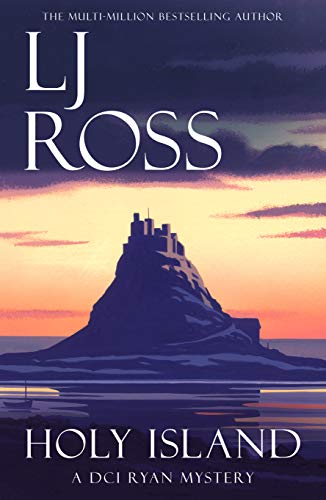
  • L J Ross — Holy Island – crime fiction (DCI Ryan)
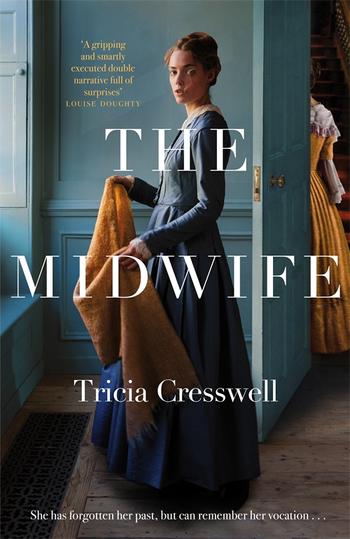
  • Tricia Cresswell – The Midwife – historical fiction
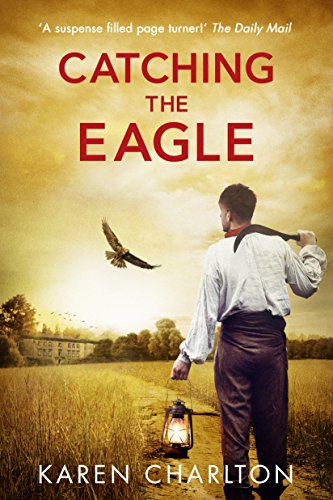
  • Karen Charlton – Catching the Eagle – historical fiction*
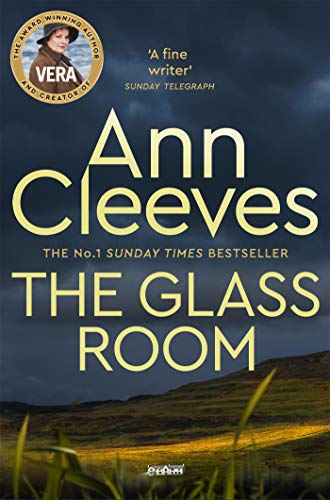
  • Ann Cleeves – The Glass Room – crime fiction (Vera Stanhope)*
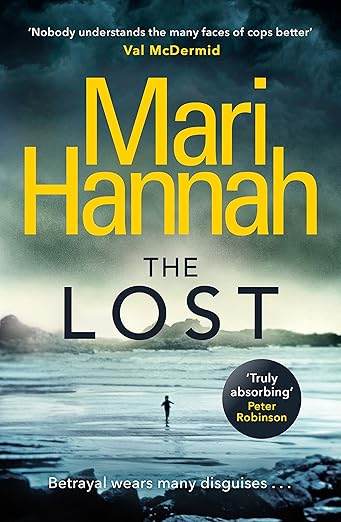
  • Mari Hannah – The Lost – crime fiction (DS Frankie Oliver and DI David Stone)

Buckinghamshire

Have you read any of them?

The Glass Room by Simon Mawer
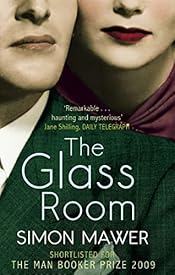
The Glass Room by Simon Mawer 

Synopsis from Amazon:

Cool. Balanced. Modern. The precisions of science, the wild variance of lust, the catharsis of confession and the fear of failure – these are things that happen in The Glass Room.

High on a Czechoslovak hill, the Landauer House shines as a wonder of steel and glass and onyx built specially for newlyweds Viktor and Liesel Landauer, a Jew married to a gentile. But the radiant honesty of 1930 that the house, with its unique Glass Room, seems to engender quickly tarnishes as the storm clouds of WW2 gather, and eventually the family must flee, accompanied by Viktor’s lover and her child.

But the house’s story is far from over, and as it passes from hand to hand, from Czech to Russian, both the best and the worst of the history of Eastern Europe becomes somehow embodied and perhaps emboldened within the beautiful and austere surfaces and planes so carefully designed, until events become full-circle.

The house and its setting are not fictional, but are based on the Tugendhat House, Brno in the Czech Republic. A few of the characters are non-fictional but the rest are imaginary and their story has no basis in fact. In his introduction to the Abacus edition of the book, published in 2013, Simon Mawer describes his first visit to the house, which was then a museum. He hadn’t planned to write a novel centred on the house. To him is not a museum, but ‘vibrant and alive’, and the novel was born.

I found it a gripping novel that had me on tenterhooks as I was reading. It is, as the synopsis relates, the story of a house, the Landauer House, and specifically of a room within that house called the ‘Glass Room’.

Liesel and Viktor stood and marvelled at it [the Glass Room]. It had become a palace of light, light bouncing off the chrome pillars, light refulgent on the walls, light glistening on the dew in the gardens, light reverberating from the glass. It was as though they stood inside a crystal of salt. Isn’t it wonderful,’ she exclaimed, looking round with an expression of amazement. ‘You feel so free, so unconstrained. The sensation of space, of all things being possible. Don’t you think it is wonderful, Viktor? Don’t you think that Rainer has created a masterpiece for us?’ (pages 64-5)

The whole wall of the lower ground floor is plate glass. The room is a huge space, white walls, furnished with little decoration beyond a piano, specially designed chairs in the sitting area in front of an onyx wall veined with amber and honey, polished to a mirror-like gloss, reflecting the light, and a circular dining table in the dining area enclosed in a semicircle partition of Macassar wood.

But it was the story of the people who lived/worked in the house that captivated me and made me so anxious for them and about what would happen to them as the events of the Second World War and beyond overtook their lives. It’s not only a gripping novel, but also a beautifully written book with interesting and likeable characters, set in a Europe at war and its aftermath; and a book about architecture, ideas, about love and loss, about prejudice and persecution. A deeply moving and haunting book.

I’ve read two of Simon Mawer’s earlier books, The Gospel of Judas (2000) and The Fall (2003), both of which I also thoroughly enjoyed. He has also written:

Chimera (1989)
The Bitter Cross (1992)
A Place in Italy (1992)
A Jealous God (1996)
Mendel’s Dwarf (1997)
Swimming to Ithaca (2006)
The Girl Who Fell From the Sky (2012)
aka Trapeze
Tightrope (2015)

For more details see his website.

The Glass Room is my 27th book for Bev’s Mount TBR 2016 challenge and the 5th book I’ve read in the 20 Books of Summer Challenge.

The Glass Room by Ann Cleeves

The Glass Room is the fifth book in Ann Cleeves’s Vera Stanhope series.

It’s going to be a contender for my best book of the year, because I loved it. It has everything I like in a crime fiction novel – setting, characters and a cleverly constructed plot. I didn’t guess who the murderer was but realised afterwards that all the clues had been there, skilfully woven into the narrative, hidden among the dead-ends and red herrings, so that I’d read on without realising their significance.

Set in the Northumberland countryside in an isolated country house, a number of aspiring authors are gathered at the Writers’ House, run by Miranda Barton, to work on their novels. It’s an old fortified farmhouse close to the sea, sheltered on the landward side by trees. DI Vera Stanhope’s neighbour, Joanna has gone missing and her husband, Jack is frantic to find her, so Vera, having tracked her down to the Writers’ House goes to see her, only to find that one of the visiting tutors, Professor Tony Ferdinand has been murdered in the conservatory, stabbed with a kitchen knife. And Joanna is the chief suspect.

If you’ve seen the TV series Vera, maybe you’ll have a vision of Brenda Blethyn as Vera, but that image gradually faded as I read this book. Vera is bigger, fatter, and ruder than the TV version, but above all she is a truly convincing character, exasperating and opinionated, and she can be a nightmare boss. She has no compunctions about breaking the rules, or doing things in her own way and she acknowledges that if any of the other detectives went freelance, playing the private eye, as she is doing in looking for Joanna, she’d give them ‘such a bollocking’. She cares deeply about her job and she does have a soft side, even if it is touched with cynicism:

And why had she agreed to do as Jack asked and chase around the countryside looking for Joanna? Because I’m soft as clarts. Because I like happy endings and want to bring the couple together again, like I’m some great fat Cupid in wellies. Because it would be bloody inconvenient living here without them next door. (page 10)

The interplay between the Vera and Sergeant Joe Ashworth is excellent. Joe isn’t as easily managed as Vera would want him to be and yet she likes that in him. And her relationship with the rest of her team leaves much to be desired, but she is human – and she gets results.

Alongside the mystery Ann Cleeves includes a commentary on writing and writers and on creative writing weekend retreats. This particular course shows the writing world in rather a bad light, as a place of people with huge egos, selfish and self- absorbed and with aspiring, insecure would-be-writers:

Writers were like parasites, preying on other people’s stress and misery. Objective observers like spies or detectives  (page 98)

All in all, this is a book I thoroughly enjoyed and one that kept me guessing to the end.