Library Books & Short Story September 2025

The mobile library van came yesterday and I borrowed three books of short stories to read for Short Story September 2025.

I’ve read books by each of the three following authors before:

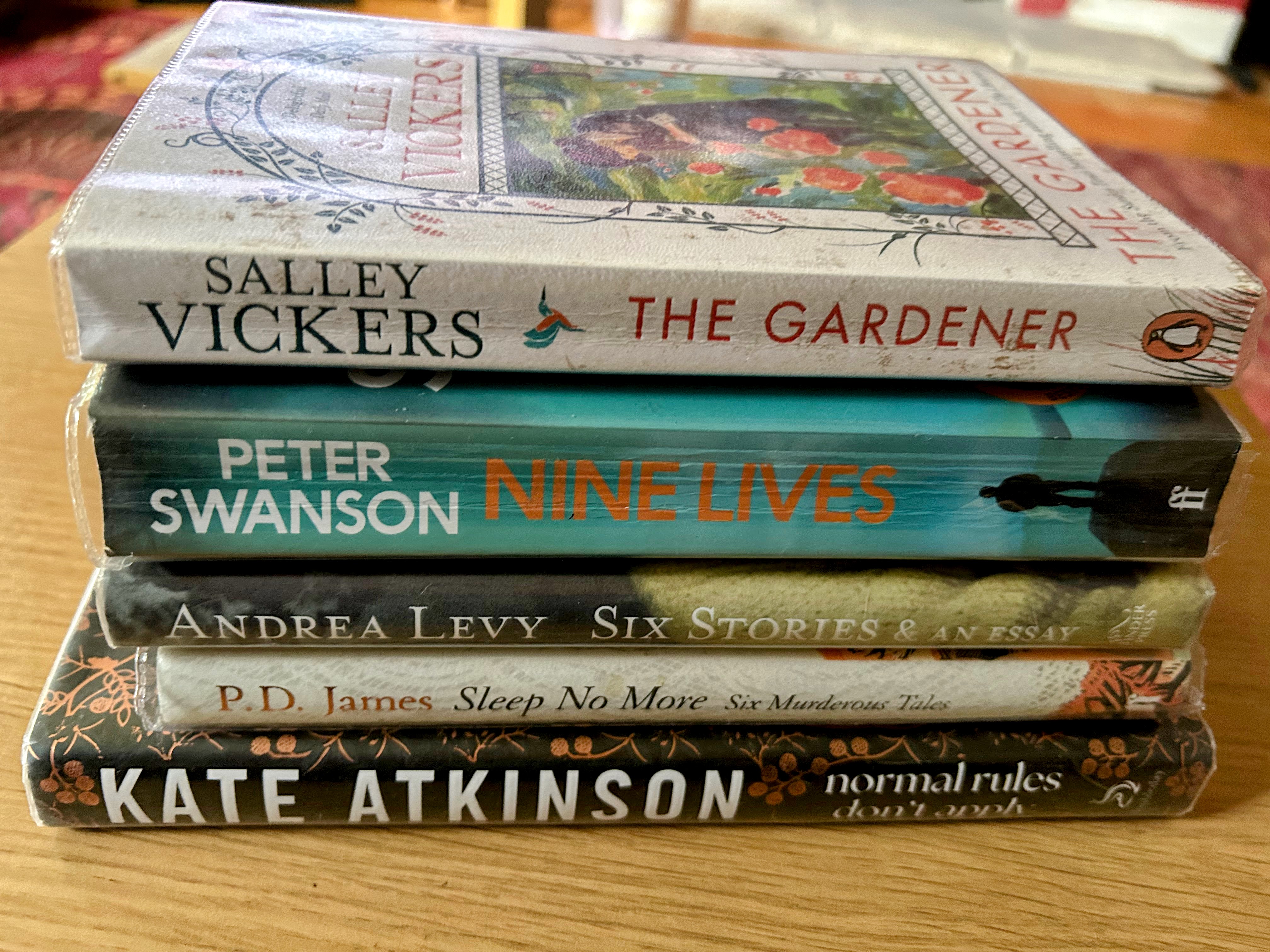
Sleep No More: Six Murderous Tales by P D James – each one with the dark motive of revenge.

Normal Rules Don’t Apply by Kate Atkinson – Eleven interconnected stories, where everything is changing, where nothing is quite as it seems.

Six Stories and an Essay by Andrea Levy – This collection opens with an essay about how writing has helped Andrea Levy to explore and understand her heritage. She explains the context of each piece within the chronology of her career and finishes with a new story, written to mark the centenary of the outbreak of the Great War in 1914.

I also borrowed two other books:

The Gardener by Salley Vickers – Previously I’ve read five books by Vickers, and enjoyed them, especially Miss Garnet’s Angel and Mr Golightly’s Holiday. The last one I read was The Librarian, which I thought was rather underwhelming. I hope this one is better.

Nine Lives by Peter Swanson – I haven’t read any of Swanson’s books, but keep seeing them on book blogs and thought I’d see if I like this one.

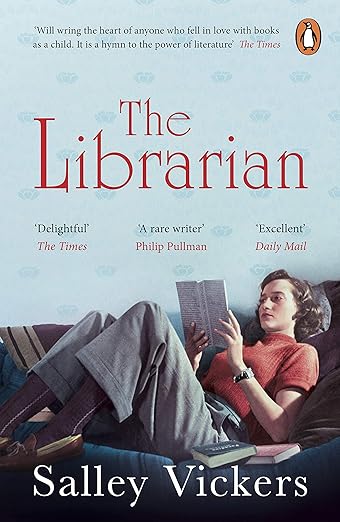
The Librarian by Salley Vickers

Penguin |26 April 2018 | 388 pages| paperback| 3*

Description from Amazon:

In 1958, Sylvia Blackwell, fresh from one of the new post-war Library Schools, takes up a job as children’s librarian in a run down library in the market town of East Mole.

Her mission is to fire the enthusiasm of the children of East Mole for reading. But her love affair with the local married GP, and her befriending of his precious daughter, her neighbour’s son and her landlady’s neglected grandchild, ignite the prejudices of the town, threatening her job and the very existence of the library with dramatic consequences for them all.

The Librarian is a moving testament to the joy of reading and the power of books to change and inspire us all.

‘Underneath the delightful patina of nostalgia for post-War England, there are stern and spiky questions about why we are allowing our children to be robbed of their heritage of story.’ Frank Cottrell Boyce

‘Vickers has a formidable knack for laying open the human heart’ Sunday Times

The Librarian is one of my TBRs (a paperback I bought four years ago) and also one of the books I decided to read as one of my 20 Books of Summer 2025. Frances @ Volatile Rule also identified it as one of her 10 Books of Summer and suggested we could do a buddy read. I am really looking forward to reading what she thinks about it.

I wanted to read The Librarian because I’ve enjoyed some of Salley Vickers’ books – especially Miss Garnet’s Angel and Mr Golightly’s Holiday (both of which I read pre-blogging). But I have to say that I was rather underwhelmed. It seems a bit shallow as I was expecting something that dug deeper beneath the surface, exploring the characters’personalities in more depth. I found the writing style naïve. Nevertheless I did enjoy it. It’s a simple story, simply told, a light read.

Having said that it does reflect life in the 1950s, a time when memories of the Second World War and Hiroshima still lingered. It’s strong on family relationships, and attitudes towards marriage, sex, and morals and shows the class divisions and the social inequality that existed, one in which the role of women was very different from that of today. It also looks at education and the nature of the 11+ exam and its divisive effects on children in deciding whether they went to a grammar or secondary modern or technical school.

In 1958 Sylvia Blackwell moves to East Mole, a fictional town, to become the Children’s Librarian. The town is described as ‘one of those small, middle-English country towns whose reputation rests on an understanding that it has known better days.’ The library is in a redbrick Victorian building that has been neglected over the years and the Children’s Library has suffered from a lack of adequate funding. It contained an outdated collection of books by mainly once fashionable Victorian authors, most of which could ‘hardly pass for children’s reading in the twentieth century.’ Sylvia is keen to update it and to introduce new books to encourage the children to use the library.

Sylvia is renting one of the cottages in Field Row on the outskirts of East Mole, a redbrick terrace, originally a two up, two down building with no inside WC, no bathroom or running hot water. It’s a damp cottage that her landlady, Mrs Bird, had modernised by adding a toilet next to the kitchen and had squeezed in a bathroom upstairs with a chipped bath and water-stained basin. Sylvia thinks it’s rustic and picturesque with its tiled roof greened over with moss.

Sylvia’s neighbours in the terrace of five houses are June and Ray Hedges, and Sam, their son and his little twin sisters, and Mr Collins, a councillor who is a member of the library committee. She gets on well with the Hedges, particularly so with the children. However, Mr Collins is not so friendly, almost antagonistic towards her. She has an affair with Hugh the local doctor, an older married man, putting her job in jeopardy and indeed threatening the closure of the Children’s Library. It causes problems between Hugh’s daughter and Sam. Sylvia’s work life and personal life become entangled, which has both negative and positive consequences for everyone involved.

I think the most interesting part for me is that it is about libraries in 1958, as I was also a librarian, although not a Children’s Librarian, like Sylvia. And I was a child in the 1950s and and used the local town library from the age of 4, so reading this has brought back many memories of using and working in libraries.

I was less enthusiastic about the ending set some sixty years later, when the library was threatened once again with closure. One of the children returned, now a famous author, to speak at an event which they hope might help to keep the library open, thus giving an update on the lives of some of the characters. However, I think it’s too long and neatly ties up all the loose ends. The book doesn’t need it.

In her Author’s Note at the end of the book, Salley Vickers writes:

The years I have spent as a novelist have taught me that there is no knowing how people will take one’s books. And I really believe that a book is finally made by its readers. Books should not be ‘about’ anything but if this book expresses any special interest it is the interest I acquired as a child in reading. The Librarian grew out of my experience as a young girl with a superb local library and a remarkable Children’s Librarian, Miss Blackwell, whose surname I have stolen (I never knew her first name) for my protagonist.

There’s also a list of children’s books from East Mole Library ‘Recommended reading from East Mole Library’, including some of my favourite books I read as a child and some I missed.

What I have taken from this book is Salley Vickers’ love of reading and enthusiasm for opening the children’s eyes to the joy of reading. It centres on Sylvia and her experiences not only as a Children’s Librarian but as a rather naive young woman in her second job away from her parents and her home. And it is that side of the story that I found less engaging. Salley’s inexperience makes her easy prey for Hugh and I thought the outcome was so predictable.

Salley Vickers

Salley Vickers was born in Liverpool, the home of her mother, and grew up as the child of parents in the British Communist Party. She won a state scholarship to St Paul’s Girl’s School and went on to read English at Newnham College Cambridge.

She has worked, variously, as a cleaner, a dancer, an artist’s model, a teacher of children with special needs, a university teacher of literature, and a psychoanalyst. Her first novel, ‘Miss Garnet’s Angel’, became an international word-of-mouth bestseller. She now writes full time and lectures widely on many subjects, particularly the connections between, art, literature, psychology and religion.

Her principal interests are opera, bird watching, dancing, and poetry. One of her father’s favourite poets, W.B.Yeats, was responsible for her name Salley, (the Irish for ‘willow’) which comes from Yeats’s poem set to music by Benjamin Britten ‘Down by the salley gardens’.(Goodreads)
Back to Barter Books!

On Tuesday I went Barter Books in Alnwick (this is a secondhand bookshop where you can ‘swap’ books for credit that you can then use to get more books from the Barter Books shelves). The last time I went there was in January 2020. Since the pandemic began I’ve only been out to a few places and not been around many people at all, so I was a bit nervous.

These are the books I got (the descriptions are from Amazon):

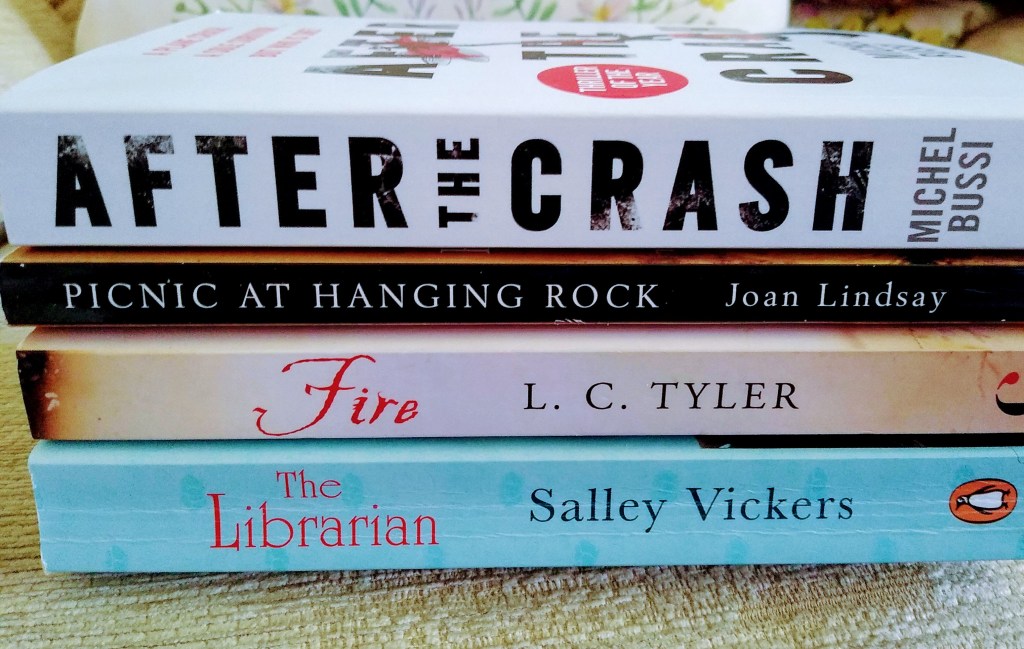
After the Crash by Michel Bussi – because I’d enjoyed reading Time is a Killer by Bussi a couple of years ago.

On the night of 22 December 1980, a plane crashes on the Franco-Swiss border and is engulfed in flames. 168 out of 169 passengers are killed instantly. The miraculous sole survivor is a three-month-old baby girl. Two families, one rich, the other poor, step forward to claim her, sparking an investigation that will last for almost two decades. Is she Lyse-Rose or Emilie?

Eighteen years later, having failed to discover the truth, private detective Crédule Grand-Duc plans to take his own life, but not before placing an account of his investigation in the girl’s hands. But, as he sits at his desk about to pull the trigger, he uncovers a secret that changes everything – then is killed before he can breathe a word of it to anyone . . .

Picnic at Hanging Rock by Joan Lindsay – this has been on my wishlist for years!

It was a cloudless summer day in the year nineteen hundred.

Everyone at Appleyard College for Young Ladies agreed it was just right for a picnic at Hanging Rock. After lunch, a group of three of the girls climbed into the blaze of the afternoon sun, pressing on through the scrub into the shadows of Hanging Rock. Further, higher, till at last they disappeared.

They never returned.

Whether Picnic at Hanging Rock is fact or fiction the reader must decide for themselves.

Fire by L C Tyler – I’ve never read any of his books. I chose it because I like historical fiction and I’m interested in the Restoration period, having read Andrew Taylor’s Marwood and Lovett series also set in the same period. Fire is the fourth book in the John Grey Historical Mystery series.

1666. London has been destroyed by fire and its citizens are looking for somebody, preferable foreign, to blame. Only the royal Court, with its strong Catholic sympathies, is trying to dampen down the post-conflaguration hysteria. Then, inconveniently, a Frenchman admits to having started it together with an accomplice, whom he says he has subsequently killed.

John Grey is tasked by Secretary of State, Lord Arlington, with proving conclusively that the self-confessed fire-raiser is lying. Though Grey agrees with Arlington that the Frenchman must be mad, he is increasingly perplexed at how much he knows. And a body has been discovered that appears in every way to match the description of the dead accomplice.

Grey’s investigations take him and his companion, Lady Pole, into the dangerous and still smoking ruins of the old City. And somebody out there – somebody at the very centre of power in England – would prefer it if they didn’t live long enough to conclude their work…

The Librarian by Salley Vickers – I’ve read a few of Salley Vickers’ books and enjoyed them, especially  Miss Garnet’s Angel and Mr Golightly’s Holiday, which I read before I began this blog.

In 1958, Sylvia Blackwell, fresh from one of the new post-war Library Schools, takes up a job as children’s librarian in a run down library in the market town of East Mole.

Her mission is to fire the enthusiasm of the children of East Mole for reading. But her love affair with the local married GP, and her befriending of his precious daughter, her neighbour’s son and her landlady’s neglected grandchild, ignite the prejudices of the town, threatening her job and the very existence of the library with dramatic consequences for them all.

The Librarian is a moving testament to the joy of reading and the power of books to change and inspire us all.

There was a queue outside when I got there as entry to the bookshop is limited to a maximum of about sixty people at a time to ensure enough space for social distancing. Although I was pleased to be able to go to Barter Books again, there were too many people there for me, especially around the counter and the crime fiction bookcases near the counter. So I didn’t linger and went to back of the main hall, which is the largest room in the shop where there were only a few people browsing the shelves. Even so I felt nervous, so once I’d found four books I decided it was time for me to leave. I’ve never been comfortable in crowds, even before the pandemic.

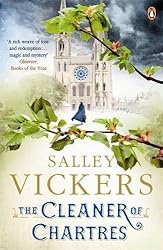
The Cleaner of Chartres by Salley Vickers

Once more I am behind with writing about the books I’ve read, so this is a short post with brief thoughts on The Cleaner of Chartres by Salley Vickers. I enjoyed it immensely.
This is a beautiful book, beautifully written, with the character of Agnès Morel at its centre. Agnès was found as a baby in a straw shopping basket, wrapped in a white tablecloth, with just a single turquoise earring in the bottom of the basket that may or may not indicate her parentage. She was brought up by the Sisters of Our Lady of Mercy at Evreux. It tells of how Agnes became the cleaner of the Cathedral of Notre Dame in Chartres, in central France, north of Paris, and not only of the cathedral but also a cleaner for other residents of the town.
So, there is a mystery about her origins and also about her life before she arrived in Chartres. Moving between the past and the present, the details are slowly revealed. There are many characters, some likeable people including the Abbé Paul, Professor Jones, who teaches Agnes to read, Philippe Nevers, and Alain Fleury, who works on the cathedral restoration and some unlikeable characters such as Madame Beck and Sister (later Mother) Veronique whose interfering ways cause Agnes such a lot of trouble. All are convincing characters with depth.

I liked it all, the slow build up as Agnès’s history unfolds, the interaction of the characters and the description and history of the cathedral also added to my enjoyment of the book.

Stacking the Shelves: 9 April 2016

STSmall

Stacking The Shelves is all about sharing the books you are adding to your shelves. This means you can include ‘˜real’ and ‘˜virtual’ books (ie physical and ebooks) you’ve bought, books you’ve borrowed from friends or the library, review books, and gifts.

I’ve borrowed three library books this week, books by authors whose books I’ve read in the past and enjoyed:

  • The Cleaner of Chartres by Salley Vickers – I borrowed this because I’ve some of Salley Vickers’ books and loved them, in particular Miss Garnet’s Angel and Mr Golightly’s Holiday and Where Three Roads Meet, so I’m hoping I’ll love this one too.

Blurb:

There is something special about the ancient cathedral of Chartres, with its mismatched spires, astonishing stained glass and strange labyrinth. And there is something special too about Agnès Morel, the mysterious woman who is to be found cleaning it each morning.

No one quite knows where she came from – not the diffident Abbé Paul, who discovered her one morning twenty years ago, sleeping in the north porch; nor lonely Professor Jones, whose chaotic existence she helps to organise; nor Philippe Nevers, whose neurotic sister and newborn child she cares for; nor even the irreverent young restorer, Alain Fleury, who works alongside her each day and whose attention she catches with her tawny eyes, her colourful clothes and elusive manner. And yet everyone she encounters would surely agree that she is subtly transforming their lives, even if they couldn’t quite say how.

But with a chance meeting in the cathedral one day, the spectre of Agnès’ past returns, provoking malicious rumours from the prejudiced Madame Beck and her gossipy companion Madame Picot. As the hearsay grows uglier, Agnès is forced to confront her history, and the mystery of her origins finally unfolds.

Blurb:

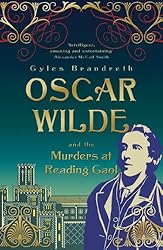
Reading Gaol’s most famous prisoner is pitted against a ruthless and fiendishly clever serial killer. ‘Intelligent, amusing and entertaining’ Alexander McCall Smith It is 1897, Dieppe. Oscar Wilde, poet, playwright, novelist, raconteur and ex-convict, has fled the country after his release from Reading Gaol. Tonight he is sharing a drink and the story of his cruel imprisonment with a mysterious stranger. He has endured a harsh regime: the treadmill, solitary confinement, censored letters, no writing materials. Yet even in the midst of such deprivation, Oscar’s astonishing detective powers remain undiminished – and when first a brutal warder and then the prison chaplain are found murdered, who else should the governor turn to for help other than Reading Gaol’s most celebrated inmate?
In this, the latest novel in his acclaimed Oscar Wilde murder mystery series, Gyles Brandreth takes us deep into the dark heart of Wilde’s cruel incarceration.

Blurb:

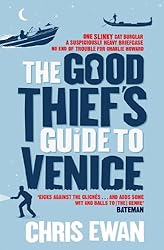
Charlie Howard ‘“ struggling crime-writer by day, talented thief by night ‘“’¯has gone straight. But holing himself up in a crumbling palazzo in Venice in an attempt to concentrate on his next novel hasn’t got rid of the itch in his fingers. And to make matters worse, a striking Italian beauty has just broken into his apartment and made off with his most prized possession, leaving a puzzling calling card in its place.

It looks as though kicking the habit of a lifetime will be much more of a challenge than Charlie thought.

Sneaking out into Venice’s maze of murky canals, Charlie’s attempts to tame a cat burglar embroil him in a plot that is far bigger and more explosive than he could ever have imagined.

We should treasure our libraries.

Teaser Tuesday

Teaser Tuesday is a weekly event hosted by MizB where you share ‘teasers’. I’ve adapted it a bit to include more information about the book and longer teasers.

Yesterday I finished reading Where Three Roads Meet by Salley Vickers. I borrowed it from the library simply because I’ve enjoyed other books by Salley Vickers –  in particular Miss Garnet’s Angel and Mr Golightly’s Holiday.

Where Three Roads Meet is different, but just as good. It’s one of the Canongate Myths series, modern versions of myths told by a number of different authors. I’ve read others in the series – A Short History of Myth by Karen Armstrong, Weight by Jeanette Winterson (the myth of Atlas and Heracles) and The Penelopiad by Margaret Atwood (the myth of Penelope and Odysseus).

It’s the Oedipus myth as told to Sigmund Freud during his last years when he was suffering from cancer of the mouth. Under the influence of morphine he is visited by Tiresias, a blind prophet of Thebes who tells him his version of the Oedipus story. In between telling the story, Freud and Tiresias discuss language and the origins of words. The point where the three roads meet is the place Oedipus and his father had their tragic meeting, setting in motion the sequence of events that led to his downfall and to the fulfilment of the prophecy that he would kill his father and marry his mother.

In Tiresias’s version Freud’s interpretation wasn’t quite right:

Because, if I may say so, here in all the world was the one person you could safely say didn’t have the complex you dreamed up for him. He was Oedipus, plain Oedipus. But not simple. What was complex about him was not that he wanted to sleep with his mother (as she herself said, that impulse is not so uncommon) nor even that he killed a man who had once threatened his life. Tit for tat, some might say. What was so remarkable was that his own safekeeping was usurped by the need to know what he needed not to know. (page 169)

This is a book with multiple layers, not a simple book. Although it’s easy enough to read it straight through, it is complex, with many ideas about life and death, and truth and ambiguity to ponder. Even if you know the story of Oedipus it seems fresh and new in this version. I found the details of the operations Freud had, their effect upon him and the terrible pain he suffered was quite shocking. All in all, a satisfying, entertaining and challenging book.