Six Degrees of Separation from Kairos to The One I Was: July 2024

It’s time again for Six Degrees of Separation, a monthly link-up hosted by Kate at Books Are My Favourite and Best. Each month a book is chosen as a starting point and linked to six other books to form a chain. A book doesn’t need to be connected to all the other books on the list, only to the one next to it in the chain.

This month starts with Kairos by Jenny Erpenbeck. Kairos is the winner of the International Booker Prize 2024. An intimate and devastating story of the path of two lovers through the ruins of a relationship, set against the backdrop of a seismic period in European history. Translated from German by Michael Hofmann.

Berlin. 11 July 1986. They meet by chance on a bus. She is a young student, he is older and married. Theirs is an intense and sudden attraction, fuelled by a shared passion for music and art, and heightened by the secrecy they must maintain. But when she strays for a single night he cannot forgive her and a dangerous crack forms between them, opening up a space for cruelty, punishment and the exertion of power. And the world around them is changing too: as the GDR begins to crumble, so too do all the old certainties and the old loyalties, ushering in a new era whose great gains also involve profound loss.
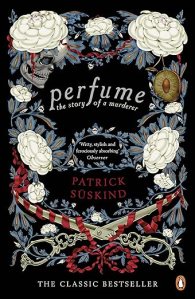
My first link is another novel translated from German, Perfume:the story of a murderer by Patrick Süskind, translated from German by John E Woods. It is an extraordinary novel, a Gothic work in the vein of Edgar Allen Poe, or Oscar Wilde’s The Picture of Dorian Grey. It depicts the strange life of Jean-Baptiste Grenouille and is a book of smells. This is a horror story, one that made me not want to read it and yet also want to read it to the bitter end.
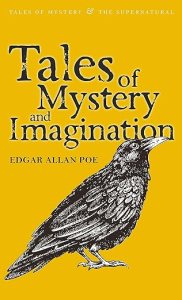
My second link is Tales of Mystery and Imagination by Edgar Allan Poe, which is a collection of Poe’s best stories containing all the terrifying and bewildering tales that characterise his work. As well as the Gothic horror of such famous stories as ‘The Pit and the Pendulum’, ‘The Fall of the House of Usher’, ‘The Premature Burial’ and ‘The Tell-Tale Heart’, all of Poe’s Auguste Dupin stories are included.

These are the first modern detective stories and include ‘The Murders in the Rue Morgue’, ‘The Mystery of Marie Roget’ and ‘The Purloined Letter’.
My third link stays on the theme of tales of horror with Tales of Terror by Robert Louis Stevenson, which are published in my copy of The Strange Case of Dr. Jekyll and Mr Hyde. It consists of two short stories, both written for the Christmas “crawler” tradition in 1884 and 1885. Christmas was a season traditionally associated with supernatural and creepy tales. The Body Snatcher is very much a traditional Christmas ghost story, beginning with four men gathered in an inn on a dark winter’s night telling tales round the fireside of grisly deeds. The other story is Olalla, a Gothic tale, set in an ancient Spanish castle surrounded by deep woodland, about a young man recovering from his war wounds and to “renew his blood”, who finds himself living with a strange family.
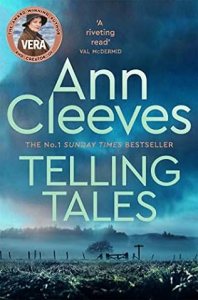
My fourth link moves away from horror stories to crime fiction, linked by the word ‘tales’ in the title. It is Telling Tales by Ann Cleeves, a book I have read but I didn’t write a review. It’s the 2nd of her Vera Stanhope series in which the residents of an East Yorkshire village are revisited with the nightmare of a murder that happened 10 years before. There was some doubt about the guilty verdict passed on Jeanie Long and now it would seem that the killer is still at large. Inspector Vera Stanhope builds up a picture of a community afraid of itself and of outsiders.
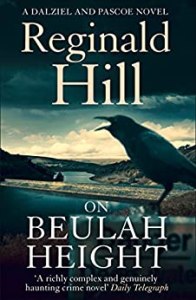
My fifth link is On Beulah Height, Reginald Hill’s 17th Dalziel and Pascoe novel. It’s also set in a Yorkshire village, Dendale. Three little girls had gone missing from the village one summer. Their bodies were never found, and the best suspect, a strange lad named Benny Lightfoot, was held for a time, then released. Fifteen years later another little girl, Lorraine, aged seven went out for a walk one morning with her dog before her parents got up and didn’t return home, reviving memories of the missing children from fifteen years earlier.
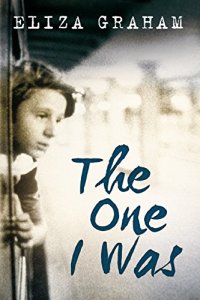
My final link is to a another book featuring a character called Benny – The One I Was by Eliza Graham – historical fiction split between the present and the past following the lives of Benny Gault and Rosamund Hunter. Benny first came to Fairfleet in 1939, having fled Nazi Germany on a Kindertransport train. As an adult he bought the house and now he is dying of cancer. Rosamund returns to Fairfleet, her childhood home, to nurse Benny. I was totally engrossed in both their life stories as the various strands of the story eventually combined.

Half of my chain consists of horror stories, not a genre I often read and the other half is made up of crime fiction novels, as usual.

Next month (August 3, 2024), we’ll start with  The Museum of Modern Love by Heather Rose (Kate’s pick was inspired by Sue’s recent post about writers and artists).

Perfume:the Story of a Murderer by Patrick Suskind

Perfume by Patrick  Süskind, translated from the German by John E üWoods was first  published in 1985. It is an extraordinary novel, a Gothic work in the vein of Edgar Allen Poe, or Oscar Wilde’s Picture of Dorian Grey. It depicts the strange life of Jean-Baptiste Grenouille and is a book of smells. Grenouille, himself has no body smell, but an acute sense of smell. He can recognise and locate the source of smells from miles away. His absence of smell alienates him from other people and he in turn is disgusted by their odour. He is an outsider.

On the trail of an elusive but exquisite smell he tracks it down to a young girl and kills her to possess  her scent for himself.  This puts him in a state of ecstatic happiness and

… he felt he knew who he really was: nothing less than a genius. And that the meaning and goal and purpose of  his life had a higher destiny: nothing less than to revolutionise the odoriferous world. (page 46)

He knew he had to become a creator of scents, the greatest perfumer of all time.

From then on his life became even stranger, if that was possible. He learnt the various processes of making perfume, then withdrew from the world, living for seven years in total isolation in a cave. There he existed in a world with no human smells, whilst he lived in his mind recreating the exquisite scent of the young girl he had killed.

He had withdrawn solely for his own personal pleasure, only to be nearer to himself. No longer distracted by anything external, he basked in his own existence and found it splendid. He lay in his stony crypt like his own corpse, hardly breathing, his heart hardly beating – and yet he lived as intensively and dissolutely as ever a rake had lived in the world outside. (page 128)

I was fascinated by the descriptive language, by so many different smells, scents, perfumes, stenches and obnoxious odours. The descriptions of how perfume is made, when you know what he had in mind was chilling. He wants the delicious scent of the girl he killed, to peel it off her and make it his own. Quite simply this is a horror story, one that made me not want to read it and yet also want to read it to the bitter end. It’s a tale of obsession, the atmosphere Süskind evokes is tremendous, and the detail it contains adds to the realism. Maybe Grenouille is a modern Dracula.

To say that I ‘enjoyed’ it is not true, but it is a tremendous story and well written.

Publisher: Penguin (re-issue edition April 2010)
Paperback: 272 pages
ISBN-10: 0141041153
ISBN-13: 978-0141041155
Source: My own copy (an earlier edition)

Sunday Salon

Reading today:

Eden’s Outcasts: the Story of Louisa May Alcott and Her Father by John Matteson. I’m making heavy weather of this book, mainly because I’m finding Bronson Alcott such a difficult person. I’m only reading a few pages each morning, which is about all I can put up with Bronson’s self-centred approach to life.

It will take me a while to finish this book as it’s over 400 pages long. So far, I’m up to page 118, and Bronson has tried and failed at almost everything he has undertaken in his search for perfection. His efforts at running a school have failed and he is about to embark on a new project – a self-sufficient commune, a ‘beacon of morality in a fallen world.’  This was to be ‘an earthly heaven‘, anything that came from the work of slaves was excluded, they would do away with money, shun the use of animal products and rely as little as possible on animals for work.

He asked Emerson to join him in his venture and also to back him financially. Emerson refused and wrote in his diary:

For a founder of a family or institution, I would as soon exert myself to collect money for a madman. (page 114)

I have to agree with Emerson.

There has been little yet in this book about Louisa but I’m hoping that will soon change as she is now 11 and beginning to rebel against her father, who baffles him with her stubbornness.

I’ve also started to read Perfume: the Story of a Murderer by Patrick Suskind. I’m not sure yet what I think of this novel. It begins well, grabbing my attention with a description of the birth of Jean-Baptiste Grenouille in Paris just before the French Revolution began. The description of the smells of Paris at that time is breath-taking in its awfulness:

The streets stank of manure, the courtyards of urine, the stairwells of mouldering wood and rat droppings, the kitchens of spoiled cabbage and mutton fat; the unaired parlours stank of stale dust, the bedrooms of greasy sheets, damp featherbeds, and the pungently sweet aroma of chamber-pots. The stench of sulphur rose from the chimneys, the stench of caustic lyes from the tanneries, and from the slaughterhouses came the stench of congealed blood. People stank of sweat and unwashed clothes; from their mouths came the stench of rotting teeth, from their bellies that of onions, and from their bodies, if they were no longer very young, came the stench of rancid cheese, and sour milk and tumorous disease.  (page 3)

Grenouille born in this stink, is not an attractive character either. Having no odour of his own but a highly developed sense of smell, he is a strange character to say the least. On the trail of an elusive but exquisite smell he tracks it down to a young girl and kills her to possess  her scent for himself.

Peter Ackroyd is quoted on the back cover:

A meditation on the nature of death, desire and decay.

I’m reserving judgement for the time being.