Top 5 Tuesday:Top 5 books with no pictures on the cover

Top 5 Tuesday was created by Shanah at Bionic Book Worm, and it is now being hosted by Meeghan at Meeghan Reads. For details of all of the latest prompts for April to June, see Meeghan’s post here.

Today the topic is top 5 books with no pictures on the cover. Meegan writes: I guess this one is more of an anti-scavenger hunt? Also, it’s up to you how far you take this one. Does a pattern count as a picture? What about a single line or spot of colour? Maybe you want to go completely blank with just the words. No matter, please share your top 5 books with no pictures on the cover.

These are all books I’ve read, three nonfiction and two novels.

Nonfiction:
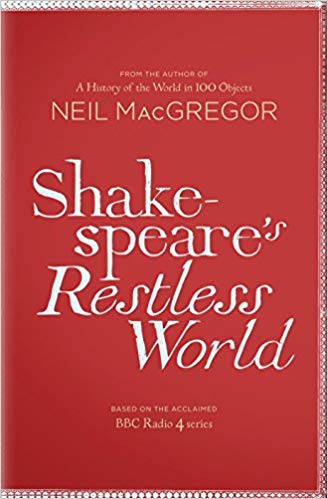
Shakespeare’s Restless World by Neil MacGregor.

A beautiful book recreating Shakespeare’s world through examining twenty objects. It reveals so much about the people who lived then, who went to see Shakespeare’s plays in the 1590s and 1600s, and about their ideas and living conditions. Through looking at each object MacGregor explores a number of topics, including what people ate whilst watching plays, religion, medicine, the plague, magic, city life, treason, and the measuring of time. It’s all fascinating and informative, and easy to read. There are plenty of quotations from Shakespeare’s plays and puts both him and his work into context. For me, it was a new way of seeing into the past,
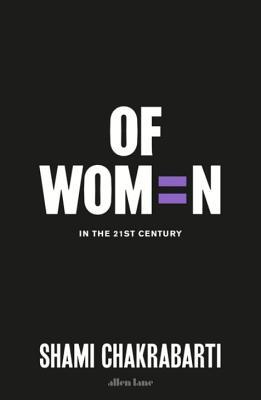
Of Women in the 21st Century by Shami Chakrabarti, a member of the House of Lords, formerly Labour’s Shadow Attorney General, and the author of On Liberty, a book about human rights violations published in 2014.

Shami Chakrabarti is passionate, and indeed angry, about the need for gender equality in her book. She examines the effects of gender injustice on a wide variety of issues in many parts of the world. In parts it reads like an academic textbook, packed full of statistics and wide ranging examples of gender injustice on a global scale. It becomes more personal however, when she writes about her own experiences her family and her background.

She covers a broad overview of many issues, rather than an in-

depth study, including violence against women, abortion, sanitary products, childcare and sex education and topics such as faith, the concept of home and displaced persons, health, wealth, education, representation, opportunity and insecurity in the 21st century. However, she remains optimistic, concluding that she believes that ‘far greater equality for women and men is realistically within our reach and well worth the stretch.’ I don’t think it is that easy and will need more than a ‘stretch’.
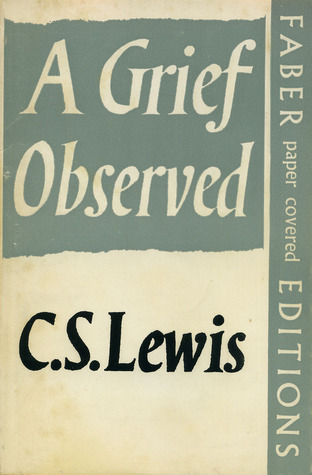
A Grief Observed by C S Lewis, another book I read before I began blogging, so no review.

Written after his wife’s tragic death as a way of surviving the “mad midnight moment,” A Grief Observed is C.S. Lewis’s honest reflection on the fundamental issues of life, death, and faith in the midst of loss. This work contains his concise, genuine reflections on that “Nothing will shake a man — or at any rate a man like me — out of his merely verbal thinking and his merely notional beliefs. He has to be knocked silly before he comes to his senses. Only torture will bring out the truth. Only under torture does he discover it himself.” This is a beautiful and unflinchingly honest record of how even a stalwart believer can lose all sense of meaning in the universe, and how he can gradually regain his bearings. (Goodreads)

Fiction:
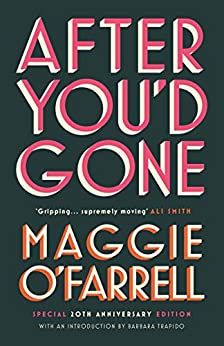
After You’d Gone by Maggie O’Farrell

Alice is in a coma after being in road accident, which may or may not have been a suicide attempt. She has been grieving the death of her husband, John.

It’s quite a complicated story, following the life stories not only of Alice, but also those of her mother, Ann (who I didn’t like much),  her grandmother, Elspeth (who I did like very much), her two sisters and of John. What was it that Alice saw at Edinburgh station that shocked her so much? You don’t find out until the end of the book, although I did have an idea before that what it meant to her and why it was so upsetting. 
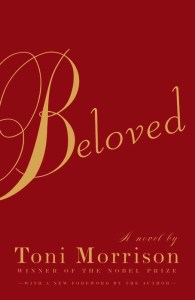
Beloved by Toni Morrison, which I read years ago before I began blogging, so I haven’t reviewed it.

Staring unflinchingly into the abyss of slavery, this spellbinding novel transforms history into a story as powerful as Exodus and as intimate as a lullaby.

Sethe, its protagonist, was born a slave and escaped to Ohio, but eighteen years later she is still not free. She has too many memories of Sweet Home, the beautiful farm where so many hideous things happened. And Sethe’s new home is haunted by the ghost of her baby, who died nameless and whose tombstone is engraved with a single word: Beloved. Filled with bitter poetry and suspense as taut as a rope, Beloved is a towering achievement by Nobel Prize laureate Toni Morrison. (Goodreads)
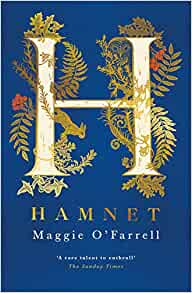
Hamnet by Maggie O’Farrell

I’ve read and enjoyed three of Maggie O’Farrell’s books, The Hand That First Held Mine, Instructions for a Heatwave, and a memoir of the near-death experiences that have punctuated her life, I Am, I Am, I Am. So I was looking forward to reading her latest book, Hamnet, which won the Women’s Prize for Fiction this year.

Set mainly in Stratford-on-Avon, it is historical fiction inspired by Hamnet, Shakespeare’s son and is a story of the bond between him and his twin sister, Judith. (At the time the names Hamlet and Hamnet were considered virtually interchangeable.) The central theme, though is the grief – the overwhelming and all consuming grief, that the whole family and in particular, Agnes, Hamnet’s mother suffered when he died at the age of eleven in 1596. Although the cause of his death was not recorded in the parish registers, in Hamnet Maggie O’Farrell imagines it was the plague.

The opening chapters confused me a bit at first as they cover the events in 1596 alternating with chapters about the time some fifteen years earlier when William Shakespeare, never named in this book, first met Anne Hathaway, also known as Agnes, pronounced Ann-yis. He was employed by her father as a tutor to his sons and much to her family’s disapproval they fell in love. Their first child, Susannah, was born six months after their marriage, followed by the twins in 1585. Four years, or so later, Shakespeare wrote the play, Hamlet giving its tragic hero a variation of his dead son’s name.

But Hamnet and Shakespeare are not the main focus, rather it is Agnes who takes centre stage. Little is actually known about her and she comes across to me in this book as a rather wayward, wild young woman when Shakespeare first met her, flouting convention and set on getting her own way, manipulating the people around her. Even Shakespeare’s decision to leave Stratford for London is presented as Agnes’s decision as she subtly persuaded him to leave. She was a skilled herbal healer and had the ‘second sight’ able to see a person’s future. Her grief over Hamnet’s death is intense, so overwhelming that I could hardly bear to read about it. It is a tragedy almost beyond telling – raw unrelenting, and powerful, especially the scene where she washes Hamnet’s dead body. I was relieved to finish it.

However, it is written in the third person present tense which distracted and distanced me from the story, although it is richly descriptive. There are some vivid scenes in the early part of the book, such as the scenes in the apple shed and later in the wood where Agnes gave birth to her first child. And an episode about a flea is slotted into the text, giving an explanation of the spread of the plague from Venice across Europe to Stratford. As this written before the outbreak of the current pandemic, it struck me as particularly prescient.

I also enjoyed the final section of the book in which Agnes travelled to London to see a performance of her husband’s new play, Hamlet. But in the middle section I found myself thinking the description passages were overwritten and this lessened their impact on me diluting somewhat the portrait of grief. Overall though, I found the whole book fascinating and I’m glad I read it.

  • File Size : 793 KB
  • Word Wise : Enabled
  • Print Length : 279 pages
  • Source: I bought it
  • My Rating: 3*

WWW Wednesday: 30 September 2020

WWW Wednesday is run by Taking on a World of Words.

The Three Ws are:

What are you currently reading?
What did you recently finish reading?
What do you think you’ll read next?

The Three Ws are:

 What are you currently reading?
What did you recently finish reading?
What do you think you’ll read next?

I’m currently reading Hamnet by Maggie O’Farrell and am surprised that I’m not feeling enthusiastic about it; surprised because I’ve enjoyed her earlier books and Hamnet won the Women’s Prize for Fiction this year. It looks just the sort of book I usually enjoy. It’s historical fiction, set in Elizabethan England and it is beautifully written.

It has a strange, fairy-tale feel and I’m finding hard to settle into this book. I don’t feel involved. I feel I’m on the outside looking on from a distance. I think it’s O’Farrell’s use of the present tense, but I’m hoping I’ll feel more involved as I read on.

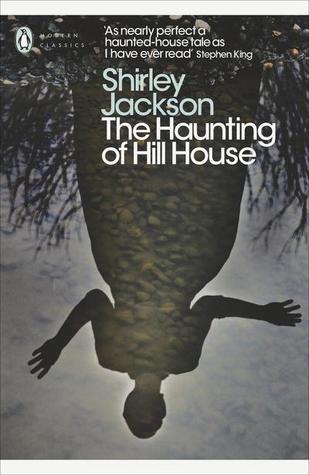
The last book I read was The Haunting of Hill House by Shirley Jackson, a disturbing novel to say the least. My review will follow. For now here is the description from Goodreads:

Four seekers have arrived at the rambling old pile known as Hill House: Dr. Montague, an occult scholar looking for solid evidence of psychic phenomena; Theodora, his lovely and lighthearted assistant; Luke, the adventurous future inheritor of the estate; and Eleanor, a friendless, fragile young woman with a dark past. As they begin to cope with chilling, even horrifying occurrences beyond their control or understanding, they cannot possibly know what lies ahead. For Hill House is gathering its powers – and soon it will choose one of them to make its own.

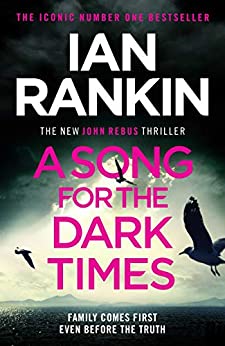
Reading Next: I’m really looking forward to reading A Song for the Dark Times by Ian Rankin, published tomorrow, his latest Rebus novel.

When his daughter Samantha calls in the dead of night, John Rebus knows it’s not good news. Her husband has been missing for two days.

Rebus fears the worst – and knows from his lifetime in the police that his daughter will be the prime suspect.

He wasn’t the best father – the job always came first – but now his daughter needs him more than ever. But is he going as a father or a detective?

As he leaves at dawn to drive to the windswept coast – and a small town with big secrets – he wonders whether this might be the first time in his life where the truth is the one thing he doesn’t want to find…

My Friday Post: Hamnet by Maggie O’Farrell

Every Friday Book Beginnings on Friday is hosted by Gillion at Rose City Reader where you can share the first sentence (or so) of the book you are reading. You can also share from a book you want to highlight just because it caught your fancy.

My extracts today are from Hamnet by Maggie O’Farrell, one of my favourite authors, and the winner of this year’s Woman’s Prize for Fiction. I’ve just started to read it.

The book begins:

A boy is coming down the stairs.

Also every Friday there is The Friday 56, hosted by Freda at Freda’s Voice. *Grab a book, any book. *Turn to Page 56 or 56% on your  ereader . If you have to improvise, that is okay. *Find a snippet, short and sweet, but no spoilers!

  1. Grab a book, any book.
  2. Turn to page 56, or 56% on your eReader. If you have to improvise, that is okay.
  3. Find any sentence (or a few, just don’t spoil it) that grabs you.
  4. Post it.
  5. Add the URL to your post in the link on Freda’s most recent Friday 56 post.

Hamnet climbs the stairs, breathing hard after his run through the town. It seems to drain his strength, putting one leg in front of the other, lifting each foot to each stair. He uses the handrail to haul himself along.

~~~

What a coincidence that both the opening paragraph and the extract from page 56 are about Hamnet climbing the stairs – first down and then up.

On a summer’s day in 1596, a young girl in Stratford-upon-Avon takes to her bed with a fever. Her twin brother, Hamnet, searches everywhere for help. Why is nobody at home? 

This is historical fiction inspired by Hamnet, Shakespeare’s son and is a story of the bond between twins.

My Friday Post: I Am, I Am, I Am

Book Beginnings Button

Every Friday Book Beginnings on Friday is hosted by Gillion at Rose City Reader where you can share the first sentence (or so) of the book you are reading, along with your initial thoughts about the sentence, impressions of the book, or anything else the opener inspires.

This week I’m featuring I Am, I Am, I Am: Seventeen Brushes with Death by Maggie O’Farrell, one of the books I’m currently reading.

I Am, I Am, I Am: Seventeen Brushes With Death

I chose this book because I love Maggie O’Farrell’s books and as soon as I read the description I knew I had to read it:

About the Book

I AM, I AM, I AM is Maggie O’Farrell’s electric and shocking memoir of the near-death experiences that have punctuated her life. The childhood illness she was not expected to survive. A teenage yearning to escape that nearly ended in disaster. A terrifying encounter on a remote path. A mismanaged labour in an understaffed hospital.

This is a memoir with a difference: seventeen encounters with Maggie at different ages, in different locations, reveal to us a whole life in a series of tense, visceral snapshots. Spare, elegant and utterly candid, it is a book to make you question yourself. What would you do if your life was in danger? How would you react? And what would you stand to lose?

It begins:

Neck 1990

On the path ahead, stepping out from behind a boulder, a man appears.

This opening sentence drew me in immediately, knowing from the title and book description that this was not going to be a happy encounter – this is the ‘terrifying encounter on a remote path.’

~~~

Also every Friday there is The Friday 56, hosted by Freda at Freda’s Voice.

30879-friday2b56These are the rules:

  1. Grab a book, any book.
  2. Turn to page 56, or 56% on your eReader. If you have to improvise, that is okay.
  3. Find any sentence (or a few, just don’t spoil it) that grabs you.
  4. Post it.
  5. Add the URL to your post in the link on Freda’s most recent Friday 56 post.

Pages 55-56:

Suddenly the plane is falling, dropping, plummeting, like a rock fallen from a cliff. The downward velocity is astonishing, the drag, the speed of it. It feels like the world’s most unpleasant fairground ride, like a dive into nothing, like being pulled by the ankles into the endless maw of the underworld. My ears and face bloom like petals of pain, the seatbelt cutting into my thighs as I am thrown upwards.

~~~

The title is taken from Sylvia Plath’s The Bell Jar:

I took a deep breath and listened to the old brag of my heart. I am, I am, I am.

What about you? Does it tempt you or would you stop reading? 

January’s Books 2018

I read seven books in January, six of them are fiction and one non-fiction, all of them good – some indeed are excellent. So far I’ve only reviewed three of them:

Turning for Home by Barney Norris, a beautifully and lyrically written novel. I loved this. It’s set on the day of Robert’s 80th birthday celebration and the narrative alternates between Robert’s and his granddaughter Kate’s stories, reflecting on their lives.

The Wicked Cometh by Laura Carlin, historical fiction set in England in 1831 – a tale of wickedness and evil. Although this begins well, it drags in the middle and ends with a final twist I didn’t find convincing.

The Confession by Jo Spain, a standalone book, set in Ireland.  Banker, Harry McNamara, recently cleared of multiple accounts of fraud, is brutally attacked in his home in front of his wife, Julie. I was gripped by this story and I had to read it quickly to find out what really happened.

I didn’t get round  to writing reviews for the other books, so here are a few notes on two of them, both books that I enjoyed. Both are written achronologically which took a bit of getting used to, but it worked well. This meant that with both books you have to be on your toes, so to speak, to keep track of where you are and who is who. And I really should have made notes as I read – and written about them not long after I finished them!

Notes From An Exhibition by Patrick Gale. It’s been a month since I finished reading this and unfortunately the details are rather vague in my mind now. Artist Rachel Kelly, a manic-depressive, subject to highs and lows is found dead in her Penzance studio, leaving her family with lots of unanswered questions. It becomes clear that her Quaker husband knew nothing about her early life. The narrative moves backwards and forwards from the past to the present and is told from different characters’ perspectives. It reminded me a bit of Sylvia Plath’s The Bell Jar in parts. I enjoyed the sections on Quakerism and working out the puzzle of Rachel’s life and her relationships. But I wasn’t sure about the ending – I should probably re-read the book.

After You’d Gone by Maggie O’Farrell – her debut novel. The main character, Alice is in a coma after being in road accident, which may or may not have been a suicide attempt. She has been grieving the death of her husband, John.

It’s quite a complicated story, following the life stories not only of Alice, but also those of her mother, Ann (who I didn’t like much),  her grandmother, Elspeth (who I did like very much), her two sisters and of John. What was it that Alice saw at Edinburgh station that shocked her so much? You don’t find out until the end of the book, although I did have an idea before that what it meant to her and why it was so upsetting. I’ve already started to re-read it as I’m sure there’s a lot I missed on my first reading, especially as some of it is written in the present tense. And I may write a more detailed post at some point.

And my reviews of these books will follow later: