Top 5 Tuesday:Books set in the Americas

Top 5 Tuesday was created by Shanah at Bionic Book Worm, and it is now being hosted by Meeghan at Meeghan Reads. For details of all of the latest prompts for January to March, see Meeghan’s post here.

Today the topic is Books set in America – North or South, we’re doing the continents. Tell us about all your fave books set in the Americas.

I have too many books to choose from to say these are the top five books set in the Americas that I’ve read. And it’s so hard to decide which ones to feature, because I could pick five different books on another day. But in the end I decided to pick books from Canada, the USA and South America (Brazil and Chile) They are all books I’ve read and loved.

Canada:
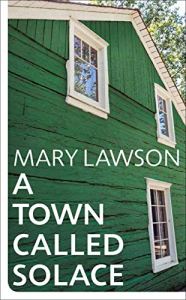
A Town Called Solace by Mary Lawson. It’s set in North Ontario in 1972, but looks back to events thirty years earlier when Elizabeth Orchard first met Liam who was then a small boy of 3 when he and his family lived in the house next door. The last time she saw him he was still only 4 years old. It was not a happy time for either of them, and thirty years later, when she is dying she wants to make amends and gives him her house.

Clara lives next door to Elizabeth, who she loves, and she is alarmed when she sees Liam moving into Elizabeth’s house. Elizabeth had given her a key and she goes in every day to feed Moses, Elizabeth’s cat. She has no idea that Elizabeth is dying and is furious when she discovers that Liam is moving Elizabeth’s things and packing them in boxes. Her life is in turmoil in any case as she is devastated that Rose, her 16 year old sister has gone missing.

The narration moves between these three people, seeing events through their eyes. Elizabeth, in hospital looks back over her life, remembering her despair at not having a child of her own, and her love for little Liam that ended badly, despite her good intentions. Clara spends the time before and after school at the window looking out for Rose’s return and Liam, whilst remembering his sad childhood, is trying to rebuild his life after his marriage ended in divorce.

I loved this book. It’s about families, the things that go wrong, about memories and about friendships and the care that people have for each other. It’s moving and sad, but also filled with hope. And it’s beautifully written.

North America:
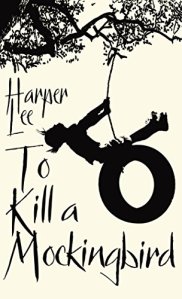
To Kill a Mockingbird by Harper Lee, set in the Deep South of  America in the 1930s. It’s narrated by Scout (Jean Louise Finch) as she looks back as an adult to the Depression, the years when with her older brother, Jem, and their friend, Dill, she witnessed the trial of Tom Robinson, a black man accused of raping a white girl. Scout’s father, Atticus, a lawyer defends Tom. It’s also the story of Boo Radley, their neighbour, a man who is never seen, who is said to only come out at night. 

Scout is a feisty character, always prepared to stand up for what she thinks is right, but Atticus, who also stands for justice and the moral and ethical ideal, has to reign her in sometimes. The book is full of strong characters and for me the outstanding scenes are those when Atticus sat reading outside the jail to stop the lynch mob attacking Tom and the trial itself at the court-house. 
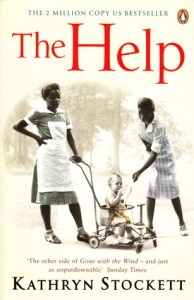
The Help by Kathryn Stockett. Enter a vanished and unjust world: Jackson, Mississippi, 1962. Where black maids raise white children, but aren’t trusted not to steal the silver…

There’s Aibileen, raising her seventeenth white child and nursing the hurt caused by her own son’s tragic death; Minny, whose cooking is nearly as sassy as her tongue; and white Miss Skeeter, home from college, who wants to know why her beloved maid has disappeared.

Skeeter, Aibileen and Minny. No one would believe they’d be friends; fewer still would tolerate it. But as each woman finds the courage to cross boundaries, they come to depend and rely upon one another. Each is in a search of a truth. And together they have an extraordinary story to tell…

South America:
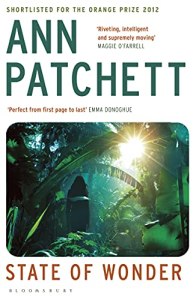
State of Wonder by Ann Patchett. Among the tangled waterways and giant anacondas of the Brazilian Rio Negro, an enigmatic scientist is developing a drug that could alter the lives of women for ever. Dr Annick Swenson’s work is shrouded in mystery; she refuses to report on her progress, especially to her investors, whose patience is fast running out. Anders Eckman, a mild-mannered lab researcher, is sent to investigate.Dr. Annick Swenson, a research scientist, is developing a drug that could alter the lives of women forever.

A curt letter reporting his untimely death is all that returns. Now Marina Singh, Anders’ colleague and once a student of the mighty Dr Swenson, is their last hope. Compelled by the pleas of Anders’s wife, Marina leaves the snowy plains of Minnesota and retraces her friend’s steps into the heart of the South American darkness, determined to track down Dr. Swenson and uncover the secrets being jealously guarded among the remotest tribes of the rainforest.

The novel raises questions about the morality and ethics of research into the use of extreme fertility treatments and drug studies in general, along with the exploitation of native populations. It is wonderfully descriptive and I could easily imagine that I was there in the jungle, experiencing the oppressive heat and humidity. I found it all fascinating and I was totally absorbed in the story.

Portrait in Sepia by Isabel Allende, part of a trilogy, with The House of the Spirits and Daughter of Fortune. Aurora is the narrator and this is the story of her family and after giving details of her birth, Aurora goes back to 1862 beginning her story with details about her grandparents. There is a lot of detail, a lot of 19th century history of Chile, its mix of nationalities, politics and wars.

It’s a book about love, loss, identity, betrayal and about family relationships. It’s a portrayal of the strengths and weaknesses of the characters and their struggle to survive. Aurora tells her family’s story through looking at photographs, snapshots in time, through her own disjointed, incomplete and vague memories of her childhood and through conversations with her family members. Whilst she was still very young her two grandmothers decided her future, thinking that time would erase the memory of the traumatic events she had seen, never realising that the scenes would live forever in her nightmares.
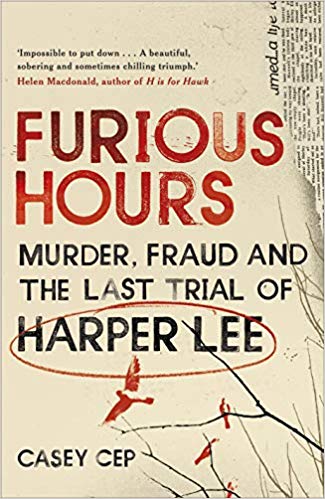
Furious Hours by Casey Cep

The stunning story of an Alabama serial killer and the true-crime book that Harper Lee worked on obsessively in the years after To Kill a Mockingbird

Furious hours

Cornerstone|May 2019|311 pages|e-book via NetGalley|Review copy|4*

In the first half of the book Casey Cep tells the story of the Reverend Willie Maxwell, who murdered members of his own family in the 1970s and held his rural community in Alabama, in fear and dread as they believed he was practising voodoo. He was shot dead at the funeral of his step-daughter by a relative, Robert Burns. Maxwell’s lawyer, Tom Radney, who had successfully defended Maxwell for years, then defended Burns, who confessed to the shooting, on the grounds of temporary insanity.

The second half is about the author, Harper Lee, who decided to write a book about all three men. In doing so Cep has written a remarkable biography of Harper Lee, her friendship with Truman Capote, her part in writing his book, In Cold Blood and her attempts to follow up the success of her book, To Kill a Mockingbird.

My favourite part of the book is without doubt the part about Harper Lee. All I knew about her before is that she wrote To Kill a Mockingbird, thought to be her only book until Go Set a Watchman was published in 2015. Cep explains that Watchman was an early version of Mockingbird, that Lee hadn’t edited or revised, and although it appears to be a sequel it isn’t  – it is the story she wrote first.

The section on Lee’s work in helping Capote  research his ‘nonfiction novel’ set in Kansas, In Cold Blood is equally as fascinating. They had lived next door to each other in Monroeville and as Cep phrased it ‘before Nelle was out of toddlerhood, she and Truman had become partners in crime and just about everything else.‘ (‘Nelle’ is her first name, the name she was known by for the first thirty-four years of her life, pronounced Nell, not Nellie.) Once they ran out of stories to read they started writing them. Cep goes into detail about the development of crime writing, and how Capote applied the techniques of fiction to nonfiction. Not everyone was happy with this novelisation of crime, not did they believe that Capote’s book was strictly factual, accusing him of  producing a sensational novel. Harper Lee minded very much about his fabrications, although she never objected publicly and this caused a rift between them.

So, this presented her with a challenge when it came to writing her book about Maxwell and his crimes, determined it would be based strictly on facts and she spent many years researching and writing her book, provisionally called The Reverend, but never finished it.

The sheer detail of Furious Hours made it quite a difficult book to read in some parts, digressing from the bare bones of the story into details such as the history of insurance, for example. But I was impressed by that detail and by Cep’s meticulous research. The book has an extensive Acknowledgements section, Notes and Bibliography, citing numerous books, journal articles and documentary films. And it has made me keen to read Go Set a Watchman, which although I bought a copy I have not read yet fearing it would spoil my love of To Kill a Mockingbird. I also must get round to reading Capote’s In Cold Blood, which I bought earlier this year, without knowing of Harper Lee’s involvement in the book.

My thanks to Cornerstone for an e-book review copy via NetGalley

A-Z of TBRs: E-Books: G, H and I

Once again I’ve been looking at all the forgotten e-books on my Kindle and this is the third instalment of my A – Z of my e-book TBRs – with a little ‘taster’ from each. These are all fiction.

Go set a watchman

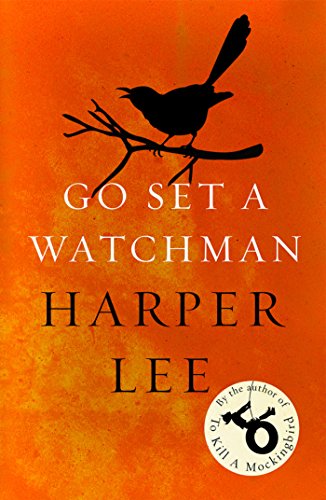
G is for  Go Set a Watchman by Harper Lee, on my Kindle since November 2014. I remembered I hadn’t read this when recently I got a copy of Furious Hours: Murder, Fraud and the Last Trial of Harper Lee by Casey Cep, in which she tells the story Harper Lee wanted to write and why she couldn’t after the success of To Kill a Mockingbird (which I loved).

Atticus Finch shot his left cuff, then cautiously pushed it back. One-forty. On some days he wore two watches: he wore two this day, an ancient watch and chain his children had cut their teeth on, and a wristwatch. The former was habit, the latter used to tell time when he could not move his fingers enough to dig in his watchpocket. He had been a big man before age and arthritis reduced him to medium size. He was seventy-two last month, but Jean Louise always thought of him hovering somewhere in his middle fifties – she could not remember him being any younger, and he seemed to grow no older. (page 17)

Go Set a Watchman is set two decades after To Kill a Mockingbird and is the story of Jean- Louise Finch – ‘Scout’ – as she returns home from New York City to visit her ageing father, Atticus. Her homecoming turns bittersweet when she learns disturbing truths about her close-knit family, the town and the people dearest to her. Memories from her childhood flood back, and her values and assumptions are thrown into doubt.

I’d dithered over whether to read this and then forgot I had it!

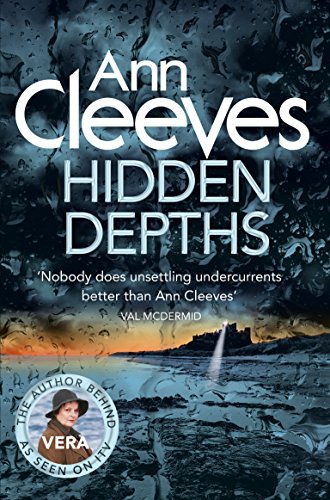
Hidden depths

is for Hidden Depths by Ann Cleeves, on my Kindle since March 2014. It’s the 3rd book in her Vera Stanhope series, which I have been reading totally out of order. It doesn’t spoil my enjoyment, especially as over the years I’ve been watching the TV series and I think I remember seeing the TV version of Hidden Depths years ago.

It’s hot summer on the Northumberland coast and Julie Armstrong arrives home from a night out to find her son strangled, laid out in a bath of water and covered with wild flowers. In the following extract, his mother, Julie is talking to Vera:

Julie was sitting on the floor, her knees pulled up to her chin, her arms clasped around them. She looked up at the detective, who was still watching and waiting. It came to her suddenly that this woman, large and solid like rock, might once have known tragedy herself. That was why she could sit there without making those stupid sympathetic noises Sal and the doctor had made. This woman knew that nothing she could say would make it better. But Julie didn’t care about the detective’s sadness and the thought was fleeting. She went back to her story. (15).

Ann Cleeves is one of my favourite authors and I really should have read this book when I first bought it.

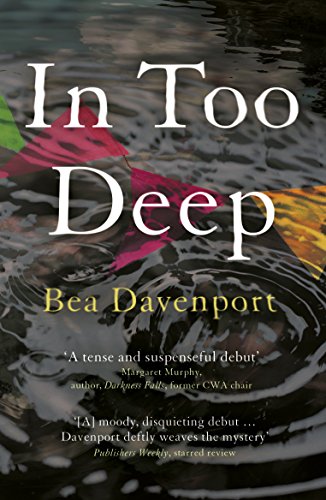
In too deep

I is for In Too Deep by Bea Davenport, on my Kindle since July 2013. I had totally forgotten that I had this book. Five years ago Maura fled life in Dowerby and took on a new identity, desperately trying to piece her life back together and escape the dark clouds that plagued her past. But then a reporter tracked her down, and persuaded her to tell her story, putting her own life in danger once again.

So then as I just get out the shower and the door buzzer sounds, I catch my breath. No-one ever comes to see me, and I don’t receive post unless it’s junk mail. When a man’s voice asks for Maura Wood, I feel a grip on my heart, clenching like a fist. I am frozen with fear.

I shiver involuntarily, goose bumps covering my body like guilty fingers. I haven’t heard that name for almost five years. I pull my towel tighter around me. ‘No, sorry. There’s no-one here of that name.’

But the voice has picked up on my pause. ‘I was told Maura Wood lives here. Is that not you, Maura?’

‘No, I’m not Maura. I’ve told you. Who is that?’

(7%)

Bea Davenport is the writing name of former print and broadcast journalist Barbara Henderson. In Too Deep, was her first crime/suspense novel. Bea spent many years as a newspaper reporter and latterly seventeen years as a senior broadcast journalist with the BBC in the north-east of England. Originally from Tyneside, she lives in Berwick-upon-Tweed, not very far away from me. I haven’t read any of her books.

If you’ve read any of these books please let me know what you think. Or if you haven’t read them do they tempt you?

Library Books

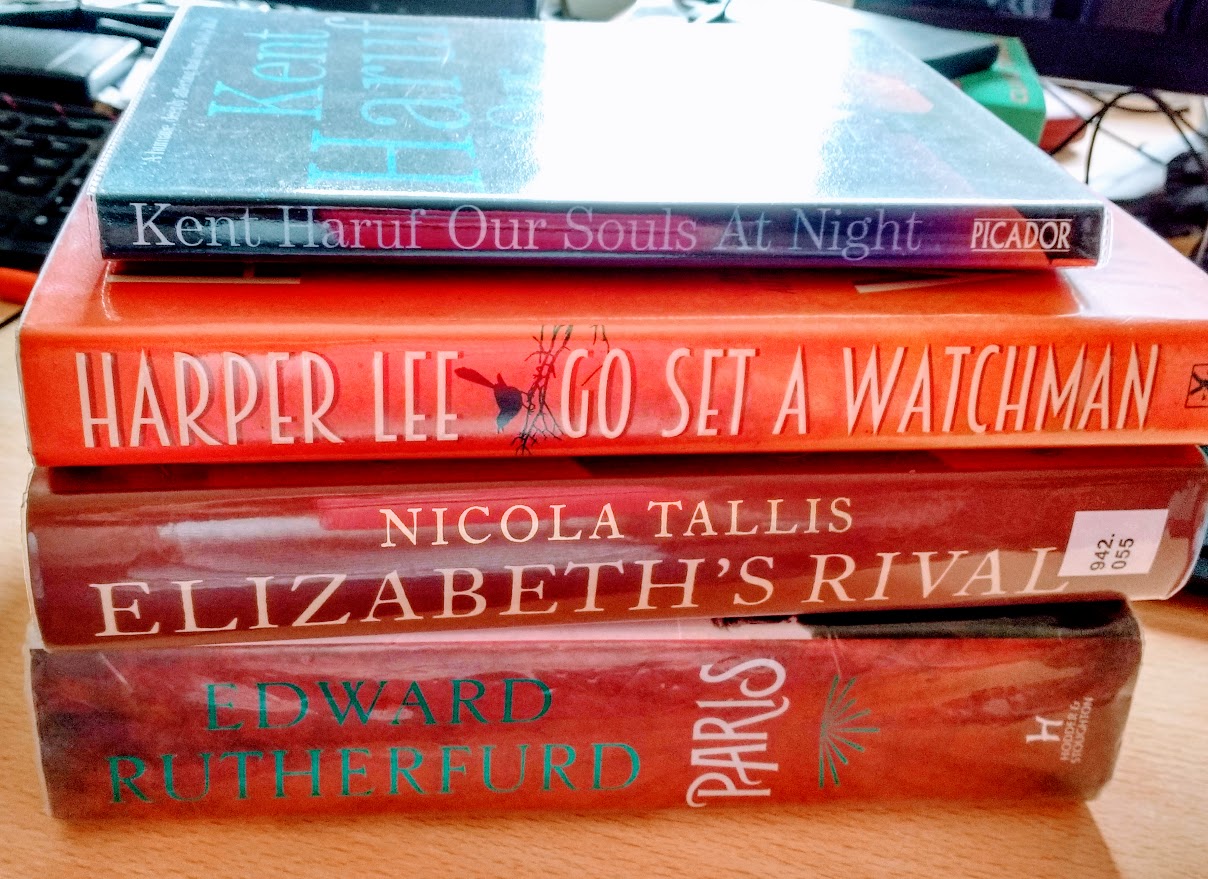
Over the last few months I’ve reserved books at the library, but of course they all arrived at once instead of at regular intervals. This leaves me hoping I can renew them as there is no way I could read them all in the next three weeks!

Reserved bks June2018

From top to bottom they are:

  • Our Souls At Night by Kent Haruf. Annabel  reviewed it recently on her blog Annabookbel, saying she absolutely adored it and that it was the best thing she’s read so far this year. I liked the look of it – it’s a novel about the pursuit of happiness and a story about growing old with grace. With such a recommendation I think I’ll start with this one.
  • Go Set a Watchman by Harper Lee. I reserved this ages ago. It’s set two decades after Harper Lee’s Pulitzer Prize-winning masterpiece, To Kill a Mockingbird, which I loved. I’ve read reviews that it’s disappointing, so I thought I’d see for myself what it’s like. Jean Finch, ‘Scout’, returns home to visit her father Atticus, in Maycomb, Alabama.
  • Elizabeth’s Rivals: the Tumultuous Tale of Lettice Knollys, Countess of Leicester by Nicola Tallis. I saw this on Amazon and fancied having a look at it, then saw it was available from the library. This is the first biography of Lettice Knollys, one of the most prominent women of the Elizabethan era. A cousin to Elizabeth I – and very likely also Henry VIII’s illegitimate granddaughter – Lettice Knollys had a life of dizzying highs and pitiful lows.
  • Paris by Edward Rutherfurd, a huge doorstop of a novel of over 700 pages, telling a tale of four families across the centuries set in Paris, the City of Lights. Helen at She Reads Novels wrote about Edward Rutherfurd’s books in one of her Historical Musings posts and I thought I’d like to try them. Paris was listed in the library catalogue and so I reserved it.

The beauty of borrowing library books is that you can then take your time deciding whether you really do want to read them – and if no one else reserves them you can renew the ones you haven’t finished in the loan period – my library lets you renew them 5 times!

First Chapter, First Paragraph: Go Set a Watchman

Every Tuesday Diane at Bibliophile by the Sea hosts First Chapter, First Paragraph Tuesday Intros, where you can share the first paragraph, or a few, of a book you are reading or thinking about reading soon.

My choice this week is Go Set a Watchman by Harper Lee which is published today. It begins:

Since Atlanta, she had looked out the dining-car window with a delight almost physical. Over her breakfast coffee, she watched the last of Georgia’s hills recede and the red earth appear, and with it tin-roofed houses set in the middle of swept yards, and in the yards the inevitable verbena grew, surrounded by whitewashed tires. She grinned when she saw her first TV antenna atop an unpainted Negro house; as they multiplied her joy rose.
Jean Louise Finch always made this journey by air, but she decided to go by train from New York to Maycomb Junction on her fifth annual trip home. For one thing, she had the life scared out of her the last time she was on a plane: the pilot had elected to fly through a tornado. For another, flying home meant her father rising at three in the morning, driving a hundred miles to meet her in Mobile, and doing a full day’s work afterwards: he was seventy-two now and this was no longer fair.

I loved To Kill a Mockingbird when I read it a couple of years ago but I’m still not sure I want to read Go Set a Watchman, so I downloaded a sample on my Kindle to have a look at the beginning.

What do you think? Are you going to read it?

To Kill a Mockingbird by Harper Lee

 I often find with well-known books that all the world seems to love that they don’t live up to the hype, but To Kill a Mockingbird certainly does! It’s a wonderful book!

It was first published in 1960 and is set in the Deep South of  America in the 1930s. To Kill a Mockingbird is narrated by Scout (Jean Louise Finch) as she looks back as an adult to the Depression, the years when with her older brother, Jem, and their friend, Dill, she witnessed the trial of Tom Robinson, a black man accused of raping a white girl. Scout’s father, Atticus, a lawyer defends Tom. It’s also the story of Boo Radley, their neighbour, a man who is never seen, who is said to only come out at night. The children are scared of him, people said he was ‘a malevolent phantom‘, but their curiosity makes them fascinated by the idea of getting him to come out.

It’s the story seen through the eyes of a child, but narrated by an adult. And it’s told as a series of episodes in the fictional town of Maycomb, revealing the hypocrisy, prejudice and social injustice of the times. I was immediately drawn into Scout’s world, seeing Maycomb and its inhabitants through her eyes.

Maycomb was an old town, but it was a tired old town when I first knew it. In rainy weather the streets turned to red slop; grass grew on the sidewalks, the court-house sagged in the square. Somehow, it was hotter then; a black dog suffered on a summer’s day; bony mules hitched to Hoover carts flicked flies in the sweltering shade of live oaks on the square. Men’s stiff collars wilted by nine in the morning. Ladies bathed before noon, after their three o’clock naps, and by nightfall were like soft tea-cakes with frostings of sweat and sweet talcum. (page 5)

Scout is a feisty character, always prepared to stand up for what she thinks is right, but Atticus, who also stands for justice and the moral and ethical ideal, has to reign her in sometimes. The book is full of strong characters and for me the outstanding scenes are those when Atticus sat reading outside the jail to stop the lynch mob attacking Tom and the trial itself at the court-house. It is all so vivid I believed I was right there with them.

There is so much to think about reading this book and I could write page after page! But here are a few quotations that particularly struck me:

‘First of all,’ he [Atticus] said, ‘if you can learn a simple trick, Scout, you’ll get along better with all kinds of folks. You never really understand a person until you consider things from his point of view -‘

‘Sir?’

‘- until you climb into his skin and walk around in it.’ (page 33)

and

 Shoot all the bluejays you want, if you can hit ’em, but remember it’s a sin to kill a mockingbird.

… Mockingbirds don’t do one thing, but make music for us to enjoy. they don’t eat up people’s gardens, don’t nest in corncribs, they don’t do one thing but sing their hearts out for us. That’s why it’s a sin to kill a mockingbird. (pages 99 – 100)

and

‘People in their right minds never take pride in their talents,’ said Miss Maudie. (page 109)

and

People generally see what they look for, and hear what they listen for … (page 192)

On equality:

We know all men are not created equal in the sense some people would have us believe – some people are smarter than others, some people have more opportunity because they’re born with it, some men make more money than others, some ladies make better cakes than others – some people are born gifted beyond the normal scope of most men.

But there is one way in this country in which all men are created equal – there is one human institution that makes a pauper the equal of a Rockefeller, the stupid man the equal of any college president. That institution, gentlemen, is the court. (page 226)

The sticking point, however, is that a court is no better than the people sitting on the jury …