
Top 5 Tuesday was created by Shanah at Bionic Book Worm, and it is now being hosted by Meeghan at Meeghan Reads. For details of all of the latest prompts for April to June, see Meeghan’s post here
We’re continuing reading around the world this month and today the topic is Europe. The books I’ve chosen are crime fiction and historical fiction.
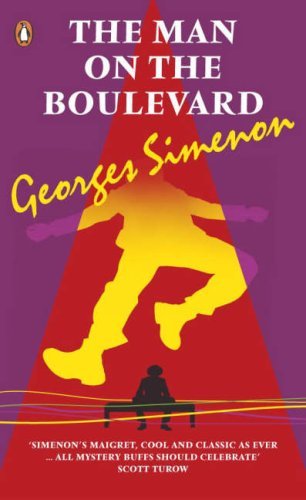
France: When I think of French crime fiction Georges Simenon’s Maigret immediately pops into my mind. Simenon was actually Belgian, not French, but the Maigret books are set in France (mainly in Paris). Simenon wrote 75 novels and 28 short stories featuring Commissaire Jules Maigret and I first knew of them from a friend at school who loved the books. Then there were the numerous TV productions with Rupert Davies as Maigret and more recently Rowan Atkinson has played the role of Chief Inspector Maigret in the 2016 ITV series.
I’ve read several of the Maigret books. The Man on the Boulevard is the 41st book in the series. There were lots of things I liked in this book – the attention to detail, the descriptions of the weather (cold and wet), and the characters themselves. It’s set in Paris and without knowing the location of the various boulevards I could still get a good impression of the city and its suburbs.
It has a puzzling murder to solve – Louis Thouret is found stabbed in a little alleyway. Seemingly a perfectly ordinary man of regular habits who had left his home in the suburbs to go to his job as a storekeeper in Paris for the past twenty five years. It turns out that Louis had a double life that his wife knew nothing about. It appears he had been having an affair and for the past three years he had not had a job. I liked the theme of a man following a double life and the way Louis resolves his problem of keeping up appearances with his wife and family although I thought his method of maintaining his income was rather implausible.
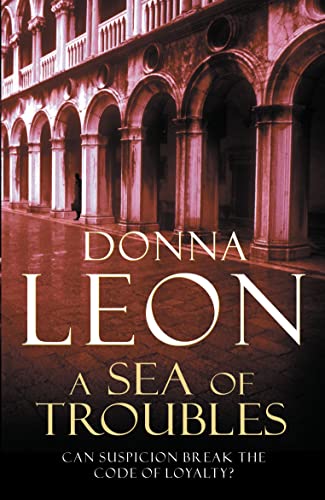
Italy: A Sea of Troubles by Donna Leon, whose books are crime fiction, but also discuss various social and cultural issues and A Sea of Troubles, the 10th Commissario Guido Brunetti novel, is no exception. Brunetti is one of my favourite detectives. He is happily married with two children. He doesn’t smoke or drink to excess and often goes home for lunch to his beautiful wife Paolo, who is a wonderful cook – in this book she treats him to a delicious apple cake made with lemon and apple juice and ‘enough Grand Marnier to permeate the whole thing and linger on the tongue for ever.’ (page 238)
I read it eagerly, keen to get to the bottom of the mystery surrounding the deaths of two clam fishermen, father and son, off the island of Pellestrina, south of the Lido on the Venetian lagoon, when their boat suddenly exploded. As well as the mystery the issues Leon highlights in this book are concerning pollution and the overfishing of clams that is destroying the clam beds.
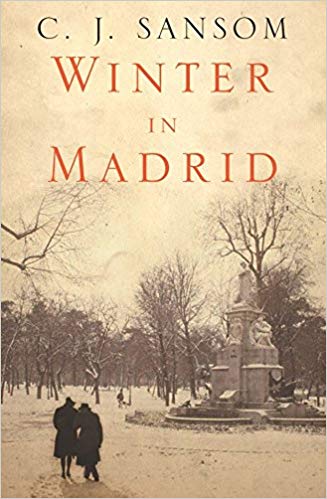
Spain: C J Sansom’s Winter in Madrid, which I think is one of the best books I’ve read, a book that had me in tears as I was reading about the devastation, desolation and waste of war. It is an action packed thrilling war/spy story and also a moving love story and historical drama all rolled into this tense and gripping novel. Sansom vividly conveys the horror and fear of the realities of life in Spain during the Spanish Civil War and the first two years of the Second World War.
The opening chapter dramatically sets the tone for the book with the brutality of the Battle of Jarama in 1937 then leaps straight into the bombing of London in 1940. Then Harry Brett, traumatised by his injuries at Dunkirk is sent to Spain to spy for the British Secret Service. He is plunged into the terrible living conditions in Madrid where people are starving, children are left homeless to fend for themselves and wild dogs roam the rubble of bombed houses.
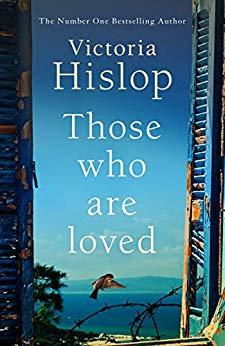
Greece: Those Who Are Loved by Victoria Hislop, one of the most moving novels I’ve read. It is historical fiction ‘set against the backdrop of the German occupation of Greece, the subsequent civil war and a military dictatorship, all of which left deep scars’. It begins slowly and it was only at about the halfway stage that it really took off for me. But then, the book sprang to life, the pace increased, and I was totally gripped and moved as history and fiction came together dramatically in glorious technicolor, telling the story of the characters personal lives and their parts in the action.
The main character is Themis Koralis/Stravidis (in Greek mythology Themis is the personification of fairness and natural law). In 2016 she is a great grandmother and realising that her grandchildren knew very little about Greek history she decided to tell them her life story, beginning from when she was a small child in the 1930s, through the German occupation of Greece during the Second World War, the civil war that followed, then the oppressive rule of the military junta and the abolition of the Greek monarchy, up to the present day.
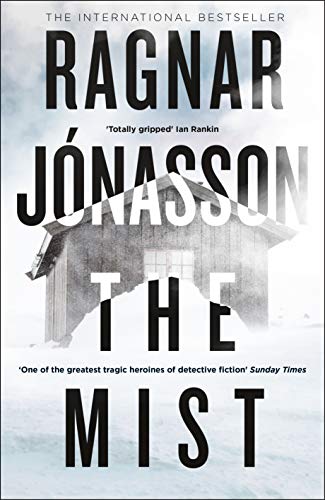
Iceland: The Mist by Ragnar Jonasson, the third novel in the Hidden Iceland series. Detective Inspector Hulda Hermannsdottir is worrying about her daughter, Dimma and her relationship with her husband, Jon. Alongside the story of what is happening in her personal life, she is also investigating the disappearance of a young woman and a suspected murder case, a particularly horrific one in an isolated farmhouse in the east, where Erla and her husband, Einar live. When a stranger, lost in a snowstorm arrives Erla invites him in and the nightmare begins.
I loved the setting, Jonasson’s writing bringing the scenery and the weather to life – you can feel the isolation and experience what it is like to be lost in a howling snowstorm. The emotional tension is brilliantly done too, the sense of despair, confusion and dread is almost unbearable.
 BooksPlease